2026 Best Barbed Wire for Sale for Global Buyers

Choosing barbed wire for sale in 2026 means comparing more than price per roll. Buyers need to assess wire gauge, barb spacing, coating, coil diameter, and packaging. These details affect handling, corrosion resistance, and installation time. A low quotation can hide costly differences.

Global steel figures offer useful context, but they are not barbed-wire sales forecasts. World Steel Association data put global crude steel production at 1,882.6 million tonnes in 2024. That scale highlights how important material sourcing and product consistency can be. It does not prove that every market has equal supply or demand. UN DESA’s World Urbanization Prospects estimates that about 68% of the world’s population may live in urban areas by 2050. Perimeter planning remains relevant across changing land uses, though urban growth alone cannot predict fencing purchases.

A practical comparison should examine traceable specifications, coating information, roll weight, and supplier quality records. Ask for clear photographs and a sample when possible. Check the packing details, too. Freight can change the real delivered cost. Local climate, terrain, and maintenance capacity also matter; one product rarely suits every site. This guide reviews common barbed-wire options, supplier checks, and purchasing considerations for global buyers. Some details are easy to overlook. That is worth admitting. The best choice depends on verified product data and the conditions where the wire will be installed.
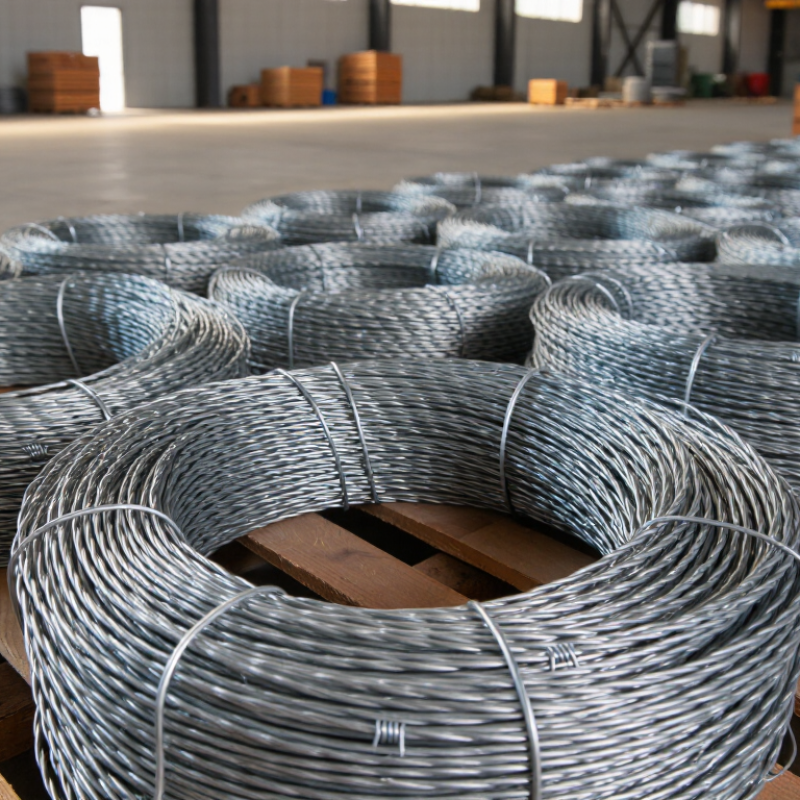
2026 Best Barbed Wire for Sale for Global Buyers

What Barbed Wire Is and How It Is Used

2026 Best Barbed Wire for Sale for Global Buyers

What Barbed Wire Is and How It Is Used

Barbed wire is a fencing material made from twisted metal strands with sharp points spaced along them. Commonly made from galvanized steel, it helps define boundaries and discourage unwanted access. You may see it around farms, storage yards, and some construction sites. It is a barrier, not a complete security system. Its performance depends on the fence structure, installation quality, and local weather. Coastal air and heavy rain can speed up corrosion if the coating is unsuitable. Small details matter.

Tips: Check the wire’s coating, strand thickness, roll length, and packaging before ordering. Match the product to the site’s climate and fence design. Ask a qualified installer to assess safe placement, especially near paths, animals, or neighboring properties.

For global buyers, clear product specifications make comparisons easier. Confirm measurements and material details with the supplier, and check that the shipment is protected from moisture. Installation should keep sharp points away from regular contact areas, with visible warnings where appropriate. Barbed wire can be practical, but it may not suit every site. I would not assume that a heavier wire is always the better choice; the right fit depends on the boundary and its intended use.

Common Barbed Wire Types, Materials, and Coatings

Barbed wire is sold in several practical forms. Double-strand, reverse-twist wire is common for boundary fencing, while single-strand designs can suit lighter-duty layouts. Low-carbon steel is easier to form; high-tensile steel can carry greater tension, but needs compatible posts and careful installation. A tight pull is not always better.

Coatings matter as much as wire construction. Hot-dip galvanizing typically provides a thicker zinc layer than electrogalvanizing, while PVC-coated wire adds a visible barrier against moisture. Yet a coating can be damaged at cut ends or during handling. Small details matter. In coastal or humid settings, ask for coating specifications and inspect samples for bare spots, uneven coverage, and sharp burrs.

World Steel Association’s World Steel in Figures 2024 reports 1,892.2 million tonnes of crude steel production in 2023. That industry scale makes material traceability worth checking, but it does not prove a particular fence wire will last. Ask suppliers for steel grade, wire diameter, zinc-coating mass, and test documentation. I would compare those details before choosing by price alone; even then, local exposure and installation quality complicate any lifespan estimate.

How to Choose Barbed Wire for Different Applications

Choosing barbed wire starts with the job, not the lowest price. For cattle boundaries, assess wire strength, strand count, post spacing, and tension against animal size and terrain. USDA NRCS Conservation Practice Standard 382 ties fence design to livestock, wildlife, and site conditions, rather than prescribing one universal setup. That matters on uneven ground, where a tight line can sag after rain or temperature changes. Check the coating specification too. Galvanized wire suits many outdoor settings, while harsher coastal or industrial exposure may call for stronger corrosion protection. Ask for documented coating and tensile-test results, not just a “heavy-duty” label.

For pasture and farm boundaries, choose barb spacing and wire gauge to suit the animals and maintenance plan. For temporary or highly visible boundaries, barbed wire may be a poor fit; its sharp points can injure animals and complicate handling. FAO’s Statistical Yearbook 2023 reports roughly 3.2 billion hectares of permanent meadows and pastures worldwide, underscoring how varied grazing conditions can be. A dry inland field and a wet, salty coastal site do not age wire alike. Inspect sample coils for even galvanizing, consistent barb twists, and damage around bends. One detail buyers sometimes miss: easier installation does not always mean lower lifetime cost. Replacing rusted wire is tedious. Compare supplier test documents and the actual environment before choosing.

Key Specifications Global Buyers Should Compare in 2026

Global buyers should compare wire diameter, tensile strength, barb spacing, and coating mass—not price alone. ASTM A121 provides a recognized specification for metallic-coated carbon-steel barbed wire; request test documents that identify the applicable requirements. A thicker-looking strand is not proof of better performance. Check the details.

Coating choice affects service life, especially near coastlines or industrial sites. NACE International’s 2016 IMPACT study estimated corrosion costs at US$2.5 trillion annually, or 3.4% of global GDP, and reported that corrosion-control practices could save 15–35% of those costs. This is broad industry data, not a product-life guarantee. Ask suppliers for coating weight, test method, and salt-spray results, then compare like with like. I still find coating labels easy to misread.

Tips: Confirm roll length, wire gauge, barb interval, and core-wire strength on the quotation and packing list. Request a sample and measure it with calipers before approving a large order. Check packaging, too: wet timber or torn wrapping can leave marks during transit. Small details matter. Allow for local installation conditions, since soil, humidity, and handling can change how long the fence performs.

Sourcing, Shipping, and Maintaining Barbed Wire Internationally

International sourcing starts with a clear specification, not a low quote. Confirm wire gauge, strand count, barb spacing, coil diameter, and coating type against the fence design and local requirements. Ask for recent inspection records and a sample when practical; a small sample can reveal uneven twists or a thin zinc coating. Small details matter. Also confirm that product descriptions and export documents use consistent specifications, so the delivered coils match the order.

Plan shipping before production is complete. Barbed wire is dense and awkward to handle, so confirm coil dimensions, gross weight, pallet strength, and container loading with the supplier and freight forwarder. Protect coils from shifting and standing water, especially during long sea voyages. Check import rules, tariff classification, documentation, and any required permits with a qualified customs broker in the destination country. Requirements differ, and a guess can delay a shipment.

After delivery, store coils under cover with airflow, away from wet floors and corrosive chemicals. Inspect the coating for scratches, rust, and loose ties before installation, using suitable protective equipment and trained handlers. Recheck exposed sections after storms and during routine fence maintenance. Rust travels fast. Even a careful plan can miss a detail, so record damage and revise the next order’s packing or coating requirements.

2026 Best Barbed Wire for Sale for Global Buyers - Sourcing, Shipping, and Maintaining Barbed Wire Internationally

Product Type Typical Construction Suitable Uses Corrosion Protection Key Sourcing Checks International Shipping Notes Maintenance Considerations
Hot-Dip Galvanized Barbed Wire Steel line wires twisted with barbs; commonly supplied in two-strand construction. Wire diameters and barb spacing vary by specification. Farm boundaries, livestock fencing, and general perimeter fencing in inland or moderately exposed locations. Zinc coating provides sacrificial corrosion protection. Performance depends on coating mass, exposure, and installation conditions. Confirm line-wire and barb-wire diameters, barb spacing, coil length, coating requirement, and applicable test documentation. Request coil outside diameter, coil weight, packing method, and pallet dimensions before booking freight. Protect coils from prolonged wet storage. Inspect for broken wires, loose ties, coating damage, and vegetation contact. Repair damaged sections and keep the fence tensioned appropriately.
PVC-Coated Galvanized Barbed Wire Galvanized steel wire with an additional polymer coating; color and coating thickness are supplier-specific. Projects requiring a colored finish or an added barrier against direct exposure, where the coating specification suits the site. The underlying zinc coating and outer polymer layer provide separate protective functions. Cuts, cracks, or abrasion can expose the substrate. Specify the galvanized substrate, coating material and thickness, color, adhesion requirements, and UV suitability for the destination climate. Use packaging that prevents sharp barbs from puncturing adjacent coils or protective wrap. Check destination import rules for polymer-coated goods. Check for peeling, cracking, or abrasion, particularly at bends and contact points. Replace sections with extensive coating damage.
Zinc-Aluminum Alloy-Coated Barbed Wire Steel wire coated with a zinc-aluminum alloy; exact alloy composition and coating mass depend on the order specification. Fencing projects seeking an alternative metallic coating for exposed outdoor service; confirm suitability for the local environment. Coating performance depends on alloy composition, coating mass, and site conditions. Avoid assuming a universal service life. Ask for coating composition, coating mass or thickness, test method, wire dimensions, and a certificate matching the shipment. Ensure the commercial documents describe the coating accurately. Confirm packing and container-loading plans for heavy, compact coils. Inspect for mechanical damage, corrosion, and contact with dissimilar metals. Follow the supplier's guidance for cut ends and repairs.
High-Tensile Barbed Wire Higher-strength steel wire construction; available dimensions and tensile properties vary. Installation requirements may differ from softer wire. Long fence runs and agricultural boundaries where the design calls for fewer supporting structures, subject to local engineering and fencing practices. Usually supplied with a metallic protective coating; confirm the coating type and specification separately from tensile properties. Verify tensile strength range, wire diameter, elongation, barb spacing, recommended posts, and installation instructions as a complete system. Confirm coil mass and safe handling equipment. Clearly label bundles and provide handling guidance to the receiving warehouse. Use suitable tensioning and anchoring methods. Inspect end assemblies and posts regularly; do not over-tension beyond the system design.
Standard Galvanized Barbed Wire for General Fencing Common two-strand twisted wire with evenly spaced barbs; custom coil lengths and dimensions may be available. General agricultural and property fencing where the required security level and local regulations permit barbed wire. Typically protected by a zinc coating. Specify coating requirements rather than relying on a generic “galvanized” description. Match the product to fence height, post spacing, intended use, local safety rules, and the buyer's installation method. Compare quotations on net wire weight, coil length, packing, and delivery terms—not price per coil alone. Confirm shipment marks and packing list details. Check tension, posts, and boundary visibility periodically. Keep people and animals clear during installation and maintenance.
Custom-Specification Barbed Wire Dimensions, coating, barb spacing, coil length, and packing are defined in the purchase specification. Projects with fixed drawings, local procurement requirements, or compatibility needs for an existing fence system. Protection method is selected in the specification; request measurable coating criteria and acceptance requirements. Approve a written specification and pre-shipment inspection plan. State tolerances, sampling method, documents, and remedies for nonconformity. Confirm country of origin, tariff classification with a customs broker, shipping marks, document language, and destination-specific import requirements. Keep the approved specification and inspection records for future replacement orders. Inspect delivered goods before installation.

Buyer note: Dimensions, coating levels, test methods, packaging, and legal requirements vary by product and destination. Put the agreed technical specification in the purchase contract, request inspection documents for the actual shipment, and check local rules on barbed-wire placement before installation.

Contact us

Please fill out the enquiry form, and our dedicated team will promptly attend to your request