2026 Best CNG Bus Engine Parts Suppliers for Global Buyers?
In 2026, global fleet operators will examine more than price when sourcing Cng Bus Engine Parts. They will compare material quality, service records, delivery stability, and technical support. A bus engine works under demanding conditions. It faces crowded city routes, repeated stops, heat, vibration, and long operating hours. One weak gasket can delay an entire vehicle. That detail matters.
John Wall, former Chief Technical Officer at Cummins, emphasized the role of natural-gas technology in transport: “Natural gas engines can support the transition to lower-carbon transportation.” His view reflects a practical reality. CNG systems can reduce local emissions when engines, fuel systems, and maintenance practices work together. Parts must match the engine design. They must also meet documented quality and safety requirements.
This guide reviews leading Cng Bus Engine Parts suppliers for global buyers. It considers cylinder-head components, pistons, valves, injectors, ignition systems, sensors, turbocharger parts, and sealing kits. Supplier experience matters. So does traceability.
A polished website proves little.
Buyers should request test reports, material specifications, warranty terms, and production references. They should check whether replacement parts remain available after the initial order. Regional inventory can reduce downtime. Clear technical communication can prevent costly mistakes.
The market is not perfectly uniform. Some suppliers offer excellent pricing but limited engineering support. Others provide strong documentation but slower delivery. That trade-off deserves careful attention. This introduction is not a final verdict. It is a starting point for comparing suppliers with evidence, field experience, and a realistic view of fleet requirements.
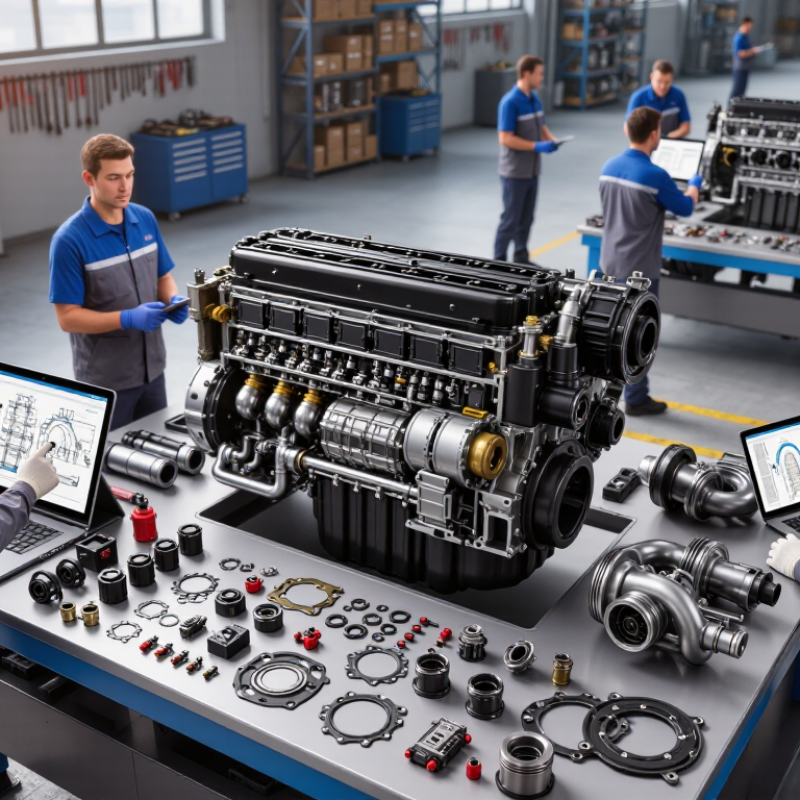
Understanding CNG Bus Engine Parts and Their Role in Fleet Performance
Understanding CNG bus engine parts begins with the fuel system, not the supplier catalogue. Gas pressure changes constantly during daily operation. Regulators, injectors, filters, valves, spark plugs, sensors, and ignition coils must work together. A weak regulator can cause poor acceleration, while contaminated injectors may increase fuel consumption. Workshop inspections often find small leaks around fittings and aging seals. These details matter during long urban routes.
NGV Global’s 2024 vehicle statistics report more than 28 million natural-gas vehicles worldwide. That scale increases demand for consistent replacement parts and trained maintenance support. The International Energy Agency’s Global Methane Tracker 2024 estimates that fossil-fuel operations released about 120 million tonnes of methane in 2023. This figure makes leak control a performance and environmental priority. Reliable gaskets, pressure sensors, and shut-off valves deserve serious attention. They are not minor components.
The best suppliers provide traceable materials, dimensional drawings, batch records, and testing evidence. Ask for cold-start data. Ask about warranty response. NREL transit-bus evaluation reports show that duty cycle, climate, and maintenance timing strongly affect fuel use and availability. Global buyers should compare parts against engine calibration, gas quality, service intervals, and local standards. A cheaper injector may appear efficient, yet create uneven combustion later. That risk is easy to underestimate. Even experienced fleets sometimes replace parts too late, then blame the engine. Supplier quality matters, but disciplined inspection matters more.
Key Criteria for Choosing Reliable CNG Engine Parts Suppliers
Reliable CNG engine parts suppliers should understand bus duty cycles, not only list catalog numbers. A city bus may idle for hours, restart hundreds of times, and face steep routes. Ask whether the supplier has tested valve seats, gaskets, injectors, and ignition components under comparable conditions. Practical experience matters here.
Request material certificates, dimensional reports, and batch traceability before placing a large order. Each part should match the engine code, model year, operating pressure, and service temperature. A supplier should explain storage limits and installation requirements clearly. Vague answers are a warning. So are inconsistent measurements.
Quality control must be visible, not merely promised. Check sampling procedures, inspection equipment, nonconformity records, and corrective actions. Independent laboratory results can strengthen confidence, especially for safety-critical components. Yet one certificate cannot prove every shipment is reliable. I have seen documents look perfect while packaging exposed moisture damage. That detail deserves attention.
Global buyers should also evaluate communication, export experience, lead times, and replacement support. Confirm how urgent claims are handled across time zones. Clear technical drawings reduce costly misunderstandings between workshops and factories. Suppliers should provide stable packaging, readable labels, and parts that remain identifiable after delivery. Price still matters, but an inexpensive gasket that fails early can stop an entire fleet. Ask for references from comparable bus operators, while remembering that even strong references need current verification.
Leading CNG Bus Engine Parts Suppliers for Global Buyers in 2026
Leading CNG bus engine parts suppliers for global buyers in 2026 should offer verified components, clear documentation, and dependable technical support. Experienced suppliers understand that valves, injectors, regulators, sensors, and gaskets require precise compatibility. A part that looks correct may still fail under heat, vibration, or pressure. Careful matching matters.
Professional suppliers provide drawings, material information, batch records, and test reports before shipment. They should explain operating limits in plain language. Look for quality systems, controlled production, and inspection records that independent buyers can review. Sample testing can reveal poor sealing, inaccurate dimensions, or unstable electrical signals. Small details matter.
Reliable global sourcing also depends on packaging and communication. Moisture-resistant packing protects metal surfaces during long sea transport. Clear labels reduce customs delays and installation mistakes. Suppliers serving different markets should understand regional vehicle specifications and documentation requirements.
No supplier is perfect. I would still question unusually low prices, limited traceability, and promises without evidence. A responsive engineer is valuable when an engine behaves differently after installation. Support should continue beyond the invoice, although some suppliers remain weaker in field feedback and warranty handling.
Evaluating Quality, Compatibility, Certification, and Supplier Support
2026 Best CNG Bus Engine Parts Suppliers for Global Buyers?
For global buyers, CNG bus engine parts demand evidence, not attractive catalogs. IEA’s Gas 2024 report projected global gas demand growth of about 2.5% in 2024. That expansion increases pressure on replacement supply. Quality checks should examine valve-seat hardness, injector flow, gasket material, and machining tolerance. Ask for batch traceability and dimensional reports. A part that looks identical may fail after repeated thermal cycling.
Compatibility starts with engine code, model year, fuel pressure, connector type, and calibration data. Suppliers should provide cross-reference tables, drawings, and installation limits. UNECE Regulation No. 110 and ISO 15500 offer useful benchmarks for CNG components. Local vehicle approval rules may add testing. NGV Global’s published industry statistics place the worldwide natural-gas vehicle population above 25 million, but operating conditions vary sharply. Cold starts, dusty depots, and poor gas quality expose weak designs.
Supplier support is measurable. Request response times, warranty terms, failure-analysis reports, emergency stock, and technician training. Certificates matter. They are not magic. A seal can meet a standard and still fit badly. This is where procurement teams should challenge assumptions. Ask for field-return data, not only laboratory results. One practical trial should compare pressure retention, fuel consumption, exhaust behavior, and service interval across several duty cycles. Missing data is itself a warning.
How to Source, Import, and Maintain CNG Bus Engine Parts Globally
For global buyers, sourcing CNG bus engine parts in 2026 starts with traceable technical data, not attractive catalog photos. Ask suppliers for part numbers, material grades, dimensional drawings, batch records, and test reports. Confirm compatibility with the engine code, fuel pressure range, operating temperature, and local emission requirements. A reliable supplier should explain its inspection process and provide samples before a large order. Request references from fleet operators using similar buses. Real experience matters here. A spreadsheet can reveal gaps quickly. I have found that the cheapest quote often excludes calibration, packaging, or replacement seals.
Import planning needs equal care. Check tariff codes, certificates of origin, customs documents, and applicable transport rules for associated components. CNG systems require disciplined handling, even when the part itself is not a cylinder. Use moisture-resistant packaging, labeled boxes, and shock protection for sensors, valves, and injectors. Agree on delivery terms, lead times, warranty coverage, and an inspection point before dispatch. Independent pre-shipment inspection can verify quantities and markings. Do not rely on verbal promises. They disappear quickly.
After arrival, record each part by bus, engine hours, installation date, and technician. Replace filters and seals at scheduled intervals, then inspect torque, leaks, wiring, and fault codes. Keep calibration tools within specification. A clean maintenance log helps identify repeated failures and supplier quality issues. Still, no sourcing plan is perfect. A shipment may arrive late, or a part may fit but perform poorly. Keep approved alternatives, quarantine uncertain components, and review field data every month. That small discipline protects uptime and passenger safety.
2026 Best CNG Bus Engine Parts Suppliers for Global Buyers – How to Source, Import, and Maintain CNG Bus Engine Parts Globally
| Part Category | Common Engine Function | Key Specifications to Confirm | Relevant Standards or Approvals | Typical Sourcing Channel | Import and Documentation Requirements | Maintenance Priority |
|---|---|---|---|---|---|---|
| CNG Fuel Injectors | Meter gas into the intake system according to engine demand. | Engine application, injector flow rate, connector type, operating pressure, calibration data, and material compatibility with natural gas. | Applicable vehicle emissions rules, electrical safety requirements, and the engine manufacturer's approved part specification. | Authorized engine-part distributors, specialist gas-fuel suppliers, and qualified OEM-equivalent manufacturers. | Commercial invoice, packing list, tariff classification, country of origin, and product conformity documents where required. | Inspect for clogging, leakage, poor spray pattern, and electrical resistance abnormalities during scheduled servicing. |
| Pressure Regulators | Reduce high-pressure CNG from the storage system to the pressure required by the fuel system. | Inlet and outlet pressure range, gas flow capacity, temperature range, port size, relief function, and seal materials. | UN Regulation No. 110 or equivalent local rules for CNG vehicle components, where adopted by the destination market. | Certified gas-vehicle component distributors and industrial gas-control suppliers with traceable testing records. | Verify pressure-component classification, test certificates, safety declarations, and any destination-country approval before shipment. | Check output pressure stability, external leakage, icing, diaphragm condition, and filter contamination. |
| Gas Filters | Remove oil, moisture, particles, and contaminants from the CNG supply. | Filtration rating, housing pressure rating, flow capacity, replacement interval, drain design, and seal compatibility. | Pressure-vessel and gas-system requirements applicable in the destination country. | Engine service networks, commercial-vehicle parts distributors, and filtration specialists. | Confirm filter media, pressure rating, hazardous-goods handling requirements, and correct customs code. | Replace at the engine or vehicle manufacturer's interval and inspect for water or oil contamination. |
| Gas Valves and Shut-Off Valves | Control, isolate, or automatically stop CNG flow during normal operation and emergency conditions. | Gas type, working pressure, valve size, actuation method, response time, temperature range, and leak-tightness rating. | UN Regulation No. 110 or applicable national CNG vehicle regulations and recognized gas-component testing requirements. | Certified automotive gas-system suppliers and approved commercial-vehicle service channels. | Request pressure-test reports, conformity declarations, valve identification, and installation instructions. | Perform leak checks and verify automatic shut-off operation after repairs or abnormal pressure events. |
| Sensors and Electronic Control Components | Measure pressure, temperature, oxygen content, speed, and engine position for fuel and emissions control. | Sensor range, signal type, connector pinout, response time, operating temperature, and diagnostic compatibility. | Vehicle electromagnetic compatibility, electrical safety, and applicable emissions-control requirements. | Commercial-vehicle electronics distributors and engine-management service providers. | Provide technical datasheets, wiring information, firmware or calibration requirements, and conformity documentation. | Use diagnostic equipment to compare live readings with specified values; avoid replacing parts without fault-code verification. |
| Ignition Coils, Spark Plugs, and High-Voltage Leads | Ignite the compressed natural-gas and air mixture in spark-ignited engines. | Heat range, electrode gap, thread size, coil output, insulation rating, and engine-specific compatibility. | Vehicle electrical safety requirements and the engine manufacturer's ignition specification. | Heavy-duty engine parts distributors and qualified ignition-component suppliers. | Confirm material details, packaging quantity, tariff code, and compatibility evidence for the exact engine model. | Inspect electrode wear, misfire history, insulation damage, and coil output during preventive maintenance. |
| Gaskets, Seals, and O-Rings | Prevent gas, coolant, oil, and intake-air leakage at engine and fuel-system joints. | Material, hardness, dimensions, temperature range, pressure rating, and compatibility with methane and lubricants. | Applicable pressure-system, chemical-resistance, and vehicle safety requirements. | Engine overhaul suppliers, sealing specialists, and approved maintenance distributors. | Include material certificates, dimensional drawings, batch traceability, and correct product classification. | Replace during disassembly; never reuse damaged or permanently compressed seals in a pressurized gas circuit. |
| Engine Cooling and Thermal-Management Parts | Maintain engine operating temperature and prevent overheating under high-load bus duty cycles. | Coolant compatibility, flow rate, thermostat temperature, hose dimensions, pressure rating, and heat-exchanger capacity. | Applicable vehicle safety requirements and coolant-system specifications for the engine platform. | Heavy-duty bus parts distributors, engine rebuilders, and cooling-system specialists. | Confirm material composition, coolant requirements, packing details, and any regulated chemical content. | Monitor coolant level, leaks, fan operation, thermostat response, radiator cleanliness, and temperature alarms. |
Article Source:
Contact us
Please fill out the enquiry form, and our dedicated team will promptly attend to your request