2026 Best Laser Parts Suppliers for Global Buyers?

The 2026 laser supply market demands more than attractive prices and polished websites. Laser Parts now support cutting, welding, marking, medical equipment, research, and semiconductor production. Each application requires exact specifications, stable quality, and dependable after-sales support.

Industry forecasts show why supplier selection matters. MarketsandMarkets projects the global laser technology market to grow from approximately USD 16.8 billion in 2023 to USD 24.6 billion by 2028. Grand View Research also identifies industrial processing as a major growth area, supported by automation and advanced manufacturing. These figures suggest expanding demand, but they do not guarantee reliable component quality.

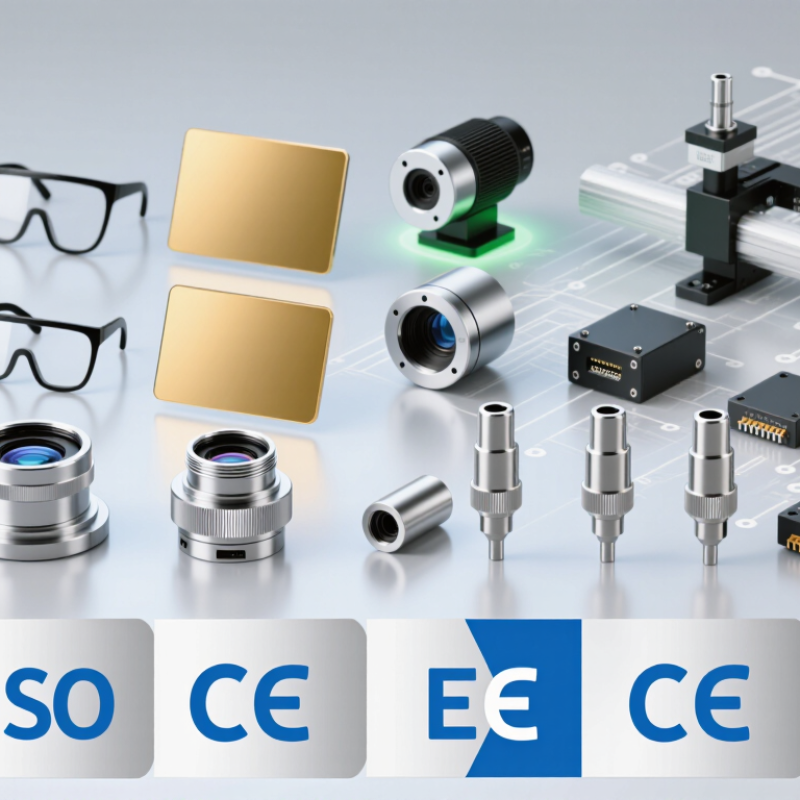
This guide evaluates Laser Parts suppliers through practical buyer criteria. The review considers laser sources, focusing lenses, protective windows, mirrors, nozzles, beam delivery components, and replacement modules. It also examines ISO 9001 certification, material traceability, wavelength testing, power tolerance, packaging, warranty terms, and delivery performance. A supplier may claim high precision, yet test reports and production samples reveal more. Look closely.

Global buyers should also review applicable safety and environmental requirements, including CE documentation, RoHS and REACH declarations, export paperwork, and regional product standards. The International Organization for Standardization emphasizes risk control through standards such as ISO 11553 for laser processing machinery. Practical experience remains essential because a minor lens coating defect can reduce beam quality, increase downtime, or damage a workpiece.

No supplier is perfect. Some publish limited test data, while others offer excellent engineering support but longer lead times. This comparison therefore focuses on verifiable evidence, realistic service capability, and total operating value rather than marketing language alone.
2026 Best Laser Parts Suppliers for Global Buyers?

Classify Laser Parts by Wavelength: 355, 532, 1064, and 1550 nm

For global buyers, laser parts should be classified by wavelength before comparing suppliers. At 355 nm, ultraviolet optics support fine marking, semiconductor inspection, and low-heat processing of polymers. At 532 nm, green laser components work well with copper, gold, and fluorescence-based inspection. The 1064 nm range remains central to metal marking, cutting, welding, and fiber-laser systems. A 1550 nm design is common in optical communications and LiDAR, where eye-safety advantages can support higher permissible system power.

Industry reports show strong demand across these bands. MarketsandMarkets projects the global laser technology market to grow from about USD 19 billion in 2024 to more than USD 29 billion by 2029. Grand View Research also identifies fiber lasers and industrial material processing as major growth areas. These figures do not mean every wavelength has equal purchasing value. They indicate a broader need for compatible sources, lenses, mirrors, sensors, isolators, and coatings.

A qualified supplier should provide wavelength tolerance, coating range, laser-induced damage threshold, surface quality, and test records. For 355 nm optics, contamination control is critical. For 1064 nm parts, thermal handling deserves closer review. For 1550 nm modules, connector return loss and environmental stability can change field performance. I have seen buyers compare price first, then discover incompatible beam divergence. That mistake is avoidable, though specifications can still be incomplete. Wavelength alone never proves compatibility. Pulse width, repetition rate, beam diameter, and operating temperature matter just as much.

Sources: MarketsandMarkets, Laser Technology Market, 2024; Grand View Research, Laser Technology Market, 2024.

Screen Suppliers for IEC 60825-1 and ISO 9001 Compliance

2026 Best Laser Parts Suppliers for Global Buyers?

Screening laser parts suppliers requires more than comparing prices and delivery dates. IEC 60825-1 should guide the safety review. Ask whether the supplier understands laser classification, accessible emissions, protective housing, warning labels, and user instructions. Request current test reports, risk assessments, and design records for the exact part or assembly. Generic documents are weak evidence.

ISO 9001 certification can reveal how consistently a supplier controls production. Check the certificate scope, issuing body, covered facility, and expiration date. The certificate should match the site making your components. Review incoming inspection records, calibration logs, nonconformance reports, and corrective actions.

I have found that traceability often matters more than polished presentations. Can the supplier link a serial number to materials, operators, and test results?

Look closely at sample packaging and technical drawings. Dimensions, optical surfaces, connector types, and protective features should match the approved specification. Ask how design changes are communicated before shipment. A supplier may pass an audit yet struggle with rushed batches. That deserves attention.

Remote audits are useful, but they cannot fully replace an experienced visit. If possible, observe assembly areas, storage conditions, and final inspection practices. Do not accept an IEC reference without confirming its relevance to your product’s intended use. A certificate can be genuine and still provide incomplete assurance.

Compare Power, Beam Quality M², MTTF, and Dimensional Tolerance

2026 Best Laser Parts Suppliers for Global Buyers?

When comparing laser parts suppliers, power should be checked under stated operating conditions. A 20-watt rating means little without duty cycle, temperature, and cooling details. Ask for test reports showing output stability, not only peak power. Beam quality matters just as much. An M² value near 1 indicates a beam close to the ideal Gaussian profile. Higher values may reduce focusing precision and increase spot size. Confirm whether M² was measured at the final output or earlier in the optical path.

MTTF helps estimate reliability, but it is not a guaranteed service life. Request the test method, sample size, and operating temperature. Dimensional tolerance also deserves close attention. A mounting surface tolerance of ±0.02 mm can affect alignment across a long optical assembly. Check drawings, material specifications, coating data, and inspection records before ordering. In practice, supplier documents can look complete yet omit the conditions behind each number. That gap deserves questions.

Tips: Compare identical test conditions across suppliers. Request a sample part when alignment is critical. Measure key dimensions with calibrated equipment after delivery. Keep serial numbers and inspection photos for traceability. I sometimes find that a slightly weaker part performs better when its beam quality and tolerance remain consistent. Perfect specifications are rare. Reliability often comes from transparent testing and repeatable manufacturing.

2026 Best Laser Parts Suppliers for Global Buyers? - Compare Power, Beam Quality M², MTTF, and Dimensional Tolerance

Anonymous market comparison based on commonly specified performance bands for industrial laser components. Values are representative ranges, not brand-specific claims.

Anonymous Supplier Offering Typical Part Category Wavelength Rated Optical Power Beam Quality M² Typical MTTF Dimensional Tolerance Best-Fit Applications Buyer Verification Points
Profile A Industrial fiber-laser source or module 1,030–1,080 nm 20–1,000 W 1.05–1.30 Typically 50,000–100,000 hours for the pump-diode assembly; confirm the supplier’s test basis Housing: typically ±0.05 mm; optical interface: typically ±0.02 mm Metal cutting, welding, marking, and precision material processing Output-power stability, delivery-fiber core diameter, QBH interface accuracy, cooling requirements, and test report
Profile B High-power diode-laser module 808, 915, 940, or 980 nm 50–500 W 5.0–20.0 Typically 10,000–30,000 hours under rated current and temperature Housing: typically ±0.05–0.10 mm; emitter or fiber position: typically ±0.03 mm Pumping, heat treatment, plastic welding, and direct-diode processing Emitter uniformity, thermal resistance, wavelength drift, cooling plate flatness, and operating current
Profile C CO₂ laser tube or sealed CO₂ source 10.6 μm 30–400 W 1.10–1.30 Typically 3,000–20,000 operating hours, depending on tube design and duty cycle Tube length: commonly ±1–3 mm; mounting and optical-axis references: typically ±0.10 mm Non-metal cutting, engraving, acrylic, wood, textile, and packaging materials Beam mode, cooling-water quality, tube mounting alignment, ignition voltage, and rated duty cycle
Profile D UV solid-state laser module 355 nm 3–30 W 1.20–1.50 Typically 10,000–20,000 hours for the pump source; nonlinear-crystal life depends on power density Module housing: typically ±0.05 mm; output-axis position: typically ±0.02–0.05 mm Cold marking, electronics, glass, polymers, and fine micromachining Pulse width, repetition rate, pulse-energy stability, spot size, harmonic-conversion efficiency, and heat dissipation
Profile E Green solid-state laser module 515 or 532 nm 1–20 W 1.20–1.50 Typically 10,000–20,000 hours for the pump source; verify the complete-module rating Housing: typically ±0.05 mm; beam-axis reference: typically ±0.02–0.05 mm PCB marking, solar-cell processing, glass marking, and precision engraving Beam-pointing stability, pulse-to-pulse energy, thermal drift, spot circularity, and modulation response
Profile F F-theta scan lens or laser focusing optic Compatible with 355, 532, 1,064, or 10,600 nm systems Not rated by optical output power alone; verify coating damage threshold System-dependent; commonly 1.10–1.30 when paired with a suitable source Not normally expressed as MTTF; service life is determined by coating, contamination, and fluence Barrel and mounting features: typically ±0.02–0.05 mm; focal-length tolerance commonly ±1% Galvo marking, engraving, drilling, and large-field scanning Scan-field size, telecentricity, distortion, coating band, focal length, clear aperture, and damage threshold
Profile G Protective window or focusing-lens assembly Application-specific: 355 nm to 10.6 μm Specified by coating damage threshold, not nominal source power Does not define source beam quality; surface quality affects transmitted beam Not normally published as MTTF; replacement interval depends on spatter, dust, and process gas Diameter: typically ±0.05 mm; thickness: typically ±0.05 mm; wedge commonly below 5 arcmin Laser cutting heads, welding heads, marking heads, and beam-delivery systems Material grade, surface quality, wedge, coating reflectance, contamination resistance, and usable aperture
Profile H Delivery fiber, fiber connector, or beam-delivery assembly Commonly 1,030–1,080 nm; other bands available 50–2,000 W, subject to core size, numerical aperture, and connector design Typically specified by NA and mode quality; multimode assemblies may exceed M² 10 Typically 20,000–50,000 hours for the assembly under approved bend radius and power conditions Connector interface: typically ±0.02–0.05 mm; fiber length: commonly ±10–30 mm Industrial beam delivery, cutting heads, welding heads, and remote processing Core diameter, NA, minimum bend radius, end-face quality, connector keying, insertion loss, and power rating
Notes: M² values closer to 1 indicate better beam quality. MTTF is not a guaranteed service-life promise and varies with temperature, drive current, contamination, cooling, duty cycle, and maintenance. Dimensional tolerances shown are common procurement ranges rather than universal specifications. Global buyers should request a current datasheet, incoming inspection report, calibration traceability, applicable IEC or ISO compliance documents, warranty terms, and a sample measurement before placing a production order.

Evaluate MOQ, Lead Time, Incoterms, Warranty, and Traceability

2026 Best Laser Parts Suppliers for Global Buyers?

A strong laser parts supplier should show clear control over MOQ, lead time, Incoterms, warranty, and traceability. MOQ affects cash flow, storage, and testing costs. Ask whether the minimum applies per model, order, or production batch. A low MOQ may hide higher unit prices. Check the details.

Lead time should separate production, inspection, and transit. Request a dated schedule, not a general promise. For urgent components, confirm available stock and replacement capacity. Incoterms must match your team’s import experience. Clarify who handles freight, insurance, customs documents, and delivery risk.

Warranty language deserves careful reading. Confirm coverage period, inspection procedures, response time, and exclusions for installation errors or contaminated environments. Ask for failure-analysis reports, not only verbal assurances. Reliable suppliers should link each part to a serial number, batch code, material record, and final test result. Traceability can expose a weak process quickly. It also supports controlled maintenance and recall decisions.

In supplier evaluations, buyers sometimes overvalue price and underestimate documentation work. That judgment can be expensive. A practical scorecard should compare total landed cost, proven lead-time performance, warranty handling, and record accuracy across several orders. Supplier claims still need independent verification.

Rank 2026 Suppliers by Cost, Quality, Capacity, and Supply Risk

2026 Best Laser Parts Suppliers for Global Buyers

A practical 2026 ranking should compare cost, quality, capacity, and supply risk together. The lowest quote rarely means the lowest purchasing cost. Buyers should calculate tooling, freight, inspection, customs handling, and replacement expenses. Quality deserves measurable evidence, including dimensional reports, material traceability, coating tests, and stable performance across sample batches. A supplier with consistent records usually creates fewer production surprises.

Capacity must reflect real output, not impressive factory claims. Check monthly production data, equipment availability, maintenance planning, and lead-time history. A capable supplier should explain how it handles urgent orders without weakening inspection standards. Supply risk also matters. Review geographic concentration, raw-material dependencies, backup facilities, export documentation, and inventory policies. I would rank a slightly more expensive supplier higher when delivery variance remains low.

Tips: Request three recent batch records. Test samples before signing volume agreements. Ask for a written recovery plan. Keep a qualified second source. The scoring model is not perfect. Cost data can change quickly, and factory capacity may shrink during peak seasons. Recheck the ranking every quarter, especially after delayed shipments, engineering changes, or unexplained quality drift.

2026 Best Laser Parts Suppliers for Global Buyers

An anonymized 2026 benchmark ranking based on normalized cost competitiveness, quality consistency, production capacity, and supply resilience. Higher scores are better; supply risk is scored inversely, so a higher resilience score indicates lower disruption exposure.

The benchmark is intended for initial sourcing comparison. Final supplier selection should also verify technical compatibility, certifications, warranty terms, payment conditions, and current lead times.

Contact us

Please fill out the enquiry form, and our dedicated team will promptly attend to your request