2026 Best Roll Parent Tissue Paper Types for Global Buyers
Global tissue purchasing is becoming more technical, regional, and cost-sensitive. Roll Parent Tissue Paper is no longer selected by basis weight alone. Buyers now compare fiber composition, reel width, moisture, bulk, tensile strength, softness, and converting performance.
Smithers’ The Future of Global Tissue and Hygiene Products to 2028 identifies continued demand growth across away-from-home, household, and personal-care tissue markets. Grand View Research also estimates steady expansion in the global tissue paper sector through 2030. These findings suggest stronger demand for reliable parent reels. However, published market figures differ by definition, region, and product category. The numbers deserve careful checking.
Rod Young, a long-time tissue industry analyst, has said, “The tissue business is a local business.” This short observation remains useful for global buyers. A reel that performs well in Turkey may require different fiber, bulk, or moisture control in Mexico. Climate, transport distance, machine design, and local converting habits all matter.
This 2026 guide examines the best Roll Parent Tissue Paper types for international procurement. It considers virgin kraft, recycled, hybrid, bamboo, and specialty grades. Each type has practical strengths and compromises. Virgin fiber may deliver cleaner appearance and higher softness. Recycled grades can support circularity goals, but their quality may vary between suppliers. Bamboo can offer marketing value, yet availability and processing consistency require verification.
Buyers should request current technical data sheets, test certificates, sample reels, and converting trials. A polished specification is not enough. Real machine performance matters more. This guide provides a practical framework for comparing quality, sustainability, supply reliability, and total landed cost across global markets.
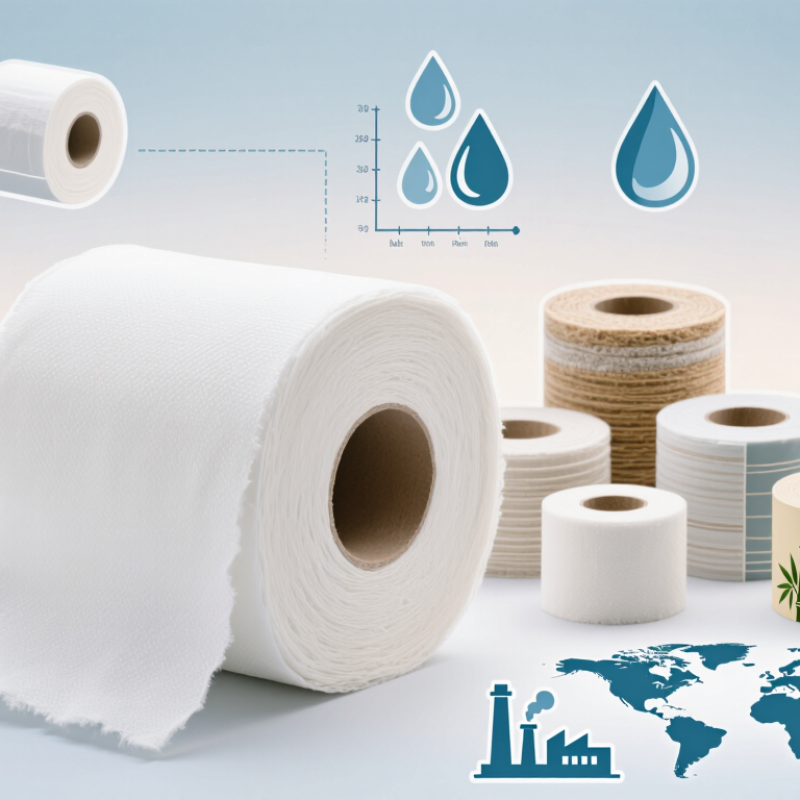
What Is Roll Parent Tissue Paper and Why Does It Matter?
Roll parent tissue paper is the large jumbo roll supplied to tissue converters. Converters unwind it, emboss it, perforate it, fold it, and package it as finished products. It is not ready for direct consumer use. Still, its quality shapes every later process.
Why does it matter? Because the parent roll controls softness, strength, absorbency, dust, and machine speed. Virgin-fiber grades usually offer cleaner surfaces and stable tensile strength. Recycled grades can support lower-impact purchasing, but fiber length and cleanliness may vary. Blended grades often balance softness, performance, and cost. Bamboo-based tissue can offer a distinctive fiber profile, though supply consistency needs careful checking. No type wins every market.
For global buyers, specifications matter more than attractive samples. Request basis weight, ply structure, moisture range, reel width, core size, roll diameter, and packaging details. Ask for recent laboratory data covering tensile strength, absorption time, brightness, and lint. During inspection, check roll hardness and edge damage. A beautiful outer layer may hide loose winding inside. I have seen purchasing decisions focus too heavily on price; this is a mistake worth reconsidering. The cheapest parent roll can create slower machines, more waste, and inconsistent finished tissue. Local climate, transport distance, converting equipment, and consumer preferences should shape the final grade selection.
How Roll Parent Tissue Paper Is Classified by Fiber and Material
2026 Best Roll Parent Tissue Paper Types for Global Buyers
Roll parent tissue paper is classified mainly by fiber source and material composition. Virgin wood fiber usually combines long softwood fibers with shorter hardwood fibers. Long fibers improve tensile strength, while short fibers create a smoother hand feel. Recycled fiber lowers dependence on fresh pulp, but it may reduce softness and brightness after repeated use. Non-wood options, such as bamboo or agricultural fibers, can offer different textures, although supply consistency remains uneven.
Mixed furnish is common. A parent roll may contain 60% recycled fiber and 40% virgin pulp, or the reverse. Buyers should request the exact furnish ratio, not only terms like “premium” or “eco.” The FAO Global Forest Products Facts and Figures 2022 reported global paper and paperboard production of about 417 million tonnes, showing the enormous scale of fiber demand. CEPI’s 2023 preliminary statistics recorded approximately 79.5 million tonnes of European paper and board production. These figures support careful sourcing, but they do not guarantee tissue quality.
Material classification also includes basis weight, moisture, softness, brightness, and wet strength. ISO 12625 test methods help compare these properties across suppliers. In practice, a 15–18 gsm parent roll can feel very different after converting because refining, creping, and drying change the surface. This is where specifications can mislead. Ask for a mill sample, laboratory results, and a trial roll. A modest recycled content may perform well. A higher percentage may not.
Which Basis Weights and Ply Structures Suit Global Buyers?
Global buyers should match tissue paper basis weight with the finished product, not simply choose the heaviest roll. Basis weight, measured in grams per square meter, affects softness, strength, absorbency, and freight cost.
For facial tissues, 13–18 gsm per ply often provides a soft hand feel.
Two plies usually balance comfort and production efficiency. Toilet tissue may use 14–20 gsm per ply, depending on embossing and required bulk. Napkins often need 16–22 gsm per ply for better liquid handling.
Higher weights can improve durability, but they may reduce softness and increase shipping expense. This trade-off is easy to underestimate.
Ply structure also changes converting performance.
Two plies suit many everyday products, while three plies can support premium positioning and stronger wet handling. However, extra plies may create thicker cores, slower folding, and higher material consumption.
For jumbo parent rolls, buyers should check tensile strength in both machine and cross directions. Roll diameter, moisture, winding tightness, and core size also matter during long-distance transport.
A technically strong sheet can still arrive with edge damage if wrapping is weak.
Regional climate deserves practical testing.
Humid storage can soften paper and affect unwinding, while dry conditions may increase dust and static. Trial rolls should be tested on the actual converting line. Laboratory results alone are not enough.
I would also compare finished-sheet performance after transport simulation, because the first specification is rarely perfect.
Supplier documentation should clearly state basis weight tolerance, ply bonding, moisture range, and applicable quality standards.
How to Compare Performance, Compliance, and Sustainability
2026 Best Roll Parent Tissue Paper Types for Global Buyers
How to Compare Performance, Compliance, and Sustainability
Choosing parent tissue rolls starts with the end product, not the lowest quoted price. Virgin pulp grades usually offer strong softness, brightness, and reliable machine performance. Recycled grades can reduce virgin fiber demand, but their absorbency and surface feel may vary. Hybrid grades often balance strength, comfort, and cost. Bamboo-based fibers may support diversification, yet supply consistency requires careful verification.
Run practical trials before approving a shipment. Check tensile strength, wet strength, absorbency time, bulk, dust, and roll winding. A laboratory result can look excellent. The converting line may disagree. Measure core fit, moisture, roll density, and web breaks during production. Small differences can create serious waste. I have found that operator feedback often reveals problems missed by standard certificates.
Compliance must match the destination market and product use. Request current test reports for chemical restrictions, food-contact suitability, packaging materials, and fiber claims. Confirm who issued each document and whether its scope covers the supplied grade. A certificate without traceable batch information is weak evidence. Sustainability comparisons should include recycled content, responsibly sourced fiber, water use, energy demand, bleaching methods, and transport distance. Carbon claims need clear boundaries. They are not automatically comparable. No type wins every test. Buyers should record both measured results and unresolved questions, then review them with suppliers before signing long-term contracts.
2026 Best Roll Parent Tissue Paper Types for Global Buyers - How to Compare Performance, Compliance, and Sustainability
| Parent Tissue Type | Typical Basis Weight | Typical Brightness / Appearance | Strength and Converting Performance | Softness and Absorbency | Common End Uses | Sustainability Considerations | Key Compliance Checks | Best Buying Position |
|---|---|---|---|---|---|---|---|---|
| Virgin Bleached Kraft Tissue | 13–40 g/m² per ply | Approximately 80–90 ISO brightness; clean, uniform appearance | High fiber purity and reliable machine runnability; generally strong wet and dry performance when engineered for the application | Can provide a balanced combination of softness, bulk, and absorbency; performance depends on refining and creping | Premium toilet tissue, facial tissue, napkins, towels, and high-speed converting products | Uses virgin wood fiber; prefer certified or controlled sources and mills with documented energy, water, and effluent management | Fiber-source legality and chain of custody; chemical restrictions; food-contact or cosmetic-contact requirements where applicable | High-performance products where consistency, appearance, and converting speed are priorities |
| Recycled Deinked Tissue | 15–40 g/m² per ply | Commonly 70–85 ISO brightness; may show natural shade or slight shade variation | Adequate to good dry strength; shorter recycled fibers may reduce tensile strength and increase dust if not well processed | Usually good softness and absorbency; softness may vary with furnish quality and deinking method | Toilet tissue, napkins, hand towels, industrial towels, and environmentally positioned products | Reduces demand for virgin fiber; verify recovered-fiber percentage, collection source, water use, sludge management, and mill energy profile | Recovered-content claims; contaminants and restricted substances; recycled-material documentation; applicable hygiene and food-contact rules | Cost-sensitive or sustainability-led programs that can accept natural shade and moderate variability |
| Mixed-Fiber Tissue | 15–35 g/m² per ply | Typically 75–88 ISO brightness, depending on virgin and recycled fiber proportions | Balanced strength, bulk, and machine stability; formulation can be adjusted for different converting requirements | Moderate to high softness and absorbency; often provides a practical performance-to-cost balance | Everyday toilet tissue, napkins, towels, and general-purpose away-from-home tissue | Allows partial replacement of virgin fiber; require a clear fiber-mix declaration and evidence for any recycled-content claim | Fiber composition, claim substantiation, chemical safety, migration limits, and local labeling obligations | Most versatile option when buyers need stable quality at a controlled total cost |
| Bamboo-Fiber Tissue | 15–35 g/m² per ply | Approximately 75–88 ISO brightness; shade varies by pulping and bleaching process | Good strength potential; actual performance depends on fiber length, pulp processing, refining, and sheet structure | Can deliver good softness and absorbency, although results vary significantly by furnish and creping design | Toilet tissue, facial tissue, napkins, towels, and products marketed around alternative fiber content | Bamboo is a rapidly renewable raw material, but cultivation, transport, pulping chemicals, and land-use practices must still be assessed | Verified fiber origin, responsible agricultural sourcing, chemical restrictions, wastewater controls, and evidence for environmental claims | Buyers seeking alternative-fiber positioning, provided origin and processing data are transparent |
| High-Bulk TAD / Air-Dried Tissue | 25–45 g/m² per ply | Generally 80–90 ISO brightness; pronounced three-dimensional sheet structure | Very high bulk and good absorbency; supports lower basis weight per functional unit but requires specialized production equipment | Usually superior softness, bulk, and liquid-holding capacity compared with conventional creped tissue | Premium towels, luxury toilet tissue, facial tissue, and high-absorbency products | Potential material savings through high bulk, but air-drying can increase energy demand; assess product-level carbon and energy data | Energy and emissions reporting, fiber sourcing, chemical compliance, product safety, and performance claims | Premium segments where softness, absorbency, and consumer experience justify a higher purchase price |
| Wet-Strength Tissue | 20–45 g/m² per ply | Usually 75–90 ISO brightness, depending on fiber furnish and additives | Enhanced integrity when wet; useful where the sheet must resist tearing during use, dispensing, or cleaning | Absorbency can be good, but wet-strength chemistry may reduce repulpability or dispersibility if poorly specified | Industrial wipes, durable hand towels, cleaning products, and selected medical or hygiene applications | Evaluate additive chemistry, biodegradability, repulpability, wastewater impact, and disposal route rather than relying on strength alone | Chemical inventory, restricted substances, skin-contact safety, food-contact requirements where relevant, and disposal claims | Applications requiring wet durability; not the default choice for products intended to disperse rapidly in water |
What Factors Should Buyers Check Before Selecting a Supplier?
2026 Best Roll Parent Tissue Paper Types for Global Buyers
Choosing roll parent tissue paper starts with the end product, not the catalogue description. Buyers should compare virgin, recycled, and blended fiber grades. Virgin fiber often provides cleaner appearance and stronger tensile performance. Recycled fiber can support cost control, but softness and brightness may vary. Check GSM, ply structure, absorbency, stretch, and reel width together. One attractive specification rarely tells the full story.
Supplier evaluation needs practical evidence. Request recent samples from different production batches, not only one polished roll. Test moisture, winding tightness, core size, and machine performance with your converting equipment. Ask for fiber origin records, laboratory data, quality certificates, and traceable batch numbers. A reliable supplier should explain acceptable tolerances clearly. Capacity matters too. Confirm monthly output, minimum order quantity, lead time, export packaging, and response procedures for damaged cargo. Small details become expensive delays.
Tips: Compare samples under identical humidity conditions. Measure roll diameter and weight independently. Ask how claims are investigated. Check whether pallet wrapping protects edges during sea transport. Do not select the lowest quotation too quickly. It may hide unstable GSM or excessive dust. A useful supplier shares limitations, not only strengths. Buyers should also review their own forecast accuracy; changing specifications late can disrupt production. Even experienced teams miss this. Document every agreed parameter before signing.
2026 Best Roll Parent Tissue Paper Types for Global Buyers
Typical basis-weight ranges by parent tissue grade are shown below. Buyers should also verify moisture, tensile strength, brightness, roll width, core diameter, converting performance, certifications, production capacity, lead time, and quality consistency before selecting a supplier.
Indicative industry ranges: basis weight varies according to the intended finished product, fiber mix, machine configuration, and buyer specification. Higher basis weight generally supports greater bulk and absorbency, but it can increase material cost and shipping weight.
Article Source:
Contact us
Please fill out the enquiry form, and our dedicated team will promptly attend to your request