2026 How to Choose the Right Mobility Scooter?
Choosing The Mobility Scooter in 2026 is not simply a matter of comparing prices or battery ranges. The right model should fit your body, routine, home, and confidence level. A compact scooter may glide neatly through a supermarket aisle but struggle on wet grass or uneven paving. A larger model may offer better stability yet require more storage space and careful transport planning.
Dr. Rory Cooper, a respected rehabilitation engineer and mobility researcher, puts the issue clearly: “Mobility is a basic human right.” His perspective reminds buyers to evaluate independence, not just machine specifications. Before purchasing, consider seat support, tiller adjustment, turning radius, ground clearance, control sensitivity, and maximum user weight. Measure doorways and lift access with a tape measure. Small details matter.
Real experience can challenge attractive showroom promises. A claimed travel range may decrease in cold weather, on slopes, or with heavier loads. Charging habits matter too. Service availability can be more valuable than a minor speed increase. In 2026, buyers should also examine battery technology, warranty terms, replacement costs, and local maintenance support.
There is no perfect scooter.
This guide will compare practical scooter classes, explain essential safety checks, and identify common buying mistakes. It will also question assumptions that seem reasonable but fail in daily use. The best choice is not always the newest, fastest, or most expensive model. It is the one that helps you move safely, comfortably, and reliably through ordinary life.
Understanding Mobility Scooter Types and Their Intended Uses
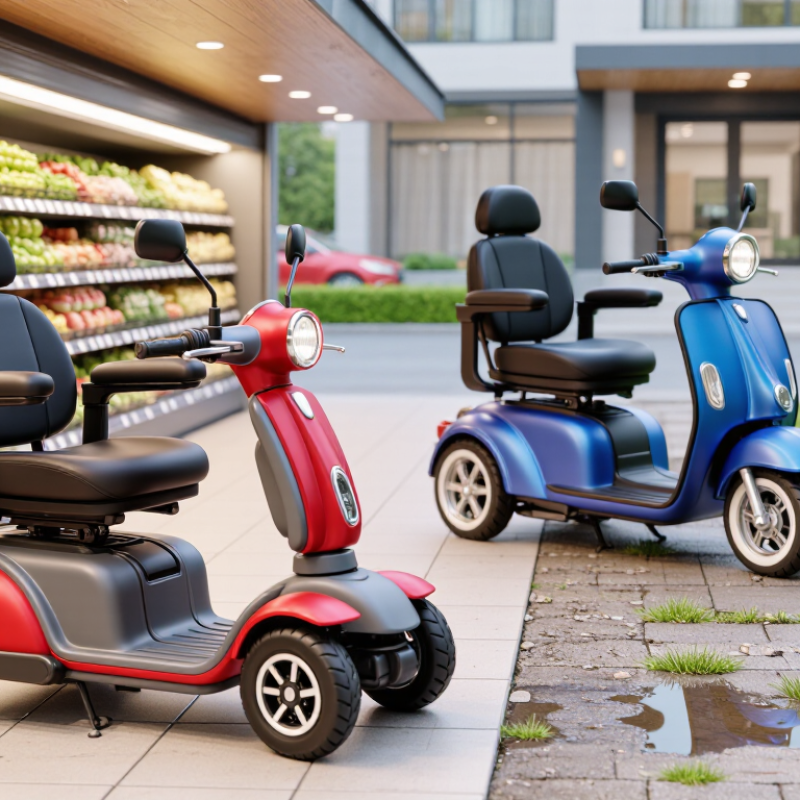
Mobility scooters differ by where and how they are used. Compact, often foldable models suit short trips, car transport, and tight indoor spaces. Their smaller frames can feel less stable on uneven paths. Three-wheel scooters usually turn more sharply, which helps in shops and narrow hallways. Four-wheel designs often provide a steadier feel outdoors, though their wider turning circle needs room. The labels can mislead. A “travel” scooter may still be awkward to lift into a car.
Larger scooters generally offer more legroom, seating support, and capacity for longer outdoor journeys. Check the route, not just the advertised range: slopes, rough paving, and frequent stops can affect battery use.
The World Health Organization’s 2022 Global Report on Assistive Technology estimates that 2.5 billion people need at least one assistive product, underscoring why fit and access matter. That figure covers many products, not scooters alone.
Before choosing, measure doorways and storage space, and consider who will transport or charge the scooter. A clinician or occupational therapist can help assess posture, balance, and control needs.
It is easy to focus on speed. Comfort matters more over a long day.
Assessing Personal Mobility Needs, Comfort, and Physical Requirements
Choosing a mobility scooter starts with the trips you actually make. Can you transfer from your usual chair without twisting? Can you reach the tiller and operate its controls without leaning forward? Measure your hip width while seated, then check that the seat leaves room for a coat. A seat that feels fine indoors may pinch after an hour. Small details matter.
The World Health Organization’s 2022 Global Report on Assistive Technology estimates that 2.5 billion people need one or more assistive products, while nearly one billion lack access. These figures describe broad assistive-product needs, not scooter demand, but they underline why fit and access matter. Ask a qualified occupational or physical therapist to assess posture, balance, hand strength, vision, and transfer ability. Then test the scooter on routes you use: a doorway, curb cut, uneven pavement, and a tight turn. Check foot clearance and whether the controls remain comfortable after several minutes. A short showroom ride may not reveal fatigue. I might still miss something on a checklist; daily routines change, and needs can shift. Revisit the fit if pain, swelling, or stamina changes.
Choosing the right mobility scooter
This chart shows UK maximum speeds: Class 2 scooters are limited to 4 mph, while Class 3 scooters can travel up to 8 mph on roads. Speed is only one consideration. Assess your typical journey distance, routes, storage and transport options, and whether the seat, controls, and turning space suit your comfort and physical needs. Regulations vary by location.
Comparing Key Features, Performance, Safety, and Accessibility
A mobility scooter should fit the places you actually go, not just look capable on a product page. Compare the turning radius, seat width, and overall length with your hallway, lift, or car boot. A tight doorway can matter more than a long advertised range. Measure before you buy.
Performance depends on more than battery capacity. Check the stated range, charging time, and how the scooter handles slopes and uneven pavement. A heavier model may feel steadier outdoors, but it can be difficult to transport. A compact scooter is easier to store, though its smaller wheels may feel less comfortable over cracked paths. Test it on a route similar to your usual one, if possible. Numbers don’t tell the whole story.
Safety features deserve close attention. Look for responsive brakes, clear lights, a stable seat, and controls you can operate without straining. Try starting, stopping, and turning slowly in a safe, open area. Accessibility includes the details: adjustable armrests, easy-to-read indicators, simple charging connections, and enough legroom. Ask a qualified mobility professional to assess your needs, especially if balance, vision, or hand strength is a concern. I’ve found that people sometimes prioritize speed and regret the extra bulk later. It’s an easy trade-off to miss.
| Feature | Portable Travel Scooter | Four-Wheel Travel Scooter | Mid-Size Scooter | Heavy-Duty Scooter |
|---|---|---|---|---|
| Typical use | Short trips, indoor use, and occasional outings where compact storage matters. | Errands and paved outdoor routes, with added stability compared with many three-wheel travel designs. | Regular neighborhood travel and longer outings on a mix of indoor and paved outdoor surfaces. | Longer outdoor journeys and use by riders who need a higher weight capacity or more space. |
| Typical maximum speed | About 3–5 mph (5–8 km/h). | About 4–6 mph (6–10 km/h). | About 5–8 mph (8–13 km/h). | About 5–10 mph (8–16 km/h), depending on the model and local regulations. |
| Typical range per charge | About 6–12 miles (10–19 km). | About 8–15 miles (13–24 km). | About 15–25 miles (24–40 km). | About 20–35 miles (32–56 km). |
| Typical maximum user weight | Often around 250–300 lb (113–136 kg). | Often around 250–350 lb (113–159 kg). | Often around 300–400 lb (136–181 kg). | Often around 400–500 lb (181–227 kg) or more. |
| Transport and storage | Usually the easiest class to disassemble or fold; check individual component weights before lifting. | Often disassembles into sections, though it may be heavier or bulkier than a compact three-wheel model. | Typically larger and heavier; a vehicle lift or accessible van may be needed for transport. | Usually requires a suitable vehicle lift, ramp, or van; verify the vehicle’s payload and loading limits. |
| Maneuverability and stability | Compact turning radius can help in tight spaces; small wheels may be less suitable for uneven ground. | Four wheels can provide a stable feel, but the turning circle may be wider than a three-wheel scooter’s. | Offers a balance of maneuverability and stability; turning space should be tested in the intended environment. | Built for substantial outdoor use, but its size and turning radius can limit access in narrow areas. |
| Surface and incline considerations | Best suited to smooth floors and firm, even paths; avoid assuming it can handle steep slopes or rough ground. | Generally suited to paved paths and moderate outdoor use; check the manufacturer’s slope and ground-clearance limits. | May manage a wider range of paved routes; performance on slopes depends on load, battery condition, and design. | Often has stronger outdoor capability, but it is not intended for every terrain or steep incline. |
| Safety features to check | Responsive controls, stable seating, a visible battery indicator, and a speed setting appropriate for indoor use. | Braking system, lighting, reflectors, anti-tip protection where fitted, and clear controls. | Lighting, horn, reliable brakes, secure seating, and visibility aids for outdoor trips. | Braking performance under load, lighting, tires suited to the route, stability features, and accessible controls. |
| Accessibility checks | Measure doorways, turning areas, and storage space; confirm seat height and transfers are manageable. | Check doorway width, turning space, threshold height, and access to charging and storage. | Measure the full scooter width and turning circle against home, workplace, and transit access requirements. | Confirm ramp or lift capacity, doorway clearance, turning room, and accessible charging arrangements. |
| Best fit when | Portability and compact storage are more important than long range or rough-surface capability. | You want a portable option for paved outdoor trips and prefer a four-wheel layout. | You need a versatile scooter for frequent use and can accommodate its larger size. | You need higher capacity, a roomier platform, or extended outdoor range and have suitable transport and storage. |
| Figures are broad category-level estimates, not guarantees. Actual speed, range, weight capacity, turning radius, incline limits, and portability vary by model, rider weight, terrain, temperature, battery age, and maintenance. Check the manufacturer’s specifications, local mobility-device rules, and accessibility requirements; arrange a professional assessment or supervised test ride when possible. | ||||
Evaluating Portability, Storage, Maintenance, and Operating Costs
2026 How to Choose the Right Mobility Scooter?
Portability is more than a folded weight on a product sheet. Measure your car boot, doorway, and storage space, then check whether the heaviest removable part is manageable. Try lifting it with the same motion you would use at home. A scooter that fits the boot but blocks the hallway is not really portable. The WHO and UNICEF Global Report on Assistive Technology (2022) estimates that 2.5 billion people need one or more assistive products worldwide. That scale makes practical access, including storage and transport, part of the decision—not an afterthought.
Storage affects battery care and daily convenience. Keep the scooter somewhere dry, with room to charge it safely and reach the controls. Ask how often the battery should be checked, what routine servicing includes, and whether replacement parts are readily available. Small details matter. A tight shed can make charging awkward; a long walk to the parking area can make a “portable” scooter less useful than expected.
Operating costs include more than electricity. Compare the quoted battery replacement schedule, tyres, servicing, and any delivery or repair charges. Electricity use depends on battery capacity, charging habits, and local rates, so avoid relying on a generic annual-cost figure. Request written estimates and check what routine maintenance does not cover. One useful test: total the expected costs over several years, then add a modest repair allowance. It is an imperfect estimate, but more honest than assuming nothing will wear out.
Checking Legal Requirements, Test Rides, and Final Purchase Decisions
Before choosing a mobility scooter in 2026, check the rules where you live and where you plan to travel. Requirements can differ for pavements, roads, crossings, speed limits, lighting, and registration. Ask your local transport authority or an authorized mobility adviser for current guidance. Do not rely on an old online forum post. Also check whether your home entrance, lift, and storage area can accommodate the scooter’s width and turning circle.
Tips: Bring a tape measure. Note doorway widths, seat height, and the distance from your usual parking spot. Ask about battery charging, servicing, warranty terms, and the cost of replacement parts.
A test ride can reveal problems that a product sheet cannot. Try turning in a tight space, stopping on a gentle slope, and reaching the controls without stretching. Check that the seat feels stable and that your knees have room. If possible, ride on a surface similar to your usual route. Take someone who knows your daily routine; a second opinion can catch small issues. I once thought a wider seat would feel safer, but it made a narrow hallway harder to navigate. That may not apply to everyone. Before paying, compare the total cost, delivery setup, and return conditions in writing. Choose the model you can control comfortably, not simply the one with the longest advertised range.
Article Source:
Contact us
Please fill out the enquiry form, and our dedicated team will promptly attend to your request