7 Tips for Choosing the Right Explosion Proof Forklift?
Choosing an Explosion Proof Forklift is not a routine equipment purchase. The right model must match the materials handled, the work area, and the pace of daily operations. A narrow aisle, a cold storage room, or a dusty transfer point can change which features matter most. Small details count.
As an illustrative industry voice, safety specialist Alex Morgan offers this reminder: “A truck is only a sound choice when its protection, capacity, and service plan fit the actual worksite.” Treat that as a guiding principle, not a substitute for checking manufacturer specifications or getting qualified technical advice. The term “explosion proof” alone does not tell you whether a specific truck suits a particular environment.
This guide outlines seven practical checks: hazard classification, required protection features, load capacity, power source, operating conditions, maintenance support, and supplier documentation. Expect to compare nameplate details with real loads, measure aisle clearance, and ask how routine inspections will work. A few questions may expose gaps in an attractive quote. That can feel tedious. It is still worth doing.
There is no universal best model. A truck that performs well in one facility may be unsuitable elsewhere. The recommendations below are a starting point, and site-specific hazards deserve careful review before selection.
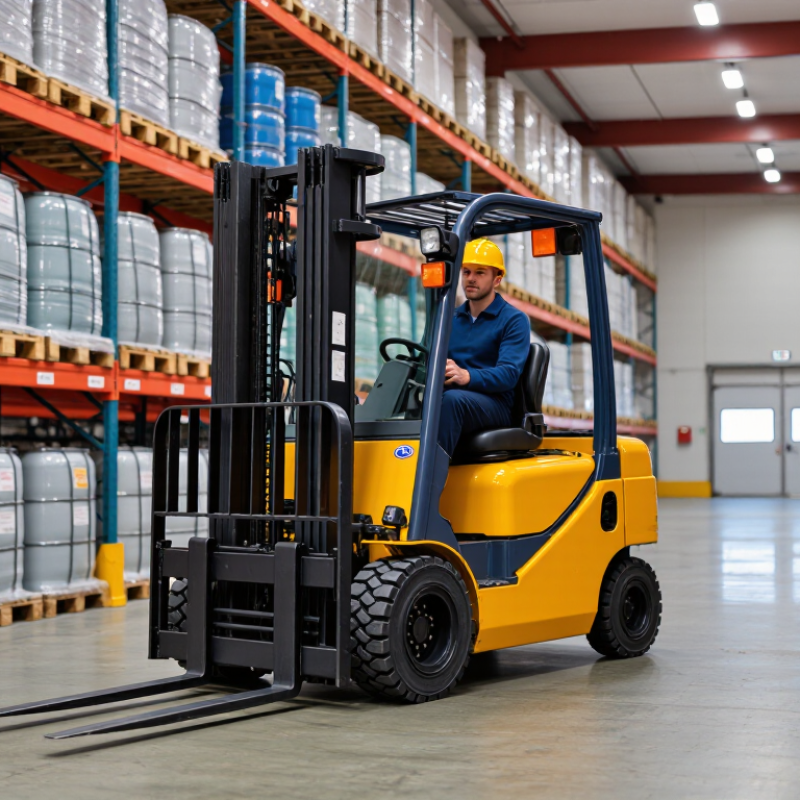
Understanding Hazardous Area Classifications and Certification Requirements
Hazardous-area selection starts with the site’s documented classification, not a forklift’s appearance. Check whether the space presents flammable gas or vapor, combustible dust, or both. In North American systems, areas may use Class and Division designations; other systems use Zones. These terms are not interchangeable. Confirm the exact location, including loading bays and charging areas, because conditions can differ across a facility.
Read the equipment certification and compare it with the area’s group, division or zone, and temperature requirements. The temperature marking matters: a machine’s hot surface must remain suitable for the substances present. Look at the complete rating, not one label alone. Attachments, electrical components, and charging equipment may have separate restrictions. Small details count. A mismatched component can undermine an otherwise suitable truck.
Ask for the certificate documents and verify that they cover the forklift’s actual configuration and intended operating conditions. Check the data plate against the facility’s classification drawings, then have a qualified safety professional resolve any uncertainty. A practical inspection should include the truck, its attachments, and the route it will travel. Paperwork can look clear until site conditions change. Recheck after process changes, and be cautious about relying on a familiar classification from another building.
Matching Forklift Protection Levels to Workplace Risks
Choosing an explosion-proof forklift starts with the hazards present, not the machine’s appearance. Identify whether the workplace contains flammable gases, vapors, or combustible dust, and where those hazards may occur. A loading bay beside a solvent process can have different risks from a dusty storage room. Details matter.
Match the forklift’s certified protection level to the site’s documented hazard assessment. Check that the certification covers the specific atmosphere and operating area; similar-looking labels do not necessarily mean equal protection. Ask a qualified safety professional to verify the classification and equipment documentation. Do not rely on a general “explosion-proof” claim alone. Temperature limits matter, too, because hot surfaces may create risks around certain materials.
Look beyond the power system. Motors, switches, brakes, wiring, alarms, and attachments should all suit the intended environment. Consider how the truck will be used: frequent pallet changes, narrow aisles, or outdoor temperature swings can affect equipment choice and upkeep. A hurried checklist can miss a small but important detail, and reassessment is easy to postpone. That deserves a second look. Review inspection records, charging arrangements, and maintenance procedures with trained staff. If the work area or materials change, revisit the hazard assessment before continuing operations.
Evaluating Capacity, Power Sources, and Operating Conditions
7 Tips for Choosing the Right Explosion-Proof Forklift
Evaluating Capacity, Power Sources, and Operating Conditions
Tip 1: Size for the heaviest load. Check the forklift’s rated capacity at the actual load center and lift height; tall, offset loads can reduce safe capacity. Tip 2: Include attachments. A clamp or extended fork adds weight and changes the truck’s capacity. Tip 3: Allow for real-world variation. Pallets are rarely as uniform as the specification sheet suggests.
Tip 4: Match the power source to the atmosphere. Battery-electric and combustion models have different emissions, heat, and charging needs. Tip 5: Verify the equipment’s protection rating against the specific gas, vapor, or dust hazards identified for the work area. “Explosion-proof” alone is not a complete specification. Tip 6: Consider the shift. Check runtime, charging access, ventilation, and whether cold, damp conditions affect performance.
Tip 7: Assess the route. Measure aisle width, floor gradients, turning space, and door clearances; a capable truck can still be a poor fit. OSHA’s Powered Industrial Trucks eTool cites estimates of about 85 forklift-related deaths and 34,900 serious injuries annually. That figure is a reminder to treat visibility, stability, and operator training as selection criteria—not afterthoughts. Confirm the load chart and equipment documentation before purchase. A hurried choice can miss a detail.
| Tip | Selection factor | What to check | Practical guidance |
|---|---|---|---|
| 1 | Hazardous-area classification | Identify whether the hazard is flammable gas or vapor, combustible dust, or both. Confirm the area zone or class, gas or dust group, and required equipment protection level. | Use the site’s formal hazardous-area assessment. The truck’s certification must match the location; “explosion proof” alone does not establish suitability. |
| 2 | Required capacity and load center | Record the heaviest load, its dimensions, the horizontal load center, and any attachment weight. Check the capacity plate for the exact mast, attachment, and lift configuration. | Attachments and loads with a longer load center can reduce rated capacity. Do not select a truck based only on its headline capacity rating. |
| 3 | Power source and charging or refueling | Compare electric and internal-combustion options against the certified configuration, duty cycle, ventilation, runtime, and available charging or refueling locations. | An electric truck is not automatically suitable for a hazardous area. Batteries and charging equipment must meet site requirements; charging or battery changes may need to occur in a designated safe area. |
| 4 | Operating environment | Assess indoor or outdoor use, ventilation, temperature, moisture, corrosive substances, dust deposits, floor condition, gradients, and traffic routes. | Confirm that the truck’s permitted ambient temperature range and protective features suit the actual site conditions, including the presence of conductive or combustible dust. |
| 5 | Lift height, mast, and clearance | Measure the highest storage position, doorway and aisle clearances, overhead obstructions, and the required free lift. | Verify overall mast height when lowered and the truck’s capacity at the required lift height. A mast or attachment change may affect the capacity rating. |
| 6 | Certification and equipment configuration | Review the applicable certification documents, equipment markings, permitted zone or area, substance group, temperature limits, and any restrictions on accessories or modifications. | Check the complete truck configuration, not just its base model. Unapproved modifications or attachments can invalidate the approval or create ignition risks. |
| 7 | Maintenance, inspection, and operator readiness | Plan inspections and servicing by personnel qualified for the certified equipment. Confirm operator training, pre-use checks, and procedures for damage or faults. | Follow the manufacturer’s instructions and site rules. Remove a truck from hazardous-area service if protective components are damaged, missing, or outside their approved condition. |
Checking Safety Features, Ergonomics, and Maintenance Needs
For an explosion-proof forklift, match its documented protection rating to the site’s hazardous-area classification and operating conditions. Ask a qualified safety professional to review the nameplate, certificate, and permitted attachments. Improper modifications can compromise protection. Inspect the brakes, emergency shutoff, warning lights, and protective enclosures; check that inspection records are current. Small details matter.
Ergonomics affect safe work throughout a shift. Sit in the cab and test visibility around the mast, mirror placement, seat adjustment, pedal reach, and control effort. Have an operator handle a typical load in the actual aisles. Floor joints and tight turns may reveal blind spots. If gloves or hearing protection are routine, confirm controls remain easy to identify and use. A short trial helps, though one operator’s comfort may not represent everyone.
Ask how often electrical components, seals, tires, brakes, and safety devices need inspection, and who is qualified to service them. Request a sample maintenance log. Confirm replacement parts and trained technicians are realistically available. Dust, moisture, and washdown routines can change service needs. I’d be cautious about assuming the lowest maintenance estimate will suit a busy site; local conditions often tell a less tidy story.
7 Tips for Choosing the Right Explosion-Proof Forklift
Check safety features, ergonomics, and maintenance needs against the hazards and tasks at your site.
How to read the chart: It shows the minimum ATEX equipment category associated with each zone. Category 1 provides the highest protection; these category numbers are labels, not a performance score. Confirm the applicable regulations and the exact certification for the complete truck and its intended environment.
- Identify the hazardous zone and whether the hazard is gas, vapour, or dust.
- Match the truck’s certification and equipment category to the zone.
- Check the substance group and temperature-class requirements for the site.
- Verify rated capacity, load centre, lift height, and any capacity changes from attachments.
- Assess visibility, controls, seating, and access for the operators and work area.
- Review required inspections, maintenance procedures, and availability of qualified service.
- Confirm operator training and site procedures for charging, refuelling, and use.
Comparing Suppliers, Documentation, and Ongoing Support
Compare suppliers by evidence, not brochure claims. Ask for the forklift’s hazardous-location rating, equipment markings, and the exact conditions covered by its certification. Check that the documents match the truck, battery, charger, and attachments you plan to use. Small mismatches matter. For U.S. workplaces, OSHA’s Powered Industrial Trucks standard addresses truck suitability for hazardous locations. OSHA-cited estimates also put forklift incidents at about 85 worker deaths and 34,900 serious injuries each year. Those figures cover forklifts broadly, not explosion-proof models, but they underline why verification and operator training deserve attention.
Request a document pack before purchase: third-party certification, operating limits, maintenance intervals, wiring diagrams, and service records. Then compare how quickly each supplier can provide replacement parts, technician support, and updated manuals. Ask who checks the truck after a repair, and how changes to attachments affect its approved configuration. A clear answer is useful. A vague promise is not. Ongoing support should include practical details, such as response times and technician qualifications, not just a general service pledge. During a site walk-through, note narrow aisles, washdown routines, and charging locations; these can expose needs missing from a sales checklist. One detail is easy to overlook: even a complete file can be hard to use during a shift. Ask operators to locate key instructions themselves, then revise the handover if they struggle.
Contact us
Please fill out the enquiry form, and our dedicated team will promptly attend to your request