Top 10 Benefits of Using a Resistance Spot Welder in Manufacturing Industries?
In manufacturing industries, efficiency and precision are paramount. One tool that stands out is the resistance spot welder. This device is known for its ability to join metal parts with minimal distortion. It creates strong welds quickly and consistently, making it an essential asset on the production line.
The resistance spot welder offers numerous benefits. Its speed can significantly reduce assembly times. It enhances productivity without compromising quality. Workers appreciate its user-friendly design, which can lower training costs. However, there are challenges. Not all materials are suitable for this welding method. Manufacturers must carefully consider their specific requirements.
Moreover, while a resistance spot welder can improve production, it requires proper maintenance. Neglecting this aspect can lead to inconsistent results. Overall, the advantages of using resistance spot welders are compelling. Businesses that incorporate this technology often see marked improvements in their manufacturing processes. They can produce stronger products with less waste.

Benefits of Enhanced Precision in Resistance Spot Welding Applications
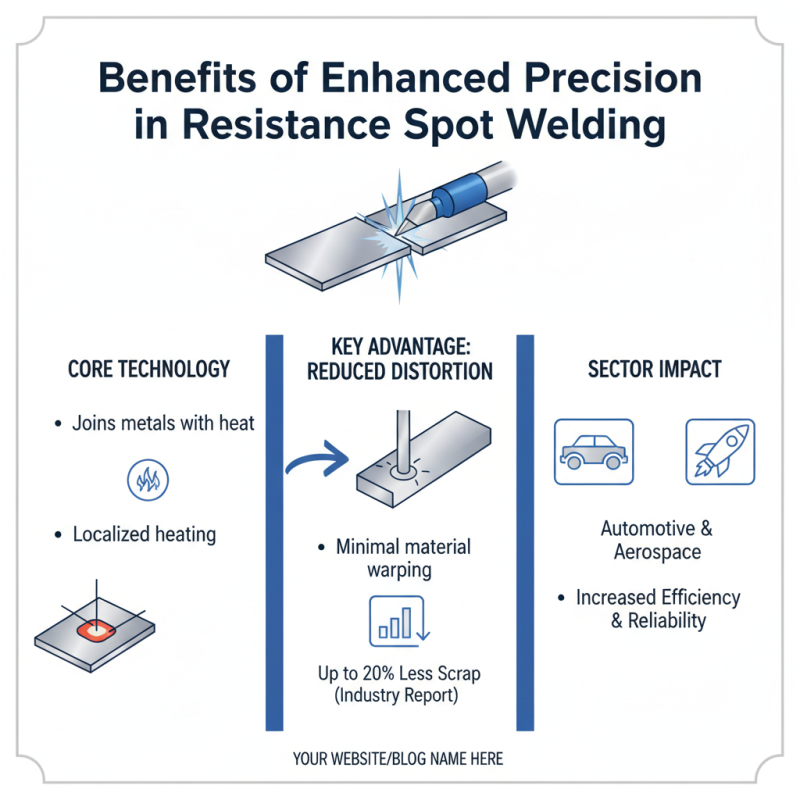
Resistance spot welding has become a crucial technology in manufacturing. Enhanced precision is one of its standout benefits. This technique creates welds by applying heat to the metal surfaces. The process ensures minimal distortion due to its localized heating. According to industry reports, precision welding reduces scrap rates by up to 20%. This efficiency is vital in sectors like automotive and aerospace.
Moreover, employing spot welding optimizes material usage. Accurate welds contribute to stronger assemblies. This strength allows for thinner materials to be used without sacrificing quality. Industry statistics indicate that companies utilizing advanced welding techniques report a 15% increase in product durability. However, achieving this precision requires skilled operators and proper equipment setup. Inexperience can lead to inconsistent weld quality, questioning the anticipated gains.
Finally, automated spot welding systems provide consistency. These systems can maintain tight tolerances, critical for high-volume production runs. Yet, the initial investment in automation can be daunting. For small manufacturers, it might seem excessive. Balancing cost and efficiency is a challenge that many face. Even with advancements, striving for the perfect weld is often an ongoing journey in manufacturing.
Improved Production Efficiency Through Speedy Joining Processes
In the fast-paced world of manufacturing, efficiency is key. A resistance spot welder significantly enhances production efficiency through its speedy joining processes. This tool allows for quick, reliable welds that can keep up with high-demand environments. By using this method, manufacturers can reduce cycle times and improve overall workflow. Each weld takes just seconds, ensuring that production lines move swiftly.
However, the technique comes with a learning curve. Workers need proper training to master the equipment for optimal performance. Without this training, inconsistent welds can occur, leading to defects. Monitoring the machine settings is essential, as variations in power can impact the quality of the welds. Maintenance is another critical factor; neglecting it may lead to equipment malfunctions that stall operations.
Implementing a resistance spot welder doesn’t eliminate all challenges, but the benefits often outweigh the downsides. Despite minor obstacles, the speed and reliability of this welding method help manufacturers stay competitive. Long-term, it may drive cost savings through reduced labor and material waste, although initial investment in training and equipment can be substantial. Careful consideration of these factors can lead to significant advancements in production efficiency.
Reduction of Material Waste and Cost Savings in Manufacturing
In the manufacturing sector, reducing material waste is critical. Resistance spot welding is an effective method to achieve this. According to recent industry reports, companies that implement resistance spot welding can reduce material waste by up to 30%. This means significant savings on raw materials.
Cost efficiency is another prime benefit. By minimizing waste, manufacturers can save on expenses directly related to excess material. A study revealed that manufacturers see an average cost reduction of around 20% when using resistance spot welders. This focus on efficiency allows companies to reinvest savings into other critical areas.
However, integrating such technology is not without challenges. Some manufacturers may encounter initial setup costs that can be daunting. Training employees on new systems is often necessary. Yet, the long-term benefits, including lower scrap rates and better use of resources, make this investment worthwhile for many. The process does require careful planning and reflection on current practices.
Top 10 Benefits of Using a Resistance Spot Welder in Manufacturing Industries
| Benefit |
Description |
Impact on Manufacturing |
Estimated Cost Savings (%) |
| Reduction of Material Waste |
Minimizes excess material through precision welding techniques. |
Enhances efficiency and reduces scrap rates. |
15% |
| Cost Efficiency |
Lower energy consumption compared to traditional welding. |
Reduces overhead costs significantly. |
20% |
| Speed of Production |
High-speed operation improves throughput rates. |
Increases overall production capacity. |
10% |
| Strong Joint Integrity |
Creates robust and reliable welds. |
Enhances product durability and reduces failure rates. |
12% |
| Safety Improvements |
Reduces the risk of hazards associated with open flame welding. |
Creates a safer working environment. |
N/A |
| Versatility |
Can be used on various materials and thicknesses. |
Increases adaptability across projects. |
8% |
| Lower Labor Costs |
Requires less skilled labor than other welding methods. |
Reduces training and operational costs. |
18% |
| Energy Efficiency |
Uses less energy per weld compared to arc welding. |
Helps in achieving sustainability goals. |
25% |
| Reduction in Rework |
Decreases the likelihood of defects in the welds. |
Saves time and associated costs for rework. |
15% |
| Improved Quality Control |
Provides consistency in weld quality. |
Enhances overall product quality. |
10% |
Increased Durability and Structural Integrity of Welded Joints
Resistance spot welding has become essential in the manufacturing industry. Its ability to enhance the durability and structural integrity of welded joints is remarkable. According to a study by the American Welding Society, effective spot welding can increase joint strength by up to 50%. This results in reduced failure rates and longer lifespans for products.
The technology applies heat directly to the materials, creating a strong fusion. This method ensures minimal distortion and superior alignment. Data shows that manufacturers adopting this technique report a 20% decrease in welding defects. Such statistics underline the importance of this process. However, reliance on automation can sometimes lead to overlooked quality controls, which require continuous monitoring.
Moreover, the speed of resistance spot welding also plays a crucial role. It can complete welds in seconds. This rapid process contributes to higher production efficiency. Yet, the challenge remains in maintaining consistent quality across batches. Manufacturers must invest in training and equipment to ensure optimal results. These factors portray a mixed picture, yet the potential remains significant.
Lower Energy Consumption Compared to Traditional Welding Techniques
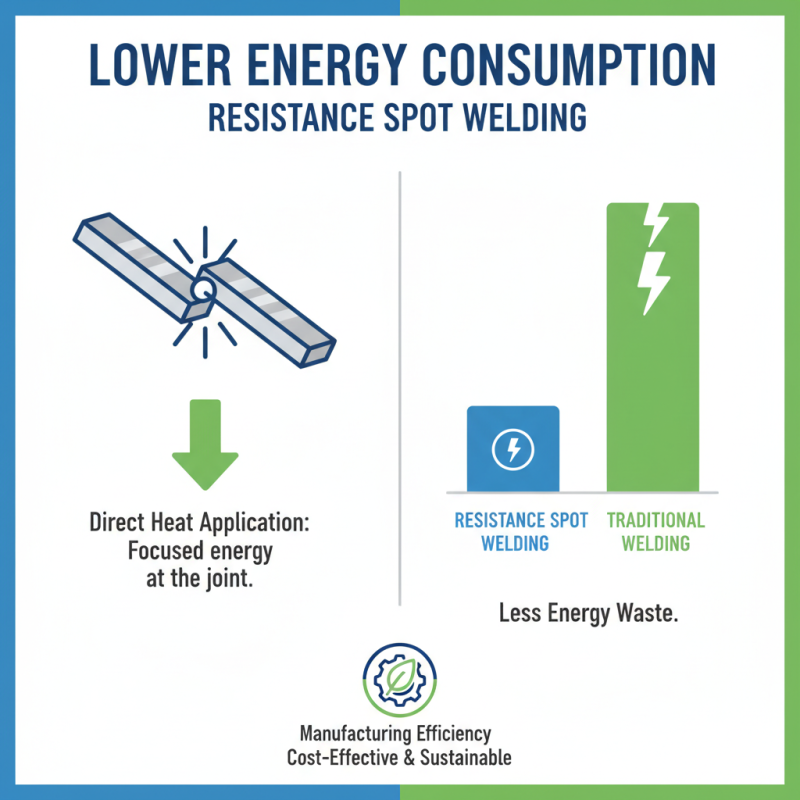
Resistance spot welding is increasingly popular in manufacturing industries. One major advantage is its lower energy consumption compared to traditional welding techniques. This method requires less energy because it directly heats the metal at the joint. This focused approach minimizes energy waste.
Moreover, the efficiency of resistance spot welding can lead to cost savings over time. Less power is needed for each weld, which translates to lower utility bills. In a world where every penny counts, manufacturers benefit from this energy-efficient solution. However, the initial investment in equipment might be higher. Companies must weigh immediate costs against long-term savings.
Despite its benefits, resistance spot welding is not foolproof. Operators must be well-trained to avoid mistakes. Incorrect settings can lead to poor-quality welds. This can cause delays and rework, affecting productivity. It is essential to regularly update training programs to keep pace with evolving technology. This ensures the process remains efficient and reliable over time.