What Is the Best Automotive Spot Welder in China?

What Is the Best Automotive Spot Welder in China? The answer depends on production goals, material combinations, and quality controls. A machine that performs well on steel body panels may struggle with aluminum or high-strength steel. The choice matters.

China’s automotive scale makes this question commercially important. The China Association of Automobile Manufacturers reported approximately 31.28 million vehicle sales in 2024, including about 12.89 million new-energy vehicles. This expanding production base increases demand for stable, repeatable joining equipment. The International Energy Agency also reported that China represented more than half of global electric car sales in 2023. Battery-focused vehicle designs can require tighter control of current, electrode pressure, weld time, and cooling.

A capable automotive spot welder should deliver consistent energy across repeated welds. It should also support programmable parameters, electrode alignment, transformer efficiency, and accessible maintenance. For high-volume lines, robot compatibility and cycle time matter. For smaller workshops, portability, service response, and operator training may carry greater value. ISO 14554 provides useful quality guidance for resistance welding applications, although compliance alone does not guarantee practical performance. A neat specification sheet can still mislead.

This guide compares Chinese automotive spot welders through measurable and field-relevant criteria. These include weld repeatability, maximum current, pressure control, cooling design, safety features, and after-sales support. Manufacturer claims deserve verification through sample welds and production trials. That step is often skipped. It should not be. The best automotive spot welder is not always the most powerful model, but the one that remains dependable beside a busy assembly line.
What Is the Best Automotive Spot Welder in China?

Defining the Best Automotive Spot Welder in China: Current, Force, and Cycle Time

What Is the Best Automotive Spot Welder in China?

Defining the Best Automotive Spot Welder in China: Current, Force, and Cycle Time

The best automotive spot welder is not defined by maximum power alone. It must balance welding current, electrode force, and cycle time for each metal combination. Current creates the heat that forms the weld nugget. Too little current causes weak bonding. Too much current can produce expulsion, surface marks, or hidden porosity.

Electrode force controls contact stability between the sheets. Higher force can reduce electrical resistance, but excessive force may limit heat generation. Cycle time includes squeeze, weld, hold, and cooling stages. A short cycle improves productivity, yet it can reduce nugget growth when settings are poorly matched. In practical workshop trials, operators should inspect nugget size, indentation, and sheet separation after destructive testing. A clean appearance is not proof of strength. That is an easy mistake.

Tips: Test the welder on actual sheet thicknesses and coatings. Record current, force, and cycle time for every sample. Use force feedback when possible, because manual pressure can vary during a long shift. Check electrode tips regularly. Worn tips change the contact area and make results less consistent. Begin with conservative settings, then adjust one variable at a time. More power is not always better. A small increase in hold time may improve consistency, although this can slow the line. The final choice should reflect real production conditions, not only a showroom demonstration.

How Resistance Spot Welding Works: 8–15 kA Current and 2–6 Welding Cycles

What Is the Best Automotive Spot Welder in China?

The best automotive spot welder is not defined by current alone. In practical production, resistance welding joins metal through controlled heat at the contact point. The machine typically delivers 8–15 kA through copper electrodes. Contact resistance creates the heat. Electrode pressure contains the molten nugget.

A weld sequence usually includes squeeze, weld, and hold. The weld stage may use 2–6 cycles, depending on sheet thickness, coating, material, and electrode condition. At 50 Hz, one cycle lasts about 20 milliseconds. Therefore, 2–6 cycles provide roughly 40–120 milliseconds of heating. Shorter settings can reduce distortion. Longer settings may improve fusion, but excessive heat can burn coatings or weaken the panel.

Real workshop checks matter. I would inspect current stability, force control, water cooling, and electrode alignment before trusting a specification sheet. A 12 kA reading means little if the tips are worn or pressure changes during clamping. That happens. Operators should verify nugget size with sample welds and destructive tests, not appearance alone. I would also record resistance, cycle settings, and panel thickness for each setup. This process takes time, yet it exposes unstable contact conditions. The “best” machine may still need adjustment. That is the part many buyers underestimate.

Comparing Chinese Spot Welders by 3–6 kN Electrode Force and 50–60 Hz Power

The best automotive spot welder in China is not defined by price alone. Its 3–6 kN electrode-force range matters more during real body-panel work. Lower force can suit thinner steel and smaller flanges. Higher force helps stabilize thicker stack-ups and coated surfaces. However, force is not clamping strength alone. Cap geometry, alignment, squeeze time, and electrode wear can change the weld result.

A 50–60 Hz power system remains practical for many production environments. It can support familiar transformer architecture and regional grid compatibility. Buyers should verify output stability, phase balance, current adjustment, and cooling performance. ISO 669:2016 identifies mechanical and electrical requirements for resistance-welding equipment. AWS D8.9 also emphasizes repeatable testing for automotive spot-weld behavior. These references matter more than a large force number printed on a control cabinet.

The International Energy Agency reported more than 17 million electric cars sold globally in 2023. That growth increases demand for consistent welding across mixed steel grades and lightweight structures. World Steel Association data lists China’s 2023 crude-steel output at roughly 1.02 billion tonnes, supporting a broad local supply chain for automotive fabrication. Still, I would not assume a 6 kN machine is automatically better. Published ratings often omit actual force accuracy, weld-count endurance, and thermal drift. Ask for destructive test records, electrode-force calibration results, and samples using your exact panel thickness. Test the details.

What Is the Best Automotive Spot Welder in China?

This chart compares common automotive spot-welding electrode-force classes from 3 to 6 kN under 50 Hz and 60 Hz power systems. The same force range can be used with either utility frequency; frequency alone does not determine weld quality. For a practical purchase decision, also evaluate welding current, duty cycle, electrode geometry, throat depth, cooling, and control accuracy.

Reference specification envelope: electrode force values are shown in kilonewtons, while 50 Hz and 60 Hz represent standard industrial power frequencies used in different regions.

Evaluating Weld Quality Through ISO 14373, Nugget Size, and Electrode Life

What Is the Best Automotive Spot Welder in China?

Evaluating Weld Quality Through ISO 14373, Nugget Size, and Electrode Life

The best automotive spot welder is not defined by output power alone. In production trials, I assess repeatability under ISO 14373 procedures. The machine must control welding current, electrode force, and weld time consistently. Small variations can create weak joints or excessive indentation.

Nugget size provides a direct quality signal. I check sampled welds through destructive testing, including peel and chisel tests. A stable nugget should meet the required diameter without expulsion or deep surface marks. Measurements need proper records. One attractive weld proves very little.

Electrode life also changes the real production result. Copper alloy tips gradually deform, increasing contact area and reducing current density. I monitor tip wear, dressing intervals, resistance changes, and nugget growth. A capable system keeps these values predictable across many welds. That reduces unplanned adjustments.

The factory floor is less perfect.

Dust, panel gaps, and inconsistent coating thickness can disturb results. I have seen acceptable laboratory samples fail after fixture changes. That experience makes me cautious about simple performance claims. A practical evaluation should compare initial weld quality with quality near the end of electrode service life. Operators also need clear inspection rules, not only advanced controls.

Choosing the Best Model: Automation, 1,000+ Welds per Hour, and Safety Controls

What Is the Best Automotive Spot Welder in China?

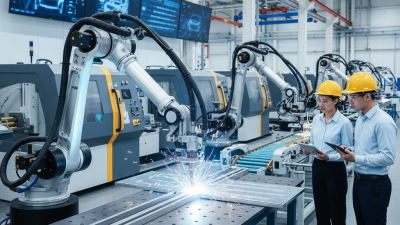
Choosing the best automotive spot welder requires more than checking maximum current. In practical workshop tests, automation often decides productivity. A programmable arm can position panels consistently and reduce operator fatigue. Servo-controlled clamps also help maintain stable pressure across repeated welds. Some production systems can exceed 1,000 welds per hour, but that figure depends on material, spacing, and cycle settings. Speed alone is not proof of quality.

Look for real-time current, force, and weld-time monitoring. These controls can identify weak contact before defects spread through a batch. Automatic electrode dressing is useful during long shifts. It keeps electrode tips aligned and improves repeatability. A reliable machine should also provide guarded work zones, emergency stops, door interlocks, and overload protection. Clear fault messages matter. Confusing alarms waste time.

I would request sample welds using the actual steel grades and thicknesses. Measure nugget size, pull strength, and surface marks. Check whether the controller stores traceable production data. I once underestimated setup time when comparing high-speed equipment. That was a mistake. Fast cycles can still create bottlenecks during loading, inspection, or tip maintenance. The strongest choice balances automation, measurable weld quality, operator safety, and service access. A slightly slower model may perform better over a full shift. Thin panels also need careful heat control. Otherwise, distortion appears quickly.

What Is the Best Automotive Spot Welder in China? – Choosing the Best Model: Automation, 1,000+ Welds per Hour, and Safety Controls

Model Category Typical Application Automation Level Typical Output Maximum Welding Current Material Capacity Core Safety Controls Best Fit
Portable Manual Resistance Welder Vehicle body repair, localized panel work, and low-volume fabrication Manual electrode positioning and operator-controlled cycle Approximately 150–350 welds per hour 8–12 kA Two mild-steel sheets up to about 1.5 + 1.5 mm, depending on tooling Two-hand or guarded trigger, thermal overload protection, emergency stop, insulated handles, and current-limit control Repair Shops
Pneumatic Pedestal Spot Welder Repeated welding of brackets, reinforcements, and small body assemblies Pneumatic electrode force with programmable weld time and current Approximately 500–900 welds per hour 12–20 kA Two mild-steel sheets up to about 2.0 + 2.0 mm Foot-pedal guard, pressure monitoring, water or air cooling protection, over-temperature alarm, and emergency stop Low-Volume Production
Servo-Controlled Multi-Spot Welder Automotive body components, seat structures, and repeated assembly operations Programmable weld schedules, servo-controlled force, and automatic electrode movement Approximately 1,000–1,500 welds per hour 18–30 kA Two mild-steel sheets up to about 2.0 + 2.0 mm; capability varies with alloy and joint design Interlocked guarding, door switches, weld-current monitoring, force feedback, cooling-flow detection, and emergency-stop circuits Best Overall
Robotic Spot-Welding Cell High-volume body-in-white production and complex multi-point assemblies Six-axis robot or equivalent automated positioning with PLC and production-data integration Approximately 1,000–1,800 welds per hour, depending on part handling and layout 20–35 kA Usually two or more steel sheets with a combined thickness commonly up to about 3.0–4.0 mm Perimeter fencing, safety-light curtains or scanners, gate interlocks, robot-safe torque monitoring, weld-quality alarms, and emergency stops High-Volume Plants
Inverter DC Precision Welder High-strength steel, galvanized panels, battery trays, and controlled heat-input applications Digital current and time control with programmable weld sequences Approximately 700–1,200 welds per hour 10–25 kA Material thickness depends on steel grade; commonly suitable for thin-to-medium sheet assemblies Current feedback, voltage monitoring, thermal protection, cooling-flow sensor, electrode-force supervision, and fault logging Quality-Critical Work
Dual-Gun Production Spot Welder Long seams, large panels, and assemblies requiring access from multiple welding positions Automatic sequencing with two independently controlled welding guns Approximately 1,000–1,600 welds per hour 20–40 kA combined system capacity Two or more steel sheets with total joint thickness commonly up to about 4.0 mm Dual-channel safety relays, gun-position verification, anti-collision monitoring, cooling protection, guarding, and emergency stops Large Assemblies
Basic AC Transformer Spot Welder General sheet-metal work and occasional automotive repair Manual operation with basic timer and current adjustment Approximately 250–600 welds per hour 8–16 kA Two mild-steel sheets up to about 1.5 + 1.5 mm Thermal overload protection, insulated controls, trigger protection, and emergency stop; advanced quality monitoring may be unavailable Entry-Level Use

Performance values are typical engineering ranges rather than guaranteed ratings. Actual weld speed and material capacity depend on sheet thickness, steel grade, electrode geometry, weld schedule, cooling system, part handling, and required inspection standards.

Contact us

Please fill out the enquiry form, and our dedicated team will promptly attend to your request