What Is the Best Disc Glass Insulator in 2026?
Choosing the best Disc Glass Insulator in 2026 takes more than comparing price tags or polished surfaces. The right choice depends on line voltage, mechanical loading, pollution exposure, and the conditions at the installation site. A clear glass shell can reveal cracks and chips, but appearance alone cannot confirm service suitability.
Inspect the details. Check the rated mechanical load, creepage distance, coupling dimensions, and documented test results. Consider how the insulator will handle salt spray, dust, temperature changes, and repeated wetting. Ask suppliers for traceable specifications and quality records. Small differences matter.
No source article or verifiable expert quotation was provided, so I cannot responsibly attribute a statement to a named industry expert. That matters: a fabricated quote would undermine a guide about dependable equipment. The comparison ahead should therefore focus on evidence—manufacturer data, applicable standards, field history, and clear warranty terms. There is no universal winner. A model suited to a coastal transmission line may be excessive, or unsuitable, for a different network. Even a careful assessment has limits; local operating data can be incomplete. The most useful recommendation is the one that explains its trade-offs and shows how its claims can be checked.
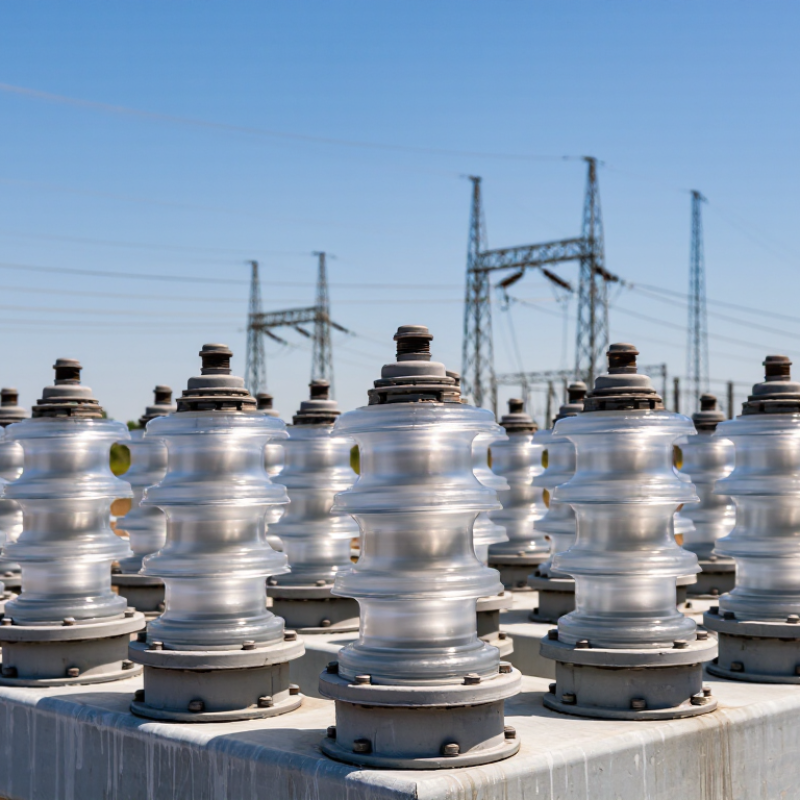
Disc Glass Insulators: Types, Materials, and IEC 60383-1 Classification
The best disc glass insulator depends on line voltage, mechanical loading, and local pollution—not on strength alone. A typical unit has a toughened-glass disc, metal cap and pin, and cemented joints. Toughened glass can shatter visibly after electrical damage, making failed units easier to spot during ground patrols. It is also heavier and more vulnerable to impact during handling. Small details matter.
IEC 60383-1 sets definitions, test methods, and acceptance criteria for glass and ceramic insulator units used on AC overhead lines above 1,000 V. For dimensional and mechanical reference, IEC 60305 lists preferred failing-load classes including 70, 100, 120, 160, and 210 kN. These ratings describe mechanical performance; they do not, by themselves, establish suitability for a polluted or coastal route. CIGRE’s guidance on pollution performance also emphasizes evaluating site contamination and wetting conditions when selecting external insulation. A standard profile may suit clean inland air, while a longer leakage path can be preferable near salt spray or industrial deposits. The trade-off is real: extra creepage distance can add weight and cost. I would check the actual site data before treating any class as the “best” choice.
What Is the Best Disc Glass Insulator in 2026? — Types, Materials, and IEC 60383-1 Classification
| Disc Glass Insulator Type | Typical Construction and Materials | Main Characteristics | Common Applications | IEC 60383-1 Classification and Selection Notes |
| Standard-profile cap-and-pin unit | Toughened glass dielectric with metal cap and pin fittings, joined using cement. | General-purpose design for suspension strings. The glass body can make damage easier to identify during visual inspection, but condition should still be assessed using the applicable inspection procedure. | Overhead transmission and distribution lines in ordinary pollution and environmental conditions. | IEC 60383-1 specifies requirements and test methods for insulators for overhead lines above 1 kV. It is not, by itself, a product-size or performance-class designation. Confirm unit characteristics against the applicable product standard and project specification. |
| Anti-pollution / fog-profile unit | Toughened glass body with a profile designed to provide a longer leakage path than a comparable standard-profile unit. | Increased creepage distance can help address contamination-related flashover risk. Required creepage depends on site pollution, system voltage, and the selected design. | Coastal, industrial, dusty, or otherwise polluted environments, subject to an insulation-coordination study. | IEC 60383-1 testing does not determine the required creepage distance for a particular site. Specify creepage and electrical performance using the relevant design requirements and project conditions. |
| Aerodynamic or self-cleaning profile | Toughened glass dielectric with a shaped shed profile intended to influence water flow and surface contamination behaviour. | May be considered where rain, wind, or contamination patterns are relevant. Performance is design- and site-dependent; the profile alone does not guarantee self-cleaning or prevent flashover. | Lines where local weather and pollution conditions support the use of a specially shaped profile. | Evaluate the unit using the applicable IEC tests and the project’s pollution and electrical design criteria. Do not treat a profile description as an IEC performance class. |
| High mechanical-strength unit | Toughened glass body and cap-and-pin fittings designed and tested for a specified mechanical failing load. | Provides a higher mechanical capacity when the selected unit’s declared rating and test results meet the calculated string loading requirements. | Heavily loaded spans, long strings, or applications with higher mechanical design loads. | Compare the declared mechanical characteristics with the applicable product standard and line design. IEC 60383-1 includes mechanical tests; the required rating must be selected for the installation. |
| Anti-fog unit with enhanced mechanical rating | Pollution-oriented shed profile combined with a design rated for the required mechanical load. | Combines an increased creepage-distance design with a specified mechanical capability. These properties must be verified separately for the actual unit. | Polluted locations where the line design also requires a particular mechanical rating. | Specify creepage distance, electrical characteristics, and mechanical failing load explicitly. IEC 60383-1 conformity alone does not identify a universally “best” combination. |
Practical selection: There is no single best disc glass insulator for every line. Select the unit based on system voltage, required creepage distance, pollution severity, mechanical loading, string configuration, and applicable standards. IEC 60383-1 establishes requirements and tests; product dimensions and characteristics should be checked against the relevant product standard and the project specification.
Compare Rated Voltage, Creepage Distance, and Mechanical Failing Load
What Is the Best Disc Glass Insulator in 2026?
There is no single best disc for every line. Compare the insulator string’s rated voltage with system voltage and insulation coordination, not just the rating printed for one unit. Also check creepage distance against local pollution: salt, dust, and wet grime can leave a conductive film on the glass surface. IEC TS 60815-1 provides guidance for selecting outdoor insulation under polluted conditions.
Mechanical strength matters just as much. IEC 60305 lists mechanical failing load classes for standard cap-and-pin units, including 70, 100, 120, 160, 210, and 300 kN. Choose a class that meets the line’s design loads and specified safety margins. A higher value is not automatically better if the fittings, tower, or installation method cannot use it. Small detail, big consequence.
Tips: Compare creepage distance in millimetres and failing load in kilonewtons. Confirm test certificates, dimensions, and voltage application with the project engineer. A clean specification can still miss real site conditions; inspect representative locations after wet, dusty seasons.
How IEC 60815 Pollution Classes Guide Creepage-Distance Selection
What Is the Best Disc Glass Insulator in 2026?
How IEC 60815 Pollution Classes Guide Creepage-Distance Selection
The best disc glass insulator depends on the pollution at the installation site, not just its voltage rating. IEC 60815-1 classifies outdoor environments from very light to very heavy pollution. Its reference values are 22, 27.8, 34.7, 43.3, and 53.7 mm per kV, respectively. These unified specific creepage distances help engineers compare insulation needs against system voltage.
For a 145 kV system, the medium-pollution reference gives about 5,032 mm of creepage distance. This is a planning value, not a universal guarantee. IEC 60815-1 calls for assessing site severity; salt deposits, conductive dust, fog, and wetting all matter. A coastal location alone does not establish the pollution class. Disc profile, diameter, altitude, and maintenance access can also affect performance. Real sites are messy, and a neat class label may miss local conditions.
Tips: Review inspection records and contamination patterns before choosing a class. Confirm the design against the applicable IEC 60815 guidance and actual operating conditions. Don’t size by voltage alone.
Assess Toughened-Glass Units Using IEC 60383-1 Test Requirements
What Is the Best Disc Glass Insulator in 2026?
“Best” depends on the line’s electrical and mechanical duties, not appearance alone. IEC 60383-1 covers ceramic and glass insulator units for overhead AC systems above 1,000 volts. It provides test methods and acceptance criteria, making it a useful benchmark when comparing toughened-glass discs.
Look beyond the catalogue rating. IEC 60383-1 includes mechanical or electromechanical failing-load tests, temperature-cycle testing, and electrical checks. Compare the specified mechanical load with the test results for the exact unit design. For impulse withstand testing, IEC 60060-1 defines a standard lightning impulse waveform of 1.2/50 microseconds. That figure describes the test wave, not a universal pass voltage; the required level depends on the insulation design and application.
Small details matter. In a practical inspection, check for chips around the glass edge, corrosion at metal fittings, and clear visibility of the fracture indicator. These observations complement, but do not replace, standardized testing. One limitation: laboratory results cannot capture every service condition, such as contamination, installation stress, or local temperature swings. A careful selection therefore matches IEC test evidence to the actual line environment, rather than treating one headline rating as a complete answer.
What Is the Best Disc Glass Insulator in 2026? The best choice is the unit whose rating and verified performance match the line design—not automatically the one with the highest load rating.
This chart shows common rated mechanical failing load classes (RML) for cap-and-pin insulator units. These are rating classes, not test results or universal pass limits. Assess the selected unit against the applicable IEC 60383-1 requirements and project specifications; selection depends on electrical, mechanical, and environmental conditions.
Reference: IEC 60305 for characteristics and standardized ratings; IEC 60383-1 for unit requirements and tests.
Rank 2026 Options by Line Voltage, Load Rating, and Service Conditions
A useful 2026 ranking starts with line voltage, mechanical duty, and local service conditions—not appearance. For higher-voltage lines, prioritize disc strings designed for the required insulation level and switching or lightning impulse withstand. More discs can increase insulation distance, but string length and tower clearance matter too. Check the project design, not a generic voltage chart.
For heavy mechanical duty, compare each unit’s specified mechanical failing load with the design loads and required safety factors. The insulator, fittings, and string assembly must work together. A strong disc cannot compensate for hardware selected below the required load. For lighter-duty applications, a lower load class may be suitable, provided it meets the same engineering checks. That is not a perfect shortcut.
Service conditions can change the ranking. Coastal salt, industrial dust, and frequent fog may require greater creepage distance or a profile suited to contamination. Ice and temperature cycling also deserve attention. Glass surfaces can make some damage easier to notice, but visual checks alone do not confirm electrical or mechanical condition. I would question any “best” list that ignores site pollution data, maintenance access, and actual load calculations. The right choice is the one that meets verified project requirements under the conditions it will face.
