What Are the Best Power Generators Made in China?

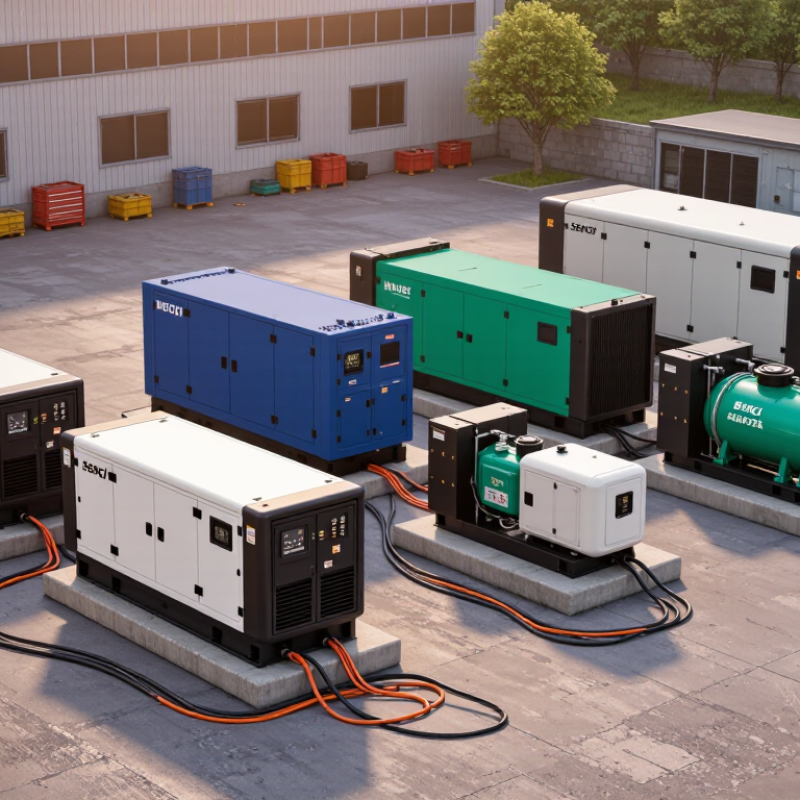
Choosing the best Power Generators made in China requires more than comparing prices or advertised wattage. A reliable evaluation examines engine quality, alternator design, fuel efficiency, noise control, service support, and documented safety testing. Brand reputation matters, but it should never replace evidence.

Nikola Tesla, an influential electrical engineer, once said, “The present is theirs; the future, for which I really worked, is mine.” His words remain relevant when assessing Chinese generator manufacturers. Companies such as Senci, Weichai, Yuchai, and Baifa continue investing in cleaner engines, digital controls, and smarter monitoring systems. Some models perform impressively in construction sites, farms, hospitals, and backup applications. Others look excellent on paper but disappoint after long operating hours.

That is the difficult part.

A practical buyer should inspect load stability, cold-start performance, enclosure strength, and spare-parts availability. A generator may produce impressive peak power but struggle under continuous demand. Certification documents should be checked carefully. Local service technicians also deserve attention, especially when downtime affects business operations.

This guide does not treat every Chinese manufacturer as equal. It compares real-world strengths, weaknesses, operating costs, and application suitability. The ranking may not satisfy every buyer. That is intentional. Generator selection depends on climate, workload, budget, and maintenance discipline. The best Power Generators are not always the cheapest units. They are the machines that deliver dependable power when conditions become uncomfortable, noisy, wet, or unexpectedly demanding.
What Are the Best Power Generators Made in China?

How Chinese Power Generators Are Classified by ISO 8528 Ratings

What Are the Best Power Generators Made in China?

Chinese power generators are best compared through ISO 8528 ratings, not country of origin. ISO 8528-1:2018 defines four important categories. COP supports constant loads for continuous operation. PRP allows changing loads and extended annual use. LTP covers limited running periods, often up to 500 hours yearly. ESP supplies emergency power during utility failure, usually with restricted annual hours.

The rating changes the buying decision. A factory running every day may need PRP or COP. A hospital backup system usually requires ESP, with automatic transfer equipment and regular load testing. The International Energy Agency’s Electricity 2024 report forecasts global electricity demand to rise by about 3.4% annually through 2026. That pressure increases the value of correctly sized backup systems. However, a higher kVA label does not guarantee better performance. Fuel use, voltage stability, cooling design, noise control, and service records still matter. My practical concern is simple: some datasheets make ratings look interchangeable. They are not.

Tips: Ask for the ISO 8528 rating, load profile, permitted annual hours, overload conditions, and test method. Request a witnessed load-bank test. Check performance at 25%, 50%, 75%, and 100% load. MarketsandMarkets’ 2024 generator-set analysis also identifies standby and prime-power demand as key market segments. Treat forecasts carefully. Installation conditions can change real output. A generator tested at a cool factory may perform differently in a dusty, hot site.

Leading Chinese Generator Brands and Their 10–3,000 kVA Product Ranges

China’s leading generator manufacturers now cover a broad 10–3,000 kVA range. Smaller 10–100 kVA sets suit workshops, retail sites, and backup power for offices. Mid-range 125–800 kVA models support hotels, factories, construction sites, and data rooms. Larger 1,000–3,000 kVA units are designed for hospitals, industrial plants, and utility-scale temporary power.

In practical purchasing work, I examine more than the nameplate rating. A reliable set should show stable voltage under changing loads, clear fuel-consumption data, and accessible service points. Load-bank testing is especially valuable before delivery. It reveals overheating, weak connections, and control-panel faults that a factory inspection may miss. Many Chinese suppliers offer diesel configurations, automatic transfer compatibility, sound-attenuated enclosures, and remote monitoring. Specifications still require careful checking.

I would not call every model equally refined. Some units perform impressively, while others need better wiring labels or more detailed manuals. Buyers should compare prime and standby ratings, engine and alternator matching, cooling performance, warranty response, and spare-parts availability. For a 10 kVA site generator, portability may matter most. For a 3,000 kVA installation, synchronization, protection settings, exhaust design, and commissioning support become critical. Local climate also matters. Dust, humidity, altitude, and cold starts can change real-world performance.

Comparing Fuel Efficiency, 50/60 Hz Output, and Prime Power Ratings

What Are the Best Power Generators Made in China?

Fuel efficiency should be judged at the intended load, not at no-load showroom figures. The U.S. Energy Information Administration reports diesel energy content near 137,381 Btu per gallon, or roughly 10.7 kWh per litre before conversion losses. A practical generator may deliver about 2.8–4.0 kWh per litre, depending on engine size and loading. Lightweight units often perform poorly below 30% load. That detail matters on construction sites, farms, and backup systems with irregular demand. Record litres consumed and kilowatt-hours produced during a two-hour field test. The result is more useful than a brochure claim.

Frequency selection is equally important. A 50 Hz generator typically runs near 1,500 or 3,000 rpm, while a 60 Hz model commonly uses 1,800 or 3,600 rpm. Verify motors, pumps, and control systems before ordering. A wrong frequency can cause overheating, speed errors, or unstable operation. ISO 8528-1 separates prime power from standby ratings. Prime power supports variable loads and extended operation, while standby power covers emergency use. Do not compare these ratings as equals. The 2024 Global Electricity Review also shows continued growth in electricity demand, making dependable distributed power increasingly relevant. Still, rating labels can be interpreted too generously. Ask for ISO-based test conditions, fuel curves at 25%, 50%, 75%, and 100% load, and measured voltage stability. Real-site performance remains the harder truth.

Evaluating GB/T 2820 Compliance, ISO 8528 Performance, and Safety Features

What Are the Best Power Generators Made in China?

Evaluating a Chinese power generator should begin with GB/T 2820 documentation, not appearance or advertised wattage. This standard addresses generator-set design, operating conditions, testing, and performance requirements. Ask for the exact standard edition, rated output, frequency, voltage, and test records. A reliable supplier should provide traceable documents, not vague claims. Check whether the test conditions match your intended environment, especially altitude, temperature, and duty cycle.

ISO 8528 performance data helps compare machines more fairly. Review steady-state voltage regulation, frequency stability, fuel consumption, starting response, and load acceptance. A generator may look impressive at no load but struggle when pumps or compressors start. Load-bank testing is valuable here. Observe the control panel, exhaust behavior, vibration, and temperature readings. Small details matter.

Safety features deserve equal attention.
Look for overload protection, short-circuit protection, emergency shutdown, proper grounding points, insulated terminals, and low-oil protection. Guards should cover hot and rotating components. Clear warning labels help operators work safely. Noise and exhaust management also require practical inspection.

Certificates alone are not proof. Some published figures may reflect ideal laboratory conditions. That limitation should be recorded honestly.

The best evaluation combines standards, factory evidence, independent testing, and careful observation during real operation.

Personally, I would leave room for doubt when maintenance access is poor or documentation conflicts. Testing is imperfect, but untested confidence is worse.

How Noise, Emissions, Service Networks, and Export Data Shape Buying Decisions

What Are the Best Power Generators Made in China?

Choosing a China-made power generator requires more than comparing rated output and purchase price. In field evaluations, noise becomes important near homes, hospitals, and temporary work areas. Ask for measured sound levels at a stated distance and load. A quiet-looking specification can mislead when testing conditions are unclear. Emissions data also deserves careful review. Confirm the engine class, fuel consumption, testing method, and documents required for your destination market. Certification papers should match the exact engine and generator configuration.

Service support often decides whether a generator remains useful after installation. Check parts availability, technician response times, warranty procedures, and training records. A wide export network can indicate manufacturing experience, but export volume alone proves little. Study shipment trends, destination regions, product categories, and after-sales feedback. I have seen buyers trust impressive export numbers while overlooking slow parts delivery. That mistake can stop a project for weeks.

Tips: Request a witnessed load test before payment. Compare noise readings at 50%, 75%, and 100% load. Keep emissions documents with the serial number. Ask who repairs the unit locally. If answers stay vague, pause. Reliability is partly measurable, yet service quality remains difficult to predict. Build a decision sheet, but leave space for informed doubt.

What Are the Best Power Generators Made in China?

China's electric generating set exports provide a useful market-scale reference. Buyers should combine export momentum with verified noise ratings, applicable emissions certification, spare-parts availability, and local service response times.

Export value covers China’s HS 8502 electric generating sets and rotary converters, reported in current US dollars. Source: UN Comtrade database, reporter China, trade flow exports, partner World.

Contact us

Please fill out the enquiry form, and our dedicated team will promptly attend to your request