What is the Best Spot Welder for Your Welding Needs?
Choosing the best spot welder can be crucial for various projects. In recent reports, the welding equipment market was valued at nearly $20 billion in 2022 and is projected to grow significantly. This growth highlights the essential role that spot welders play in manufacturing, automotive, and repair industries.
When selecting the best spot welder, factors like power, ease of use, and portability matter. Many professionals rely on reliable brands, but not every machine meets their expectations. Users often face frustrations due to overheating and inconsistent welds. Finding a durable and efficient model can be challenging.
Some models are praised for their performance, yet they fall short in certain areas. It’s essential to balance features with your specific needs. Check user reviews for real-world insights. The best spot welder should fit your projects and budget without compromising quality.

Understanding the Basics of Spot Welding Technology
Spot welding is a crucial technology in manufacturing, particularly in the automotive and electronics industries. This process uses heat generated by passing a current through the workpieces. The intensity of the current can vary, which directly affects weld quality. A study showed that nearly 90% of sheet metal in vehicles is joined using spot welding techniques. This statistic illustrates its significance in modern fabrication.
Understanding the basics of spot welding technology can enhance productivity. Operators must choose appropriate settings based on material type and thickness. A miscalculation in electrode pressure or current can lead to weak joints. Inconsistent weld quality impacts the structural integrity of products. Reports reveal that up to 30% of welds may require rework due to improper settings. This suggests a need for continuous training and skill development among technicians.
Spot welding often seems straightforward, but it's not without challenges. Variances in sheet alignment or surface cleanliness can affect the outcome. Operator fatigue plays a role in performance as well. The industry recognizes these factors but sometimes overlooks them in training programs. A focus on precision, rather than rushing through the process, can make a significant difference in final results.
Types of Spot Welders: Which One Is Right for You?
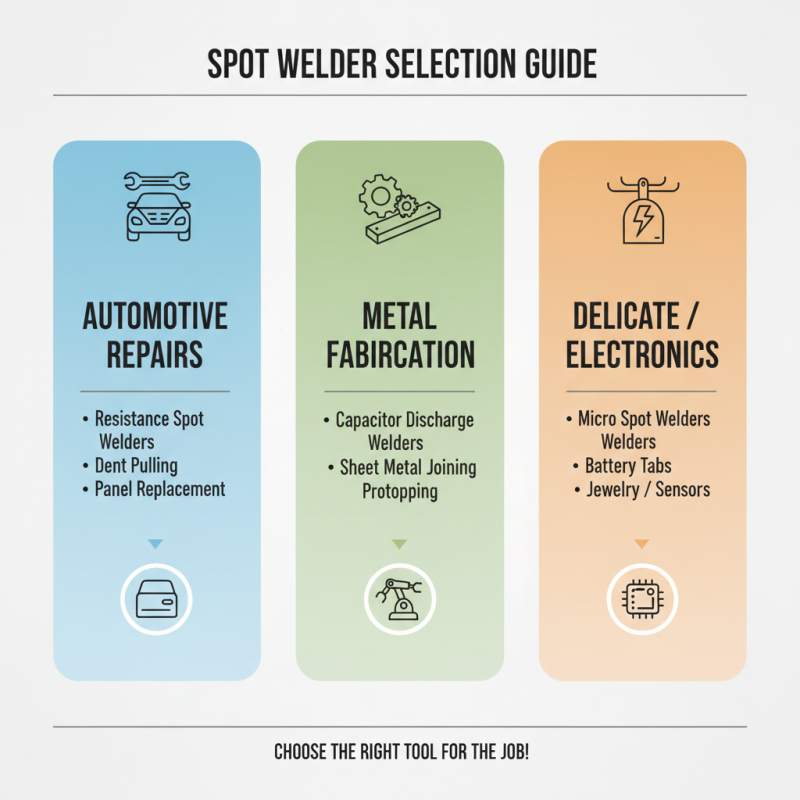
When choosing a spot welder, consider your specific needs. Spot welders come in several types. Each type serves different purposes, from automotive repairs to fabrications.
MIG welders are versatile and easy to use. They work well for light- to medium-gauge metal. However, they may struggle with thicker materials. If you're welding thin sheets, a resistance spot welder is beneficial. It creates heat through electrical resistance, ensuring quick and effective welds.
**Tips:** Always check the power output before making a selection. Higher power generally means faster welds. Look into portability too. If you need to move your welder around, weight matters.
For automotive work, handheld welders can be a great option. They allow for flexibility in tight spaces. Yet, they might not provide the strength needed for heavy-duty tasks. Evaluate the warranty and support options, as service can be crucial.
**Tips:** Research user reviews to gauge performance. Real-world experiences often reveal hidden issues. Invest in safety gear like gloves and goggles. Protecting yourself should be a priority.
Key Features to Consider When Choosing a Spot Welder
When selecting a spot welder, consider the power requirements. The wattage should match your tasks. High wattage offers quicker heating but can warp thinner materials. Make sure to assess the metal thickness you’ll work with. Using the wrong settings can lead to weak joints or burn-through.
Another crucial feature is the electrode shape. The right shape ensures efficient current flow and better welds. Round electrodes are ideal for small spots, while flat ones can cover larger areas. You must also evaluate the machine's duty cycle. A shorter duty cycle may not suit high-volume tasks.
Safety features are non-negotiable. A thermal overload protection is essential to prevent damage. Check for ergonomic designs as well. Comfortable grips reduce fatigue during prolonged use. The balance between power and usability is tricky but necessary. This balance requires careful thought and adjustment during use.
Spot Welder Comparison: Key Features
This chart compares three hypothetical spot welders based on their key features: Power Output, Max Welding Thickness, Duty Cycle, and Weight. This information can help you make an informed choice when selecting the best spot welder for your welding needs.
Safety Tips for Using Spot Welding Equipment
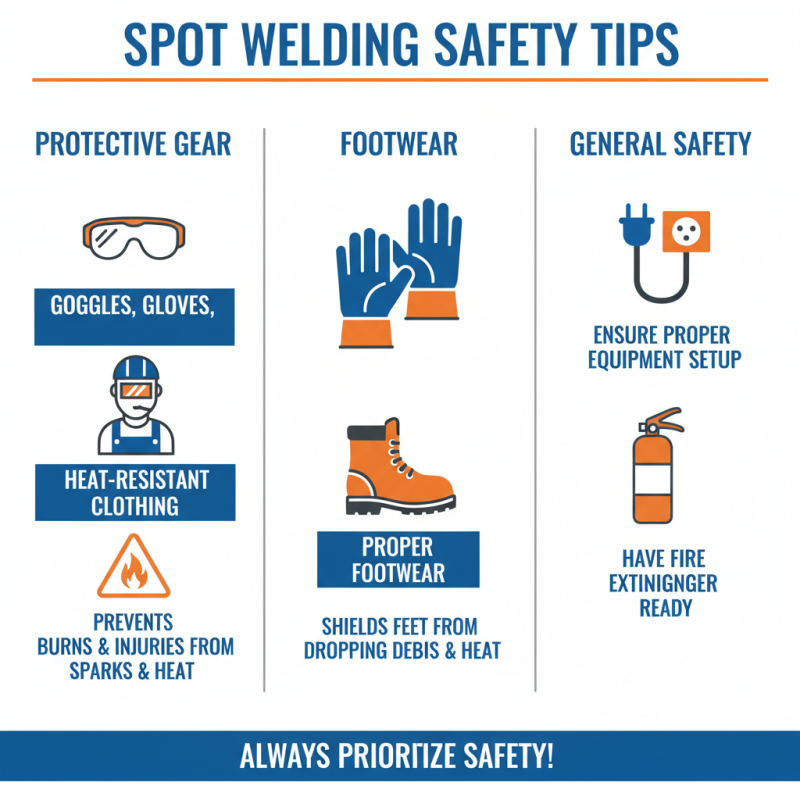
Spot welding can be a great way to join metal pieces. However, safety should always be your priority when using spot welding equipment. One of the most important tips is to wear appropriate protective gear. This includes goggles, gloves, and heat-resistant clothing. Sparks and heat can cause burns and injuries. Don’t forget to use proper footwear to protect your feet.
Another key precaution is to work in a well-ventilated area. Fumes can build up and become hazardous. Ensure your workspace is clear of flammable materials. Check your equipment regularly for wear and tear. A damaged machine can lead to serious accidents. Always keep a fire extinguisher nearby, just in case.
Take your time to practice your techniques. Spot welding can be tricky. Inaccurate welds can weaken joints and create faults. Keep a close eye on your work to avoid mistakes. Regular breaks during long tasks help maintain focus and reduce fatigue. Safety isn’t just a protocol; it’s essential for successful welding.
Top Brands and Models for Spot Welders in 2023
When choosing a spot welder, consider your specific needs. There are various models available, each designed for different applications. Some welders work best for automotive repairs, while others may excel in DIY projects. Evaluating your usage type can guide you toward the right model.
Different brands offer unique features. Look for welders with adjustable power settings. This allows for precise control, beneficial for delicate tasks. Ergonomics are also important; a comfortable grip can reduce fatigue during prolonged use. Portability may be a concern, especially if you need to move between workspaces. Lightweight models can simplify transportation.
Many users report mixed experiences with their choices. Some find a model difficult to use despite its glowing reviews. It often takes time to master, leading to frustration. Reflecting on these aspects can help you select wisely. Ensure you seek a balance between reliability and usability.
Related Posts
-
Unveiling the Best Spot Welder for Home Projects with Essential Insights and Expert Tips
-
Why You Need a Mini Spot Welding Machine for Your DIY Projects Today
-
2025 Top 5 Best Spot Welders: Unmatched Performance & Efficiency Ratings
-
Top 10 Resistance Spot Welder Tips for Beginners
-

10 Best Tips for Choosing MIG Welder Hire Options
-
What are the Different Types of Welders and Their Uses?
Contact us
Please fill out the enquiry form, and our dedicated team will promptly attend to your request