How to Buy a MIG Welder for Your Welding Projects?
When considering how to buy a MIG welder, the process can feel overwhelming. Many factors come into play, shaping your decision. It's important to know what you need for your welding projects. A MIG welder can be a fantastic tool for various applications.
Before you buy a MIG welder, think about your skill level. Are you a beginner or an experienced welder? Each level requires different features. You might want a machine that is user-friendly. Alternatively, you may seek advanced options if you are more skilled.
Consider the power source too. Some welders run on gas, while others are gasless. This choice affects your project type. Take the time to research different brands and models. Some may not meet your expectations. Be ready to reflect on your needs. Remember, investing wisely can lead to great results.
Understanding the Basics of MIG Welding for Project Success
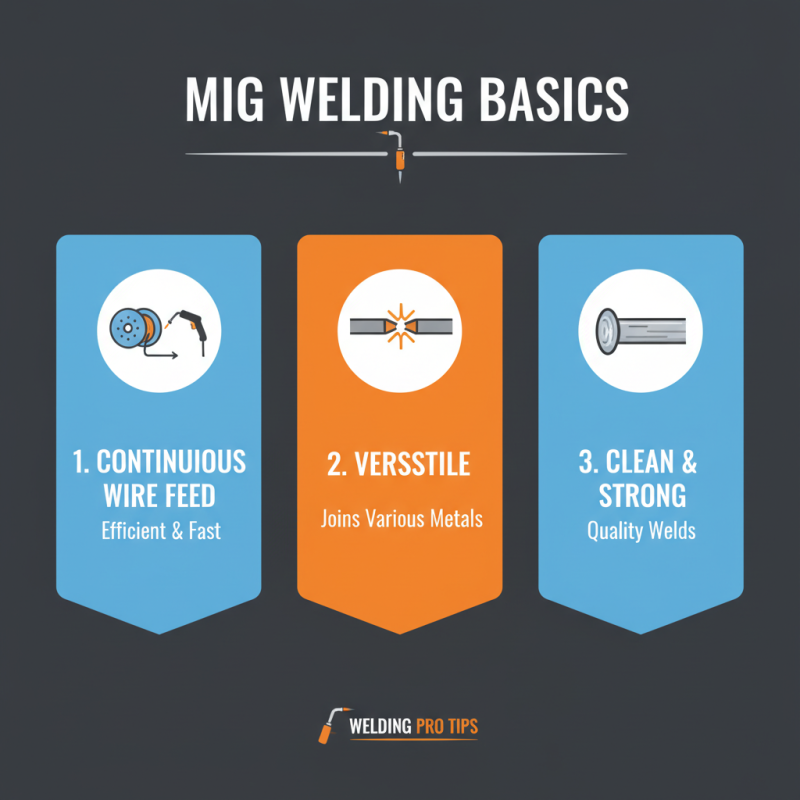
MIG welding, or Metal Inert Gas welding, is a popular method for its efficiency. Understanding its basics is crucial for project success. MIG welding uses a continuous wire feed. This makes it suitable for various metals. It provides a clean and strong weld.
To get started, consider your material. Different metals require different settings. For example, aluminum needs more heat. Steel is easier to weld with a lower setting. Experimenting with settings can help you find the right balance.
Tips: Always wear protective gear. Sparks can fly, so safety is essential. Choose the right filler metal for your project. This makes a big difference in the strength of your weld. If you are unsure about your techniques, don’t hesitate to practice. Mistakes are part of learning.
Connect your welder correctly. A faulty connection can lead to inconsistent welding quality. Keep your workspace tidy. Clutter can distract you and cause accidents. Reflecting on your work will improve your skills over time. Each project teaches you something new.
Identifying Your Welding Needs and Project Specifications
When planning to buy a MIG welder, understanding your specific needs is crucial. Consider the materials you will work with. Are they thin sheets of metal, or thicker plates? This choice will influence the welder's power settings and wire types. Think about the projects you envision. Will you be crafting delicate art pieces or heavy-duty structural work? This clarity will help guide your decision.
Evaluate your skill level, too. If you are a beginner, a user-friendly model with basic features may be best. Advanced users might need a machine that offers more versatility and power. Don't forget about portability. Will you work in a fixed location, or do you need a welder that can be easily moved? Size can play a significant role here.
Finally, explore your space. Do you have the right environment for welding? Adequate ventilation is important to minimize harmful fumes. Reflect on safety and accessibility as well. Mistakes can happen, even for experienced welders. Assess your workspace to ensure it accommodates your welder and enhances your ability to work safely. These aspects generally require careful consideration. Choose wisely, and focus on your unique project requirements.
How to Buy a MIG Welder for Your Welding Projects?
| Welding Needs |
Project Specifications |
Recommended Features |
Price Range |
| Light DIY Projects |
Thin materials (up to 1/8 inch) |
Portability, Adjustable Voltage |
$150 - $300 |
| Home Repairs |
Medium steel projects (1/8 to 1/4 inch) |
Multi-process capability, Enhanced Duty Cycle |
$300 - $600 |
| Professional Fabrication |
Thicker materials (1/4 inch and above) |
High output, Advanced Controls |
$600 - $1500 |
| Automotive Repair |
Various gauges of metal |
Flux-cored and gas shielded options |
$400 - $800 |
Evaluating Different MIG Welder Types and Their Features
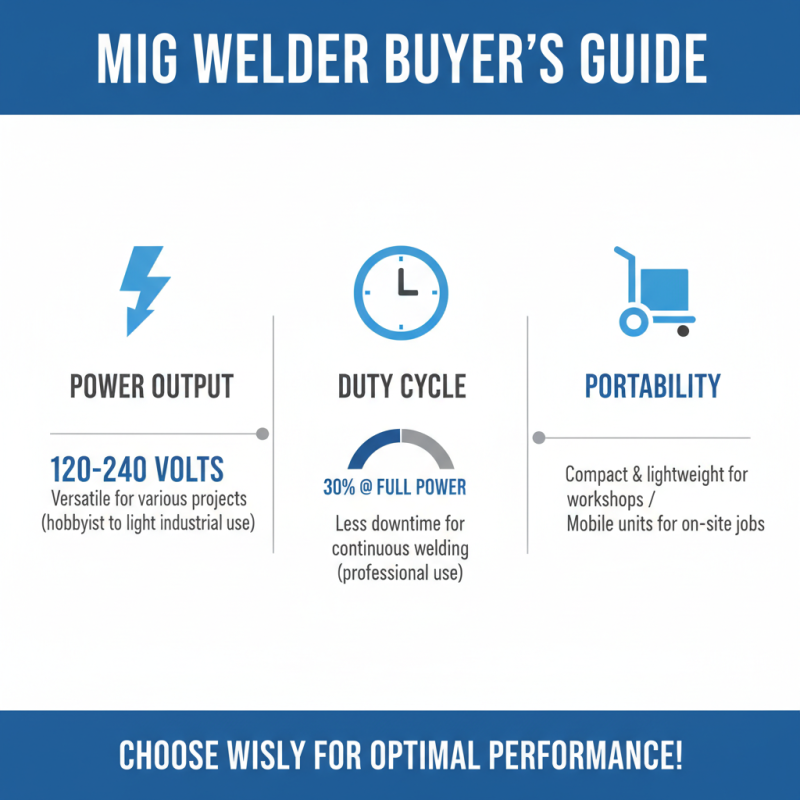
When evaluating different types of MIG welders, it’s essential to consider their core features. MIG welders vary widely in terms of power output, duty cycle, and portability. Most hobbyists require a welder with 120-240 volts, which can accommodate various projects. According to industry reports, a welder with at least 30% duty cycle at full power is ideal for regular use. A higher duty cycle often means less downtime, which can be a significant factor in productivity.
Portability also plays a crucial role. Many MIG welders are designed for ease of use, especially for DIY projects. Welders weighing under 50 pounds are popular choices among hobbyists. The design must also include features like spool gun compatibility for aluminum welding. Features like adjustable wire feed speed and voltage control are necessary for optimal results. Data indicates that welders with these capabilities provide better control over the welding process, especially for beginners.
Nonetheless, various models may not fully meet individual needs. Some users find that cheaper options lack the desired performance or reliability. If a welder doesn’t fit the specific demands of a project, it can lead to frustration and subpar welds. Each welder type has its limitations, and self-reflection on personal and project needs can lead to better purchasing decisions.
Considering Budget and Price Ranges for MIG Welders
When considering the budget for a MIG welder, it's essential to understand the price ranges available. Entry-level MIG welders can start at around $200. These models are great for beginners. However, they may lack advanced features. For hobbyists, a mid-range MIG welder between $500 and $1,000 offers better performance and durability. This range often includes features like adjustable settings and better duty cycles.
Professional-grade MIG welders typically start around $1,500. They are built for heavy use and can handle thicker materials. However, they may be overkill for casual users. According to industry reports, the average cost for a decent home workshop welder is about $800. This price reflects the growing demand for DIY projects and small-scale welding jobs.
It's crucial to evaluate what you need. Some users may think they need the most expensive model. But for simple projects, a budget-friendly welder may suffice. Consider your welding intentions. Will you tackle projects often? Or will it sit unused? This reflection can lead to better financial decisions. Remember, investing wisely will enhance your welding experience without breaking the bank.
Comparison of MIG Welder Prices Across Different Price Ranges
This chart illustrates the average price ranges for MIG welders, showing how prices vary based on the category. Understanding these price ranges can help you make an informed decision based on your budget for welding projects.
Researching Brands and Customer Reviews for Reliability
When considering a MIG welder, researching brands is crucial. Many reviews reveal a mix of positive and negative feedback from users. For instance, a report by the American Welding Society states that 70% of welders prioritize reliability over other factors. This emphasizes the importance of brand reputation and reliability in decision-making.
Customer reviews are a goldmine for insights. Look for trends in feedback. Are users consistently praising durability? Or are there common complaints about performance? Analyzing patterns can help you avoid pitfalls. Remember, online ratings can sometimes be skewed. Always seek balanced reviews, both good and bad.
**Tip:** Don’t just focus on the high ratings. Read the detailed reviews. Understanding issues others faced can offer valuable lessons.
Be mindful of your own needs. A welder that suits professional use may differ from one for DIY projects. Reflect on what you’ll actually weld. A mismatch can lead to disappointment.
**Tip:** Join user forums or local welding groups. Engaging with fellow welders can provide practical insights. Experiences shared in discussions can guide your purchase effectively.