How to Buy ABB Power Factor Correction Capacitors 2026?

Buying Abb Power Factor Correction Capacitors in 2026 requires more than comparing prices on a supplier’s website. The correct choice depends on voltage, kvar demand, operating temperature, harmonic distortion, and switching frequency. A capacitor bank may look suitable on paper, yet fail early beside variable-speed drives or welding equipment. That lesson is easy to overlook.

Roger C. Dugan, a recognized power-quality engineer and author, has said, “Power quality is a system-performance issue, not merely a product choice.” His principle remains practical for buyers evaluating ABB equipment. Start with recent load data, not assumptions from an old electrical drawing. Review monthly demand charges, motor starting patterns, and measured power factor. Then confirm whether standard capacitors or detuned capacitor banks are required.

A reliable purchasing process should verify ABB model numbers, rated voltage, kvar output, discharge resistors, enclosure protection, and thermal limits. Ask for factory documentation, test records, warranty terms, and traceable serial numbers. An authorized ABB channel can also clarify regional availability and compatible controllers. This matters when replacement units must fit an existing panel without rewiring.

Do not select the largest kvar rating simply because it promises faster correction. Overcorrection can create switching problems and unnecessary stress. Harmonics may also produce resonance, especially in facilities with six-pulse drives. A site survey is worth the cost.

Still, no guide replaces field measurement. Supplier advice can be incomplete, and datasheets may not reflect actual operating conditions. Compare two or three technically equivalent quotations. Check lifecycle value, not only the first invoice. This 2026 buying approach reduces avoidable risk and supports a more dependable ABB power-factor-correction installation.
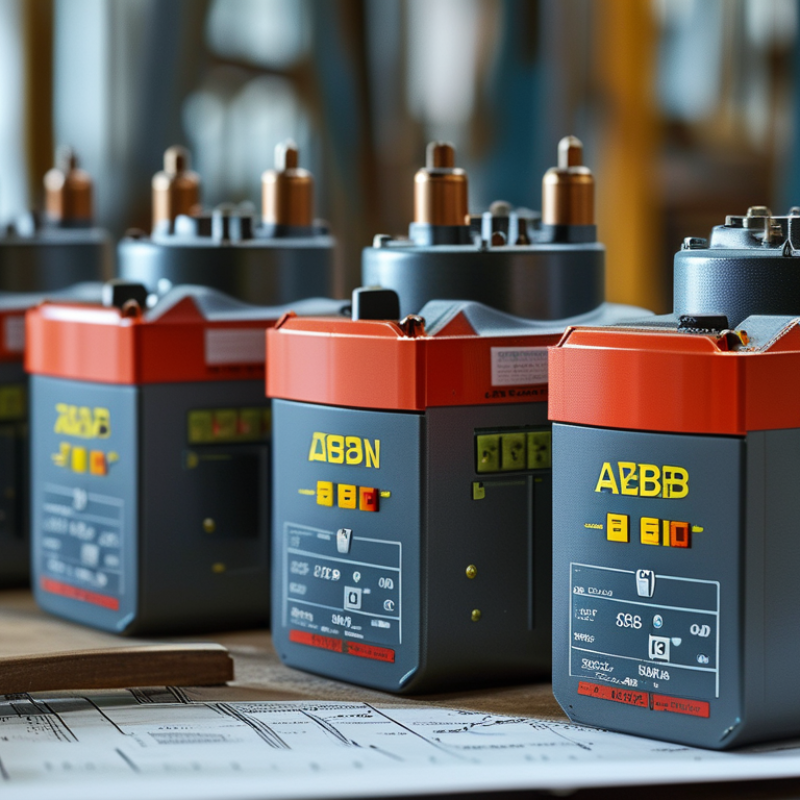
How to Buy ABB Power Factor Correction Capacitors 2026?

What ABB Power Factor Correction Capacitors Are and How They Work

Power Factor correction capacitors are electrical components that improve how efficiently AC equipment uses power. Motors, pumps, compressors, and transformers often draw reactive power, even when that power produces no useful mechanical output. The capacitor supplies part of this reactive demand locally. As a result, the electrical system can carry more useful power with lower current.

Inside a typical correction unit, capacitor elements store energy during one part of the AC cycle and release it during another. This offsets the magnetic demand of inductive equipment. Lower current can reduce cable heating, voltage drop, and utility power-factor penalties. In a workshop, the effect may appear as steadier voltage and cooler distribution equipment. The improvement is measurable, not magical.

Buying the correct unit in 2026 requires more than matching voltage and capacitance. Check system frequency, rated voltage, kvar output, temperature range, enclosure protection, and discharge requirements. Harmonic-producing loads can overheat ordinary capacitors, so detuned reactors or harmonic-rated designs may be necessary. I have seen installations fail after ignoring changing motor loads. Fixed correction may then overcompensate during light operation. Automatic capacitor banks usually respond better, but their controllers need accurate current-transformer placement and regular inspection. Moisture, swollen cases, and noisy contactors deserve immediate attention. Always verify local electrical standards and have qualified personnel review the installation.

How to Determine Your Electrical System’s Capacitor Requirements

How to Buy Power Factor Correction Capacitors in 2026: Determining Your Electrical System’s Capacitor Requirements

Begin with measured operating data, not the utility bill alone. Record voltage, current, real power, power factor, and load changes during a normal production cycle. A handheld meter gives a snapshot. A power-quality logger reveals the pattern.

Estimate the required correction with this formula: kVAr = kW × (tan φ₁ − tan φ₂). Here, φ₁ is the present power-factor angle, and φ₂ is the target angle. For example, a 500 kW load improving from 0.78 to 0.95 may need roughly 210 kVAr. The result is only an estimate. Motors, welders, and variable-speed drives can change the demand within minutes.

Check more than the kVAr rating. Confirm the system voltage, frequency, enclosure conditions, discharge time, switching frequency, and expected service temperature. Measure harmonic distortion before selecting standard capacitors. Harmonics may require reactors or specially designed assemblies. Otherwise, overheating and premature failure can follow. I have seen installations sized correctly on paper but poorly matched to changing loads. That mistake is easy to repeat.

Use staged banks when demand fluctuates. Smaller steps can prevent overcorrection and leading power factor. Select capacitors with documented test results, protection details, and applicable safety certifications. Leave space for ventilation and inspection. Keep records of readings after installation, because real performance may differ from the design model. Recheck the system after major equipment changes.

How to Buy Power Factor Correction Capacitors in 2026?

Capacitor requirements depend on active power, existing power factor, and the target power factor. The chart below estimates the reactive compensation required for a 500 kW electrical load to improve its power factor to 0.95.

Calculation method: Required capacitor capacity (kVAr) = P × [tan(cos⁻¹(PF₁)) − tan(cos⁻¹(PF₂))]. Select the nearest practical capacitor step above the calculated value, then verify voltage, system harmonics, switching conditions, and measured peak demand before purchasing.

How to Choose the Right ABB Capacitor Model and Specifications

Choosing the right power factor correction capacitor starts with the load, not the catalog. Record the system voltage, frequency, phase arrangement, and measured reactive demand. A capacitor rated for 400 V should not be applied casually on a 480 V system. The voltage margin matters. So does kvar output at the actual operating voltage.

Inspect the electrical environment before selecting a model. Variable-speed drives, welders, and switching power supplies may create harmonics. In these systems, a detuned reactor can reduce resonance risk, while a standard capacitor may age quickly. Check the capacitor’s temperature class, maximum overvoltage, discharge time, terminal design, and expected service life. Outdoor panels also need suitable protection against moisture and dust.

Use the manufacturer’s technical datasheet, test reports, and applicable certification records to verify every specification. Ask for batch traceability and clear warranty terms. During commissioning, measure current, voltage, total harmonic distortion, and capacitor temperature after the equipment reaches normal load. Field conditions often differ from design assumptions. I have seen correctly sized units underperform because the load profile was estimated too optimistically. That mistake is easy to repeat. Leave room for measured results, future expansion, and a qualified inspection before energizing the bank.

How to Verify Compatibility, Safety, and Installation Conditions

Buying power factor correction capacitors in 2026 requires more than matching voltage and kvar. Start with the motor load profile, not the nameplate alone. Confirm system voltage, frequency, connection type, switching frequency, and available fault current. Measure the existing power factor during light and peak loads. Measure, do not guess. The U.S. Department of Energy’s Motor Systems Market Assessment estimated that motor-driven systems represented about 69% of industrial electricity use. That figure shows why small compatibility errors can create large operating costs.

Check harmonic distortion before ordering. Variable-speed drives, welders, and rectifiers can overload ordinary capacitors through resonance. A power-quality recorder should capture voltage, current, total harmonic distortion, and transient events for several operating cycles. Detuned reactors may be necessary, but their tuning must match the network. Verify compliance with IEC 60831-1 and IEC 60831-2, including self-healing behavior, discharge protection, and thermal limits. Inspect the enclosure rating, ventilation, cable clearances, and ambient temperature at the installation point. Keep capacitors away from hot exhaust paths. It sounds obvious, yet field cabinets often run hotter than design assumptions. The International Energy Agency reported that global electricity demand increased by about 2.2% in 2023, making efficiency upgrades increasingly practical. Still, rushed procurement remains a weakness. Request test certificates, installation drawings, and protection settings before payment. Safety interlocks and isolation procedures must be verified on site.

How to Compare Suppliers, Pricing, Warranty, and After-Sales Support

Buying power factor correction capacitors in 2026 requires more than comparing unit prices. Ask suppliers for rated voltage, capacitance tolerance, operating temperature, discharge time, and expected service life. Request test reports for the exact model, not a similar product. Confirm whether the capacitor suits your detuned reactor, switching method, and local electrical conditions. Small mismatches can cause overheating.

Compare complete project costs. Include cabinets, contactors, fuses, reactors, freight, installation, and replacement parts. A low quotation may exclude testing or commissioning. Ask for a line-by-line offer with currency, delivery terms, taxes, and validity period. Suppliers should explain price changes clearly. If the explanation feels vague, pause.

Warranty terms deserve careful reading. Check coverage duration, response time, inspection duties, and exclusions for overvoltage or poor ventilation. Ask who pays shipping and labor after a failure. Reliable suppliers provide installation guidance, wiring diagrams, troubleshooting steps, and trained technical contacts. Request two recent customer references from similar facilities. One reference is not enough. I would also test response quality before ordering: send three practical questions and measure the reply time. This method is useful, but not perfect; references can be selective, and fast replies cannot prove long-term reliability. Keep written records of every promise, including spare-part availability and repair timelines.

How to Buy ABB Power Factor Correction Capacitors 2026? - How to Compare Suppliers, Pricing, Warranty, and After-Sales Support
Reference basis: three-phase low-voltage power factor correction capacitors, typically 400–480 V, 10–30 kvar per unit. Prices are indicative 2026 market ranges in USD per capacitor unit, excluding taxes, freight, installation, and project-specific engineering. Verify the exact voltage, kvar rating, frequency, detuned-reactor requirement, discharge resistor, terminal design, and delivery terms before ordering.
Supplier Type Typical Product Availability Indicative Unit Price Typical Warranty Lead Time Technical Documentation After-Sales Support Key Advantages Common Risks Best For Suggested Evaluation Rating
Authorized Electrical Distributor Common low-voltage capacitor ratings, standard accessories, replacement parts, and compatible power factor correction components. US$120–US$420 Usually 12–24 months, subject to the distributor’s written terms and installation conditions. Stock items: 2–10 business days; special orders: 4–10 weeks. Usually strong: datasheets, wiring information, certificates, installation instructions, and traceable order records. Good for product replacement, warranty coordination, and basic application guidance. On-site service may be charged separately. Reliable documentation, established logistics, easier returns, and lower risk of receiving unverified products. Prices may be higher than direct import offers; availability can vary by region and capacitor rating. Routine replacements, maintenance inventory, and standard industrial installations. ★★★★★
Industrial Electrical Wholesaler Frequently stocked standard capacitors, contactors, fuses, controllers, and cabinet accessories. US$100–US$360 Commonly 12 months; confirm whether labor, freight, and consequential damage are excluded. Stock items: 1–7 business days; non-stock items: 3–8 weeks. Normally adequate for standard products, but project-specific harmonic and application analysis may be limited. Fast order handling and replacement support; advanced troubleshooting may require an external specialist. Competitive pricing, quick delivery, and convenient one-stop purchasing for panel components. Limited support for harmonic distortion, resonance, high-temperature operation, and custom capacitor banks. Standard capacitor-bank maintenance and buyers already familiar with system requirements. ★★★★☆
Power Quality Specialist Capacitors, detuned filter systems, power factor controllers, reactors, harmonic measurements, and complete correction solutions. US$180–US$650 Typically 12–36 months, with clearer technical acceptance criteria on engineered projects. Standard units: 2–6 weeks; engineered systems: 6–14 weeks. Usually comprehensive: system design notes, harmonic limits, sizing calculations, test reports, and commissioning records. Strong application support, commissioning, fault analysis, and recommendations for preventing overcorrection or resonance. Best technical fit for facilities with variable-speed drives, nonlinear loads, or recurring capacitor failures. Higher upfront cost and longer engineering cycle; site data may be required before quotation. Factories, data centers, commercial buildings, and networks with significant harmonic distortion. ★★★★★
Electrical Panel Builder or System Integrator Individual capacitors integrated into automatic power factor correction panels, detuned banks, and packaged control systems. US$250–US$1,200 per installed capacitor position Commonly 12–24 months for the complete panel; component coverage may follow separate terms. Typically 6–16 weeks, depending on design approval, enclosure fabrication, testing, and component availability. Normally includes single-line diagrams, panel layouts, bills of materials, factory test documents, and operation manuals. Potentially strong: commissioning, troubleshooting, spare-parts planning, and complete panel responsibility. Provides a coordinated, tested solution rather than an isolated replacement component. Less economical when only one capacitor is needed; design changes after approval may increase cost and lead time. New installations, large retrofits, and projects requiring a complete automatic capacitor bank. ★★★★★
Direct Import or Factory-Direct Supplier Broad range of ratings and configurations, including standard and custom capacitor designs. US$55–US$240 Often 12–24 months, but claim procedures, return freight, and inspection responsibilities must be defined in writing. Usually 4–12 weeks, including production, inspection, export documentation, and transportation. Varies widely; request original datasheets, routine test reports, certificates, drawings, and material traceability. Remote technical assistance is common; local spare parts, field service, and rapid replacement may be limited. Lower purchase price, flexible specifications, and suitability for volume orders. Longer logistics, import compliance, uncertain local support, and greater need for incoming quality inspection. Volume buyers, OEMs, experienced procurement teams, and projects with sufficient inspection capability. ★★★☆☆
Online Marketplace Seller Mostly standard capacitor units with limited selection of compatible fuses, contactors, controllers, or reactors. US$45–US$220 Often 6–12 months; warranty exclusions and seller return policies vary significantly. Domestic stock: 3–14 days; international shipments: 3–10 weeks. May include basic listings only; independently verify voltage, kvar, frequency, dimensions, terminal arrangement, and safety information. Usually limited to messaging and return processing; technical troubleshooting and commissioning are rarely included. Easy price comparison and fast access to low-volume products. Higher risk of incorrect specifications, incomplete traceability, counterfeit or aged stock, and weak warranty enforcement. Low-risk, non-critical replacements when the specification and seller history can be independently verified. ★★☆☆☆
Procurement checklist: confirm the required kvar and voltage, capacitor tolerance, maximum permitted temperature, expected service life, discharge time, enclosure and terminal requirements, harmonic environment, applicable safety certification, Incoterms, warranty exclusions, replacement procedure, local support, and availability of spare units.

Contact us

Please fill out the enquiry form, and our dedicated team will promptly attend to your request