China Top 10 Automotive Oscillator Manufacturers?
China’s automotive electronics sector includes manufacturers with different strengths in timing components, production scale, and customer support. This guide introduces ten Chinese companies associated with Automotive Oscillators and outlines practical points buyers can compare. The goal is not to treat a ranking as a universal verdict. Supplier suitability depends on the vehicle program, operating environment, and qualification requirements.
For each manufacturer, readers should review current product datasheets, frequency stability, operating-temperature range, package options, and available quality documentation. Check whether the supplier can explain testing methods and provide traceable specifications. Ask about sample availability, production capacity, lead times, and engineering support. Small details matter. A component that performs well on a bench may still need evaluation under vibration, thermal cycling, and electromagnetic conditions representative of its intended application. That distinction is easy to overlook.
Company profiles and product portfolios can change, so verify claims directly with manufacturers before making sourcing decisions. Public information may not reveal every production or qualification detail. That is a limitation of any overview. Use the list as a starting point for due diligence, not as a substitute for technical review, sample testing, or supplier audits. Careful comparison can narrow the field, but the right choice should rest on documented performance and the needs of the specific automotive project.
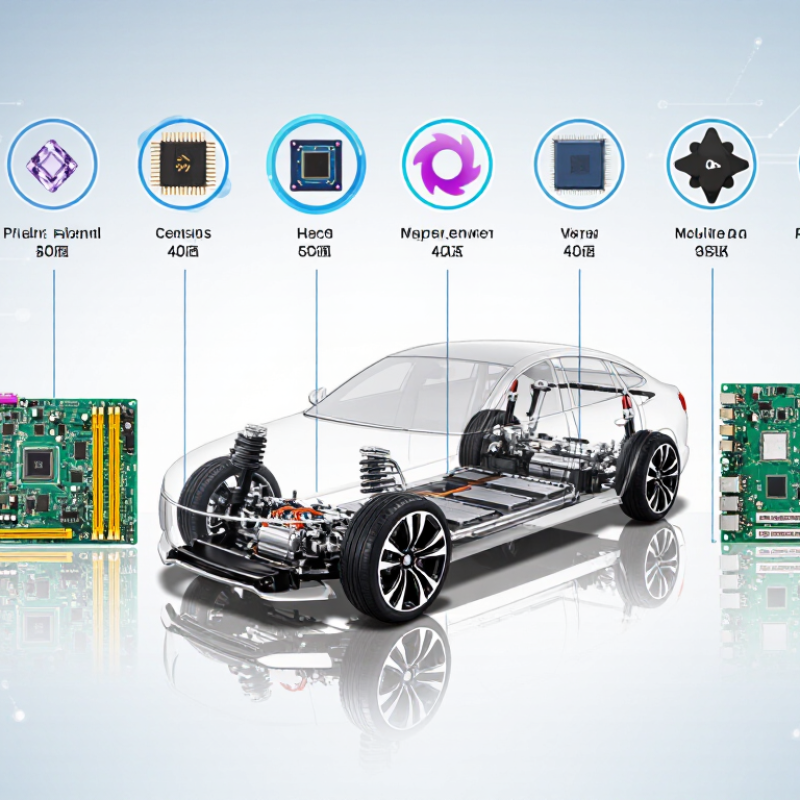
Automotive Oscillators: Definition, Functions, and Key Types
Automotive oscillators are electronic components that generate repetitive timing signals. These signals help vehicle systems coordinate when to sample data, process commands, or communicate. A tiny clock pulse can keep an engine controller and its sensors working in sync. Timing matters.
Oscillators support engine control units, driver-assistance sensors, navigation, and in-vehicle communication networks. Their performance affects data accuracy and system response. For example, a radar module needs a stable reference to measure returning signals, while a control unit relies on consistent timing to process sensor inputs. Heat, vibration, electrical noise, and rapid temperature changes can all challenge that stability.
Common types include quartz crystal oscillators, MEMS oscillators, and temperature-compensated crystal oscillators. Quartz devices are valued for frequency stability; MEMS designs can offer compact size and resilience to mechanical shock. Temperature-compensated models help limit frequency drift as conditions change. Voltage-controlled oscillators also appear in circuits that need adjustable frequency. These types are not interchangeable. Designers compare frequency accuracy, start-up time, power use, package size, and operating temperature against the needs of each vehicle system. A specification sheet rarely tells the whole story; real operating conditions can expose trade-offs that look minor on paper.
China Top 10 Automotive Oscillator Manufacturers? - Automotive Oscillators: Definition, Functions, and Key Types
Automotive oscillators generate or stabilize timing signals used by vehicle electronics. The table below compares ten common oscillator and clock-generation types; it is not a ranking of manufacturers.
| No. | Oscillator Type | Typical Frequency Examples | Primary Function | Typical Automotive Uses | Key Selection Considerations |
|---|---|---|---|---|---|
| 1 | 32.768 kHz quartz crystal | 32.768 kHz | Provides a low-power time base for real-time clocks. | Instrument clusters, body electronics, and retained-time functions. | Startup time, load capacitance, temperature behavior, and power consumption. |
| 2 | MHz-range quartz crystal | Common examples include 8, 16, and 20 MHz; the required value depends on the circuit. | Acts as a resonator for an oscillator circuit, often inside a microcontroller system. | Engine control, body control, and sensor modules. | Frequency tolerance, crystal drive level, circuit layout, and temperature range. |
| 3 | Quartz crystal oscillator (XO) | Common designs span kHz to tens of MHz; exact options are device-specific. | Integrates a resonator and sustaining circuit to provide a clock output. | ECUs, communication modules, and general-purpose control electronics. | Frequency stability, output format, supply voltage, and operating temperature. |
| 4 | Temperature-compensated crystal oscillator (TCXO) | Frequency depends on the design; MHz-range references are common. | Corrects frequency drift caused by temperature changes. | GNSS, telematics, and wireless communication equipment. | Frequency stability over temperature, warm-up behavior, power, and aging. |
| 5 | Voltage-controlled crystal oscillator (VCXO) | Frequency and tuning range are specified by the application. | Allows a clock frequency to be adjusted by a control voltage. | Clock recovery and synchronization circuits in vehicle communications. | Tuning range, linearity, phase noise, and control-voltage limits. |
| 6 | MEMS oscillator | Available frequencies vary by device and application. | Uses a micro-electromechanical resonator and electronic circuitry to generate a clock. | Compact control modules and systems exposed to vibration. | Vibration performance, temperature stability, jitter, and qualification requirements. |
| 7 | Clock generator / synthesizer | Multiple output frequencies can be derived from a reference; values are design-specific. | Generates one or more related clock signals using frequency synthesis and division. | Infotainment, domain controllers, and multi-chip electronic systems. | Output count, jitter, synchronization, power, and supported clock formats. |
| 8 | Spread-spectrum clock generator | Modulates a system clock around its nominal frequency; settings depend on the design. | Distributes clock energy across a frequency band to help reduce peak electromagnetic emissions. | Display, infotainment, and other high-speed digital electronics. | Modulation depth, modulation profile, timing tolerance, and system EMC results. |
| 9 | High-frequency reference oscillator | Examples such as 25 or 40 MHz are used in some designs; requirements vary by device. | Supplies a stable reference for frequency synthesis and high-speed signal processing. | Radar, wireless, and high-speed networking subsystems. | Phase noise, frequency accuracy, output drive, and compatibility with the target IC. |
| 10 | Automotive-grade oscillator module | Specified frequency is selected for the system; there is no single universal value. | Provides a ready-to-use clock output in a package designed for demanding operating conditions. | Safety-related ECUs and modules requiring defined environmental performance. | Operating-temperature range, reliability data, qualification status, and system-level validation. |
Note: Frequency examples are illustrative, not universal automotive standards. The required frequency, stability, temperature range, and qualification level must be verified against the target circuit and vehicle requirements.

Contact us
Please fill out the enquiry form, and our dedicated team will promptly attend to your request