Why Choose a Resistance Spot Welder for Your Next Project?
In today's manufacturing landscape, the choice of welding technology is critical. A resistance spot welder stands out for its efficiency and precision. According to a report from the American Welding Society, over 70% of automotive manufacturers rely on this technology for quality production. This method ensures strong bonds and minimizes heat distortion.
David Johnson, a welding technology expert, states, "Investing in a resistance spot welder can significantly enhance your project's reliability and speed." His insight highlights a common truth in the industry. Many projects fail due to improper welding techniques or equipment. Relying solely on traditional methods might not yield the desired strength or durability.
Resistance spot welding has its challenges. Equipment costs can be high, and maintenance may require skilled professionals. Yet, the benefits often outweigh these concerns. A careful evaluation of your project needs can lead to significant improvements in product quality and performance.
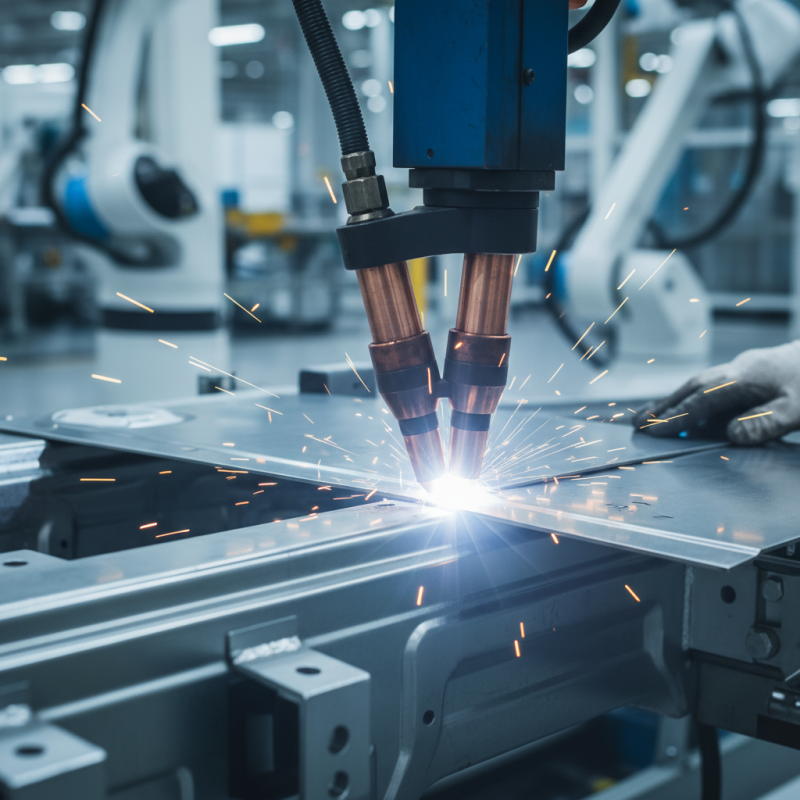
Benefits of Using a Resistance Spot Welder for Metal Projects
Resistance spot welders are crucial tools for various metal projects. They offer several benefits that enhance the welding process. One significant advantage is speed. The spot welding technique allows for quick joins between metal pieces. This can dramatically reduce fabrication time. Workers can create strong bonds without lengthy setups.
Another benefit is the consistency of the welds. Resistance spot welding produces uniform results. Each weld is created by applying pressure and electric current. This method minimizes the chances of defects. However, it requires careful calibration. Improper settings can lead to weak or burned welds.
Moreover, the process is energy-efficient. Resistance welding uses less power compared to traditional methods. This efficiency can lower operational costs. Yet, it’s essential to monitor power usage closely. A well-timed approach can improve overall productivity. Resistance spot welders are a solid choice for many projects. But, they demand skill and practice to master fully.
Understanding the Mechanism of Resistance Spot Welding
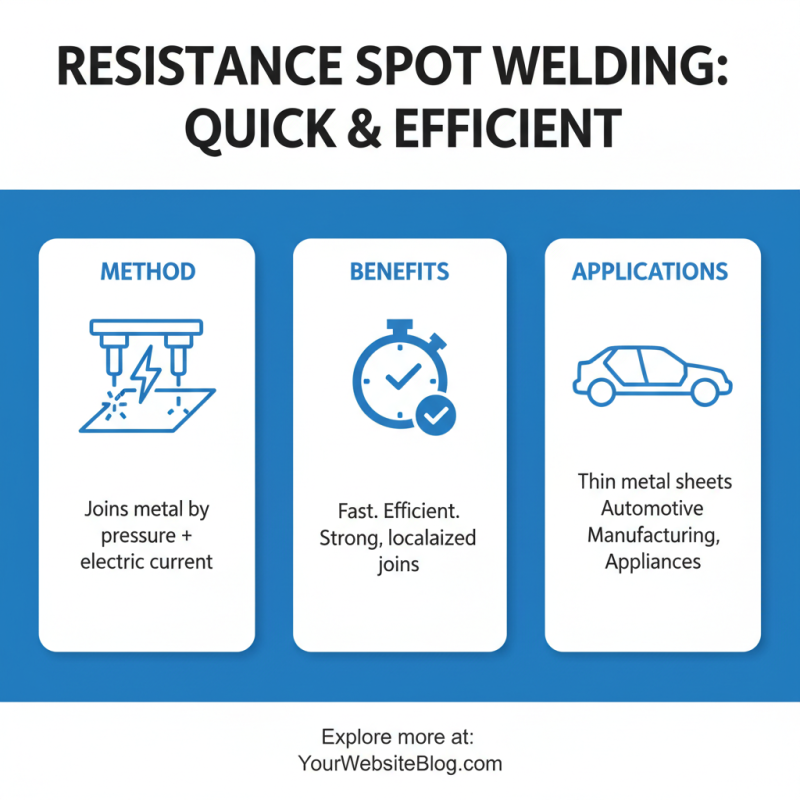
Resistance spot welding is a key technique in metal fabrication. This method joins metal sheets by applying pressure and electric current. The current passes through the workpieces, generating heat. This heat melts the metal, creating a strong bond. It's efficient for manufacturing and construction, especially for joining thin metal sections.
According to industry reports, resistance spot welding is often favored for high-volume production. It can achieve up to 1,000 welds per hour in optimal conditions. However, achieving consistency can be challenging. Proper electrode alignment and material properties play crucial roles in the process. If the parameters are not carefully controlled, defects can occur. This might lead to weak joints or increased scrap rates.
Research indicates that about 20% of welds might experience quality issues under suboptimal conditions. Skilled operators are essential for monitoring the process. They must understand the nuances of materials and parameters. Investing in training can mitigate these risks. As the industry evolves, staying updated with advancements is critical for ensuring weld quality.
Why Choose a Resistance Spot Welder for Your Next Project?
| Feature |
Benefits |
Applications |
Specifications |
| High Precision |
Ensures strong welds with minimal thermal distortion. |
Automotive, Electronics, Sheet Metal Fabrication |
Weld Force: 100-1000 kg, Power: 5-20 kW |
| Fast Process |
Quick spot welding operations increase productivity. |
Manufacturing, Construction, HVAC |
Cycle Time: 0.2-1.0 seconds |
| Cost-Effective |
Reduces material waste and labor costs. |
Appliance Manufacturing, Metal Structures |
Weld Thickness Range: 0.5-2.5 mm |
| Versatility |
Can weld various materials including steel and aluminum. |
Transportation, Heavy Machinery |
Power Supply: 230V / 380V options |
Key Applications and Industries Utilizing Spot Welders
Resistance spot welders are widely used in various industries. Automotive manufacturing is one of the primary fields. These welders create strong joints quickly. They are essential for assembling car bodies. This process improves structural integrity while reducing production time.
Another significant application lies in electronics. Many electrical components require precise connections. Spot welders enable efficient assembly of complex devices. They ensure reliable connections for circuit boards. However, the technique requires careful skill. Mistakes can lead to faulty products, which can be costly.
Additionally, sheet metal fabrication often employs this method. Fabricators appreciate the speed and efficiency of spot welding. It’s suitable for various materials, including steel and aluminum. However, achieving consistent quality is a challenge. Operators need to maintain equipment regularly. They must also understand the properties of materials used. A lack of experience can lead to inconsistent welds.
Comparing Resistance Spot Welding with Other Welding Methods
Resistance spot welding is gaining popularity among various welding methods. It's efficient and offers quick results. This technique joins metal pieces by applying pressure and electric current. It's particularly useful for thin sheets of metal, which are common in automotive manufacturing.
Compared to MIG and TIG welding, resistance spot welding has some distinct advantages. It requires minimal setup and produces less heat distortion. However, it may not be suitable for thicker materials or complex shapes. The learning curve can also be steep for beginners.
Despite these challenges, resistance spot welding presents unique opportunities. It promotes automation, which can enhance production rates. Yet, each project needs careful consideration of the materials involved and the desired outcomes. Sometimes it may fall short in versatility when compared to other methods. Each welder must assess the situation, reflecting on the best approach for their specific needs.
Factors to Consider When Selecting a Resistance Spot Welder
When selecting a resistance spot welder, consider a few key factors.
Power output is crucial for effective welding. Look for a welder that matches your project's requirements.
A high power output can create a stronger bond, especially on thicker materials. However, excessive power may lead to damage.
Balancing power and material thickness is important.
Next, consider the welder's electrode design. Different designs suit various applications.
Some electrodes are fine for delicate tasks, while others work best on heavy-duty requirements.
The right electrode can enhance the quality of the weld. Experimenting with different designs may yield unexpected results.
Portability is another factor to weigh. If your project site varies,
a lightweight, portable welder is beneficial. However, sometimes sturdiness is essential for stability.
Reflecting on your workspace allows you to make a better choice.
Additionally, ease of use is vital. A complicated model may cause frustration, wasting time and effort in the process.
Evaluate your skill level and comfort with technology. Each of these factors contributes to successful welding outcomes.