2026 How to Choose the Best Aluminum Alloy Powder for Your Needs?
When selecting the best Aluminum Alloy Powder for your projects, it is essential to consider various factors. The right powder can significantly impact the final product's strength, weight, and durability. Different aluminum alloys serve different purposes, making it important to understand your specific needs.
In the world of manufacturing, not all powders are created equal. Some may provide better corrosion resistance while others excel in thermal conductivity. Each application requires a unique approach. The complexity of choosing the right powder can be overwhelming. Users often overlook key properties, leading to less than satisfactory outcomes.
Research and experience play crucial roles in this decision-making process. Familiarizing yourself with the properties of Aluminum Alloy Powder ensures that you choose wisely. Quality matters, as inferior powders can compromise the integrity of your products. Careful evaluation of supplier credentials is necessary. By focusing on your specific application, you can find an alloy that fits perfectly, driving better results.
Factors to Consider When Choosing Aluminum Alloy Powders
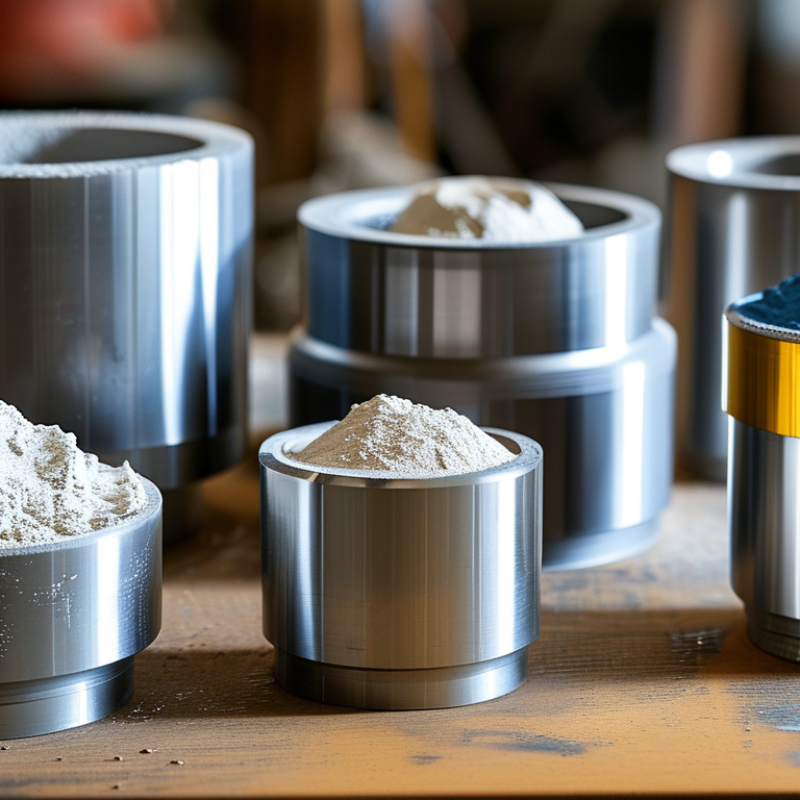
Choosing the right aluminum alloy powder involves understanding various factors. These include particle size, distribution, and alloy composition. Particle size significantly affects the flowability during processing. A report by the International Journal of Advanced Manufacturing Technology highlights that a smaller particle size can enhance the packing density and sintering performance. For some applications, a mean particle size of around 20 microns proves optimal.
Alloy composition is another critical factor. Different alloys exhibit distinct mechanical properties and corrosion resistance. According to the Aluminum Association, 6061 and 7075 alloys are popular for their adaptability and strength. However, some applications may require specialized alloys. Understanding the specific demands of your project is essential.
Lastly, consider the production method. The method can affect the quality and consistency of the powder. Techniques like gas atomization may yield finer powders but can be more costly. On the other hand, water atomization offers a less expensive option. Weigh these production methods against your budget and performance needs.
Common Applications of Aluminum Alloy Powders in Various Industries
Aluminum alloy powders are versatile materials used across various industries, from aerospace to automotive. In the aerospace sector, they are known for their lightweight properties and resistance to corrosion. According to the Aluminum Association, aluminum alloys comprise approximately 80% of total aerospace materials. This high percentage highlights their importance in producing aircraft components, where every gram counts for fuel efficiency.
In the automotive industry, aluminum alloy powders play a crucial role in lightweighting vehicles. Reports indicate that reducing vehicle weight by just 10% can enhance fuel efficiency by 6-8%. On average, automotive manufacturers are incorporating more aluminum in design, focusing on improving safety while optimizing performance. Industries are leaning towards additive manufacturing for creating custom lightweight parts that utilize aluminum alloys.
For those considering aluminum alloy powders, it's essential to assess specific requirements carefully. Understand your application needs, such as strength, corrosion resistance, and thermal properties. Selecting the right powder can lead to significant enhancements in product performance. Experiment with different alloys for precise compositions to meet your goals. Do not overlook the supplier's expertise and certification as well; reliability in quality can make a substantial difference in your project's success.
Key Properties and Characteristics of Different Aluminum Alloys
When selecting an aluminum alloy powder, it is vital to understand its specific properties and characteristics. Different alloys offer various strengths, weights, and resistances. For instance, 6061 aluminum alloy is known for its excellent corrosion resistance and weldability, making it suitable for a wide range of applications. However, it may not perform as well in high-temperature environments.
Another key alloy is 7075, which boasts superior strength. This makes it ideal for aerospace applications, where weight and strength are critical. Yet, this strength comes at a cost—7075 can be more challenging to weld and form compared to other alloys. These characteristics must align with your project requirements for optimal performance.
Additionally, some may overlook the significance of grain structure and size in aluminum powders. Finer powders achieve better sintering and enhanced mechanical properties but can be difficult to handle. Balancing these factors is crucial for successful outcomes. Careful consideration of these properties will lead to better choices in aluminum alloy powders.
Comparative Analysis of Aluminum Alloy Powders Available in the Market
When selecting an aluminum alloy powder, understanding market options is crucial. Various powders are available, each with distinct characteristics. Some excel in strength, while others offer better corrosion resistance. The specific application largely dictates the choice. For instance, aerospace applications often require high-strength powders that can withstand extreme conditions.
It's essential to compare physical properties like particle size and shape. Smaller particles provide better surface quality in sintered parts. However, they may also lead to flowability issues during processing. The choice between spherical and irregular shapes also influences the finished product's performance.
Reviewing certification and manufacturer reputation can be enlightening. Not every source is reliable, and some powders may not meet industry standards. Consideration of user reviews can highlight the advantages and drawbacks. Each selection process can reveal uncertainties, urging a deeper examination of specific needs. Balancing performance with cost is often a challenge, necessitating careful thought and research.
Comparative Analysis of Aluminum Alloy Powders
This chart compares the mechanical properties of various aluminum alloy powders commonly used in the industry. The properties measured include tensile strength (MPa), hardness (HB), and density (g/cm³).
Guidelines for Testing and Evaluating Aluminum Alloy Powder Performance
When selecting the right aluminum alloy powder, performance testing is crucial. Different alloys can exhibit significant variation in mechanical properties. A report from the American Aluminum Association indicates that alloy powders can range from 100 MPa to 800 MPa in tensile strength. Testing should involve evaluating these properties under various conditions.
Key factors to consider include particle size, distribution, and morphology. These characteristics greatly influence the powder's behavior during processes like sintering and metal injection molding. For instance, a specific alloy with a finer particle size may show improved sinterability but come at the cost of higher production complexity. A study by the Journal of Materials Science highlighted that irregularly shaped powders often lead to better packing density, which is essential for achieving desired density targets.
Moreover, it's essential to evaluate the powder's flowability. This can impact the manufacturing process directly. A flowability test can reveal limitations hidden under ideal conditions. It is advisable to analyze the powder behavior under actual processing parameters. Understanding these subtleties can lead to better decision-making. Sometimes, visual inspections or basic tests may not capture critical flaws. Ultimately, comprehensive evaluation is key to finding an ideal aluminum alloy powder for specific applications.
