How to Choose the Best Resistance Spot Welder for Your Projects in 2025
Choosing the right resistance spot welder can be a daunting task, especially with the increasing variety of models and features available in 2025. As projects vary in complexity and scope, selecting a welder that suits your specific needs is crucial for achieving optimal results. A resistance spot welder is invaluable for fabricating metal components, providing strong and reliable joins through the application of heat and pressure.
In this guide, we will explore the key factors to consider when selecting the best resistance spot welder for your projects. From assessing power requirements and welding capacity to understanding the importance of portability and user-friendly features, we will provide essential insights to guide your decision-making process. Whether you are a hobbyist or a professional, the right resistance spot welder can greatly enhance your efficiency and the quality of your work, allowing you to tackle a wide range of metalworking tasks with confidence.
Understanding Resistance Spot Welding and Its Applications
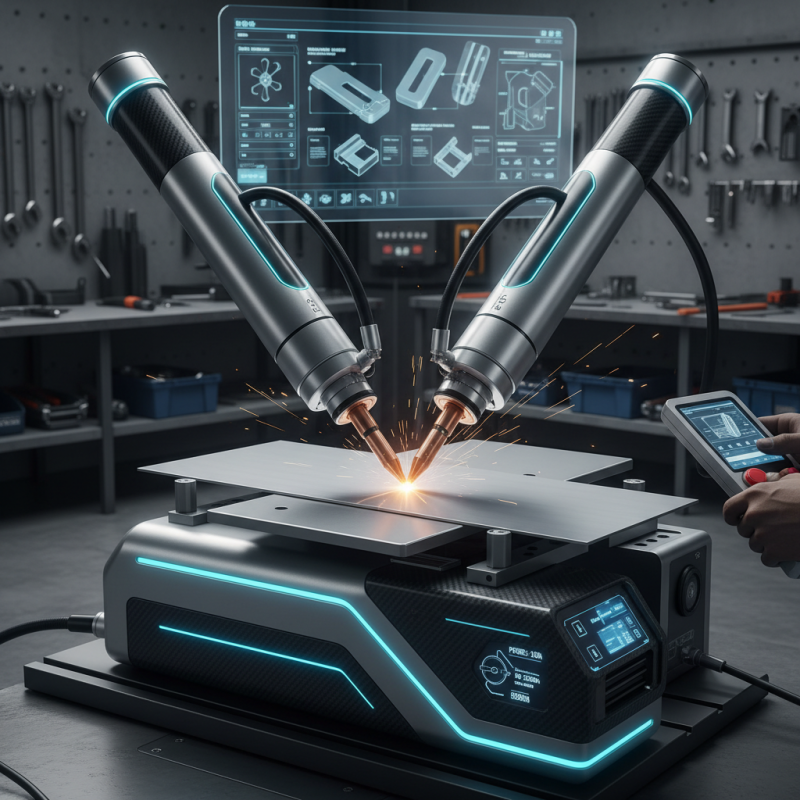
Resistance spot welding (RSW) is a fabrication process that plays a crucial role in various industrial applications. This technique joins two or more pieces of metal by applying heat and pressure at specific points, resulting in a strong and durable bond. The process involves passing an electric current through the workpieces, generating heat due to resistance, which melts the metal at the contact points. Typically used in the automotive industry for assembling vehicle bodies, RSW offers high-speed production and is well-suited for mass manufacturing due to its efficiency and reliability.
In addition to automotive applications, resistance spot welding is utilized in several other sectors. For instance, it is employed in the construction of appliances, electronics, and even in the manufacturing of durable metal furniture. The versatility of RSW allows it to be effective on various metal types, including steel and aluminum, making it a preferred choice for tasks requiring robustness and precision. Moreover, as industries continue to seek sustainable and efficient manufacturing techniques, RSW's low energy consumption and minimal waste production enhance its appeal in modern production environments. Understanding these applications will help in selecting the best resistance spot welder for your projects in 2025.
Key Factors to Consider When Choosing a Resistance Spot Welder
When selecting a resistance spot welder for your projects in 2025, several key factors must be considered to ensure you make the best choice for your specific needs. First, assess the power and duty cycle of the welder. A higher power rating generally allows for faster welding and can accommodate thicker materials. The duty cycle, which refers to the percentage of time a welder can operate without overheating, is also crucial. For projects that require prolonged use, a welder with a higher duty cycle will ensure uninterrupted operation and durability.
Another important aspect to consider is the welder’s versatility and ease of use. Look for features like adjustable welding times and current settings, which provide flexibility for different materials and thicknesses. Additionally, the design and ergonomics of the welder play a significant role in user comfort and efficiency. Opt for a model that offers features like a lightweight design and easy-to-grip handles to minimize fatigue during extended work sessions. Lastly, consider any additional functionalities or attachments that may enhance the welding process for various projects, making the tool not only effective but also adaptable to diverse applications.
Comparison of Key Factors in Resistance Spot Welders (2025)
Comparison of Different Types of Resistance Spot Welders
When selecting a resistance spot welder for your projects, it’s essential to understand the different types available, as each serves unique applications based on various factors such as material thickness, electrode design, and power supply requirements. The three primary categories include manual, semi-automatic, and fully automatic spot welders. Manual welders offer simplicity and control, making them ideal for small-scale operations or intricate tasks where precision is crucial. However, they require skilled operators to achieve consistent results.
Semi-automatic spot welders bridge the gap between manual and fully automatic systems, providing some degree of automation while still allowing operator input. This type is well-suited for medium-sized production runs where speed and efficiency are important, but some manual intervention is required. On the other hand, fully automatic spot welders are designed for high-volume production environments, integrating advanced control systems to ensure consistent weld quality and significantly reduce labor costs. They are particularly advantageous in automotive and heavy manufacturing industries, where speed and repeatability are essential. Evaluating the specifics of your projects will guide you in choosing the right type of resistance spot welder to meet your needs.
Evaluating Features: Power, Temperature Control, and Duty Cycle
When selecting the best resistance spot welder for your projects in 2025, evaluating features such as power, temperature control, and duty cycle is crucial. The power of a spot welder dictates its capability to fuse materials effectively. Higher power ratings typically enable the welding of thicker materials, ensuring a stronger bond. However, it’s vital to consider the materials you’ll be working with; for lighter metals, a lower power setting may suffice, making it essential to match the welder’s output to your specific needs.
Temperature control is another significant factor in achieving successful welds. A welder with adjustable temperature settings allows you to fine-tune the heat applied to your workpieces, accommodating various metal types and thicknesses. Precise temperature control helps prevent burn-through or excessive distortion of materials, leading to cleaner and more reliable welds.
Tips: When using your resistance spot welder, always start with sample pieces to test different power settings and temperature controls before committing to the final workpiece. Additionally, keeping an eye on the duty cycle is essential; this refers to how long the welder can operate before needing to cool down. A higher duty cycle is more beneficial for continuous projects or higher-volume tasks, ensuring improved efficiency and reduced downtime.
Top Brands and Models of Resistance Spot Welders in 2025
When choosing a resistance spot welder in 2025, the diversity of brands and models available can significantly impact your projects' efficiency and results. Industry data indicates that the global spot welding equipment market was valued at approximately $3.5 billion in 2023 and is projected to grow steadily, driven by advancements in technology and increasing demand from sectors like automotive manufacturing and metal fabrication. With such growth, selecting the right welder requires careful consideration of features such as power output, duty cycle, and the welder’s ability to handle various materials.
Among the leading models in 2025, professionals are focusing on units that offer enhanced automation capabilities and improved energy efficiency. Reports suggest that welders with integrated control systems and programmable settings not only facilitate precision but also reduce the likelihood of operator error, thus ensuring better quality welds. Additionally, models that feature multi-process capabilities are gaining popularity, allowing users to perform both spot welding and other welding methods without changing equipment. This versatility is essential for workshops aiming to optimize productivity while maintaining high standards in execution. The continuous evolution of technology will undoubtedly influence the market, so staying updated on the latest trends and user reviews is crucial for making an informed decision.
How to Choose the Best Resistance Spot Welder for Your Projects in 2025
| Model | Power (kW) | Electrode Type | Weight (lbs) | Applications |
|---|---|---|---|---|
| Model A | 5.0 | Copper | 30 | Automotive, Manufacturing |
| Model B | 7.5 | Alloy | 35 | Electronics, Metal Fabrication |
| Model C | 10.0 | Tungsten | 50 | Heavy Duty, Construction |
| Model D | 3.5 | Copper | 28 | Lightweight Fabrication |
| Model E | 6.0 | Alloy | 40 | Metal Art, Crafting |
Related Posts
-
Why You Need a Mini Spot Welding Machine for Your DIY Projects Today
-
10 Essential Tips for Welding Metal Like a Pro: Techniques and Safety
-
2025 Top 5 Spot Welders: Unveiling Industry Leaders with 30% Higher Efficiency
-
2025 Top 5 Best Spot Welders: Unmatched Performance & Efficiency Ratings
-
2025's Ultimate Guide to the Top 10 Portable Spot Welders for Every DIYer
-
The Science Behind Welding Metal Techniques for Stronger Fabrications
Contact us
Please fill out the enquiry form, and our dedicated team will promptly attend to your request