How to Choose the Right Eye Wash and Shower Station for Safety?
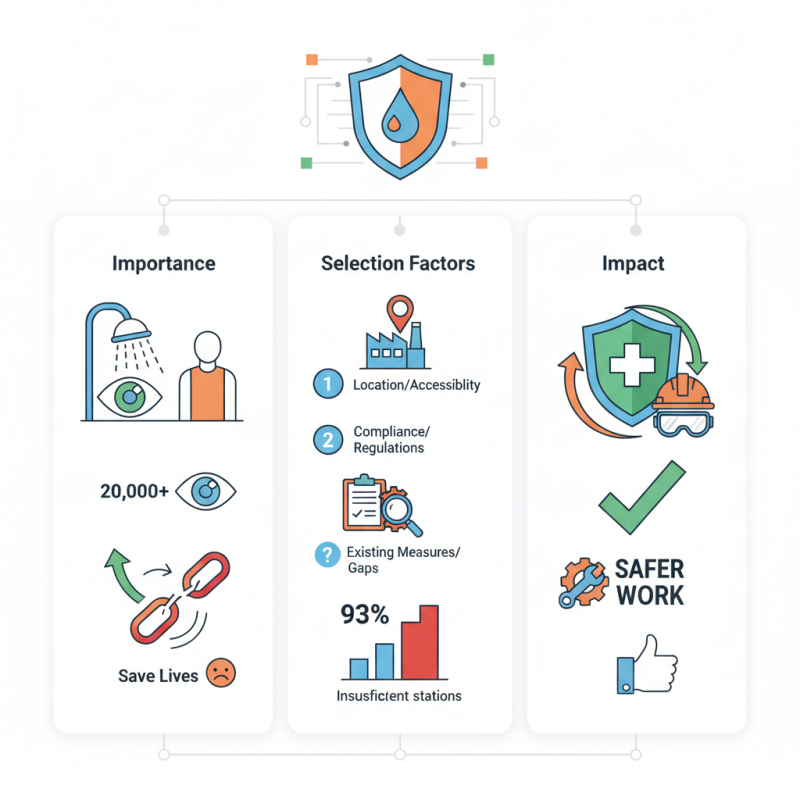
Choosing the right eye wash and shower station is crucial for workplace safety. According to the National Institute for Occupational Safety and Health (NIOSH), over 20,000 eye injuries occur in the workplace each year. Many of these could be prevented with proper eye wash and shower facilities. Leading industry expert Dr. Emily Carter emphasizes, "The right equipment can save vision and lives when accidents happen."
In selecting an eye wash and shower station, consider factors like location, accessibility, and compliance with safety regulations. Research by the American National Standards Institute (ANSI) indicates that 93% of workplaces do not have sufficient emergency wash stations. This alarming statistic highlights the need for effective solutions.
It's essential to reflect on existing safety measures and identify potential gaps. Are your current stations easy to locate? Do they meet regulatory standards? Proper assessment ensures that facilities are not just present but fully functional. Investing in the right eye wash and shower station is a vital step toward creating a safer work environment. It may be overlooked, but the impact it has is undeniable.
Factors to Consider Before Selecting Eye Wash and Shower Stations
Choosing the right eye wash and shower stations is crucial for workplace safety. Before making a selection, it’s essential to consider several factors. According to the American National Standards Institute (ANSI), emergency eye wash stations must deliver a certain flow rate and volume. Ideally, they should provide at least 0.4 gallons per minute for a minimum of 15 minutes. This standard ensures that individuals have ample time to flush contaminants from their eyes effectively.
Location is another vital factor. Stations should be easily accessible within a 10-second travel distance from potential hazards. Visibility is important too. Installing eye wash stations in well-lit areas aids quick identification during emergencies. Maintenance is critical; regular inspections can prevent malfunctions. The American Society of Safety Professionals recommends quarterly checks to ensure operational efficacy. Neglecting maintenance can lead to dire consequences.
Consider the environment where these stations will be installed. Industries like chemicals or metalworking have unique challenges. Dust, debris, and chemical splashes can compromise station performance. Stations should be appropriately designed to withstand these conditions. Reflecting on these considerations can help ensure that your workplace adequately prepares for potential accidents.
Understanding the Different Types of Eye Wash Stations Available
When it comes to safety, selecting the right eye wash station is critical. There are various types to choose from, depending on your workspace and needs. Portable units are ideal for remote locations. Wall-mounted stations are permanent fixtures that save space. The combination models provide both eye washing and drenching showers, catering to diverse emergencies.
Some considerations should guide your decision. Ensure the station meets safety ANSI standards. Regular maintenance is vital. Check the water flow and ensure cleanliness. An underperforming unit could lead to issues during an emergency.
Tips for choosing the right station include evaluating your facility's layout. Think about employee accessibility. Ideal locations are visible and easy to reach. Test the station regularly and educate employees on proper usage. Regular drills can create familiarity. An overlooked aspect can affect response time during an actual incident.
How to Choose the Right Eye Wash and Shower Station for Safety? - Understanding the Different Types of Eye Wash Stations Available
| Type of Eye Wash Station | Features | Installation Requirements | Maintenance Frequency | Recommended Use |
| Portable Eye Wash Station | Lightweight, easily movable; self-contained water supply | No plumbing required; set up in various locations | Monthly water replacement; check functionality | Fieldwork, temporary sites |
| Plumbed Eye Wash Station | Connected to water supply, constant access to clean water | Requires plumbing; locate near hazard areas | Weekly activation to ensure flow | Industries with high chemical exposure |
| Eye Shower Station | Provides full-body water wash; often fixed | Requires plumbing; drainage necessary | Monthly checks on water flow and temperature | Manufacturing, labs with hazardous materials |
| Eye Wash Bottle | Compact; single-use bottles with saline | No installation needed; easily accessible | Check expiry and conditions every 6 months | Small spaces, personal use |
Key Safety Standards and Regulations for Eye Wash Equipment
When selecting eye wash and shower stations, adhering to key safety standards is critical. According to the American National Standards Institute (ANSI) Z358.1 standard, eye wash stations must be easily accessible within ten seconds from harm. They must provide a continuous flow of water for a minimum of 15 minutes. Regular maintenance is essential to ensure compliance with these regulations. According to a recent industry report, nearly 40% of facilities fail to meet these standards due to inadequate maintenance.
These safety stations should be clearly marked and free from obstructions. Installing these units in high-risk areas is crucial. The Centers for Disease Control and Prevention (CDC) emphasizes the importance of proper location, stressing that every workplace should conduct risk assessments to identify necessary stations.
Tips: Regularly inspect the station for functionality. Keep water lines clear and ensure rapid availability. Training employees on usage increases preparedness.
Choosing the right eye wash equipment goes beyond compliance. Facilities must consider the specific hazards present. Evaluate your workplace carefully. Compliance alone does not guarantee safety; continuous training and assessment are vital. Regular drills can help identify gaps in readiness. Always aim for improvement and ensure all employees understand emergency procedures thoroughly.
Maintenance and Testing Requirements for Eye Wash and Shower Stations
When choosing an eye wash and shower station, maintenance and testing are crucial. Regular checks ensure these stations function correctly. According to the American National Standards Institute (ANSI) standard Z358.1, these stations must be tested weekly. This frequency helps identify any malfunctions early.
Inspecting water flow and temperature is critical. The water should be tepid, typically between 60°F and 100°F. Regularly draining and cleaning the fixtures prevents contamination. A 2019 study found that neglecting this can lead to hazardous bacteria buildup. This presents a significant risk in workplaces exposed to harmful chemicals.
Tips: Schedule weekly tests. Keep records of each test. Staff should know how to use these stations effectively. Regular training can save lives. Also, ensure that the pathway to the stations remains clear. Obstructions can delay access during emergencies, leading to severe injuries or complications. Regular maintenance isn't just a task; it's a vital part of workplace safety.
Training Employees on Proper Use of Eye Wash and Shower Stations
Training employees on the proper use of eye wash and shower stations is essential for workplace safety. Many workers may not understand the critical nature of these stations. Inadequate training can lead to improper use, increasing the risk of injuries. Employees should know exactly how to respond in emergencies. Regular training sessions can reinforce this knowledge and boost confidence.
Hands-on practice in a safe environment is helpful. For instance, participants can simulate scenarios where eye wash stations are needed. This method builds familiarity and encourages quick reactions during real incidents. However, it's vital to address potential gaps in knowledge. Some employees might hesitate to ask questions, fearing embarrassment.
Visual aids and clear instructions are crucial. Simple diagrams explaining the steps can enhance understanding. Additionally, conducting refresher courses helps maintain awareness. Gathering feedback after training sessions can highlight areas needing improvement. Employees should feel empowered to voice concerns. A culture of safety promotes responsibility and teamwork.
