Why Choose Telemecanique Sensors for Industrial Automation?
Industrial automation depends on reliable signals from machines, materials, and work areas. Sensors help detect position, presence, pressure, and other operating conditions. Their performance can influence process consistency, equipment protection, and maintenance decisions.
The scale is substantial. The International Federation of Robotics’ World Robotics 2024 report recorded 4.28 million industrial robots operating worldwide in 2023. Deloitte’s 2025 Smart Manufacturing and Operations Survey found that 92% of manufacturers viewed smart manufacturing as a competitiveness driver over the next three years. These figures point to growing automation, but they do not mean every installation needs the same sensor.
Telemecanique Sensors offers products for industrial detection and monitoring, including limit switches, proximity sensors, photoelectric sensors, and pressure sensors. The right choice depends on the target, sensing distance, mounting space, operating environment, and control-system requirements. A sensor facing dust, vibration, or repeated washdowns may need different protection from one installed inside a clean enclosure.
No sensor is magic.
This article explores why manufacturers consider Telemecanique Sensors for industrial automation. It looks at product range, application fit, integration, and practical selection factors. It also recognizes a less convenient truth: a respected brand cannot compensate for incorrect installation or unsuitable specifications. Careful review of the machine, operating conditions, and documentation remains essential.
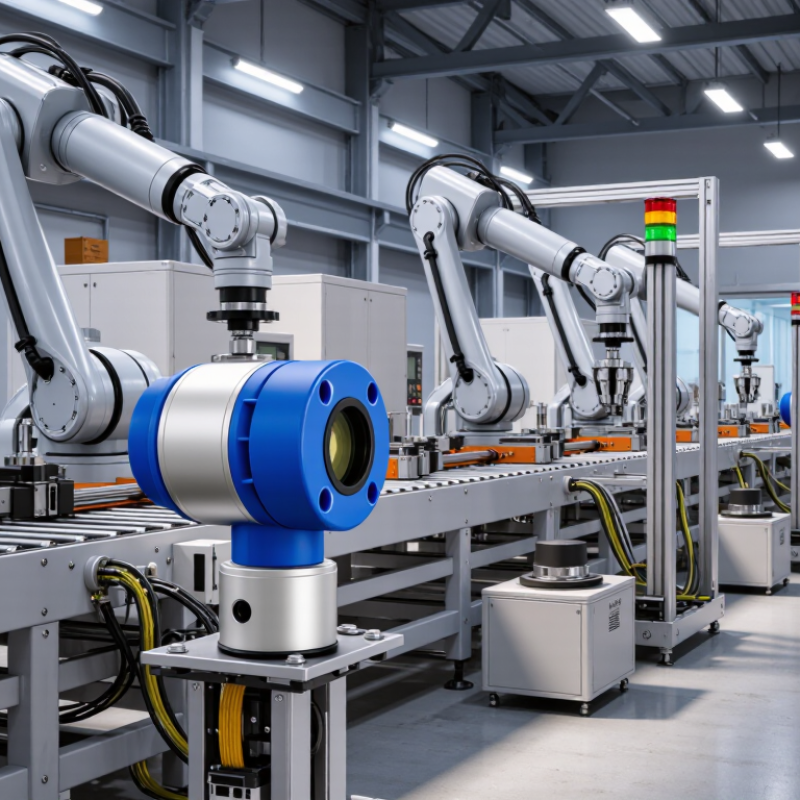
Telemecanique Sensors: Brand Scope and Industrial Role
Industrial sensor portfolios typically cover several detection needs: inductive sensors for metal targets, photoelectric sensors for objects across a gap, and limit switches for defined mechanical positions. The right choice depends on the task, not a catalogue label. A dusty conveyor, a washdown area, and a compact machine frame place different demands on sensing distance, housing, and wiring. Small details matter.
In automation, sensors turn physical events into signals a control system can use. They help track parts, confirm machine positions, and detect conditions that may interrupt a cycle. Reliable performance depends on more than the sensing element. Mounting, alignment, cable routing, temperature, and electrical compatibility all deserve attention. A sound specification should include the target material, operating environment, response needs, and maintenance access. Still, plans can miss real-world vibration or residue; commissioning may reveal that.
Tips: Test with the actual target and machine speed. Check alignment after mounting, and record the settings that work. A quick bench test is useful, but it cannot reproduce every production condition.
Industrial Automation Sensors: Scope and Industrial Role
| Sensor Category | Operating Principle | Typical Detection or Measurement | Common Industrial Role | Integration Considerations |
|---|---|---|---|---|
| Inductive proximity | An electromagnetic field detects changes caused by a nearby conductive target. | Presence or position of metal objects, without physical contact. | Machine positioning, part counting, and end-of-travel detection. | Sensing distance depends on the target material, size, and sensor installation. |
| Capacitive proximity | A change in capacitance indicates a nearby object or material. | Non-metallic solids and, in suitable applications, liquids or powders. | Level detection in containers and presence detection on production lines. | Sensitivity can be affected by material properties, moisture, and nearby objects. |
| Photoelectric | Light transmission or reflection is used to detect an object. | Object presence, passage, or position across a sensing path or field. | Conveyor monitoring, package detection, and automated sorting. | Select a sensing arrangement suited to the target, background, and ambient conditions. |
| Ultrasonic | Sound-wave reflections are used to detect objects or estimate distance. | Distance, object presence, or level, including for some visually challenging targets. | Tank level monitoring, object detection, and position checking. | Performance depends on target shape, surface, distance, and environmental conditions. |
| Pressure | A sensing element converts applied pressure into an electrical signal. | Pressure in gas or liquid systems. | Monitoring pneumatic and hydraulic circuits, pumps, and process lines. | Choose a pressure range and process connection compatible with the application. |
| Limit switch | Mechanical actuation changes the state of an electrical contact. | Physical contact with a moving part or machine component. | Position confirmation, travel limits, and machine sequence control. | Check actuator type, mechanical travel, switching frequency, and contact rating. |
| Safety interlock | A safety-related device monitors the state of a guard or access point. | Whether a machine guard or protective door is open or closed. | Supporting safety functions that prevent or stop hazardous machine operation when access is detected. | The complete safety function requires appropriate system design, validation, and installation. |
| Sensor-to-control interface | Discrete switching signals or continuous measurement signals are read by a control system. | Machine states, object events, and process measurements. | Provides input for PLC logic, alarms, sequencing, and process monitoring. | Verify signal type, supply voltage, wiring, environmental rating, and control-system compatibility. |
Sensor selection should be based on the target or process variable, operating environment, required response, installation constraints, and control-system requirements.
Sensor Types and Their Operating Principles
Industrial sensors turn physical changes into usable control signals. Inductive proximity sensors create an electromagnetic field and detect metal when it disturbs that field. They suit machine-tool fixtures, where chips and oil can make optical detection unreliable. Capacitive sensors respond to changes in an electric field, allowing them to detect materials such as plastic granules or liquids. Their sensitivity can also invite false triggers; setup matters.
Photoelectric sensors detect a light beam’s interruption or reflection. On a packaging line, they can count cartons without touching them. Ultrasonic sensors measure the return time of sound waves, making them useful when color or surface finish varies. Temperature sensors add another layer: thermocouples generate a small voltage, while resistance temperature detectors change resistance as heat shifts. Each method has limits. Dust, vibration, wiring, and mounting distance can distort readings.
The International Federation of Robotics reported 4,281,585 industrial robots operating worldwide in 2023, a 10% increase from 2022 in World Robotics 2024. That scale highlights why dependable feedback matters, though the figure measures robots, not sensor installations.
In practice, engineers should match a sensing principle to the target, environment, and response time, then test it under real operating conditions. A clean bench test is helpful, but it can miss the messy details of a running line.
Integration with Industrial Automation Systems
Industrial automation works best when sensors communicate cleanly with controllers, drives, and plant software. That sounds simple, but wiring mismatches, slow updates, or missing diagnostics can still stop a line. Before installation, confirm the sensor’s output type, supply voltage, connector, sensing distance, and PLC input compatibility. An inductive sensor beside a conveyor, for example, should detect each metal pallet despite vibration, oil mist, and changing gaps. With IO-Link or suitable network interfaces, technicians can read device status and adjust parameters without rewiring every point. Small details matter.
Integration also means planning for maintenance and expansion, not just sending a signal to the PLC. The International Federation of Robotics’ World Robotics 2024 report recorded 541,302 industrial robot installations worldwide in 2023, with 4.28 million robots operating in factories. As automation grows, consistent device data and clear documentation become more valuable. Deloitte’s 2024 Smart Manufacturing survey found that 92% of surveyed manufacturing executives expect smart manufacturing to drive competitiveness within three years. That ambition depends on reliable field-level connections. Yet connectivity alone is not an improvement; excessive alerts can overwhelm operators. Test it live. Pilot sensors on one production cell, verify response times under real conditions, and document replacement settings. Operators should be able to troubleshoot the setup during a night shift.
Why Choose Industrial Sensors for Automation Integration?
Common industrial communication options support integration across sensors, controllers, and automation networks.
Typical nominal link rates are shown, not guaranteed application throughput. Ethernet-based rates reflect common 100BASE-TX links; actual performance depends on network configuration, traffic, and device capabilities. IO-Link COM3 operates at 230.4 kbit/s, while CANopen supports rates up to 1 Mbit/s at suitable bus lengths.
Performance, Safety, and Reliability Considerations
In industrial automation, sensor performance is more than a fast response time. The device must detect the target consistently despite vibration, dust, changing temperatures, or nearby machinery. A conveyor sensor may work perfectly during a clean bench test, then miss dark or reflective objects on a busy line. Check the sensing range, target material, switching frequency, and mounting clearance against real operating conditions. Small details matter.
Safety depends on choosing a sensor suited to its role. A standard presence detector should not be treated as a safety-rated device unless its documentation confirms that function. Review the required safety level, diagnostic features, wiring method, and compatibility with the control system. During commissioning, test expected faults, not just normal operation. This step is easy to rush.
Reliability also comes from installation and maintenance. Secure brackets, protected cables, and accessible indicators can reduce troubleshooting time. Keep spare units consistent with the installed specifications, and record settings that affect detection. Even a well-selected sensor can fail when misaligned or coated with residue; that possibility deserves attention, not optimism. Check it again after the line changes.
Selecting Sensors for Specific Industrial Applications
Selecting a sensor starts with the task, not the catalogue. A metal part passing a few millimetres from a bracket may suit an inductive proximity sensor. A clear bottle on a fast conveyor may need a photoelectric sensor with reliable background suppression. For hot pipes, dusty bins, or washdown zones, check the sensing principle and enclosure rating against the actual conditions. Small details matter.
Then compare operating distance, response time, output type, and mounting space. A sensor that detects a target on a clean bench may behave differently near moving machinery, reflective surfaces, or electrical noise. Record the target material, temperature range, expected vibration, and cleaning routine before choosing. Leave a practical margin beyond the minimum sensing distance. It helps.
Installation can change the result. A metal housing near an inductive sensor may affect its range, while a poorly aligned photoelectric beam can create missed counts. Confirm the wiring matches the controller, and test the sensor with real parts at normal line speed. One trade-off is easy to overlook: extra sensing distance can increase the chance of detecting nearby objects. I would not claim that one model suits every line; field conditions rarely stay that tidy. Documenting test results and checking them after maintenance gives teams a clearer basis for future adjustments.
Article Source:
Contact us
Please fill out the enquiry form, and our dedicated team will promptly attend to your request