How to Choose the Best Line Boring Machine
Choosing a Line Boring Machine is not simply a matter of comparing prices or advertised capacity. The right choice depends on the workpiece, required bore diameter, machining reach, setup conditions, and tolerance requirements. A machine that fits a compact housing may not suit a long excavator boom or a large industrial frame. Details matter.
Grand View Research’s Machine Tools Market analysis estimated the global market at USD 84.2 billion in 2022 and projected continued growth through 2030. That broad figure does not measure demand for line boring machines alone. It does, however, reflect the wider investment in machining equipment, where accuracy, uptime, and service support influence purchasing decisions. For technical comparisons, buyers can also consult ISO 230-1, which describes tests for the geometric accuracy of machine tools, and ISO 286-1 for dimensional tolerances.
A practical evaluation should examine bar diameter and length, mounting options, feed control, drive power, and the availability of cutting tools and replacement parts. Ask how the machine performs on the materials and bore sizes you actually encounter. Request documented accuracy data, not just a best-case demonstration. Small print can matter. A common mistake is choosing maximum capacity while overlooking setup time, access around the workpiece, or operator training. Those trade-offs deserve a careful look. This guide explains how to compare specifications, verify supplier claims, and select a machine suited to real jobs—not just a catalogue description.
Identify the Repair Tasks and Workpiece Requirements
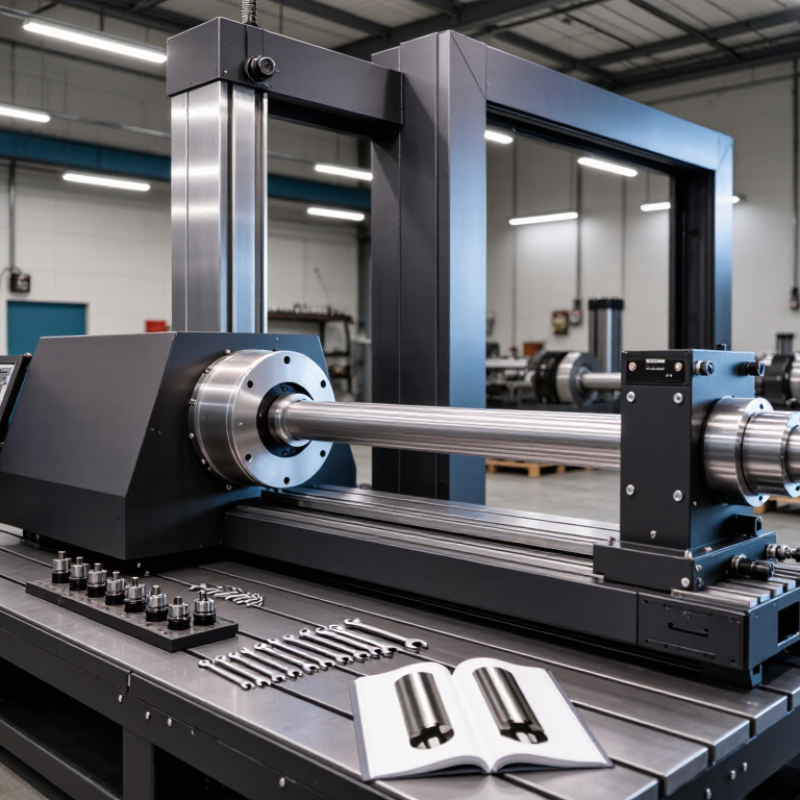
Before comparing machines, define the repair, not just the shaft diameter. Are you restoring a worn bearing seat, aligning a long housing, or enlarging a bore in place? Each task sets different demands. A bearing-seat repair may require controlled material removal and a consistent finish. A long, narrow bore calls for a stiff bar and adequate support to limit deflection. In-situ work adds access constraints. Measure the clearance around the machine, check available power, and allow room for setup. Small details matter.
Then identify the workpiece. Record bore diameter and length, material, hardness, and the amount of stock to remove. Check whether the bore is straight, stepped, or interrupted, and note nearby walls or flanges that may block the tooling. Measure alignment at both ends when possible; a single reading can hide a taper. Consider how the part will be held. A rigid fixture reduces vibration, while an awkward setup can spoil an otherwise sound cut. Don’t guess. If measurements are uncertain, pause and verify them. It may feel slower, but it helps prevent choosing a machine that reaches the bore yet cannot maintain the required tolerance. Match spindle speed, feed control, bar length, and tooling capacity to the job, then check the machine’s stated operating limits and service guidance.
How to Choose the Best Line Boring Machine
Identify the repair task and workpiece requirements before comparing machine features. The chart shows indicative selection priorities on a 1–5 scale; actual needs depend on the workpiece dimensions, access, tolerances, and repair procedure.
Match Machine Capacity to Bore Size and Accuracy Needs
A line boring machine should be sized for the actual bore, working length, and tolerance—not just the largest diameter on the job sheet. Check the machine’s stated bore range, bar length, feed control, and cutter adjustment. A long bar reaching across a deep housing may deflect, even when its diameter is within capacity. Not just diameter. In practice, the reach figure can mislead.
Use the finished-part tolerance to set the accuracy target. ISO 286-1:2010 assigns a 35 μm tolerance to IT7 and 22 μm to IT6 at a 100 mm nominal size. These are workpiece tolerance values, not guaranteed machine accuracy. Leave room for setup, bar deflection, and thermal change; a useful planning target is machine repeatability well inside the part’s tolerance. Ask for measured performance under comparable conditions. For numerically controlled axes, ISO 230-2:2014 describes tests for positioning accuracy and repeatability. A test result from a short bar may not represent a long-reach setup. I would verify it. Also confirm that the machine can hold the required diameter across the full bore, not merely at one end. Small margins matter.
Assess Tooling, Controls, Portability, and Safety Features
How to Choose the Best Line Boring Machine
Assess tooling, controls, portability, and safety as one working system. Start with the bores you actually repair: record their diameters, depths, and access limits. Match the boring bar’s length and stiffness to that range; an overly long bar can chatter and leave a rough finish. Check whether the machine accepts practical cutter sizes and replacement inserts. Small detail, big impact. A dull or poorly matched insert can waste time and damage a carefully prepared bore.
Controls should make feed and speed adjustments predictable, not merely look advanced. Look for clear settings, a readable display, and repeatable adjustments. If possible, test the controls under load and listen for changes in vibration. Portability matters when repairs happen on equipment that cannot easily be moved. Compare total setup weight, clamp reach, and how securely the machine mounts to the workpiece. A compact unit is not useful if it takes too long to align. That trade-off is easy to underestimate.
Inspect guarding, emergency-stop access, cable routing, and chip management before purchase. Operators should be able to keep hands and loose clothing clear of rotating parts, while wearing appropriate eye protection. Ask how the machine is secured before cutting begins, and check that the setup instructions explain alignment and safe operation clearly. No checklist catches every awkward job. Leave room for judgment, and choose equipment your team can inspect, maintain, and operate consistently.
Compare Total Cost, Service, and Supplier Support
A line boring machine’s purchase price is only one part of its cost. Compare the complete quotation, including tooling, setup, training, transport, and recommended spare parts. Ask what is included and what is charged separately. Small items add up.
Service matters when a machine is working on a customer’s equipment and downtime is costly. Ask how quickly a technician typically responds, whether remote troubleshooting is available, and which parts are stocked locally. Request sample maintenance schedules and clear warranty terms. Vague promises are hard to plan around.
Supplier support should also fit your jobs. Share the bore diameters, materials, access constraints, and expected workload you actually handle. Then ask for a demonstration or references from comparable applications. Check how the machine is aligned, secured, and adjusted in a real setup. A polished demonstration is useful, but it may not reveal every difficulty. Compare expected service intervals and consumable costs over several years, not just the first season. I would leave room in the budget for unplanned repairs; estimates are never perfect. A supplier willing to discuss limitations, response times, and training details is easier to assess than one offering only a low price.
