How to Choose the Best Resistance Welder for Your Needs?
Choosing the right resistance welder is crucial for effective metal joining. The global resistance welding equipment market was valued at over $3 billion in 2022, with expectations to grow due to rising manufacturing demands. Professionals stress the importance of selecting a welder that meets specific project requirements.
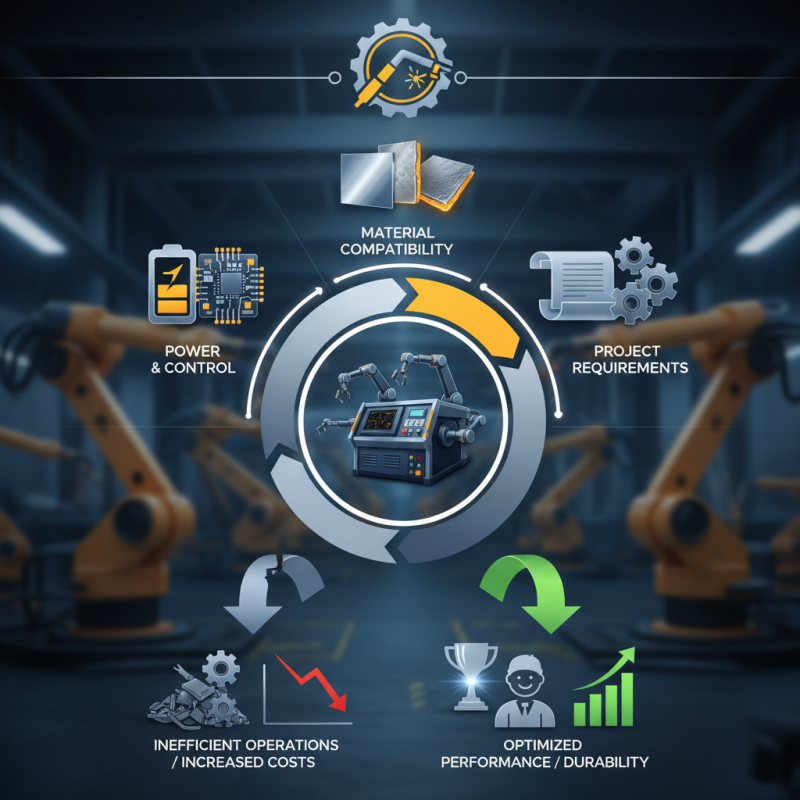
In the field of welding, not all resistance welders are created equal. You have to consider features like power output, control mechanisms, and material compatibility. Reports indicate that improper choice can lead to inefficient operations and increased costs. This highlights the need for a carefully considered purchase.
Reflecting on industry standards, many users encounter challenges in optimizing their equipment. The effectiveness of a resistance welder often hinges on its operation within defined parameters. Decisions based on superficial features can overlook critical aspects that influence performance and durability. Choosing wisely can make a significant difference in project outcomes.
Understanding Resistance Welding: Key Concepts and Applications
Resistance welding is a vital joining method used in many industries, including automotive and electronics. This process involves applying heat generated from electrical resistance to materials. According to the International Institute of Welding, around 20% of all welded joints in the automotive sector use resistance welding due to its speed and efficiency.
Understanding key concepts is crucial for effective application. For instance, the electrode force, which influences the weld quality, must match the material thickness. Inadequate force may lead to weak joints, while excessive force can cause damage. A report from the American Welding Society emphasizes that nearly 30% of welding defects arise from improper settings. Proper training is essential for operators to grasp these principles effectively.
Applications of resistance welding range from manufacturing components to assembling structures. Its strengths lie in its energy efficiency and consistency. However, challenges do exist. For example, in multi-layer assemblies, achieving uniform heating can be complex. A recent study indicated that 15% of manufacturers encounter difficulties with dissimilar materials. Addressing these issues often requires innovative solutions and thorough understanding of material properties.
How to Choose the Best Resistance Welder for Your Needs?
| Feature |
Description |
Importance Level |
| Welding Type |
Choose between spot, projection, and seam welding based on application. |
High |
| Material Compatibility |
Ensure welder supports materials like steel, aluminum, or copper. |
High |
| Power Supply |
Consider if you need single-phase or three-phase power. |
Medium |
| Welding Capacity |
Check for continuous and maximum current ratings for production needs. |
High |
| Cooling System |
Evaluate if water-cooled or air-cooled options are necessary. |
Medium |
| Control Features |
Look for digital displays and programmable settings for efficiency. |
High |
| Portability |
Consider weight and ease of transport for onsite work. |
Low |
Types of Resistance Welders: Comparing Arc, Spot, and Projection Welders
When choosing a resistance welder, understanding the types available is crucial. There are three main categories to consider:
arc,
spot,
and projection welders. Each type serves specific applications, making it vital to select one that aligns with your needs.
Arc welders create heat through an electric arc. They excel in joining thick materials. However, users must practice to avoid uneven welds.
Spot welders, on the other hand, are designed for thin sheets. They produce localized heat at contact points. This method is fast but may struggle with thicker materials.
Ensuring the right pressure and alignment is key for effective spot welding.
Projection welders connect parts with raised areas, allowing for multiple welds at once. They are efficient but can be complex to set up correctly.
Each welder type has strengths and weaknesses. Novice users might find spot welding more intuitive. Yet, mastering
arc welding can yield stronger joints. It's essential to weigh your project’s demands against your skill level. It's also important to consider service and maintenance needs, as these can affect long-term reliability and performance.
Factors to Consider When Choosing a Resistance Welder
Choosing the right resistance welder is crucial for efficient work. There are several factors to consider. First, think about the material you will work with. Different materials require specific welding techniques. It's essential to match the welder to your material to ensure a quality weld.
Next, consider the welder’s power output. Higher power settings are suitable for thicker materials. However, excessive power can damage thinner metals. Finding a balance is vital. User-friendly controls are another important aspect to check. A welder with intuitive settings can make the learning curve smoother.
The size and weight also matter. A portable model may be desirable for smaller workshops. However, larger models often provide more stability during heavy work. Reflect on your workspace and how you intend to use the machine. Lastly, review safety features. A welder with protective functionalities can prevent accidents. Each factor plays a role in your decision. Take the time to weigh these elements thoughtfully.
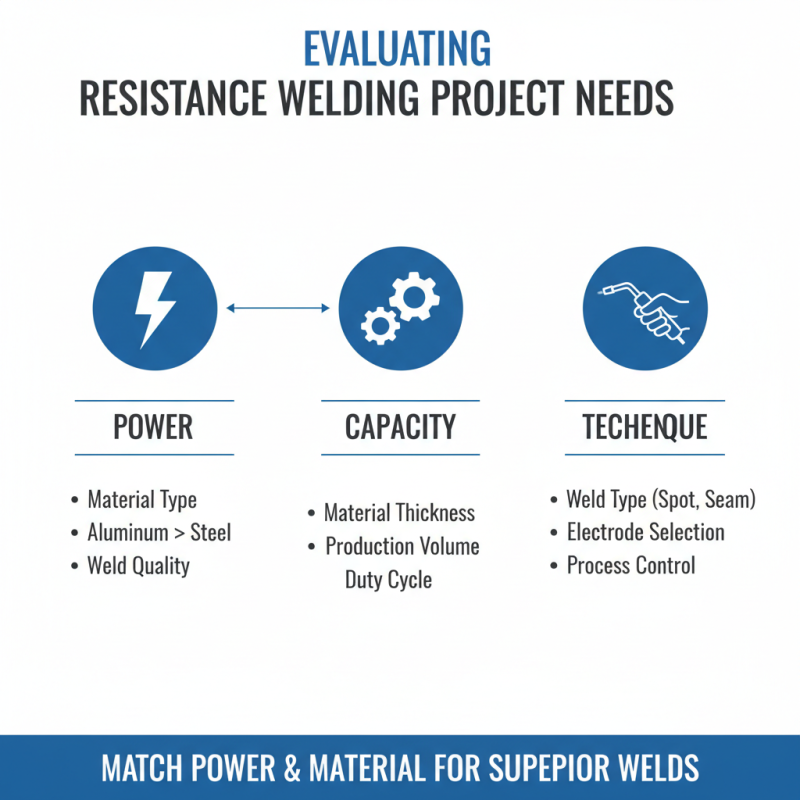
Evaluating Your Project Needs: Power, Capacity, and Technique
When evaluating your project needs for resistance welding, focus on power, capacity, and technique. Selecting the right welder requires a deep understanding of the materials and the specific application. For example, aluminum requires more power than steel for effective welding. Reports indicate that weld quality improves significantly when the power output matches the material type.
Capacity matters as well. The size of the components being welded determines the machine's capacity. Larger parts need higher tonnage, often above 20 tons. Additionally, consider the duty cycle. A higher duty cycle often means longer production runs without overheating, which is vital for efficiency.
Tips: Always analyze your production volume. If high output is expected, opt for machines with higher capacity. Additionally, consider adjustable settings. This flexibility can accommodate varying thicknesses.
Technique also plays a key role. Different welding techniques can impact the strength and appearance of the weld. Data suggests that using controlled cooling improves the final weld quality. Reflection on past projects can help identify what techniques yielded the best results. Aim to leverage your experiences to guide future selections.
Budgeting for Your Resistance Welder: Investment vs. Long-term Use
When budgeting for a resistance welder, it's crucial to balance initial investment and long-term usage. Quality welders can vary significantly in price. However, cheaper options may lead to more frequent repairs or replacements. Investing in a reliable model often saves money over time. Consider the materials you'll work with and the frequency of your projects. These factors influence the type of welder you might need.
Evaluate your specific needs. A hobbyist may require a different machine than a professional. Long-term use should weigh heavily in your decision. An underpowered welder could hinder your projects. You might end up spending more fixing issues than if you had chosen wisely upfront. Don't overlook the importance of versatility. A machine that works on multiple materials can be more cost-effective.
Reflect on what you really need. Sometimes, the most expensive option is not the best for your situation. Think about your skill level too. A complex welder can frustrate beginners. Weigh your options carefully. Exploring your budget versus expected use will lead to a smarter choice in the long run.
Budgeting for Your Resistance Welder: Investment vs. Long-term Use