How to Choose the Best Robotic Welder for Your Business?
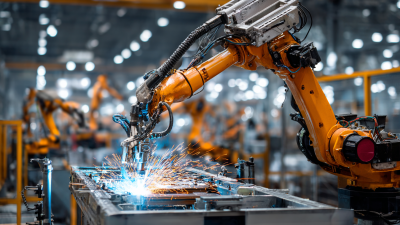
Choosing the right robotic welder can significantly impact your business’s efficiency and productivity. A robotic welder automates processes, reducing manual labor and minimizing errors. However, the choice can be daunting due to the varied options available on the market.
Understanding your specific welding needs is vital. Consider factors like material types, production volume, and the complexity of welds required. Each application demands different features from a robotic welder. For instance, some welders are designed for heavy-duty projects while others excel in finer, intricate work. Often, businesses overlook these nuances, leading to misaligned investments.
Seeking expert advice and researching credible manufacturers can guide your decision. An ideal robotic welder should not only meet current needs but also be adaptable for future challenges. Reflecting on past purchases and adjusting to new technologies is crucial. Investing in the right robotic welder could mean the difference between thriving and merely surviving in today’s competitive marketplace.
Understanding Your Business Needs for Robotic Welding Solutions
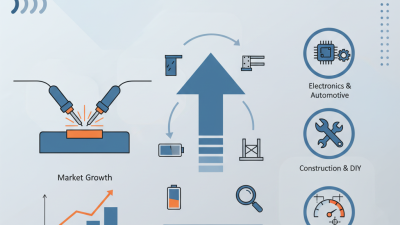
Understanding the specific needs of your business is crucial when selecting a robotic welder. According to a report by the International Federation of Robotics, the market for robotic welding is expected to grow by 15% annually. This high demand stems from companies seeking automation solutions that increase productivity and consistency. Assess your current production volume and future growth aspirations. Knowing your capacity helps in deciding whether a single welding robot suffices or if a fleet is necessary.
When considering robotic welding, think about the complexity of your projects. Data from the Welding Institute indicates that businesses with diverse welding tasks benefit from advanced programming and adaptability features in robotic welders. If your operations include various materials and geometries, it's vital to choose a system that can handle these variations without requiring frequent reconfiguration. Understand that not all systems are equally intuitive, and proper training is essential to maximize the advantages of robotic welding solutions.
Be mindful that initial costs for robotic systems can be significant. However, a well-implemented system can yield a 25% increase in overall production efficiency over time. Evaluate the return on investment by factoring in labor costs, maintenance, and production times. As you navigate the options, involve your team in the decision-making process. Their insights could highlight needs you hadn't considered, ensuring that you find a solution tailored to your operational reality.
Key Features to Look for in Robotic Welders
When selecting the best robotic welder for your business, consider the essential features that drive efficiency. A versatile welding process is crucial. Ensure the welder can handle various materials and thicknesses. This flexibility supports diverse projects and can help meet customer demands.
Accuracy is another vital aspect. Look for a robotic welder with high precision. Consistent weld quality reduces rework and material waste. A welder’s ability to maintain consistent parameters leads to better overall outcomes. Investing in a high-precision model could yield long-term savings.
Evaluate the user interface as well. A straightforward and friendly interface will ease operation and training. A complicated control system could lead to operator errors. Choose equipment that supports quick learning to minimize downtime.
Be aware that every model has its limitations. Some may struggle with complex geometries or specific types of joints. Researching potential challenges before making a purchase is crucial. Always keep in mind the unique needs of your operations. Every choice matters in crafting the right welding solution for your business.
Assessing Your Budget for Robotic Welding Equipment
When assessing your budget for robotic welding equipment, several factors come into play. A common misconception is that the initial cost is the only financial consideration. In reality, you must also account for maintenance costs, training expenses, and potential downtimes. According to a report from the International Federation of Robotics, around 20% of total costs associated with robotic systems can come from maintenance and support. Businesses should prepare for these ongoing expenses.
It's vital to analyze the return on investment (ROI). A well-chosen robotic welder can increase productivity by up to 30%, according to industry studies. However, if the equipment is not fitting your specific needs, you could face a loss. Choosing a generic model often leads to increased operational costs. On average, companies that invest in customized solutions see a 15% higher ROI over three years.
Budgeting effectively means considering not only the price tag but the long-term impact. Many companies overlook the importance of future options. Upgrades may add significant costs later. A thorough evaluation should include potential scaling needs and flexibility. Always ask, “Will this equipment adapt as my business grows?” Exploring these aspects ensures a wiser investment in robotic welding technology.
Budget Allocation for Robotic Welding Equipment
Evaluating the Manufacturer's Reputation and Support Services
When selecting a robotic welder, evaluating the manufacturer's reputation is crucial. A provider’s history in the industry can signal their reliability. According to a report by MarketsandMarkets, over 40% of businesses prioritize vendor reputation as a key factor in their purchasing decisions. This highlights the need for thorough research before committing to any purchase.
Support services are equally important. A manufacturer with strong customer support can significantly reduce downtime. For instance, the American Welding Society found that companies with robust support experience 30% less equipment downtime. This emphasizes the idea that while technical specifications matter, the level of support can affect business efficiency.
Potential buyers should analyze reviews and case studies. User experiences can reveal common issues with specific models. It's less about seeking perfection and more about understanding the challenges faced by others. Sometimes, a well-regarded manufacturer may falter in specific areas. This ongoing dialogue in user communities allows for better-informed decisions, leading to more confident investments.
Comparing Different Models and Technologies in Robotic Welding
In robotic welding, choosing the right model can significantly impact your production. Consider the welding process type you need, such as MIG, TIG, or laser welding. For instance, MIG welding is often faster and easier to automate. It suits many applications but might not provide the best finish for all materials. TIG welding, on the other hand, offers more precise control for thinner materials but may require skilled operators.
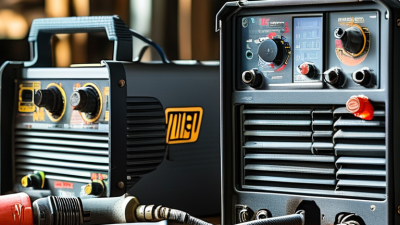
When comparing technologies, assess the power source and control systems. Some models use advanced digital systems for real-time adjustments. This can enhance quality but may also demand more maintenance. Look for feedback on ease of integration into existing systems. Performance and reliability are crucial, yet reflecting on past failures with certain models can offer vital insights. Some businesses hesitate to switch to newer technologies. This can stem from a fear of unexpected challenges.
Finally, think about the future of your operations. Investing in a versatile robotic welder can save costs in the long run. Your choice also influences employee training needs. A sophisticated system might require more training, while a simpler design could be easier for your staff to master. Tailoring your selection to both present and future needs is essential for sustained success.