How to Choose the Best Spot Welding Gun in 2026?
Choosing the right spot welding gun in 2026 requires more than comparing prices or reading attractive product descriptions. In real workshops, the best tool must deliver stable current, accurate electrode pressure, and comfortable handling during repeated welds. A gun that feels manageable for ten joints may become tiring after several hundred. Small details matter.
Our evaluation focuses on measurable performance and practical experience. We examine welding capacity, duty cycle, transformer efficiency, cable flexibility, cooling design, and electrode access. Compatibility with modern resistance welding systems also deserves attention, especially where automated controls and digital monitoring are involved. Verified specifications are more useful than vague claims. Independent testing helps, too.
Safety remains essential. Look for insulated handles, reliable trigger controls, thermal protection, and clear maintenance instructions. Reputable manufacturers should provide technical documentation, replacement-part support, and traceable warranty terms. These details often reveal a company’s reliability better than polished advertising. Still, no guide can predict every workshop condition. Metal thickness, joint geometry, operator skill, and available power may change the final decision.
Do not chase maximum power alone. It can increase heat, fatigue, and unnecessary energy use. A compact spot welding gun may outperform a larger model on thin sheet assemblies. Yet my own assessment would remain incomplete without long-term field feedback. Short demonstrations rarely expose cable heating, electrode wear, or awkward balance. The strongest choice combines tested performance, safe operation, serviceability, and a realistic understanding of your daily workload.
What a Spot Welding Gun Is and How It Works
How to Choose the Best Spot Welding Gun in 2026?
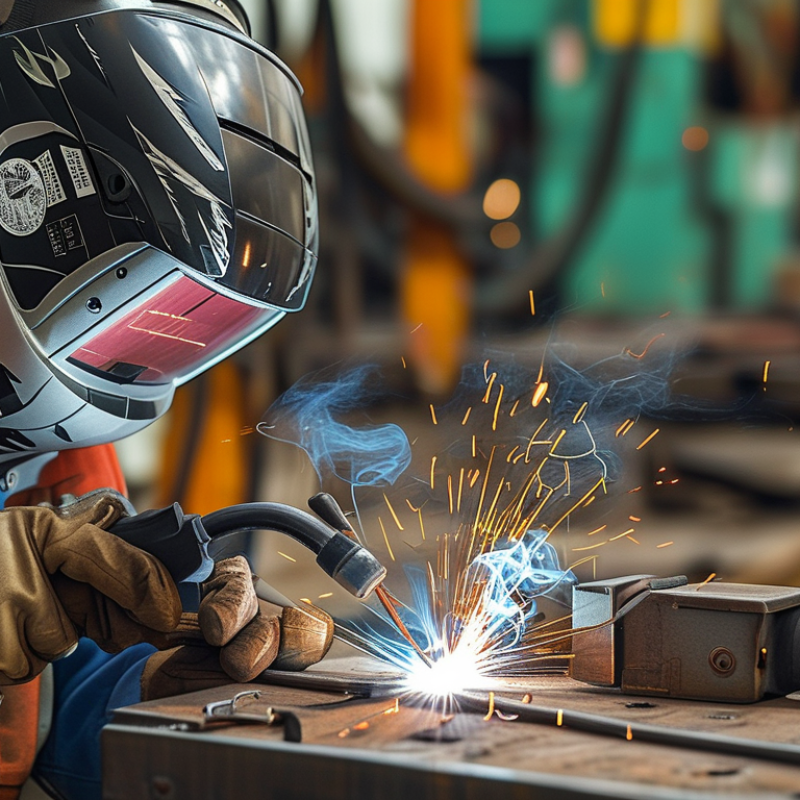
A spot welding gun joins metal sheets through heat, pressure, and electrical resistance. Two copper electrodes clamp the sheets tightly. A controlled current then passes through the contact area. Resistance creates heat, forming a compact weld nugget. The electrodes release after cooling begins. Simple in principle. Not simple in production.
The International Energy Agency reported over 17 million electric cars sold worldwide in 2024. That volume increases demand for repeatable body and battery-case assembly. A suitable gun must match sheet thickness, alloy type, and access depth. Check welding current, electrode force, duty cycle, cable flexibility, and cooling performance. Closed-loop control can monitor current, force, and weld time. These details reduce inconsistent nuggets and surface marks. ISO 18595 provides requirements for resistance spot welding equipment and process conditions.
In practical trials, fit the gun inside the intended workspace before comparing specifications. A powerful model may still fail inside a narrow frame. Measure the throat depth. Test electrode alignment on real material, not only sample coupons. I have seen selection mistakes begin with attractive current ratings. They ignored operator fatigue and cable drag. That judgment deserves review. Ask for weld-current records, maintenance intervals, and verified duty-cycle data. Independent testing matters more than impressive brochure figures. Proper force calibration remains essential, especially when aluminum sheets or coated steel are involved.
How to Choose the Best Spot Welding Gun in 2026? — What a Spot Welding Gun Is and How It Works
A practical comparison of spot-welding gun types, operating ranges, material suitability, and selection criteria.
| Gun Type | How It Works | Typical Welding Current | Typical Electrode Force | Recommended Material Thickness | Best-Fit Applications | Key Advantages | Main Limitations |
|---|---|---|---|---|---|---|---|
| Manual Handheld Gun | Two copper-alloy electrodes clamp overlapping sheets while a short, high-current pulse creates a weld nugget through electrical resistance. | 5–15 kA | 1.5–4.0 kN | Approximately 0.5–2.0 mm per sheet, depending on material and joint design. | Repair work, low-volume fabrication, maintenance, and flexible production lines. | Portable, comparatively affordable, and easy to reposition. | Operator fatigue, variable weld consistency, and lower productivity than automated systems. |
| Pneumatic Handheld Gun | Compressed air closes the electrodes and applies a repeatable clamping force before the welding current is delivered. | 8–20 kA | 2–6 kN | Approximately 0.6–2.5 mm per sheet for common low-carbon steel assemblies. | Medium-volume sheet-metal production and automotive repair environments. | More consistent force and weld quality than a fully manual gun. | Requires clean, regulated compressed air and suitable hose management. |
| Transformer-Integrated Gun | The welding transformer is mounted close to the electrodes, reducing the length of the high-current circuit and electrical losses. | 10–30 kA | 3–8 kN | Approximately 0.8–3.0 mm per sheet, subject to transformer capacity and electrode geometry. | High-throughput body-panel production and fixed or suspended welding stations. | Efficient power delivery, high output, and reduced secondary-circuit impedance. | Heavier and less convenient to move; requires adequate mechanical support. |
| Servo-Motor Gun | An electrically controlled actuator regulates electrode movement and force throughout the squeeze, weld, and hold sequence. | 8–25 kA | 1–6 kN, programmable | Approximately 0.5–2.5 mm per sheet, including demanding coated-steel applications. | Automated production, mixed-material assemblies, and processes requiring precise force control. | Excellent repeatability, programmable force profiles, and reduced compressed-air demand. | Higher purchase cost, greater control complexity, and increased maintenance requirements. |
| C-Type Gun | A rigid C-shaped frame supports the electrodes on opposite sides of the workpiece, providing a direct load path. | 10–30 kA | 2–8 kN | Approximately 0.8–3.0 mm per sheet, depending on throat depth and access. | Accessible edge joints, brackets, structural sheet assemblies, and robotic cells. | High stiffness and good force alignment at the weld location. | Limited access to enclosed or geometrically obstructed areas. |
| X-Type Gun | Scissor-like arms move the electrodes toward each other, making the gun suitable for narrow openings and complex access conditions. | 8–25 kA | 2–6 kN | Approximately 0.6–2.5 mm per sheet, depending on arm length and material stack-up. | Automotive structures, narrow flanges, and joints with restricted approach angles. | Good access flexibility and compact working envelope. | Arm deflection can affect force accuracy, especially with long or heavily loaded arms. |
| Inverter DC Gun | A high-frequency inverter converts input power into controlled direct current for precise welding-time and current regulation. | 5–25 kA | 1.5–6 kN | Approximately 0.5–2.5 mm per sheet; particularly useful for coated and stainless steels. | Energy-conscious production, galvanized steel, stainless steel, and automated manufacturing. | Fast response, stable current control, and potentially lower transformer size and energy use. | More sophisticated electronics require proper cooling, setup, and service support. |
| Capacitor-Discharge Gun | Electrical energy is stored in capacitors and released rapidly through the electrodes in a controlled pulse. | Up to 30 kA peak | 1–6 kN | Typically used for thin sheet, small components, and applications requiring short weld pulses. | Small assemblies, thin galvanized parts, battery tabs, and low-heat-input joining. | Short cycle time, low average power demand, and reduced heat-affected area. | Limited energy storage and peak-current capability may restrict thick-material welding. |
Selection note: Actual current, force, weld time, and thickness capacity depend on material type, sheet stack-up, surface coating, electrode tip size, cooling, transformer rating, and applicable welding standards. Always validate settings with destructive testing and production-quality inspection.
Related Posts
-

2025 Best Spot Welder Guide for Homeowners and DIY Enthusiasts
-
How to Choose the Best Spot Welder for Your Needs?
-

2025 How to Choose the Right Resistance Spot Welder for Your Needs
-
Top 10 Resistance Spot Welder Tips for Beginners
-

2025 Top 5 Spot Welders: Unveiling Industry Leaders with 30% Higher Efficiency
-

2026 Top Spot Welder Buying Guide for Global Suppliers?

Contact us
Please fill out the enquiry form, and our dedicated team will promptly attend to your request