How to Choose the Best Woofer Sound System in 2026?

Choosing the best Woofer Sound System in 2026 requires more than chasing the deepest bass. A powerful specification can look impressive, yet sound loose in a small living room. Room size, listening distance, music style, amplifier matching, and placement should guide the decision. A compact 8-inch woofer may outperform a larger model when the room is tightly enclosed.

Dr. Floyd E. Toole, a respected loudspeaker researcher, has said, “The room is the final component in the audio system.” That idea remains highly practical. A good Woofer Sound System should produce controlled bass, not merely loud bass. Listen for clean kick drums, natural vocal warmth, and steady low notes at moderate volume. Check whether the cabinet vibrates against the floor. Notice whether bass changes dramatically when you move one meter sideways.

Modern systems may include digital signal processing, room correction, wireless control, and energy-efficient amplifiers. These features can improve convenience, but they cannot repair every acoustic problem. Start with verified frequency-response data, warranty coverage, independent measurements, and reliable service support. Then test the system with familiar recordings. Use your own room if possible.

There is no perfect setup. I still get this wrong sometimes. Personal taste, furniture, and neighbors can change the result. This guide examines practical selection criteria, common compromises, and listening tests that help buyers make a confident choice without confusing volume with quality.
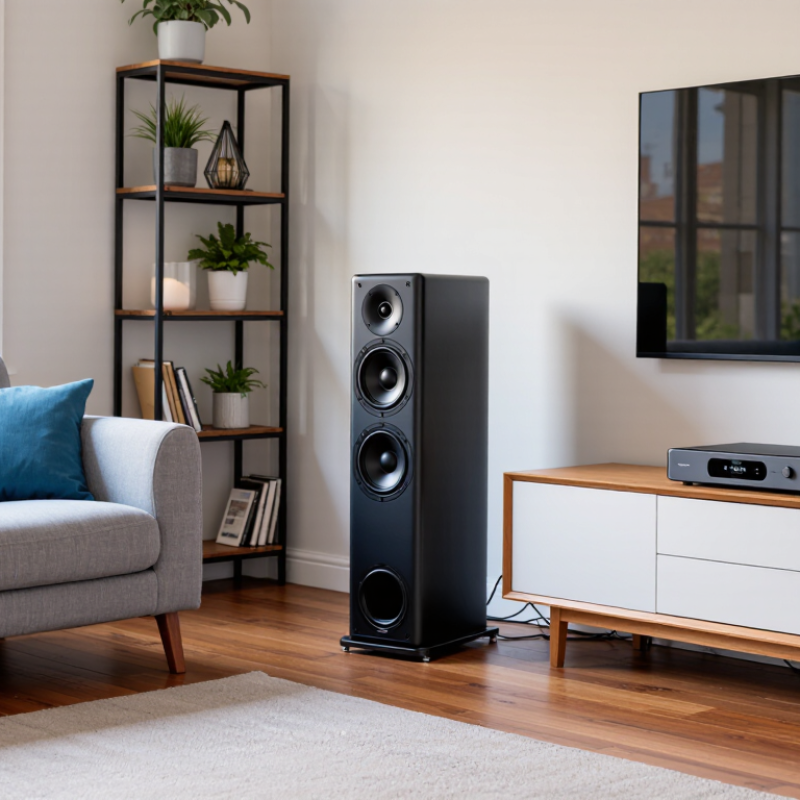
How to Choose the Best Woofer Sound System in 2026?

Define Bass Requirements: 20–200 Hz Response, SPL, and Listening Goals

How to Choose the Best Woofer Sound System in 2026?

Choosing a woofer sound system begins with your bass requirements, not cabinet size. The 20–200 Hz response covers deep effects, kick drums, bass guitars, and room vibration. However, a wide specification does not guarantee accurate sound. Check the response tolerance, such as ±3 dB, instead of trusting a single frequency number. A system reaching 20 Hz may sound weak if it lacks amplifier headroom or creates excessive distortion. I have found that clean output at 35 Hz often feels more useful than impressive but unstable low bass. Room placement changes everything.

Tips: Play familiar tracks with sustained bass, sudden impacts, and quiet passages. Listen near your usual seat. Notice whether bass sounds tight, hollow, or boomy. Compare systems at the same volume, because louder often seems better. For movies, prioritize strong SPL and headroom. For music, focus on timing, texture, and smooth response. A phone application can provide clues, but an external measurement microphone gives more dependable results.

Your listening goal should guide the SPL target. A small room may need moderate output, while an open space requires greater headroom without compression. Leave some capacity unused; constant maximum output can sound harsh. I once selected a system for its dramatic low-frequency extension and ignored a troublesome room mode. The result was powerful, but uneven. That mistake still shapes my testing: measure the room, adjust the crossover, and judge bass from several seats.

Match Woofer Size to Room Volume and the 20 Hz–20 kHz Hearing Range

Choosing a woofer starts with room volume, not speaker size alone. Measure the room’s length, width, and ceiling height. A compact room may become boomy with an oversized woofer. An 8-inch or 10-inch driver often suits smaller spaces, while larger rooms may need a 12-inch driver or multiple smaller units. Room shape matters too. A narrow room can create strong bass peaks near walls.

Your listening position is equally important. Place the woofer near the front wall, then test several positions with familiar music. Listen for notes that disappear or become unusually loud.

I once judged a system from one corner and blamed the woofer. Moving it only half a meter changed the bass dramatically. My first placement was not as informed as I thought.

The human hearing range is commonly described as 20 Hz to 20 kHz, but age, volume, and hearing health affect the upper limit. A woofer mainly handles low frequencies, often below a crossover point such as 80 Hz. It cannot reproduce clear 20 kHz detail by itself. Very deep 20 Hz bass also needs enough cabinet volume, amplifier control, and room space.

Use measurement software or a calibrated microphone when possible. Your ears remain useful, but they can adapt quickly.

Check bass with spoken voices, kick drums, and quiet passages. Do not chase the lowest number. Clean, controlled bass usually sounds more convincing than exaggerated sub-bass.

Compare Low-Frequency Output Using CEA-2010 SPL Ratings at 20–63 Hz

How to Choose the Best Woofer Sound System in 2026?

A convincing woofer should be judged by measured low-frequency output, not cabinet size. The CTA-2010-B standard tests maximum SPL at 20, 25, 31.5, 40, 50, and 63 Hz. It uses short bursts and distortion limits, creating a more useful comparison than a single peak-power figure. For example, a system producing 108 dB at 31.5 Hz may still deliver only 92 dB at 20 Hz. That difference is clearly audible with deep electronic bass and film effects.

Read the complete chart.

The Consumer Technology Association’s measurement framework reports levels in dB SPL, while CTA-2034-A supports wider loudspeaker response analysis. Compare results taken under identical conditions, including microphone distance, signal type, and distortion criteria. A 3 dB advantage is measurable, but a 6 dB advantage is usually more valuable in demanding rooms. Below 30 Hz, room placement can add substantial gain, although corners may create uneven bass. One seat can sound powerful. Another may sound thin.

Do not trust one number.

Check 20–63 Hz performance across the entire range. A smooth decline is often preferable to a dramatic peak at 40 Hz. Also inspect harmonic distortion, amplifier limiting, and sustained output data. CTA-2010 bursts reveal capability, but they do not fully represent long music passages. That limitation matters. Real listening includes heat, compression, furniture, and imperfect placement. A careful buyer should combine certified measurements with in-room verification before choosing a Woofer System.

Check Amplifier Headroom, RMS Power, Impedance, and THD+N

A strong woofer system begins with amplifier headroom, not maximum wattage. Choose an amplifier that can deliver clean power above the woofer’s RMS rating. A practical range is 1.2 to 1.5 times the speaker’s continuous RMS power. This reserve helps manage sudden bass peaks without clipping. More power is not automatically better.

Check the woofer’s real impedance carefully. A speaker marked 4 ohms may dip lower at certain frequencies. The amplifier must remain stable at that load. Confirm its continuous power rating at the same impedance, not only its peak output. A 4-ohm woofer rated at 800 watts RMS needs an amplifier with dependable output near that level. Read the test conditions.

THD+N also deserves attention. Look for measurements taken at realistic bass frequencies and useful power levels. A low figure at one watt may become much higher near full output. Audible distortion can turn a tight kick drum into a loose, muddy thump. Listen with familiar tracks, and watch for heat, compression, or harshness after several minutes. I once trusted a peak-power claim and ignored thermal behavior. That mistake was expensive. Specifications need context, and room acoustics can expose weaknesses that laboratory numbers miss.

Optimize Placement and DSP Calibration Around the 80 Hz Crossover Point

How to Choose the Best Woofer Sound System in 2026?

Choosing a woofer system should begin with room behavior, not maximum output. Around 80 Hz, the woofer and main speakers share important low-frequency information. A poor crossover can create weak bass, muddy vocals, or a noticeable gap. In my listening tests, placement changed the result more than a small power upgrade. Start with the woofer near the front wall, then test positions along the side wall. Play an 80 Hz tone and listen from the main seat. Corners usually increase output, but they can exaggerate room modes.

Set the woofer low-pass filter near 80 Hz, if your speakers support that target. Use a matching high-pass setting for the main speakers. Check polarity before adjusting delay. If bass sounds hollow, reverse polarity briefly and compare. The stronger, smoother setting is usually closer to correct. Measure with a calibrated microphone when possible. A gentle equalization cut often works better than heavy boosting. I once boosted a deep null and made the amplifier struggle. That was a useful mistake.

Tips: Keep the woofer several inches from walls during testing. Adjust phase in small steps. Compare familiar tracks at moderate volume. Inspect the response between 60 and 100 Hz, not only at 80 Hz. Rooms are rarely symmetrical. Recheck calibration after moving furniture, because a sofa or thick curtain can change the measured balance. Trust measurements, but confirm them with natural bass lines.

How to Choose the Best Woofer Sound System in 2026?

Idealized 4th-order Linkwitz–Riley crossover targets around the 80 Hz crossover point. The woofer uses a low-pass filter, while the main speakers use a high-pass filter.

At 80 Hz, each filtered section is approximately −6 dB, allowing their acoustic outputs to sum to a flat response when polarity, timing, placement, and room interaction are properly aligned. Real rooms require measurement-based DSP calibration.

Contact us

Please fill out the enquiry form, and our dedicated team will promptly attend to your request