How to Choose a Humanoid Robot for Your Business?
Choosing a Humanoid Robot for your business is not a futuristic shopping exercise. It is an operational decision with measurable consequences. The right model should solve a defined problem, support employees, and produce reliable results in real working conditions. A robot that looks impressive in a showroom may struggle beside uneven floors, narrow aisles, or changing customer requests.
Rodney Brooks, a respected robotics researcher and entrepreneur, once said, “The biggest challenge in robotics is not making robots, but making robots useful.” This idea should guide every purchase. Ask what the Humanoid Robot will do during a normal shift. Will it move cartons, welcome visitors, inspect equipment, or assist workers? Identify the required payload, walking speed, battery life, safety features, software compatibility, and maintenance support. Request demonstrations using your own workplace scenarios. Product videos are not enough.
The buying process also needs honest expectations. Humanoid robots can improve consistency, reduce repetitive strain, and collect useful operational data. However, they may require training, floor modifications, integration work, and patient supervision. The first deployment may expose weaknesses. That is valuable evidence, not failure. A careful business should compare total ownership costs, cybersecurity controls, staff acceptance, and supplier stability. It should also define success before signing a contract.
This guide explains how to assess performance, safety, adaptability, and long-term value. It will help decision-makers separate practical capability from attractive marketing. No robot fits every business. The strongest choice is the one that performs a clear job, earns employee trust, and improves results without creating hidden burdens.
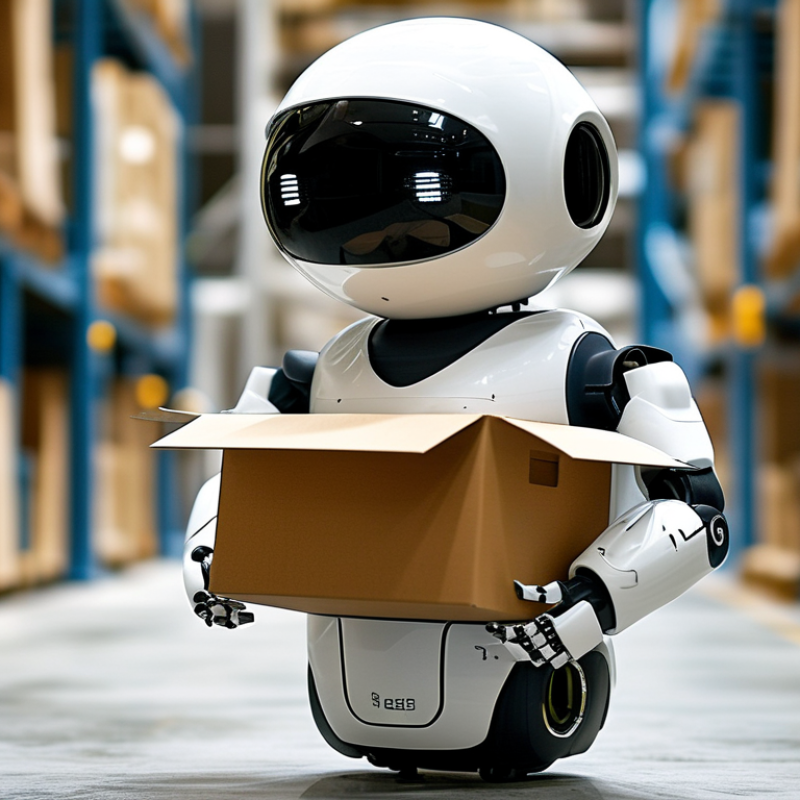
Define Your Business Goals and Humanoid Robot Use Cases
Start with the work, not the robot. Define one business problem that can be measured clearly. For example, a humanoid robot might move empty totes between a packing station and a storage aisle. Record walking distance, cycle time, lifting frequency, error rates, and employee injury risks. The International Federation of Robotics reported 541,302 industrial robot installations in 2023, showing strong automation demand. However, industrial adoption does not prove that a humanoid form suits every task.
Build the use case around real operating conditions. Measure aisle width, floor changes, lighting, payload, battery duration, and required uptime. A robot that performs well in a demonstration may struggle beside moving carts or uneven shelves. Define acceptable results before supplier discussions, such as 95% task completion, less than two manual interventions per shift, or a specific payback period. Keep a human fallback process. It matters.
The World Economic Forum’s Future of Jobs Report 2023 found that 44% of workers’ skills may be disrupted by 2027. This supports reskilling plans, not simple headcount assumptions. Train employees to supervise exceptions, inspect equipment, and improve workflows. Start with a controlled pilot. A spreadsheet will miss awkward reaches, social hesitation, and unexpected pauses. That is where experience becomes valuable. Review failures weekly, and be willing to reject a humanoid design when a simpler machine solves the task better.
Assess Required Capabilities, Skills, and Human-Robot Interaction
Choosing a humanoid robot starts with the work, not the machine’s appearance. Map every task across reach, payload, walking distance, noise, and recovery time. The International Federation of Robotics reported 4.28 million industrial robots operating worldwide in 2023. That figure shows automation maturity, but it does not prove a humanoid fits your site. Humanoids may suit human-designed spaces, yet balance and battery limits remain practical concerns.
Assess skills as measurable behaviors: grasping varied objects, following spoken instructions, recognizing hazards, and requesting help. Test these abilities with real shelves, changing lighting, and ordinary staff. Do not trust a perfect demo. Record task success, intervention frequency, recovery time, and near misses. The World Economic Forum’s Future of Jobs Report 2025 reports that 58% of employers expect robotics and autonomous systems to transform business by 2030. That expectation is significant, but workplace readiness varies sharply.
Human-robot interaction needs equal attention. Check whether workers understand intent through lights, voice, posture, and movement speed. A robot that works efficiently but surprises colleagues is poorly designed. Use clear handover rules, physical stop controls, privacy-limited sensing, and role-based training. The IFR’s World Robotics 2024 report recorded over 205,000 professional service robots sold in 2023. The category grew 30% year on year. Those numbers are useful, but they can mislead. Deployment context matters more than market momentum. Measure what workers actually experience.
Evaluate Total Costs, Integration Needs, and Ongoing Support
Choosing a humanoid robot starts with total cost, not the purchase quote. Goldman Sachs Research estimated the humanoid robot market could reach 38 billion dollars by 2035. That forecast signals opportunity, but it does not reveal your deployment cost. IFR’s World Robotics 2024 report recorded 541,302 industrial robot installations in 2023. Humanoids still require more careful testing.
Calculate hardware, safety equipment, software licenses, training, facility changes, and downtime. Then add integration labor. A robot may need new sensors, mapped routes, task-specific tools, and connections to warehouse or production systems. ISO 10218 and ISO/TS 15066 provide useful safety references, but compliance is not automatic. Your site still needs risk assessments and documented operating procedures.
Support costs continue after installation. Ask who handles replacement parts, remote diagnostics, firmware updates, and emergency visits. Check response times, technician availability, and software update policies. A low service fee can hide expensive travel or long production interruptions. Small details matter.
My planning bias is worth admitting. A spreadsheet can look precise and still be wrong. Early pilots often expose missing costs, especially workflow redesign and employee training. Start with one measurable task, such as moving a fixed load between two stations. Track cycle time, intervention frequency, energy use, and recovery time. If the robot needs constant human correction, the business case is not ready. Expect revisions. That is part of credible evaluation.
How to Choose a Humanoid Robot for Your Business?
Evaluate the main five-year cost drivers before selecting a humanoid robot. The figures below are industry planning ranges in USD thousands and should be validated against deployment scope, labor requirements, site conditions, and service terms.
Key takeaway: Hardware is only one part of the investment. Integration, safety adaptation, workforce training, software support, maintenance, and facility changes can materially affect the total cost of ownership.
Select the Robot That Best Fits Your Business Requirements
Choosing a humanoid robot starts with your business requirements, not its appearance. Define the exact work it must perform. Will it carry small parcels, guide visitors, inspect shelves, or support repetitive assembly? Observe the workplace for one full shift. Note narrow aisles, uneven floors, noise, lighting, and human traffic.
Match the robot’s physical abilities to these conditions. Check lifting capacity, reach, walking speed, battery duration, charging time, and balance recovery. A robot that looks capable may struggle with a five-kilogram load on a sloped floor.
Safety features also need close review. Look for force limits, emergency stops, obstacle detection, and controlled movement around staff. Ask how operators receive training and how incidents are recorded. Clear answers matter more than impressive demonstrations.
Integration can decide whether the project succeeds. Confirm compatibility with scheduling software, inventory systems, access controls, and existing work procedures. Request maintenance intervals, spare-part availability, cybersecurity measures, and total operating costs.
A short pilot is essential. Test one task in the real environment, then measure completion time, errors, downtime, and employee acceptance. The first trial may disappoint. That is useful evidence, not failure.
Business needs often change after deployment, so choose a system that can be updated without replacing its core hardware. A practical robot is not always the most advanced one. It is the one that reliably solves a defined problem.
