How to Choose the Right Remote Condensing Unit for Your Needs?
Choosing the right Remote Condensing Unit can be a daunting task. It requires careful consideration of various factors such as size, capacity, and efficiency. A well-selected unit will ensure optimal performance and energy savings. In contrast, a poor choice can lead to inefficiencies and increased operational costs.
Consider the application of the Remote Condensing Unit. Different settings have varied cooling demands. For example, commercial kitchens need robust units to handle high heat loads. Additionally, residential applications often require quieter models to maintain comfort. Assessing the specific requirements of your space is crucial.
Moreover, it’s important to evaluate the unit’s efficiency rating. Higher efficiency often equates to reduced energy bills. Yet, balancing upfront costs with long-term savings can be complex. Look for units that offer warranties and solid customer support. This is where reliability comes into play. A trusted brand can make a difference in overall satisfaction. Ultimately, the right Remote Condensing Unit should align with your needs and goals.
Understanding Remote Condensing Units and Their Functionality
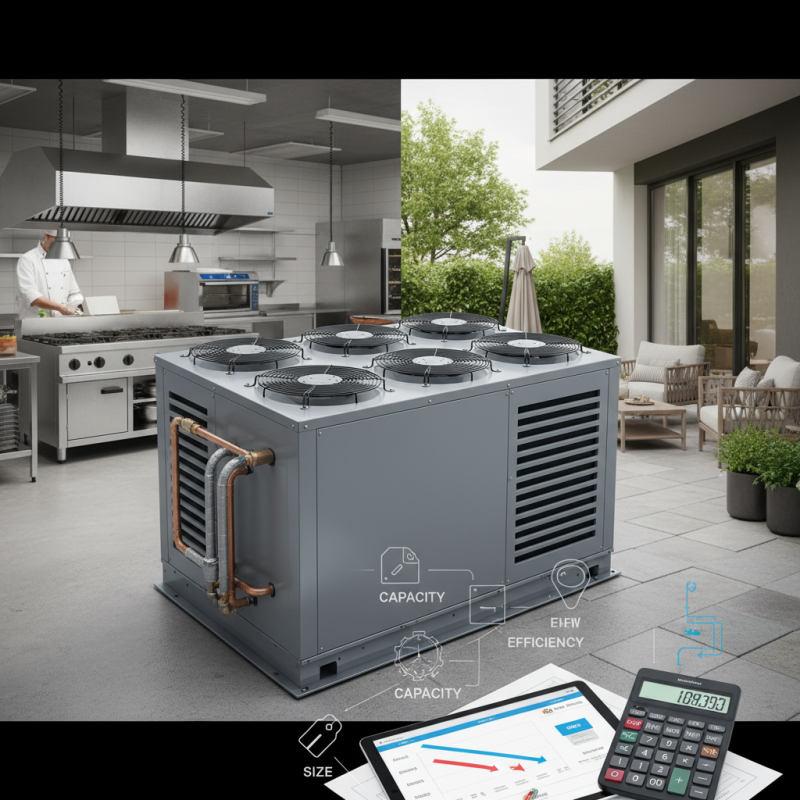
Remote condensing units play a vital role in cooling systems. These units consist of a compressor, condenser, and fan, typically located outside a building. Their primary function is to expel heat from the refrigerant, allowing for efficient cooling of indoor spaces. Understanding their role helps in making informed decisions on which unit suits your needs.
When selecting a remote condensing unit, consider factors such as capacity, efficiency, and noise levels. Assess your space requirements and calculate the thermal load to determine the necessary cooling capacity. Efficiency ratings can guide you toward units that save energy, yet they may come at a higher upfront cost. Noise levels often get overlooked but can significantly impact comfort, especially in residential areas.
Installation and maintenance are critical. A poorly installed unit can lead to performance issues. Regular maintenance, albeit often neglected, is essential for longevity. Evaluating your specific needs can reveal gaps in your knowledge. Reflecting on these details ensures you choose the best unit for your environment.
How to Choose the Right Remote Condensing Unit for Your Needs?
| Model | Cooling Capacity (BTU/h) | Refrigerant Type | Energy Efficiency Ratio (EER) | Dimensions (inches) | Weight (lbs) |
| Model A | 6000 | R-410A | 12 | 24 x 36 x 28 | 75 |
| Model B | 12000 | R-404A | 10 | 36 x 48 x 32 | 95 |
| Model C | 18000 | R-407C | 13 | 48 x 60 x 36 | 120 |
| Model D | 24000 | R-134A | 11 | 60 x 72 x 40 | 150 |
Key Factors to Consider When Selecting a Remote Condensing Unit
When selecting a remote condensing unit, several key factors come into play. The capacity is crucial. It determines how much heat the unit can remove. A unit with too low a capacity may struggle to cool effectively. Conversely, an oversized unit can lead to increased energy consumption. Understanding your cooling requirements is essential.
Efficiency ratings are also important. Higher efficiency units save energy, translating to lower operating costs. Consider SEER and EER ratings to gauge efficiency. Pay attention to noise levels, too. A noisier unit can disrupt the environment, especially in residential areas.
Tips for selection: Think about installation space. Ensure there is adequate ventilation around the unit. Assess the climate in your area. Different conditions may require different specifications. Regular maintenance is vital. Clean condensers will operate more efficiently and last longer.
Reflect on the long-term needs of your space. Choose a unit that accommodates future changes seamlessly. Avoid making a hasty decision; it’s worth taking the time to evaluate your options properly.
Evaluating Cooling Capacity and Efficiency Requirements
Selecting the right remote condensing unit hinges on understanding cooling capacity and efficiency needs. Cooling capacity, measured in BTUs, determines how much heat the unit can remove from a designated space. For instance, a unit providing 24,000 BTUs is ideal for spaces up to 1,500 square feet. However, oversizing or undersizing can lead to energy inefficiencies and increased operational costs.
Efficiency ratings, like Energy Efficiency Ratio (EER) and Seasonal Energy Efficiency Ratio (SEER), are essential in evaluating performance. An EER of 13 or higher indicates good efficiency levels. According to recent reports, units with a SEER rating above 16 demonstrate significant energy savings in the long term. This translates to lower utility bills and a reduced carbon footprint.
Tips: Always consult with a HVAC professional to assess your cooling needs. Consider the insulation levels and typical usage patterns of your space. Approaching these metrics thoughtfully can lead to better choices. Remember, a perfectly balanced unit creates optimal comfort and efficiency. It’s easy to overlook these details, but they are critical for long-term satisfaction and system reliability.
Assessing Installation Space and Environmental Conditions
When selecting a remote condensing unit, evaluating the installation space and environmental conditions is crucial. Start by measuring the available area. Whether it’s a rooftop or a ground space, dimensions matter. The unit must fit comfortably without excessive modifications. Allow for airflow and maintenance access. Consider the height and weight, too, especially for rooftop installations that have structural limits.
Next, examine environmental factors. Outdoor temperatures can fluctuate dramatically. Look at your local climate. Is it humid or dry? Hot or cold? These conditions affect the unit's efficiency. For instance, high ambient temperatures can strain the system. Assess potential exposure to debris, water, or other hazards. Nearby structures may block airflow, impact performance, or lead to overheating.
Think about noise levels as well. In residential areas, sound can be a concern. Choose a location that minimizes disruption to both occupants and neighbors. After considering the space and conditions, consult with a professional. They can provide insights based on experience. This reflection ensures you select a unit that meets your needs and operates efficiently in your specific environment.
Reviewing Maintenance Needs and Long-Term Operational Costs
When selecting a remote condensing unit, maintenance needs and long-term costs are key factors. Regular maintenance is crucial to ensure optimal performance and longevity. Neglecting these tasks can lead to costly repairs and inefficient operation.
**Tip:** Schedule seasonal maintenance checks. This can help identify issues early and reduce emergency repairs, which often come with higher costs.
Another important aspect is understanding the operational costs. Energy efficiency plays a major role here. Units that consume less electricity lead to reduced utility bills over time. However, initial costs may seem higher for energy-efficient models, making it essential to assess long-term savings.
**Tip:** Compare energy ratings carefully. Higher ratings often translate to better efficiency, resulting in lower costs in the long run.
Reflect on your unique cooling needs. Smaller spaces may require less capacity, potentially lowering initial and operational costs. Evaluate your usage patterns to find a balanced solution. Finding the right unit is not just about upfront costs but also about sustainable savings and reliability over time.
