How to Choose a Spiral Slide for Your Project in 2026
A Spiral Slide can become the feature people remember, but its success depends on more than its shape. In 2026, project teams must balance available space, user needs, materials, maintenance, and safety from the earliest design stages. A model that looks ideal in a catalog may not fit the site, suit its intended users, or work well with nearby equipment. Small details matter. Entry height, exit clearance, surface conditions, and the slide’s overall footprint can all affect how it performs in daily use. Climate also deserves attention: sun exposure, rain, and temperature changes may influence material choice and upkeep. The right decision begins with the project, not the product photo.
This guide explains how to compare Spiral Slide options using practical questions and verifiable information. It covers layout, capacity, material considerations, installation planning, maintenance, and the documentation to request from manufacturers or suppliers. It also helps readers distinguish useful specifications from vague promotional claims. Ask how the proposed slide fits the site, who will use it, and what routine inspections it may require. No universal fit. A supplier’s guidance can be valuable, but it should be checked against the project’s drawings, operating plans, and applicable safety requirements. One judgment may remain uncomfortable: the most dramatic design is not always the most usable one. Before approval, review clearances and access with qualified project professionals, and confirm that the selected equipment meets relevant local requirements. The goal is a slide that is engaging, practical, and dependable—not merely impressive on opening day.
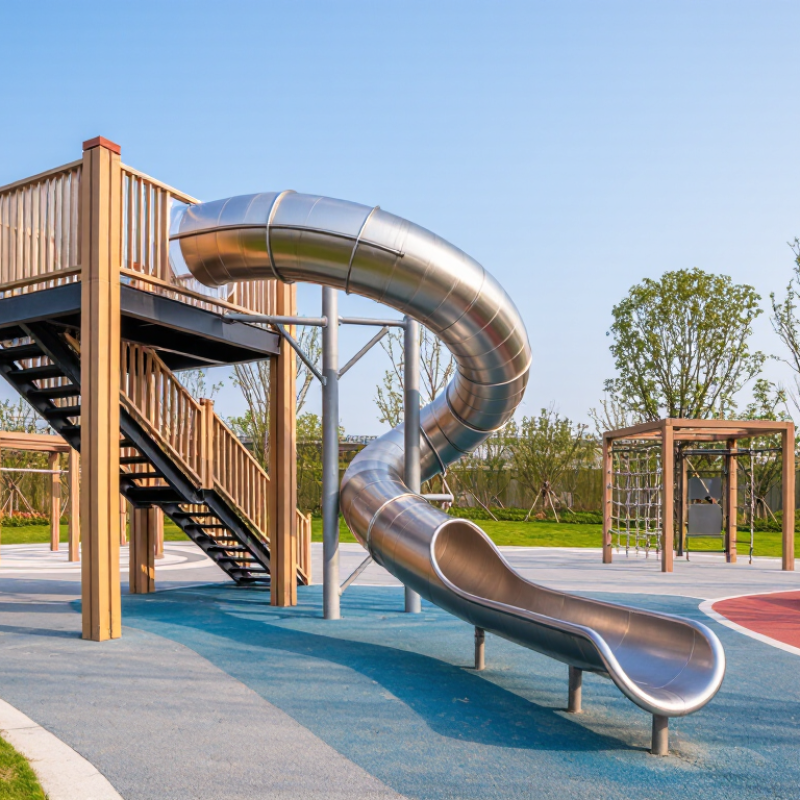
Define Project Goals, Users, and Operating Requirements
A spiral slide should serve a clear project goal, not just fill an empty corner. Decide whether it will encourage active play, connect two levels, or become a focal point. Then measure the available footprint, platform height, and required landing space. A tight site may need a compact curve, while a busy play area needs enough room for children to exit without crossing the next rider’s path. Small details count.
Define who will use the slide and how often. Young children may need a gentler slope and easy access to the platform; older users may expect a faster, taller ride. Consider mobility needs, adult supervision, and peak-time queues. A sketch can help, but watching how people move through the actual site often reveals issues a plan misses. That matters.
Operating requirements shape the final choice. For an outdoor installation, account for sun exposure, rainwater drainage, and temperature changes on slide surfaces. For indoor use, check ceiling clearance, noise, cleaning access, and ventilation. Set a realistic maintenance routine, including inspections of joints, supports, and worn surfaces. Confirm applicable safety standards with qualified project professionals before fixing dimensions. I would leave some room to revise the layout; early estimates are rarely perfect.
Compare Spiral Slide Designs, Materials, and Configurations
A good spiral slide starts with the space available, the users’ ages, and the expected traffic. Measure the platform height, landing area, and clearance around the slide before comparing models. A tight site may suit a compact, steeper spiral, while a wider layout can allow a gentler curve. Fit matters.
Stainless steel can offer a smooth ride and withstand heavy use, but it may become hot in direct sun. UV-stabilized plastic often stays cooler and allows more color choices, though surface wear and fading deserve attention. Check material thickness, edge finishing, drainage, and the supplier’s stated load limits. These details matter more than a polished product photo.
An enclosed tube can reduce exposure to sun and wind, but it may feel less open and needs accessible inspection points. An open spiral makes supervision easier and can feel more inviting, yet riders remain more exposed to weather. For younger users, compare the entry shape, side protection, and recommended age range. Match the slide’s exit speed and landing zone to the surrounding play area. Ask for drawings and installation requirements before committing.
One detail is easy to miss: a layout that looks spacious on paper may feel cramped once railings and surfacing are installed.
Measure the Site and Verify Safety and Accessibility Needs
Before selecting a spiral slide, measure the usable area, not just the slide’s footprint. Mark the platform, support posts, entry path, and exit zone on a site plan. Then check overhead branches, fences, drainage, and nearby equipment. A tape measure and chalk can reveal awkward pinch points early. Leave room for children to queue without blocking the accessible route.
Safety space matters. The U.S. Consumer Product Safety Commission’s 2015 Public Playground Safety Handbook cites an estimate of more than 200,000 annual emergency-room visits for playground-related injuries. That figure covers playground injuries broadly, not spiral slides alone. Use it as a reason to verify fall height, protective surfacing, and manufacturer-neutral safety guidance with a qualified playground professional. Measure the actual site conditions; a level drawing can hide a sloped or poorly drained surface.
Check access alongside the slide dimensions. The 2010 ADA Standards generally require an accessible route to have 36 inches of clear width. Confirm that the route reaches the play area and remains unobstructed when children gather. Also assess transfer access, turning space, and the needs of users with different mobility levels. Small detail, big difference. I would recheck measurements after installation, too; plans are tidy, but real sites often are not.
Assess Standards, Durability, Installation, and Maintenance
A spiral slide should fit the users, site, and safety requirements—not just the available space. Check which safety standards apply to your project, then request current test documentation and clear guidance on age, height, and load limits. Paperwork matters. Look closely at the entry platform, handholds, guardrails, and openings where clothing or fingers could become trapped. For outdoor use, consider UV exposure, corrosion, and temperature changes. A surface that feels sturdy in mild weather may become slick or brittle over time.
Tips: Measure the full slide footprint, including the exit area. Ask how the material handles direct sun and frequent use. Compare written specifications, not just product photos.
Installation affects safety as much as the slide itself. Confirm the supporting structure, anchoring method, ground clearance, and drainage before work begins. Uneven ground or a poorly secured platform can create problems that are difficult to fix later. Have a qualified installer follow the manufacturer’s instructions and document any site adjustments. Maintenance should be simple enough to do consistently. Inspect fasteners, joints, surfaces, and exit zones on a regular schedule, and check again after severe weather or heavy use. Keep a record of repairs. It is easy to miss a small crack when the slide still looks usable, so replace damaged parts rather than relying on appearance alone.
How to Choose a Spiral Slide for Your Project in 2026
Compare key project considerations before selecting a spiral slide.
Illustrative planning ratings on a 1–5 scale, not product test results. Confirm applicable safety standards and site requirements, and assess materials, installation conditions, and maintenance access for your specific project.
Compare Costs, Suppliers, and Long-Term Project Value
A spiral slide can fit a compact play area, but the purchase price is only one part of the project cost. Compare quotes that list the slide, support structure, platform connection, freight, installation, and required safety surfacing. Check whether site preparation, drainage, and inspection visits are included. A low quote may leave costly gaps. Small details matter.
When comparing suppliers, ask for material specifications, installation drawings, load information, warranty terms, and realistic lead times. Request references for projects with similar weather and daily use. Clear answers are useful; vague promises are not. I would also ask how damaged sections are repaired and whether replacement parts remain available. It is easy to focus on the delivery date and overlook maintenance access.
Long-term value depends on how the slide performs after years of sun, rain, and busy weekends. Compare expected cleaning, inspection, and repair needs, not just upfront cost. A durable finish may cost more initially, yet reduce downtime and repainting. Still, estimates can miss local wear patterns, especially in exposed areas. Review the site conditions with the supplier before settling on a budget, and leave room for unexpected groundwork or installation adjustments.
