How to Choose the Right Welded Steel Pipe Supplier?
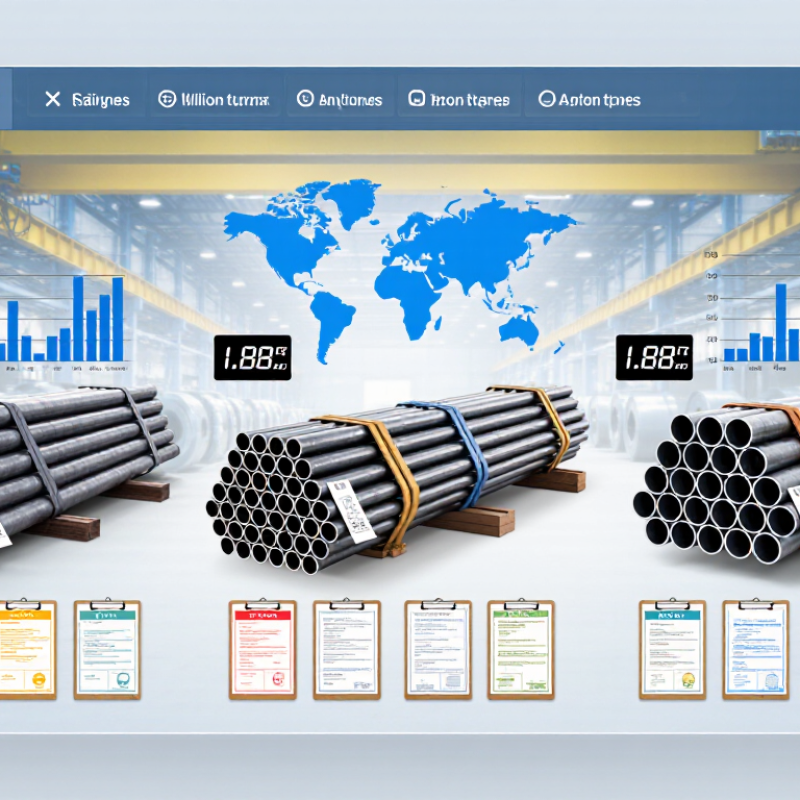
Choosing the right Welded Steel Pipe supplier begins with evidence, not attractive catalogues or low quotations. World Steel Association data shows that global crude steel production reached about 1.88 billion tonnes in 2024. This scale creates opportunity, but it also makes supplier quality uneven. Edwin Basson, Director General of worldsteel, has stated, “Steel is essential to modern life.” That importance demands careful purchasing decisions.
A reliable supplier should provide heat-number traceability, mill test certificates, welding procedures, and dimensional inspection records. Ask whether the pipe meets the required ASTM, API, EN, or project-specific standards. Confirm wall thickness, outside diameter, grade, weld-seam testing, coating condition, and hydrostatic test results. A buyer opening a pipe bundle should be able to match each pipe to its production records. That small detail matters.
Supplier selection also requires operational proof. Review production capacity, quality-control equipment, export experience, delivery performance, and corrective-action history. Request recent inspection reports, not only certificates prepared for marketing. Independent inspection can verify ultrasonic testing, surface defects, and packing before shipment. The OECD has repeatedly highlighted structural pressure from global steel overcapacity, so unusually low prices deserve careful questioning.
No supplier is perfect. That is worth remembering. A polished website proves little. Even experienced buyers can overlook inconsistent tolerances or vague delivery terms. Compare at least three qualified suppliers, document every technical requirement, and assess communication during the quotation stage. A supplier that answers difficult questions clearly is often safer than one offering the fastest promise. The final choice should balance compliance, consistency, total cost, and the consequences of failure.
Define Your Welded Steel Pipe Requirements
Defining your welded steel pipe requirements is the real starting point for choosing a reliable supplier. Begin with the application, not the catalog. Will the pipe carry water, structural loads, compressed air, or corrosive fluids? Each service needs different steel grades, wall thicknesses, and protective treatments. Specify the outside diameter, nominal size, length, and permitted dimensional tolerance. Small measurement errors can create expensive installation problems.
Describe the operating conditions clearly. Include working pressure, temperature range, soil contact, moisture, and exposure to chemicals. For structural use, state the load direction and connection method. Request relevant material certificates, weld inspection records, and test reports. A dependable supplier should explain the applicable standard and testing scope, rather than sending vague claims. Ask whether hydrostatic testing, ultrasonic inspection, or visual checks are included.
Quantity and delivery details also matter. State the required production volume, preferred lengths, packing method, and delivery location. Confirm whether temporary storage or outdoor exposure could affect the coating. In practice, a simple requirement sheet prevents many misunderstandings. I once saw a project delay because “standard length” meant different things to the buyer and supplier. That mistake was avoidable. A rough spreadsheet is acceptable at the beginning, but review every field before requesting quotations. You may not know the final coating thickness yet. Mark that uncertainty openly, and ask qualified engineers to verify it.
Assess Supplier Experience, Standards, and Production Capabilities
How to Choose the Right Welded Steel Pipe Supplier?
Supplier experience should be proven through records, not attractive brochures. Ask for recent projects with similar pipe grades, diameters, wall thicknesses, and service conditions.
The World Steel Association reported 1,888.2 million tonnes of crude steel production in 2023, showing the scale of this market.
Scale alone proves little. Request welding procedure qualifications, welder records, inspection reports, and traceability from coil to finished pipe.
Standards must match the application. Confirm compliance with specifications such as API 5L, ASTM A53, or EN 10217, where relevant.
ISO 9001 certification supports process control, but it does not replace product testing. Check whether the supplier performs hydrostatic testing, ultrasonic inspection, dimensional checks, and chemical analysis. Independent inspection can expose gaps. It costs more, sometimes.
Production capability needs measurable evidence. Review monthly capacity, forming methods, heat-treatment limits, coating facilities, and backup equipment.
The OECD’s 2024 steel market analysis continued to identify global excess capacity as a structural concern, so unusually large promises deserve careful verification.
Ask for capacity by pipe size, not only total tonnes. Confirm lead times against actual production schedules. A factory may own modern equipment but lack experienced operators. That detail is easy to miss. Supplier data can also be incomplete or outdated. Recheck certificates, sample reports, and shipping performance before signing a long-term contract.
Verify Material Quality, Testing Procedures, and Certifications
How to Choose the Right Welded Steel Pipe Supplier?
Material quality should be verified before price becomes the main discussion. Request the steel grade, heat number, chemical composition, and mechanical properties. These details should match the mill test certificate and purchase specification. Check pipe diameter, wall thickness, length, and surface condition during receiving inspection. A digital caliper can reveal small dimensional differences that photographs often hide. Do not rely on appearance alone.
Testing procedures show how seriously a supplier controls production. Ask whether pipes undergo hydrostatic, ultrasonic, radiographic, flattening, or bend testing. The correct method depends on the intended service and applicable standard. Request sample reports with test dates, equipment identification, and acceptance criteria. Traceability is essential. Each bundle should connect clearly to its heat number and inspection records. Missing links create avoidable doubt.
Certifications also require careful review. Confirm the issuing body, certificate scope, expiry date, and covered production site. A quality management certificate cannot replace product-specific inspection documents. Independent inspection may add confidence for critical orders. In practice, even experienced buyers miss inconsistencies between certificates and packing lists. I have found that simple questions often expose weak controls. No supplier is perfect. A responsive supplier should explain problems clearly and correct records without pressure.
| Evaluation Dimension | What to Verify | Relevant Standard or Test | Required Supplier Evidence | Recommended Acceptance Benchmark | Suggested Weight |
|---|---|---|---|---|---|
| Material Grade and Chemistry | Confirm that the steel grade, heat number, carbon equivalent, and chemical composition match the purchase specification. | ASTM A53, ASTM A106, API 5L, EN 10217-1, or the project-specific material specification. |
| All reported elements must comply with the ordered standard and grade; heat numbers must remain traceable from raw material to finished pipe. | 20% |
| Mechanical Properties | Check yield strength, tensile strength, elongation, and any required impact properties. | Tensile testing and, where specified, Charpy V-notch impact testing according to the applicable product standard. |
| Every reported value must meet the minimum or maximum limits stated in the applicable standard and purchase order. | 15% |
| Weld Seam Integrity | Evaluate longitudinal or spiral weld quality, weld procedure control, repair history, and operator qualifications. | Visual examination, weld procedure qualification, welder qualification, and applicable NDT requirements. |
| Welds must be continuous, free from unacceptable cracks or lack of fusion, and produced under documented, qualified procedures. | 15% |
| Nondestructive Testing | Confirm that the supplier uses an appropriate inspection method for the pipe grade, size, wall thickness, and service risk. | Ultrasonic Testing, Electromagnetic Testing, Radiographic Testing, or Magnetic Particle Testing as specified by the order. |
| Required NDT coverage must be completed and documented; equipment calibration and personnel qualification must be current. | 15% |
| Hydrostatic or Pressure Testing | Verify resistance to internal pressure and confirm that the test conditions are appropriate for the ordered pipe. | Hydrostatic test requirements stated in the applicable pipe standard or engineering specification. |
| No leakage or unacceptable permanent deformation during the specified test; pressure, duration, and calibration data must be recorded. | 10% |
| Dimensions and Surface Condition | Inspect outside diameter, wall thickness, length, straightness, end finish, ovality, and surface defects. | Dimensional tolerances and surface requirements in ASTM, API, EN, or project specifications. |
| All measured dimensions must fall within the tolerance range stated in the purchase specification; unacceptable dents, laminations, cracks, and harmful corrosion are not permitted. | 10% |
| Coating and Corrosion Protection | Assess coating type, surface preparation, dry-film thickness, adhesion, holiday detection, and repair procedures. | Project coating specification; commonly referenced practices include ISO 8501-1 for surface preparation and ISO 19840 for dry-film thickness measurement. |
| Coating system, thickness, adhesion, and defect limits must match the approved specification and intended service environment. | 8% |
| Quality Management System | Determine whether production, inspection, document control, corrective action, and traceability are managed systematically. | ISO 9001 quality management system certification or an equivalent independently audited system. |
| The certificate must be valid, issued by a competent certification body, and cover the manufacture or supply of welded steel pipe. | 5% |
| Testing Laboratory Competence | Check whether chemical, mechanical, and NDT results are produced by competent internal or independent laboratories. | ISO/IEC 17025 accreditation for relevant testing activities, where available and contractually required. |
| The laboratory scope should cover the tests performed, and calibration should be traceable to recognized national or international standards. | 2% |
Compare Pricing, Lead Times, Delivery, and After-Sales Support
How to Choose the Right Welded Steel Pipe Supplier?
Price deserves careful comparison, not quick judgment. Request itemized quotes showing steel grade, outside diameter, wall thickness, length, coating, testing, and packing. A low price may exclude inspection or protective end caps. I once treated a low quote as a clear win. It was not. The final cost increased after missing services appeared.
Lead time should include production, inspection, packing, and transport. Ask for a written schedule with milestone dates. A supplier with realistic timing is more reliable than one promising an unusually fast shipment. Confirm production capacity during busy periods. Also check whether the quoted delivery date begins after payment, drawing approval, or order confirmation. Small wording differences can create expensive delays.
Delivery planning needs practical details. Verify loading methods, moisture protection, labeling, documents, and shipment tracking. Request records from similar orders when possible. After-sales support matters when pipes arrive with dents, incorrect dimensions, or incomplete certificates. Ask who handles claims, how quickly they respond, and which evidence they require. Photos, inspection reports, and batch numbers can speed resolution. Strong suppliers explain their quality process before payment, not only after a problem. Still, no system is perfect. Build reasonable time and cost allowances into your plan.
Evaluate Supplier Reliability Before Making the Final Choice
Choosing a welded steel pipe supplier requires more than comparing prices. Reliability should be tested through evidence, communication, and repeated performance.
A polished catalog proves little. Ask for recent mill certificates, chemical analysis, mechanical test results, and dimensional inspection records. Check whether each pipe can be traced from raw coil to final shipment. The supplier should explain welding methods, heat treatment, coating control, and nonconformance procedures clearly. Vague answers deserve attention. So do missing records.
Delivery history matters as much as technical knowledge. Request references from projects with similar pipe sizes, wall thicknesses, and service conditions. Contact those customers directly, if possible. Ask about late shipments, packaging damage, documentation errors, and how problems were handled. A reliable supplier reports weaknesses honestly instead of promising perfect performance.
Use a small trial order before committing to a large contract. Inspect weld appearance, ovality, length, surface condition, and marking accuracy when the pipes arrive. Compare the supplied documents with independent test results when the application is critical. I once focused too heavily on unit price and overlooked slow responses during a specification change. That delay created avoidable pressure. A written quality plan, clear inspection points, and named technical contacts can prevent similar confusion. Still, no checklist replaces professional judgment. Reliability is demonstrated shipment after shipment.
Article Source:
Contact us
Please fill out the enquiry form, and our dedicated team will promptly attend to your request