10 Essential Tips for Choosing the Right MIG Welding Equipment?
When selecting the right MIG welding equipment, experience and careful consideration come into play. MIG welding, known for its versatility and speed, requires tools that match your specific needs. Navigating through the options available can be overwhelming, especially with the market's rapid evolution.
Choosing high-quality equipment is crucial for effective welding. Poor choices can lead to inefficient results, safety hazards, and wasted materials. Understanding the essential features, including power settings and wire types, can make a significant difference. This knowledge empowers welders, from beginners to seasoned professionals, to enhance their craft.
Investing in the right MIG welding equipment not only affects your project outcomes but also impacts your overall experience. Remember, even the best technology won't compensate for inadequate skills. Take time to reflect on your personal requirements before making a purchase, and ensure you select tools that will serve you well in various scenarios.
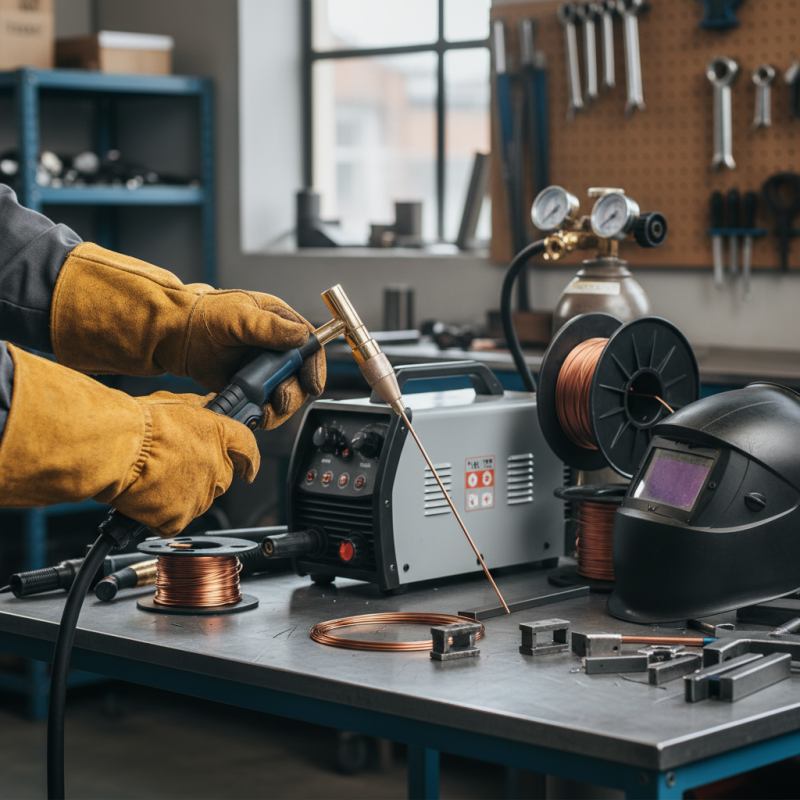
Key Considerations for Selecting MIG Welding Equipment Based on Project Needs
When selecting MIG welding equipment, it's important to consider your project needs carefully. The choice greatly impacts both the quality of your work and efficiency. According to the American Welding Society, proper equipment selection can increase productivity by up to 25%. This statistic highlights the significance of understanding your specific requirements.
One key tip is to assess the thickness of the materials you'll be welding. Thicker materials require a higher amperage welder for effective fusion. Similarly, if your projects include various metal types, versatility in equipment becomes essential. This can prevent wasted time and materials during adjustments or failures in weld quality.
Another consideration is the welding environment. Outdoor conditions can make it challenging to maintain arc stability. Equipment with appropriate shielding capabilities becomes crucial in these cases.
It's also worth noting that not all MIG welders are user-friendly. Some may have steep learning curves, so consider your skill level when selecting equipment. The right choice can create a smoother welding experience, while improper equipment may lead to frustrations.
Understanding Different Types of MIG Welding Machines and Their Features
When selecting a MIG welding machine, understanding the various types is crucial. There are gas-shielded and gasless machines. Gas-shielded systems use a shielding gas to protect the weld pool. They produce cleaner welds but require additional equipment. Gasless machines, on the other hand, rely on a self-shielding wire. They offer convenience and portability, making them appealing for outdoor work.
Also, consider the features that matter most to you. Think about the amperage range; it affects the thickness of materials you can weld. Some machines come with advanced features like digital displays, which can enhance precision. Others are more basic but are often easier to use for beginners. Reflecting on your skill level and the projects you plan to tackle will help narrow your choices.
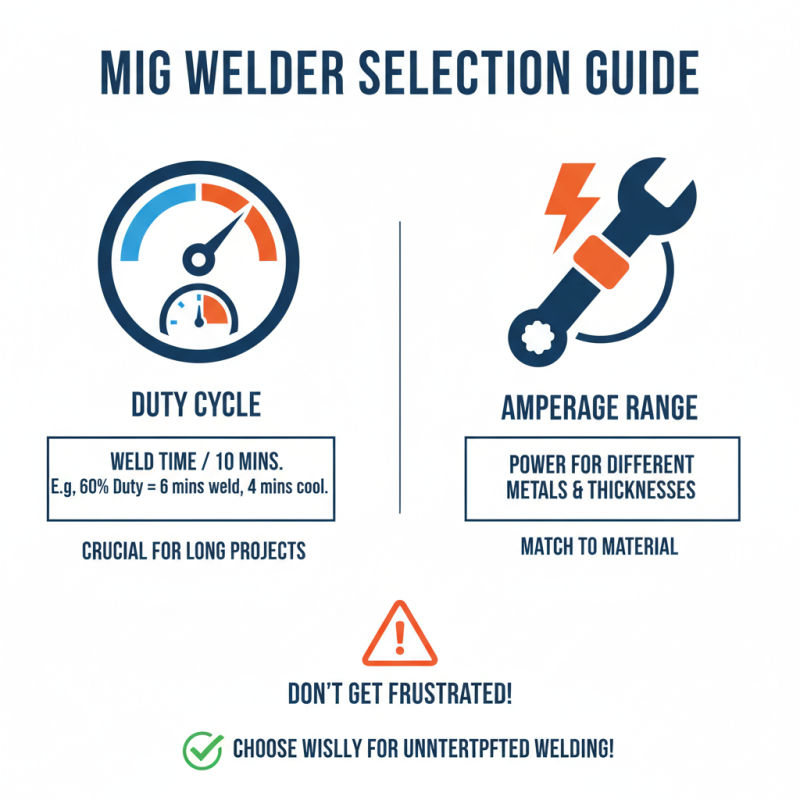
Don't overlook the importance of duty cycle. It indicates how long the machine can operate at maximum output. Higher duty cycles are better for larger projects. Remember, the best choice balances your specific needs and your budget. It's okay to feel overwhelmed; many welders start with trial and error. Each experience provides valuable insights for future purchases.
10 Essential Tips for Choosing the Right MIG Welding Equipment
| Feature |
Description |
Importance |
| Welding Power Source |
AC vs DC power sources; DC is better for MIG welding. |
Essential for weld quality. |
| Voltage Settings |
Adjustable voltage settings for different thicknesses. |
Crucial for versatility in welding. |
| Wire Feed Speed |
Control over the speed of the wire feed for heat control. |
Directly affects weld quality. |
| Portability |
Compact and lightweight models for easy transport. |
Important for mobile welding jobs. |
| Duty Cycle |
Time the machine can operate without overheating. |
Essential for determining workload capability. |
| Material Compatibility |
Ability to weld various materials like steel, aluminum. |
Critical for project range. |
| Cooling System |
Presence of fan or water cooling systems. |
Important for extended use. |
| Control Features |
Advanced features like digital displays, settings presets. |
Enhances ease of use. |
| Safety Features |
Built-in safety mechanisms to prevent accidents. |
Crucial for user protection. |
| Cost |
Consider the budget and long-term value. |
Key factor in decision-making. |
Evaluating the Importance of Duty Cycle and Amperage Range in MIG Welders
When choosing a MIG welder, understanding the duty cycle and amperage range is crucial. The duty cycle represents the amount of time you can weld before the machine needs to cool down. For example, a 60% duty cycle means you can weld for six minutes out of ten. If you choose a welder with a low duty cycle, you might find it inadequate for long projects. This can lead to frustrations and unfinished tasks.
Amperage range affects how thick of a metal you can weld. A machine with a wider range provides more versatility. Look at your welding projects. Are you working with thin materials or heavy steel? Knowing the requirements makes it easier to select the right equipment. A welder with appropriate amperage helps ensure strong, clean welds.
Tip: Always test the welder on scrap material. This helps you understand its performance and makes adjustments easier. Moreover, consider your current and future projects. An underpowered welder limits your capabilities and growth. Evaluate your choices carefully to avoid regrets later. The right duty cycle and amperage can make a significant difference in your welding experience.
Comparing Wire Feed Speed and Material Thickness for Optimal Performance
When choosing MIG welding equipment, understanding wire feed speed and material thickness is crucial. The wire feed speed directly influences the welding arc and heat. A higher feed speed can lead to a more intense arc, which is essential for thicker materials. However, too high a speed might cause burn-through or excessive spatter. This balance is necessary when working with various thicknesses.
Material thickness also plays a key role in selecting the right settings. Thicker materials need a higher feed speed to ensure adequate penetration and strong welds. But, with thinner materials, a slower feed speed is generally better. It allows for control and prevents warping or burn-through. You might find it helpful to test different settings with scrap pieces. This experimentation helps in understanding how your chosen equipment performs.
Monitoring your results can be insightful. Take notes on what works best. If you notice inconsistencies in your welds, revisit your settings. It’s a learning process. Not everything will be perfect right away. Welder setup requires patience and understanding. Adjusting feed speed in relation to material thickness can significantly enhance your overall welding experience.
Assessing Safety Features and Compliance Standards in MIG Welding Equipment
When choosing MIG welding equipment, safety features and compliance standards are paramount. The American National Standards Institute (ANSI) and the Occupational Safety and Health Administration (OSHA) have set specific guidelines to ensure safety in welding environments. Compliance with these standards reduces risk significantly. In fact, equipment that meets these regulations is 30% less likely to cause workplace accidents.
It's crucial to examine safety features like automatic shutoff systems and thermal overload protection. These features prevent equipment failure and enhance worker safety. A recent industry report indicated that 45% of welding accidents involve equipment misuse. Thus, understanding these features can be life-saving. Comprehensive training and adherence to safety protocols are equally important.
Reviewing user manuals and safety certifications is essential. Many welding operators overlook these documents. They provide vital information about compliance and safety precautions. Research shows that operators educated on safety standards perform 50% better in terms of risk management. Investing time in understanding these aspects can minimize hazards in the welding process. Thoughtful selection of MIG equipment ensures not just operational efficiency but also a safer working environment.