How to Choose a Mini Spot Welding Machine in 2026?
Choosing a mini spot welding machine in 2026 means matching the tool to the work, not just choosing the highest advertised power. Small machines vary in pulse control, electrode design, and the materials they can join reliably. A unit suited to thin nickel strip may not perform well on thicker stock. The difference shows up at the bench: uneven welds, marked surfaces, or joints that fail a gentle pull test.
Start by defining your materials, their thickness, and how often you will weld. Then compare adjustable pulse settings, power requirements, electrode access, and cooling or duty-cycle guidance. Check whether the manufacturer clearly states compatible applications and provides usable instructions. A precise display can help, but it cannot guarantee a sound weld. Test settings on matching scrap before working on valuable parts. Small detail. Big difference.
This guide explains how to evaluate those specifications and what to check before buying. It also considers practical points such as replacement electrodes, setup space, and technical support. A spec sheet can still mislead when it leaves out test conditions. That deserves a closer look. Your best choice should fit your actual workload, produce consistent results in repeatable tests, and offer clear operating guidance. If your needs are unusual, pause and verify compatibility with the manufacturer rather than guessing. A little caution now can save material, time, and frustration later.
What Is a Mini Spot Welding Machine and How Does It Work?
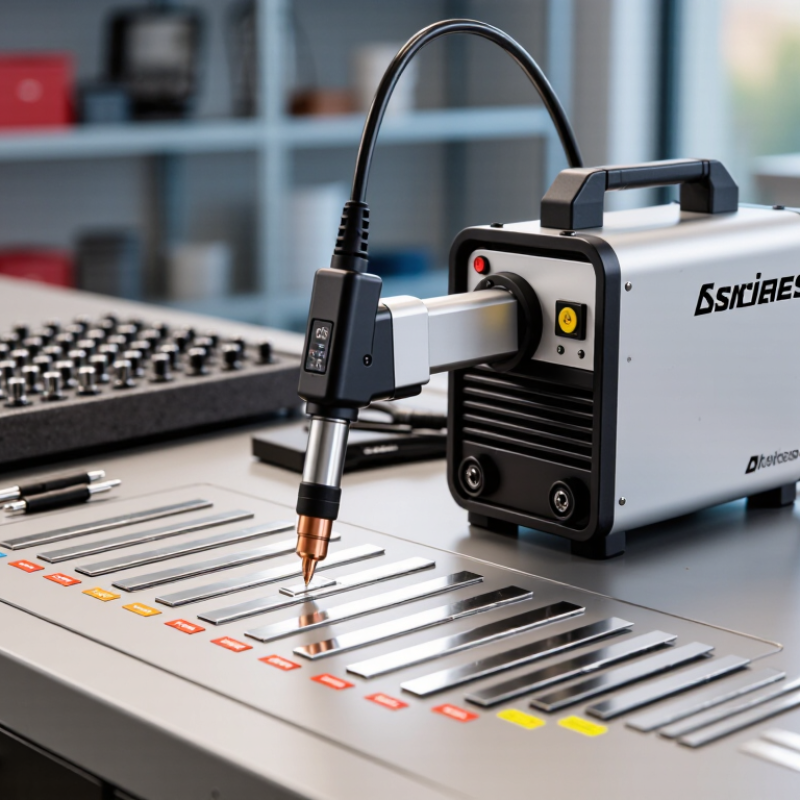
A mini spot welding machine joins two overlapping metal sheets by squeezing them between copper electrodes and sending a brief electrical current through the contact point. The metal heats from electrical resistance, forms a small molten nugget, then solidifies under pressure. The American Welding Society’s Welding Handbook describes this resistance-welding principle through the relationship Q = I²Rt: heat depends on current, resistance, and time. That equation is useful, but real weld quality also depends on electrode force, material thickness, and surface condition.
Small machines are commonly used for thin nickel strips, battery tabs, and delicate sheet-metal parts. A clean, flat contact matters. Oil or a slight gap can cause weak joints, uneven marks, or excessive spatter. The Resistance Welder Manufacturers’ Association’s guidance emphasizes controlling current, weld time, and electrode force as a coordinated process; changing one setting may require adjusting the others. Not magic. When choosing a machine, check its adjustable pulse settings, electrode pressure, duty cycle, and compatibility with your material thickness. Test sample pieces first, then inspect the joint and repeat the test. I still find visual inspection imperfect; a neat mark alone does not prove a strong weld.
| Topic | What It Means | What to Check When Choosing | Practical Guidance |
|---|---|---|---|
| What a mini spot welder is | A compact resistance-welding device that joins overlapping metal pieces by passing electric current through them while applying pressure with electrodes. | Confirm that the machine is designed for the materials, thicknesses, and joint type in your project. | It is commonly used for small sheet-metal work and battery-tab or nickel-strip connections; it is not a general-purpose arc welder. |
| How the weld forms | Electrical resistance at the contact area generates heat. Electrode pressure holds the pieces together, and the heated area forms a small fused weld when the current stops and the joint cools. | Look for adjustable weld time or energy, repeatable controls, and clear operating instructions. | Weld quality depends on current, pulse duration, electrode force, surface condition, material, and thickness—not on a single advertised power figure. |
| Capacitor-discharge type | Stores energy in capacitors and releases it as a short pulse. Many compact battery-tab welders use this approach. | Check the stated application range, adjustment options, duty limits, and whether the maker specifies compatible strip materials and thicknesses. | A short pulse can help limit heat spread, but the correct settings must be established with sample pieces before production work. |
| Mains-powered resistance type | Uses power from an electrical supply to produce the welding current, often with a transformer and timed control. | Verify supply voltage and frequency, input requirements, electrode arrangement, and applicable electrical safety certifications. | Consider this type when the work needs a fixed workstation and the machine’s documented capacity matches the parts being joined. |
| Battery and nickel-strip work | Small welders can attach suitable conductive tabs or strips to compatible battery terminals, subject to the cell and pack design. | Check the cell manufacturer’s joining guidance, strip material and thickness, electrode shape, and machine limits. | Do not assume that a welder is suitable for every cell or strip. Avoid overheating cells, and use appropriate battery-handling and fire-safety procedures. |
| Metal and thickness compatibility | Different metals and thicknesses have different electrical and thermal properties, which affect how a weld forms. | Seek a documented material-and-thickness range rather than relying only on a maximum output-current claim. | Test the exact material combination. Coatings, oxidation, fit-up, and surface contamination can change weld consistency. |
| Electrodes and pressure | Electrodes conduct current and apply force at the weld location. Their material, tip shape, alignment, and condition influence the result. | Check whether tips are replaceable, how they are maintained, and whether the machine provides stable, controllable pressure. | Keep contact surfaces clean and aligned. Worn, dirty, or uneven tips can produce inconsistent joints. |
| Controls and repeatability | Controls may adjust pulse duration, energy, or operating mode. Some machines offer a foot switch or separate welding probe. | Prefer clearly labeled settings, a reliable trigger, and repeatable operation. Check whether the controls suit the size and location of the work. | More adjustment is useful only when settings can be applied consistently. Record proven settings for repeat jobs. |
| Duty cycle and cooling | Duty cycle describes how much operating time a machine can sustain within a specified period without exceeding its thermal limits. | Read the duty-cycle rating and cooling instructions, and check any stated pause requirements. | A compact machine may need cooling breaks during repeated welds. Do not infer continuous-use capability from its size or peak output. |
| Safety features | Spot welding involves high current, heat, pressure, and potential sparks or hot metal. | Check for appropriate electrical protection, insulated handles or probes, clear warnings, and suitable documentation. | Wear eye protection, keep flammable materials away, secure the work, and follow the machine and battery manufacturers’ safety instructions. |
| A sensible selection process | Match the machine to the actual job before comparing optional features. | Define the material, thickness, joint layout, expected weld frequency, power supply, and available workspace. | Compare documented capacity, control, electrode access, duty cycle, support, and safety information. Validate welds on scrap of the same materials. |
Related Posts
-
Top 10 Benefits of Using Mini Spot Welding Machines for Your Projects?
-
2026 Best Mini Spot Welding Machine Buying Guide
-
2026 Best Mini Spot Welding Machine Options for Every Need?
-
Why You Need a Mini Spot Welding Machine for Your DIY Projects Today
-
2025's Ultimate Guide to the Top 10 Portable Spot Welders for Every DIYer
-

How to Choose the Right Welder for Global Sourcing 2026?

Contact us
Please fill out the enquiry form, and our dedicated team will promptly attend to your request