How to Choose a Robotic Welder for Your Business?

Choosing a robotic welder is not simply a matter of buying the fastest machine. It requires a clear understanding of your production goals, weld quality, and daily workflow. A suitable system should match your materials, joint designs, part sizes, and expected production volume. Steel frames may need different settings from aluminum assemblies. That detail matters.

Begin by studying your current welding process. Record cycle times, rework rates, fixture changes, and operator challenges. These observations reveal whether automation will solve a real bottleneck or merely add complexity. A robotic welder needs consistent part positioning and stable weld joints. Poor fixtures can create expensive downtime, even with advanced equipment. It is not simple.

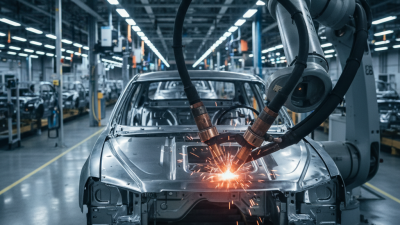
Consider payload capacity, torch access, programming methods, safety features, and maintenance support. Ask suppliers for application testing with your actual components. A sample weld may expose distortion, difficult angles, or inadequate reach before installation begins. Experienced integrators should explain their assumptions, training plans, and expected return on investment. Their recommendations should be supported by test results, technical documentation, and dependable after-sales service.

Your team also deserves attention. Operators and technicians must understand programming, inspection, troubleshooting, and safe operation. Automation does not remove responsibility; it changes where expertise is needed. A smaller robotic welder may outperform a larger system when floor space, batch size, and product variety are limited. Yet every decision contains uncertainty. Production forecasts can be wrong, and promised savings may not appear immediately. Review the evidence carefully, compare complete system costs, and choose equipment that can grow with your business.
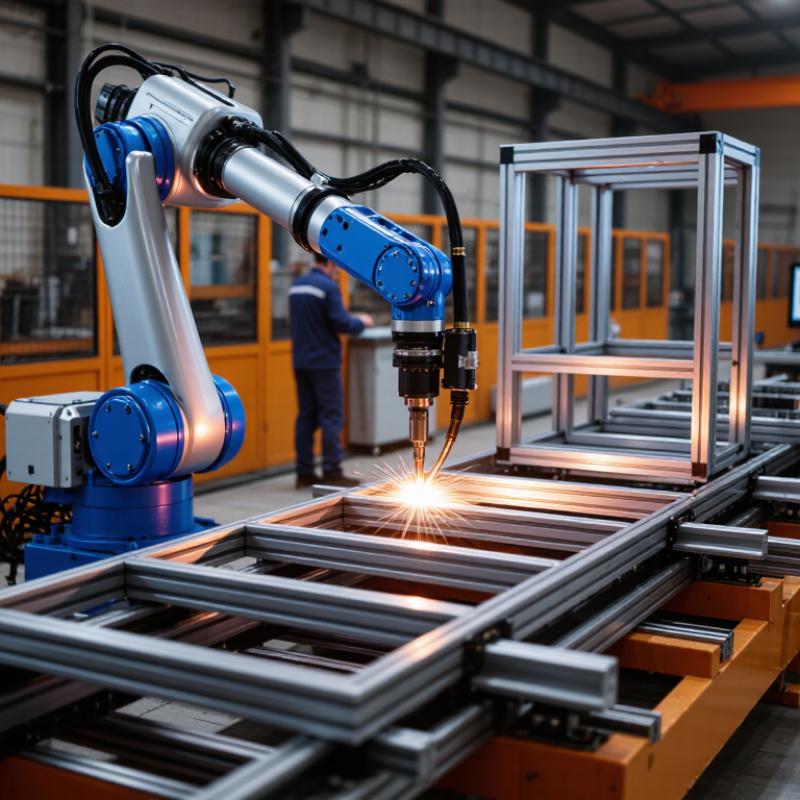
How to Choose a Robotic Welder for Your Business?

Define Production Needs with Takt Time, Weld Cycle, OEE, and Annual Volume

How to Choose a Robotic Welder for Your Business?

A robotic welder should match production evidence, not catalog promises. Start with annual volume, shifts, uptime, and product mix. Takt time equals available production time divided by customer demand. If 420 minutes remain after breaks, and demand reaches 140 assemblies, takt time is three minutes. Measure it on the floor. Planning figures often look cleaner than reality.

Separate weld cycle from total cycle. Weld cycle covers arc-on work. Total cycle includes loading, clamping, torch travel, inspection, and operator movement. A 45-second fixture delay can defeat a fast arc. Record several shifts, including changeovers and minor stops. Then compare required takt with the cell’s realistic cycle time. Leave capacity for variation, perhaps 15% to 25%. That range is practical, not universal.

OEE combines availability, performance, and quality. Do not assume the often-cited 85% benchmark. A new cell may perform far below it during commissioning. Ask for calculations based on measured stoppages, scrap, and changeover time. The International Federation of Robotics reported 541,302 industrial robot installations worldwide in 2023. Adoption is broad, not proof of fit. A 2024 Manufacturing Institute and Deloitte study projected 3.8 million U.S. manufacturing jobs could emerge by 2033, with 1.9 million potentially unfilled. Labor pressure matters, but annual volume still decides payback. Test demand falling 30%. Flexible tooling may matter more than peak speed.

Match Robot Reach and Payload to Torch Loads Under ISO 10218 Safety Rules

How to Choose a Robotic Welder for Your Business?

A robotic welder must carry more than a welding torch. Include the torch, mounting hardware, cables, dress pack, sensors, and any tool changer. Their combined weight becomes the real payload. Cable drag also creates wrist torque during fast movements. A robot may meet its rated payload yet struggle with this offset load. Check payload charts at the intended reach, not only at the robot’s base.

Reach matters just as much. The torch should access every joint without stretching near the outer envelope. Leave clearance around fixtures, clamps, and part edges. Tight positions can force awkward wrist angles, reduce accuracy, and increase collision risk. I once underestimated cable movement during a sample weld. The torch reached the joint, but the cable pulled against the wrist. That small oversight changed the cell layout.

Safety planning must follow the applicable ISO 10218 requirements and local regulations. Review the complete system, including robot motion, safeguarding, emergency stops, teach modes, and maintenance access. A compliant robot alone does not make a compliant work cell. Perform a documented risk assessment with the integrator and operators. Verify stopping distances and restricted spaces under real production conditions. Do not rely on catalog figures alone. They can omit application-specific loads, especially during acceleration. Recheck the payload calculation after adding sensors or longer cable bundles. That final review may feel repetitive. It prevents expensive redesigns and unsafe assumptions.

Select Welding Technology by Material, Thickness, Joint Type, and AWS D16.1

Choosing a robotic welder starts with the material, not the robot’s payload. Carbon steel usually suits robotic GMAW, while aluminum demands controlled wire feeding and stable arc settings. Stainless steel needs careful heat management to limit distortion and discoloration. The correct system must match your real thickness range, from thin sheet to heavy plate. Do not trust a catalog’s maximum capacity alone.

Thickness changes current, wire diameter, travel speed, and torch access. Joint type matters just as much. Fillet welds need consistent torch angles, while butt joints expose gaps and alignment errors. Lap joints can hide poor penetration.

Fit-up matters. A practical test should use production material, actual fixtures, and representative gaps. Examine macro sections, penetration, porosity, and distortion before approving a cycle. My experience is that one attractive sample weld proves very little.

The International Federation of Robotics reported 541,302 industrial robot installations worldwide in 2023, showing continued automation demand. However, productivity depends on safe integration and repeatable quality. ANSI/AWS D16.1 provides safety guidance for robotic arc-welding systems, including safeguarding, emergency stops, and cell-related hazards. Use it during risk assessment, not after installation. Include guarding, interlocks, teach-mode controls, and documented validation. This step is sometimes rushed. That is a costly weakness. A sound selection combines material testing, thickness capability, joint access, operator training, and measurable weld acceptance criteria.

Compare Cells Using Arc-On Time, Uptime, Throughput, and Payback Period

How to Choose a Robotic Welder for Your Business?

A robotic welding cell should be judged by production evidence, not brochure speed. Track arc-on time, uptime, throughput, and payback over several weeks. Arc-on time shows how long the torch actually creates weld metal. A cell scheduled for eight hours, but welding for only three, has a 37.5% arc-on rate. That figure exposes idle loading, fixture changes, programming delays, and operator interruptions.

Uptime measures whether the cell is available when production requires it. ISO 22400 provides a useful framework for availability, performance, and quality metrics. Record faults, recovery time, material shortages, and changeovers separately.

Throughput then connects performance to revenue: measure acceptable welded assemblies per shift, not theoretical cycle time.

The International Federation of Robotics reported 541,302 industrial robot installations worldwide in 2023. Automation is expanding, but more robots do not automatically mean more finished parts. The Deloitte 2023 Smart Manufacturing Survey found that 86% of manufacturing leaders viewed smart manufacturing as important for future competitiveness.

Calculate payback with verified figures. Divide the full cell investment by annual gross benefit, including labor savings, extra output, scrap reduction, and maintenance.

For example, a 120,000-dollar cell producing 45,000 dollars of annual benefit suggests a 2.7-year payback.

That is only an estimate. I would not trust it without downtime logs and quality records. A spreadsheet can still lie. Recheck the calculation after real operators run difficult joints, small batches, and frequent fixture changes.

Verify Integration, Training, and ANSI/RIA R15.06 Compliance Before Purchase

A robotic welder should fit your process, not merely your budget. The IFR World Robotics 2024 report recorded 541,302 industrial robot installations worldwide in 2023. That growth makes integration planning more important. Confirm payload, reach, torch access, cycle time, and fixture repeatability using your actual parts. Request a live trial with production material. A polished demonstration can hide awkward cable routing or poor joint access.

Verify communication with your PLC, welding power source, sensors, and safety circuits. Ask the integrator to document signal mapping, recovery steps, and fault handling. Training should cover operators, programmers, maintenance staff, and supervisors. It must include safe setup, inspection, troubleshooting, and energy isolation procedures. ANSI/RIA R15.06 compliance should be checked against the current applicable edition. Review the risk assessment, safeguarding, emergency stops, protective devices, and validation records. A compliance claim alone is not evidence. I have seen purchasing teams accept certificates without examining the cell design. That mistake can become expensive.

Tips: Ask for a compliance matrix before signing. Compare each requirement with physical evidence, such as guarded access points and validated safety functions. Include your maintenance team in the factory acceptance test. They may notice blocked service panels or unrealistic cleaning routines. Keep training records and refresher dates. OSHA guidance also emphasizes machine guarding and employee training, but the paperwork cannot replace hands-on verification. Leave time for corrections. Real installations rarely perform perfectly on day one.

How to Choose a Robotic Welder for Your Business?

Verify integration, operator training, and ANSI/RIA R15.06 safety compliance before purchase.

This example scorecard uses a five-point verification scale: 1 means that evidence is largely unavailable, while 5 means that requirements are documented, tested, and accepted by the responsible team. Give priority to systems with documented risk assessment, safeguarding validation, production-line integration details, operator and maintenance training, and evidence of conformity with the applicable ANSI/RIA R15.06 requirements.

Contact us

Please fill out the enquiry form, and our dedicated team will promptly attend to your request