Why Are PV Accessories Important for Solar Projects?
Why Are PV Accessories Important for Solar Projects? The answer begins beyond the panels themselves. A solar array is a working system, not a collection of modules. Pv Accessories connect, protect, support, and monitor that system. Mounting rails hold modules against wind and rain. Cables and connectors carry current through changing temperatures. Inverters, isolators, fuses, and surge protection devices help manage electrical risks when correctly selected and installed. Small parts matter.
On a rooftop, one loose connector can create heat, downtime, or a difficult inspection. A poorly sealed cable entry may let water reach the building envelope. A weak mounting point can transmit stress into roof materials. These details are not theoretical; installers often discover them during commissioning or routine maintenance. Product datasheets, compatibility checks, torque settings, and documented testing provide practical evidence of quality. Qualified professionals should follow applicable electrical and building requirements, manufacturer instructions, and project-specific engineering calculations. Reliable suppliers also offer traceability, clear warranties, and replacement support.
However, accessories do not automatically improve a project. More equipment can increase cost, installation time, and failure points. That is easy to overlook. A cheaper connector may appear sensible until labor costs rise after a fault. Conversely, premium components are not useful when they do not match the inverter, cable size, environment, or monitoring platform. Project teams should evaluate climate, fire exposure, maintenance access, expected loads, and future expansion. Field experience helps, but it can still contain assumptions. Reviewing test records and learning from installation mistakes leads to better decisions. Well-chosen Pv Accessories quietly protect performance long after the panels begin producing energy.
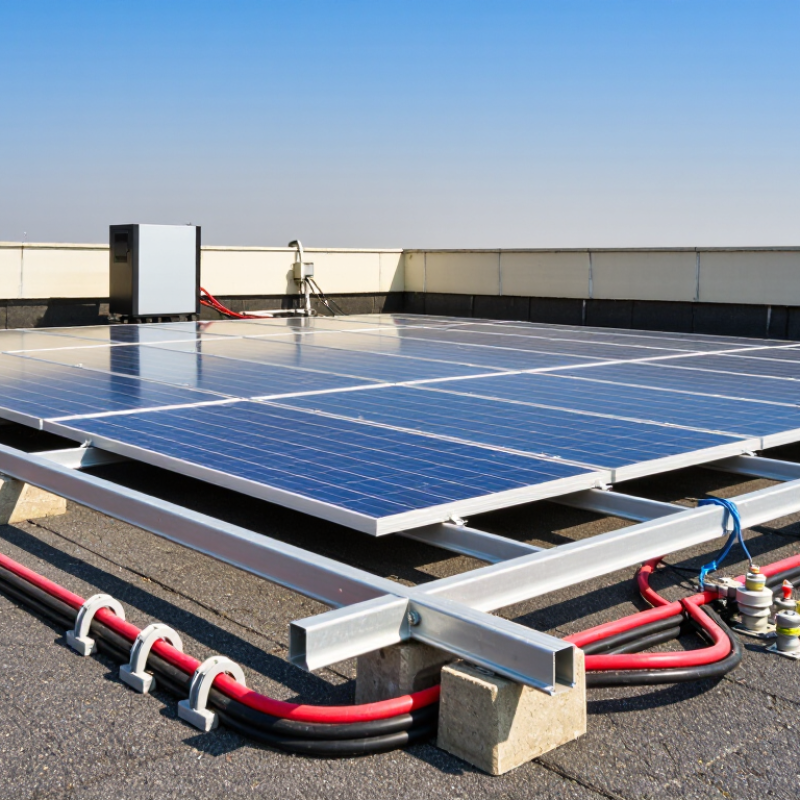
PV Accessories Drive Balance-of-System Costs Above 40% of PV CAPEX
PV accessories are often treated as minor hardware. They are not.
Mounting rails, cables, connectors, fuses, combiner boxes, grounding paths, and monitoring devices form the balance of system (BOS). They control how safely electricity moves from modules to the grid. According to the National Renewable Energy Laboratory’s 2024 PV System Cost Benchmark, non-module costs exceed 40% of utility-scale PV capital expenditure in many configurations. Accessories influence several of these cost categories, including structural work, electrical installation, and maintenance.
The International Renewable Energy Agency’s Renewable Power Generation Costs in 2023 also reported continuing declines in solar PV costs. This trend increases pressure on every non-module dollar. A cheaper connector may appear efficient, but poor compatibility can create hot spots, maintenance visits, or lost production. Field conditions matter. Dust, thermal cycling, wind loads, and water ingress rarely appear clearly in a spreadsheet.
The difficult part is timing. Accessory savings are visible immediately, while failures may appear years later. Project teams should compare lifecycle cost, installation time, replacement access, and documented compliance, not only unit price. Published benchmarks remain useful, but imperfect. Roof geometry, soil conditions, labor availability, and climate can change the real BOS cost substantially.
Cables and Connectors Enable Reliable Operation at 1,000–1,500 V DC
Why Are PV Accessories Important for Solar Projects?
Cables and connectors carry the quiet responsibility of every solar array. At 1,000–1,500 V DC, a poor connection can create heat, resistance, and unstable power output. Higher voltage reduces current for the same power, which can lower I²R losses and reduce copper requirements. However, the margin for installation mistakes becomes smaller. DC arcs can persist, especially when connectors are mismatched, damaged, or poorly crimped.
The IEA PVPS Trends 2024 report recorded more than 400 GW of new photovoltaic capacity installed globally in 2023. That scale makes accessory reliability a practical engineering concern, not a minor purchasing detail. NREL’s Best Practices for Operation and Maintenance highlights visual inspections, thermal scans, and connector checks as important reliability activities. Technicians should verify polarity, tightening torque, cable bend radius, and weather sealing before energization. Small details matter.
Field conditions are less tidy than design drawings. Dust enters housings. Cables sag against sharp edges. Heat cycles loosen assumptions. I would not treat a connector as “installed” simply because it clicks into place. Material compatibility, certification, and documented test procedures still require careful review. IEC 62930 and IEC 62852 provide relevant requirements for photovoltaic cables and DC connectors, while project teams should also follow local electrical codes and manufacturer installation instructions. Regular infrared inspection can reveal abnormal heating before a visible failure develops.
Mounting Systems Protect Modules Throughout Typical 25–30-Year Lifespans
Why Are PV Accessories Important for Solar Projects?
Mounting systems help protect solar modules across their typical 25–30-year operating lives. They hold panels at the designed angle and limit movement during wind, snow, and thermal expansion. Real sites are less tidy than drawings. Uneven roofs, poor drainage, and installation errors can create hidden stress around frames and mounting points.
The NREL report “Photovoltaic Degradation Rates—An Analytical Review” found a median module degradation rate of about 0.5% per year. That figure assumes proper operation and does not excuse weak mechanical design. Loose fasteners, incompatible metals, or insufficient roof clearance can accelerate corrosion and moisture exposure. The IEA PVPS Task 13 report on photovoltaic module failures also identifies mechanical stress, humidity, and temperature cycling as recurring reliability concerns.
Good accessories use compatible materials, controlled clamping pressure, and secure cable management. They also leave enough space beneath modules for airflow and inspection. Small details matter. A cable rubbing against sharp metal may fail long before the module does. Drainage paths can become blocked by debris, too. These risks are easy to overlook during a rushed installation.
The 25–30-year expectation is practical, but not automatic. Periodic inspections remain necessary, especially after severe weather. Even experienced teams can improve their assumptions when field evidence challenges the original design.
Protection Devices Support IEC 60364-7-712 Electrical Safety Compliance
Why Are PV Accessories Important for Solar Projects?
The global solar fleet reached about 1,419 GW by the end of 2023, according to IRENA’s Renewable Capacity Statistics 2024. That scale increases the importance of every connection, enclosure, and protective device. IEC 60364-7-712 provides installation principles for photovoltaic power supply systems. It addresses protection against electric shock, overcurrent, isolation, and abnormal operating conditions.
Protection devices help translate these principles into practical site safety. DC fuses can limit fault currents in string circuits. DC isolators support safe maintenance by separating energized sections. Surge protective devices help reduce damage from lightning-related overvoltages. Proper earthing and bonding also create a controlled path for fault currents. Small details matter here. A loose terminal can heat under load, while an incorrectly rated device may fail during a fault.
The IEA PVPS Trends 2024 report notes that photovoltaic deployment continues to expand rapidly worldwide. More installations mean more varied roofs, climates, cable routes, and maintenance conditions. Therefore, accessory selection should match system voltage, short-circuit current, ambient temperature, and enclosure location. Field inspections often reveal avoidable weaknesses, such as poor cable support or unclear isolation labels. Standards provide a strong framework, but they do not replace competent design, testing, and documentation. Some projects still treat accessories as secondary hardware. That assumption deserves review.
Monitoring Components Limit Losses Against Annual PV Degradation Near 0.5%
Why Are PV Accessories Important for Solar Projects?
Monitoring components help solar projects control losses beyond normal module aging. Annual PV degradation is often near 0.5%, depending on module quality and site conditions. That figure reflects expected aging, not preventable performance losses. Monitoring cannot reverse degradation. It can reveal additional losses before they become expensive.
A practical monitoring system combines inverter records, irradiance sensors, temperature probes, and string-current measurements. Inverter data shows whether power output follows expected levels. Irradiance readings provide the production baseline. String monitoring can identify one weak circuit among hundreds. A sudden drop may indicate soiling, shading, a loose connection, or a failed fuse. Small faults become costly when they remain unnoticed for weeks. Early alerts give technicians a clear inspection point.
Reliable data needs calibrated sensors, stable communication, and consistent recording intervals. Monthly reports should separate seasonal weather from actual performance decline. An alarm alone does not repair anything. Human verification still matters. This step is often underestimated. I would not promise that every 0.5% loss can be recovered. Some losses are permanent, and some readings are imperfect. Still, a slightly messy trend may expose a developing fault. Clear records also support maintenance decisions, warranty discussions, and long-term system evaluation.
Why Are PV Accessories Important for Solar Projects?
Monitoring components help identify avoidable operational losses while the PV array continues to experience normal module degradation. The chart uses a calculated 0.5% annual degradation assumption and compares it with a scenario containing an additional 2% operational loss.
Key point: At a 0.5% annual degradation rate, a PV system retains about 90.5% of its initial output after 20 years. A small avoidable operational loss can reduce energy availability further, which is why monitoring and fault-detection accessories are important.
Article Source:
Contact us
Please fill out the enquiry form, and our dedicated team will promptly attend to your request