Why Choose PP Poultry Manure Belt for Poultry Farms?

Poultry production operates at a scale where daily manure handling matters. FAO’s FAOSTAT database recorded roughly 142 million tonnes of poultry meat production worldwide in 2022. That figure describes meat, not manure, but it shows why practical litter and waste systems deserve careful attention. On a working farm, the difference can be visible: damp buildup beneath cages, stronger odors, or extra time spent clearing walkways.

A Pp Poultry Manuar Belt can move droppings away from housing areas for collection and handling. For farm managers, the appeal is straightforward: a belt may support more regular removal and help keep manure from accumulating under birds. Results depend on belt material, installation, ventilation, cleaning routines, and operating conditions. No belt can fix poor maintenance by itself.

Details matter.

The OECD-FAO Agricultural Outlook 2024–2033 expects poultry to remain an important source of global meat supply. Yet broad production forecasts do not prove that one belt design suits every farm. Buyers should compare belt strength, moisture resistance, dimensions, drive components, and access for cleaning. Ask suppliers for specifications and evidence from comparable installations, rather than relying on promises alone. A useful choice is not always the most expensive one. It is the system that fits the building and can be maintained consistently.

Even a well-designed belt can disappoint if its setup is wrong. That is worth admitting. Farms should assess their own layout and workload before investing.
Why Choose PP Poultry Manure Belt for Poultry Farms?

What Is a PP Poultry Manure Belt?

A PP poultry manure belt is a continuous strip made from woven polypropylene, installed beneath cage rows to carry droppings toward a collection point. As the belt moves, manure travels along its surface and can be removed at the end of the row. Its purpose is transport, not manure treatment or drying.

Not complicated. But the details matter: belt width, thickness, weave, and tension all affect how it runs.

In a poultry house, the belt should track evenly under its load. A sagging section or misaligned edge may let manure collect in the wrong place. Feathers and spilled feed can also interfere with movement, so operators should check for buildup and unusual wear during routine inspections.

I would not judge a belt by its material name alone. Row length, support spacing, drive rollers, and scraper setup need to match the installation. PP can tolerate a damp working environment, but it is not maintenance-free. A small tear or tracking problem may become harder to manage if left unnoticed.

How Does the Belt Collect and Move Poultry Manure?

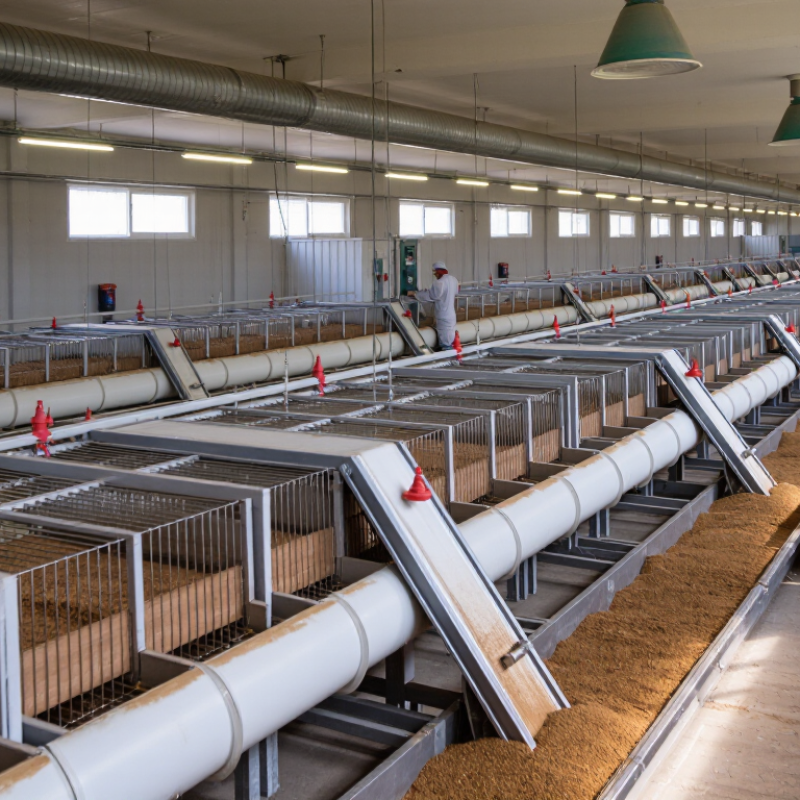
A PP poultry manure belt runs beneath the cages, catching droppings before they build up on the floor. Its smooth surface carries manure toward a discharge point when a motor moves the belt along the house. At the end, a scraper removes residue, and a cross conveyor can transfer the manure to storage or handling equipment. That matters. Keeping manure off the floor can make routine house cleaning more manageable.

The belt’s movement depends on steady alignment and appropriate tension. If it tracks to one side, manure may spill near the edges, and the belt can wear unevenly. Operators can check for buildup on the scraper, loose joints, and signs of cracking during regular inspections. Small details count. Damp, heavy manure may cling more than dry material, so belt speed and scraper contact may need adjustment. PP is practical, but not maintenance-free. A belt can still stretch or become damaged, and a rushed repair may leave the same problem in place. Observing how manure moves along the full belt helps identify issues before they disrupt collection.

Why Choose a PP Poultry Manure Belt?

How the belt collects and moves poultry manure

Manure drops onto belts beneath the cages. The driven belts carry it to a discharge point, where a scraper removes it for collection or storage. The bars show process order only; they are not measured performance data.

Which Material Properties Suit PP Belts to Poultry Farms?

Polypropylene (PP) suits poultry manure belts because it absorbs little moisture and resists many common cleaning chemicals. Compatibility still depends on concentration and contact time, so check the cleaning routine against the belt specification. In a poultry house, damp droppings and frequent washdowns make low water absorption useful. Less absorbed moisture can help the belt remain lighter during operation. That matters.

PP is also relatively light and flexible, allowing a belt to travel around rollers without excessive weight. Its strength depends on the weave, thickness, and construction, not just the material name. A smooth belt surface can help scraper blades remove manure, though worn blades or poor alignment may leave residue. Small details count.

There are limits. Prolonged heat, strong ultraviolet exposure, or constant tension can affect PP over time. Sustained loads may also cause gradual stretching, so belt tension and tracking need periodic checks. Inspect edges for fraying and the surface for cracks. PP is practical, not maintenance-free; the right choice depends on the house layout, cleaning method, and operating temperature.

Why Choose PP Poultry Manure Belt for Poultry Farms? - Which Material Properties Suit PP Belts to Poultry Farms?

Material property Typical characteristic of polypropylene (PP) Potential benefit on a poultry farm Practical consideration
Low material density PP has a density of approximately 0.90–0.91 g/cm³, making it less dense than water. A lightweight belt can be easier to handle during installation and maintenance, depending on its thickness and construction. Finished belt weight also depends on width, thickness, weave, coatings, and reinforcements.
Low moisture absorption Polypropylene generally absorbs little water compared with many materials. Can help the belt retain its dimensions during routine exposure to damp manure and cleaning conditions. Low absorption does not prevent surface contamination or eliminate the need for cleaning and proper drying.
Resistance to many common chemicals PP is resistant to many dilute acids and alkalis, but compatibility depends on the chemical, concentration, temperature, and exposure time. May be suitable for some farm cleaning environments when the belt grade is compatible with the cleaning products used. Strong oxidizing agents and certain solvents can damage PP. Check the belt supplier’s chemical-compatibility guidance before use.
Corrosion-free polymer construction Unlike metals, PP does not rust. The polymer itself will not develop rust from humid barn air or contact with wet manure. Metal fasteners, rollers, frames, and other system components may still corrode and need suitable protection.
Thermoplastic heat response PP softens as temperature rises and has a melting point commonly around 160–170°C; usable service temperatures are much lower and depend on the grade and load. Can perform in ordinary indoor poultry-house conditions when the belt is correctly selected and operated. Avoid excessive heat, hot wash water beyond the belt specification, and heat generated by friction or misalignment.
UV sensitivity Unstabilized PP can degrade with prolonged ultraviolet exposure; UV-stabilized grades can improve resistance. Often a practical choice for indoor manure-removal systems where direct sunlight is limited. For outdoor storage or strong sunlight exposure, confirm UV stabilization and follow storage recommendations.
Flexible belt construction PP can be made into woven or otherwise engineered belt structures, with performance depending on the complete design. A properly specified belt can be designed for manure conveyance and the layout of a poultry-house removal system. Confirm belt width, thickness, tensile capacity, seam design, tracking, and compatibility with the drive and support system.
Cleanability depends on surface and system design PP is a non-porous polymer, but surface texture, weave, seams, and accumulated residue affect cleaning performance. A suitable belt and cleaning routine can support regular manure removal and general barn hygiene. Choose a surface and cleaning method appropriate to the manure, equipment, and farm biosecurity procedures.

Selection note: These are general properties of polypropylene, not guaranteed performance values for every belt. Confirm the specific belt’s construction, load rating, temperature range, chemical compatibility, and maintenance requirements with its technical documentation.

What Farm Management Benefits Can PP Manure Belts Offer?

A PP poultry manure belt can make daily house management more predictable. Manure drops onto a moving belt beneath the cages and travels toward a collection point. Staff can remove it on a schedule rather than scrape wet material from floors. That matters.

Regular removal can reduce manure buildup and make inspection easier. During a walk-through, workers can check for belt misalignment, tears, or uneven loading. Keeping manure contained may also help limit dampness and odor, although ventilation and cleaning practices remain important. The belt alone cannot solve every house-management issue.

A smooth polypropylene surface is generally easy to rinse, but maintenance still takes attention. Check belt tension, joints, tracking, and drive components; a misaligned belt can spill manure and create extra work. Less guesswork. Removal schedules may need adjustment when manure moisture changes. Keeping simple flock-by-flock records can help staff refine belt speed and cleaning frequency. Results depend on the house layout and daily operating habits.

How Should Farms Select and Maintain a PP Manure Belt?

Choose a PP manure belt by matching its width, thickness, and surface finish to the house equipment and daily manure volume. Polypropylene resists moisture and is relatively easy to clean, but performance still depends on belt quality and correct installation. Check that the belt tracks evenly across rollers and fits the drive system. Ask for technical specifications, including recommended tension and operating conditions. A belt that is too thin may wear quickly; one that is too thick may not suit the existing equipment.

Tips: Inspect belt edges and seams weekly. Remove buildup before it hardens. Small details matter.

During routine checks, look for fraying, cracks, slipping, or manure collecting in one area. Keep rollers clean and aligned, and adjust tension according to the equipment instructions rather than guessing. Excessive tension can strain the belt and drive components. After washing, allow the belt and surrounding parts to dry where practical; persistent dampness can encourage odor and make buildup harder to manage. Record repairs and replacement dates, even in a simple log. Maintenance schedules should reflect actual use, since flock size and operating hours vary. If tracking problems return, stop and inspect the rollers and frame, not just the belt. A belt may not be the only cause.

Contact us

Please fill out the enquiry form, and our dedicated team will promptly attend to your request