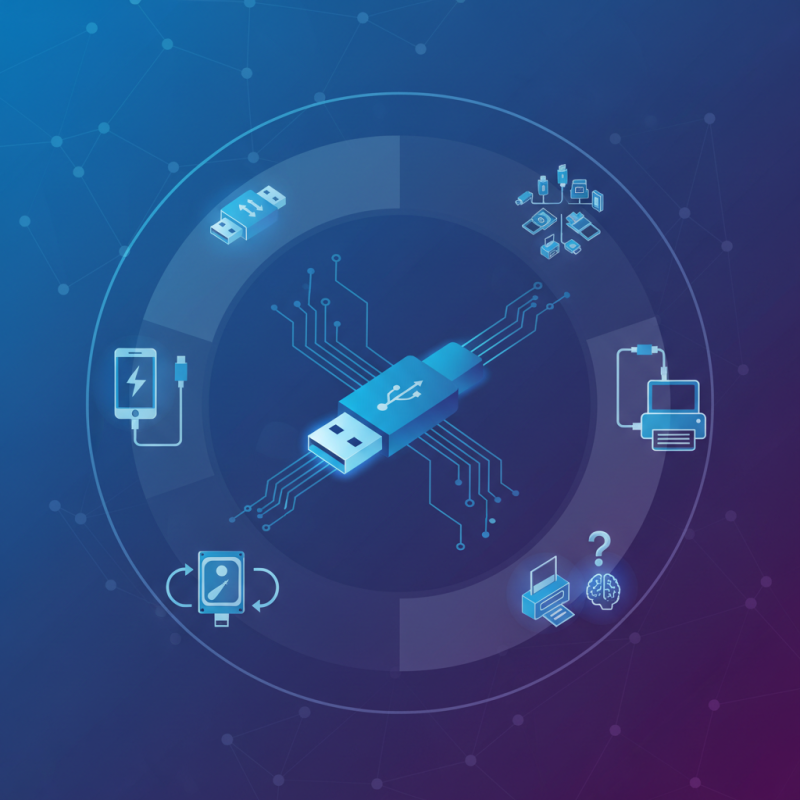
What is Socket USB and How Does It Work?
Socket Usb is a pivotal component in modern technology, enabling seamless connections between devices. It serves as a vital interface for data transfer and charging, enhancing user experience. Understanding how Socket USB functions can empower users to maximize its capabilities.
This technology has become ubiquitous in everyday devices, from smartphones to printers. Users rely on Socket USB for quick and reliable access to power and information. However, not everyone is aware of its underlying mechanisms. The lack of clarity can lead to confusion and ineffective usage.
As technology evolves, Socket USB products are improving. Different standards and types can cater to various needs. This variety may cause uncertainty among consumers. Users must reflect on their specific requirements to choose the right Socket USB solution. A well-informed decision can significantly impact performance and satisfaction.
What is Socket USB?
Socket USB is a standard used for connecting various devices. It facilitates data transfer and power supply between computers and peripherals. The design promotes versatility and ease of use, providing multiple connection types through a single interface.
The functionality of Socket USB lies in its ability to support different protocols. It allows for the interconnection of hardware such as keyboards, mice, printers, and external storage devices. Users appreciate the plug-and-play feature, which enables instant recognition upon connection. This seamless interaction reduces downtime and enhances productivity in daily tasks.
While the technology is widely accepted, it has shortcomings. Compatibility issues can arise with older devices. Sometimes, cables degrade, causing intermittent connections. Users have reported frustrations when dealing with multiple types of connectors. These imperfections remind us that while innovations simplify tasks, they also present ongoing challenges.
The Evolution of USB Technology
The evolution of USB technology has been remarkable since its inception in the mid-1990s. Originally designed to simplify device connections, USB has transformed into an essential standard for data transfer and power delivery. According to the USB Implementers Forum, over 10 billion USB ports were shipped in 2022 alone. This illustrates a significant reliance on USB across various devices, from smartphones to laptops.
USB’s journey began with USB 1.0, offering 1.5 Mbps transfer speeds. Gradually, advancements led to USB 2.0, which increased speed to 480 Mbps. The introduction of USB 3.0 marked a significant breakthrough, providing a speed of 5 Gbps, and later iterations such as USB 3.2 offered up to 20 Gbps. These advancements cater to the growing demand for faster data transfer, especially in high-definition video and large media files.
Today, USB technology continues to evolve with the advent of USB4, which can deliver up to 40 Gbps and supports Thunderbolt 3. This ensures compatibility with a wide range of devices while enhancing efficiency. Such rapid advancements can sometimes outpace the market's ability to adapt, leading to concerns over obsolescence. As technology progresses, understanding these changes becomes crucial for consumers and manufacturers alike.
How Socket USB Functions: A Technical Overview
Socket USB technology plays a crucial role in modern electronic devices. It allows for seamless data transfer and device charging through a standardized interface. According to a report by the USB Implementers Forum, more than 10 billion USB devices are currently in use globally, reflecting the technology’s wide adoption and reliability.
When examining how Socket USB functions, it's essential to consider its architecture. A typical Socket USB consists of a host controller, data lines, and power lines. The host controller manages data flow, while the data lines facilitate communication between devices. Reports show that Socket USB can deliver data transfer speeds of up to 20 Gbps with USB 3.2, significantly enhancing user experience.
However, challenges do exist. Not all devices support the latest USB protocols. This creates compatibility issues, leading to frustrations for users seeking to connect newer devices to older systems. Inconsistencies in power delivery across different devices can also result in inefficient charging. These factors highlight the ongoing need for improvements in Socket USB technology, making it a dynamic area for further research and development.
Common Applications of Socket USB
Socket USB technology has transformed how we connect devices. It allows for a simple interface between computers and peripherals. One common application is in charging devices. Many smartphones and tablets use USB sockets for quick charging. This standardization has made it easy to find compatible chargers globally.
Data transfer is another significant use. USB sockets are found in external hard drives and flash drives. This allows users to back up important files easily. While USB connections are generally reliable, they can face issues like loose connections or wear over time. These factors can cause interruptions during data transfer.
In addition, USB sockets are prevalent in automotive systems. Many vehicles now offer USB ports for entertainment and navigation devices. However, some users might find limited compatibility between their devices and the car's system. This inconsistency can lead to frustration when trying to connect. It’s essential to consider the specific requirements for devices to work seamlessly with USB connections.
Advantages and Limitations of Using Socket USB
Socket USB technology has gained traction due to its convenient features. One major advantage is its ease of use. Just plug and play. You don’t need extensive technical knowledge to operate it. Consequently, it becomes accessible to a broader audience. This simplicity encourages frequent usage across various devices.
However, limitations exist. Socket USB can be prone to wear and tear. The frequent plugging and unplugging may degrade the physical connectors over time. Additionally, data transfer speeds may vary. Older USB versions function slower. This inconsistency can hinder efficiency, especially for data-intensive tasks.
Moreover, not all devices are compatible with Socket USB. This lack of universal support can be frustrating for users. It requires careful consideration before adopting the technology. While the ease of use is appealing, potential pitfalls demand attention. Balancing convenience against these drawbacks is essential for informed users.