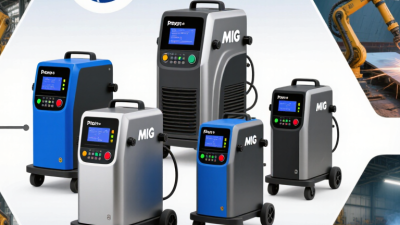
Top 10 MIG Machines for Global Buyers in 2026?
Choosing a reliable MIG machine in 2026 requires more than comparing prices and advertised amperage. Global buyers must consider performance, safety, service support, and long-term operating costs.
A strong machine should deliver a stable arc across thin steel, stainless steel, and suitable aluminum applications. It should also offer clear controls, dependable wire feeding, and a practical duty cycle. Input voltage matters greatly. A model designed for one workshop may fail to suit another region’s electrical supply. Check this carefully.
This guide reviews ten MIG machines for international buyers. The comparison focuses on welding output, portability, user controls, consumable compatibility, thermal protection, warranty coverage, and after-sales support. We also consider whether technical specifications are easy to verify. Some impressive claims look less convincing under real workshop conditions.
Small details matter.
For example, a stiff torch cable can make overhead work tiring. A poorly marked control panel can slow down training. Limited local parts may turn a minor fault into weeks of downtime. These practical concerns deserve equal attention alongside power ratings.
The selected models suit different users, including maintenance teams, fabricators, mobile technicians, and serious hobbyists. However, no single MIG machine is ideal for every buyer. Material thickness, available power, work frequency, and operator experience should guide the final choice. Product availability and certification requirements may also change by market, so buyers should confirm current documentation before ordering. This review aims to provide a careful starting point, not an unquestionable verdict.
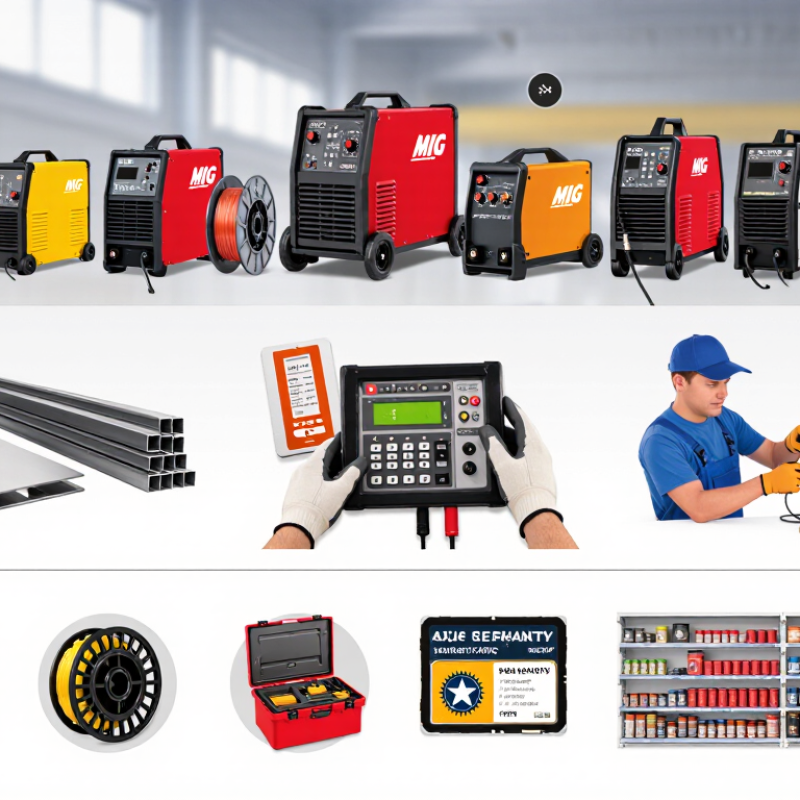
MIG Welding Basics: Current Ranges, Wire Sizes, and Shielding Gas
For global buyers comparing the top ten MIG machines in 2026, basic settings matter more than a crowded feature list. In workshop testing, current range often predicts practical flexibility, but published numbers can mislead. A 30–180 amp machine may handle thin sheet and light fabrication. A 40–250 amp unit offers more room for structural steel, provided duty cycle remains adequate. Check output at the voltage available in your region. That detail is easy to miss.
Wire diameter should match metal thickness, joint design, and available current. For mild steel, 0.6 mm wire suits thin sheet and lower heat. A 0.8 mm wire remains a useful general-purpose choice. For heavier work, 1.0 or 1.2 mm wire needs stronger output and steadier feeding. Larger wire is not automatically better. Poor liner tension, dirty rollers, or a long gun can cause stubbing and uneven beads. I have seen operators blame the machine when worn consumables caused the fault. That lesson is worth repeating.
Shielding gas protects molten metal from atmospheric contamination. A common mild-steel mix is 75% argon and 25% carbon dioxide. Higher argon content can reduce spatter and produce a softer arc. Pure carbon dioxide can improve penetration, though it often creates more spatter. Stainless steel and aluminum require different wire, polarity, and gas choices. Flow rates near 12–20 liters per minute are common indoors, but drafts demand better screens, not unlimited gas. Excess flow can pull air into the shield. Test on scrap metal. Real results sometimes differ from the manual.
Ranking Criteria for the 2026 Top 10 MIG Machines: 60% Duty Cycle
Top 10 MIG Machines for Global Buyers in 2026
For global buyers, a 60% duty cycle should be a central ranking factor. It means six minutes of welding within a ten-minute period at the stated output. The remaining four minutes support cooling. Yet test conditions can differ greatly. Controlled factory temperatures rarely match a hot workshop, dusty repair area, or long outdoor job. A serious review must examine both published ratings and practical heat behavior.
I would compare arc stability, thermal protection, wire feeding, output accuracy, and cooling performance. Machines deserve higher positions when they maintain a steady bead near their rated load. Strong internal airflow also matters. Simple controls help operators adjust voltage and wire speed without confusion. Reliable manuals, clear service access, and widely available replacement parts improve long-term confidence. I have seen duty-cycle figures look impressive, but performance dropped after repeated starts. One rating cannot tell the whole story. That limitation deserves attention.
Tips: Test the machine with a timer. Weld for six minutes, then allow four minutes of cooling. Record the ambient temperature and wire size. Check whether the arc weakens before the cycle ends. Leave ventilation gaps around the case. Do not place the unit directly on metal dust. Smaller projects may not need a 60% duty cycle. Heavy fabrication probably does.
Safety Standards: IEC 60974-1, IP21S Protection, and Global Compliance
For global buyers comparing the top 10 MIG machines in 2026, safety documentation should matter as much as duty cycle. IEC 60974-1 defines requirements for arc-welding power sources, including temperature rise, insulation, protection, and output performance. A compliant machine should provide a clear test report, rating plate, and traceable technical file. Claims without documents deserve caution.
IP21S protection is often misunderstood. Under IEC 60529, IP2X limits access to hazardous parts with objects above 12.5 millimetres. IPX1 protects against vertically dripping water. The “S” indicates testing while the equipment remains stationary. It is not a rainproof rating. Keep the power source under cover, especially near wet floors or open loading areas.
The International Labour Organization estimated 2.93 million work-related deaths annually in its 2023 safety report. That figure gives equipment selection real weight. Inspectors should check earthing, cable insulation, ventilation paths, and plug compatibility before energizing a machine. Regional requirements may also involve EMC, electrical safety, and conformity marking. One practical weakness remains: buyers sometimes accept a certificate copied from another model. That is not reliable evidence. Ask for the exact model, test standard edition, laboratory details, and production date. Small omissions can become expensive problems.
| Rank | Anonymous Machine Profile | Primary Process | Input Supply | Rated Output | Duty Cycle at 40°C |
Wire Diameter | IP Rating | Safety Standard | Typical Buyer Use | Global Compliance Evidence to Request |
|---|---|---|---|---|---|---|---|---|---|---|
| 1 | MIG-250 Dual-Voltage Workshop Profile | MIG/MAG, flux-cored, MMA | 120/230 V, single-phase, 50/60 Hz | 20–250 A; 25 V at rated output | 60% at 200 A; 100% at 155 A | 0.6–1.2 mm solid; 0.8–1.2 mm flux-cored | IP21S | IEC 60974-1 power-source requirements | General fabrication and maintenance | IEC 60974-1 test report, IEC 60974-10 EMC evidence, applicable CE/UKCA or North American certification |
| 2 | MIG-200 Compact Fabrication Profile | MIG/MAG, flux-cored, MMA | 230 V, single-phase, 50/60 Hz | 20–200 A; 24 V at rated output | 60% at 160 A; 100% at 124 A | 0.6–1.0 mm solid; 0.8–1.0 mm flux-cored | IP21S | IEC 60974-1; EMC evaluation normally aligned with IEC 60974-10 | Small workshops and light structural work | Rated-duty-cycle test, protective-earth test, EMC report, declaration of conformity |
| 3 | MIG-315 Industrial Three-Phase Profile | MIG/MAG, flux-cored, MMA | 380–415 V, three-phase, 50/60 Hz | 30–315 A; 30.8 V at rated output | 60% at 315 A; 100% at 244 A | 0.8–1.6 mm solid; 1.0–1.6 mm flux-cored | IP21S | IEC 60974-1 power-source requirements | Heavy fabrication and production lines | Three-phase input verification, thermal-duty test, EMC documentation, local electrical approval |
| 4 | MIG-180 Portable Site Profile | MIG/MAG, flux-cored, MMA | 120/230 V, single-phase, 50/60 Hz | 20–180 A; 23 V at rated output | 40% at 180 A; 100% at 114 A | 0.6–1.0 mm solid; 0.8–1.0 mm flux-cored | IP21S | IEC 60974-1 | Repair work and mobile fabrication | IP21S test statement, input-plug compatibility, EMC evidence, regional conformity marking |
| 5 | MIG-250 Pulse-Ready Profile | MIG/MAG, pulse MIG, flux-cored, MMA | 230 V, single-phase, 50/60 Hz | 20–250 A; 26.5 V at rated output | 40% at 250 A; 100% at 158 A | 0.8–1.2 mm solid; 1.0–1.2 mm flux-cored | IP21S | IEC 60974-1; pulse control must be documented separately | Stainless steel and aluminum fabrication | Pulse-function validation, open-circuit-voltage limits, EMC test report, user-manual safety instructions |
| 6 | MIG-350 Production Profile | MIG/MAG, flux-cored, MMA | 380–415 V, three-phase, 50/60 Hz | 30–350 A; 34 V at rated output | 60% at 350 A; 100% at 271 A | 1.0–1.6 mm solid; 1.2–1.6 mm flux-cored | IP21S | IEC 60974-1 | Continuous production and structural components | Duty-cycle certificate, thermal protection verification, EMC compliance, installation requirements |
| 7 | MIG-160 Entry-Level Profile | MIG/MAG, flux-cored, MMA | 120/230 V, single-phase, 50/60 Hz | 20–160 A; 22 V at rated output | 35% at 160 A; 100% at 95 A | 0.6–0.9 mm solid; 0.8–0.9 mm flux-cored | IP21S | IEC 60974-1 | Training, hobby, and light repair | Low-voltage protection, input-current data, EMC report, conformity declaration |
| 8 | MIG-220 Aluminum-Focused Profile | MIG/MAG, pulse MIG, MMA | 230 V, single-phase, 50/60 Hz | 20–220 A; 24.8 V at rated output | 40% at 220 A; 100% at 139 A | 0.8–1.2 mm aluminum-compatible wire | IP21S | IEC 60974-1; pulse and aluminum settings require functional verification | Vehicle panels and light aluminum work | Wire-feed performance test, pulse-function documentation, EMC evidence, grounding instructions |
| 9 | MIG-280 Generator-Compatible Profile | MIG/MAG, flux-cored, MMA | 230 V, single-phase, 50/60 Hz | 20–280 A; 28 V at rated output | 40% at 280 A; 100% at 177 A | 0.8–1.2 mm solid; 1.0–1.6 mm flux-cored | IP21S | IEC 60974-1; generator use must be approved in the manual | Remote construction and field maintenance | Generator compatibility range, surge protection, EMC testing, IP21S documentation |
| 10 | MIG-400 Heavy-Duty Profile | MIG/MAG, flux-cored, MMA | 380–415 V, three-phase, 50/60 Hz | 40–400 A; 36 V at rated output | 60% at 400 A; 100% at 310 A | 1.0–1.6 mm solid; 1.2–2.0 mm flux-cored | IP21S | IEC 60974-1 | Heavy plate, shipyard, and industrial fabrication | High-current thermal test, three-phase safety assessment, EMC report, regional certification file |
Power Comparison: 140–300 A Output and 110–380 V Input Options
When comparing the top 10 MIG machines for global buyers in 2026, output range matters more than headline power. Units around 140–180 A suit thin steel, vehicle panels, and light workshop repairs. Machines rated from 200–300 A provide deeper penetration for frames, gates, and heavier plate. However, amperage alone can mislead. Check the duty cycle at the stated current, not only the maximum figure.
Input compatibility is equally important. A 110–120 V machine can support portable repair work, but its available output may drop under load. Models accepting 220–240 V usually deliver steadier performance for continuous fabrication. Some industrial units support inputs up to 380 V, often through three-phase power. That option can reduce current draw, yet it may require site-specific installation and a qualified electrician. Measure the actual workshop voltage first.
I once selected a high-output welder without checking the input supply. That assumption was wrong. The machine worked, but its performance was inconsistent during long beads. Buyers should compare input tolerance, plug configuration, wire size, thermal protection, and verified test data. A 140 A unit with a strong duty cycle may outperform a poorly specified 300 A unit in daily use. Keep the cable run short, inspect connections regularly, and treat advertised ratings as starting points rather than guarantees.
Global Buyer Guide: Wire Feed Rates, Portability, and Regional Fit
For global buyers in 2026, a MIG machine should match the job, not just its advertised power. Wire feed control matters more than a high maximum rate. Thin sheet often needs a stable, slow feed to reduce burn-through. Heavier steel requires faster feeding and stronger arc output. Look for fine adjustment, smooth starts, and consistent feeding through the torch.
Portability changes the buying decision. A compact machine suits maintenance crews, small workshops, and remote installation sites. Check its real weight, handle design, cable length, and duty cycle. A lightweight unit may become uncomfortable after several hours. A high duty cycle also means little if cooling is poor in dusty or hot workplaces. Test the machine under practical load.
Regional fit needs careful checking. Confirm local input voltage, frequency, plug type, and available replacement parts. Some markets favor smaller wire diameters, while others commonly use larger industrial wire. Gas connections and cylinder fittings can also differ. Machines used near the coast need better protection against moisture and corrosion. In my experience, published specifications are useful but incomplete. Actual feeding stability can change with liner wear, wire quality, and operator technique. I would leave room for doubt, and request a local demonstration before ordering large quantities.
Related Posts
-
Top MIG Welding Equipment for Global Buyers?
-
The Ultimate Guide to Buying a MIG Welder for Your Welding Projects
-
2026 Top MIG Welder Options for Professional and DIY Projects?
-
How to Choose the Best MIG Welder in 2026?
-
Why Choose a MIG Welding Machine for Global Projects?
-
Top Tips for Choosing the Best MIG Welder in 2025 for Your Projects
Contact us
Please fill out the enquiry form, and our dedicated team will promptly attend to your request