What Are the Top 10 Types of Sieve Components?
Sieve Components may look simple from a distance: a taut screen, a metal frame, and a machine that vibrates. In practice, each part affects separation, throughput, noise, and service life. A worn gasket can let coarse particles slip through. An unsuitable mesh can blind when damp material gathers across its openings. Small details matter.
This guide examines ten common types of sieve components, from screen media and support frames to clamps, seals, and cleaning devices. It explains what each part does, where it fits, and which operating conditions deserve attention. Material properties, aperture size, temperature, and cleaning methods all influence component choice. There is no universal best setup.
A useful design principle is: “Choose components for the material and duty, not by appearance alone.” This is an editorially written principle, not a verified quotation. No source was provided for a named sieve-industry expert, so assigning it to a real person would risk misleading readers. That limitation matters. Expert authority should be checkable, not decorative.
The sections ahead connect component names with practical inspection points. Look for stretched mesh, cracked seals, loose clamps, and residue lodged at the screen edge. These signs can explain inconsistent product cuts or repeated stoppages. The ranking is a guide, not a universal standard; actual priorities vary with the sieve design and process. Begin with the components themselves, then consider how their condition shapes performance.
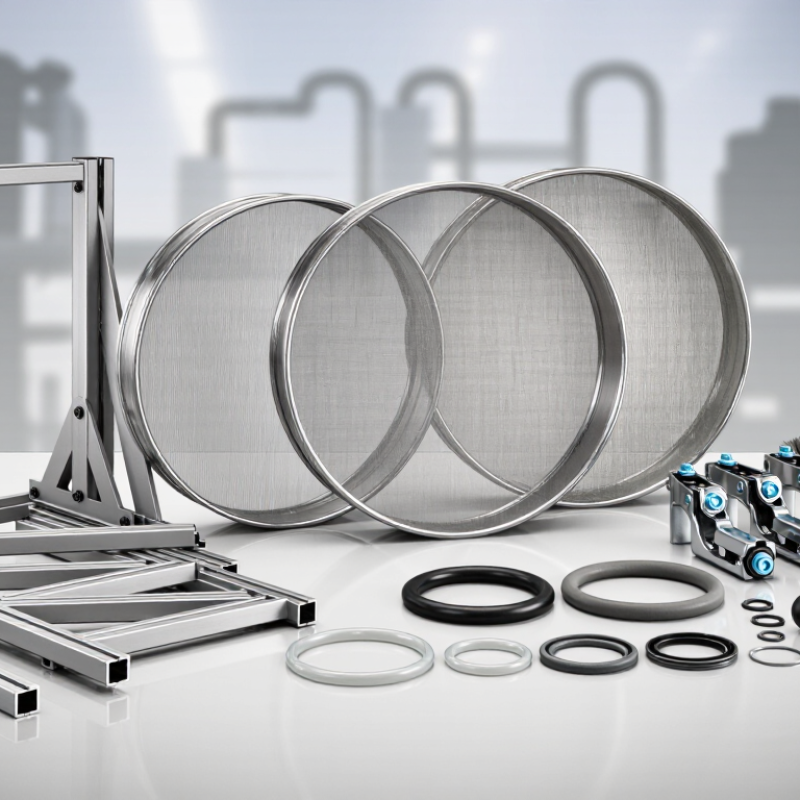
Screening Media: Woven Wire Mesh and Perforated Plate
Woven wire mesh and perforated plate are two widely used screening media, but they behave differently under load. Mesh is made from interlaced wires, creating many openings across a relatively light surface. Its aperture size, wire diameter, and weave pattern affect separation accuracy and open area. For dry, fine material, smaller openings can improve sizing, though they may blind when particles are damp or sticky. A quick visual check helps: look for broken wires, stretched sections, and material lodged between openings.
Perforated plate uses punched or drilled holes in a solid sheet. It is typically selected when impact and abrasion are concerns, such as when coarse stone lands heavily on the deck. Hole shape matters. Round holes often provide strength, while slotted openings can help elongated particles pass through. The plate’s thickness and open area also influence capacity; thicker material may last longer but can reduce screening efficiency. It is not automatically the tougher choice in every installation.
Selection depends on the feed, moisture, particle shape, and required cut size. Compare actual opening dimensions, not just nominal labels, and consider how quickly media can be inspected or replaced. In some operations, the best-looking specification performs poorly after a wet shift. That is worth checking. A short trial with representative material can reveal blinding, uneven wear, or unexpected carryover before a full change is made.
Specialized Panels: Wedge Wire and Synthetic Mesh
Wedge wire panels use V-shaped profiles joined to form narrow, consistent slots. Their smooth edges can help particles pass through while reducing the chance of blinding. Slot width, wire shape, and panel support all affect performance. Small details matter. A panel handling wet mineral slurry may need a different opening and backing structure from one screening dry granules. Wedge wire is often selected for strength and drainage, but it is not automatically self-cleaning. Sticky material can still build up.
Synthetic mesh panels are made from woven or molded polymer strands, with material choices suited to different temperatures and chemical conditions. They can be lighter and quieter than metal panels, and their flexibility may reduce impact noise. Fine mesh is useful when small particles must be separated, though tighter openings can limit throughput. Check aperture size, open area, tension, and fastening points against the machine and feed material. For example, a loose edge can create a bypass path, even when the mesh itself is correctly specified. A sample run helps. Results in a clean test may not match dusty, damp, or irregular production conditions.
Media-Fixing Parts: Tensioning Hooks and Clamping Bars
Tensioning hooks and clamping bars hold screen media in place while a sieve vibrates. Their job is simple, but poor fit can create loose edges, uneven tension, and premature mesh wear. Hooks should engage fully along the deck, while bars should sit straight without pinching the cloth at isolated points. Small parts matter. During changeovers, inspect hook bends, worn contact surfaces, and cracked or flattened cushioning strips. A bright wear line near one edge often signals movement, not merely age.
Tension should be even across the panel, not forced by tightening one side harder. Uneven loading can distort openings and affect separation results. McKinsey’s 2015 report, The Internet of Things: Mapping the Value Beyond the Hype, estimated predictive maintenance could reduce equipment downtime by 30–50% across industrial settings. That figure is not specific to sieves, but it supports routine checks of media-fixing hardware before failure. Still, inspection alone cannot correct a mismatched hook profile or a bent bar. Record the panel position, wear pattern, and replacement interval; those notes help distinguish recurring fit problems from normal service wear. Not always obvious. A quick visual check may miss slack beneath the clamp.
Operating Parts: Seals and Suspension Springs
Seals and suspension springs may look like minor sieve components, but both influence stable operation. Seals contain dust and prevent material from escaping around the screen frame. A split lip, hardened edge, or loose clamp can leave a fine trail beneath the machine. During inspection, check for flattened sections and powder packed into joints. A seal can look intact yet leak under vibration.
Suspension springs support the vibrating body and help maintain its designed movement. Compare spring height and condition at matching positions; a visibly uneven set may point to fatigue, overloading, or poor alignment. Replace damaged springs as a matched set when the equipment specification requires it. Small parts matter. The U.S. Department of Energy’s 2010 Operations & Maintenance Best Practices Guide reports potential energy savings of 5–20% from effective maintenance programs. That figure compares programs with poorly maintained systems; it is not sieve-specific. Still, it supports regular checks rather than waiting for a breakdown. Record seal wear, spring height, and unusual noise after each inspection. The exact inspection interval depends on vibration intensity and material conditions, so a fixed schedule may need adjustment.
10 Common Sieve Components by Function
A functional overview of common vibrating-sieve components, including operating parts such as seals and suspension springs.
Counts show how the selected 10 component types are grouped in this overview; they are not market shares or machine specifications. Actual components vary by sieve design.
