Top 10 U40b Glass Insulator Suppliers for Global Buyers

Choosing a reliable U40b Glass Insulator supplier requires more than comparing online prices. Global buyers need verified product data, consistent manufacturing, and responsive technical support. This introduction presents ten suppliers selected for their relevance to utility, railway, and transmission projects. The evaluation considers production experience, quality systems, export capability, and documented performance.

Details matter. A dependable supplier should provide clear drawings, mechanical ratings, electrical specifications, and applicable testing records. Buyers should also examine glass quality, cementing methods, packaging strength, and traceability from factory to shipment. These points become critical when insulators travel through humid ports, rough roads, or long storage periods. A damaged crate can affect project schedules before installation even begins.

The list is designed as a practical starting point, not a final purchasing decision. Supplier information can change, and published claims still require independent verification. Request recent certificates, inspection reports, sample approvals, and references from comparable projects. Ask how the supplier handles defects, replacement parts, and after-sales communication. These conversations often reveal more than polished catalog pages.

Some manufacturers may offer competitive prices but limited documentation. Others may provide strong engineering support at a higher cost. Neither choice is automatically correct. The best fit depends on voltage class, climate, delivery terms, and project risk. This guide helps buyers compare those factors with greater confidence while recognizing that local technical approval remains essential.
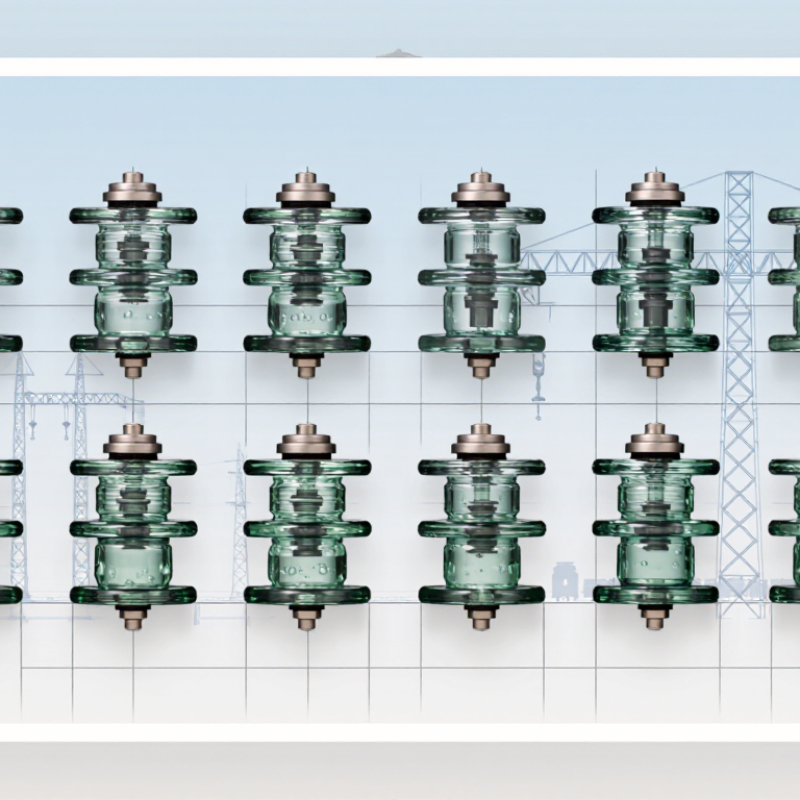
Top 10 U40b Glass Insulator Suppliers for Global Buyers

U40B Glass Insulators: Design, Specifications, and Common Applications

U40B glass insulators are widely used suspension units for overhead transmission lines. Their toughened glass body provides strong electrical insulation and visible damage after failure. The U40B designation commonly indicates a 40 kN electromechanical failing load. Typical designs use a metal cap, cement joint, and steel pin connection.

Exact dimensions vary by standard and manufacturer. Common specifications include a disc diameter near 175 mm and a unit spacing around 110 mm.

Creepage distance often falls near 190 mm, while dry arcing distance may approach 110 mm.

These figures must be checked against approved drawings. Catalog values are not enough.

In practical line work, U40B units support conductors on medium and high-voltage structures. They suit rural networks, coastal routes, and industrial corridors when suitable creepage options are selected.

Installers should inspect glass surfaces, cement joints, and fittings before stringing. Small chips matter. During maintenance, washing frequency depends on salt, dust, and local rainfall.

Field experience shows that poor hardware alignment can create stress, even with a correctly rated insulator. I would also question any supplier offering identical values for every climate. Product testing, batch traceability, and documented mechanical and electrical reports provide stronger evidence than polished sales language.

How to Evaluate U40B Glass Insulator Suppliers

How to Evaluate U40B Glass Insulator Suppliers

The IEA Electricity 2024 report forecasts global electricity demand to grow 3.4% annually through 2026. This expansion increases demand for dependable U40B glass insulators. Buyers should assess more than price. Request evidence of compliance with IEC 60383-1 and IEC 60120 requirements. Check rated mechanical failing load, creepage distance, puncture performance, and dimensional tolerances. A supplier should provide type-test reports from an independent laboratory, not only internal certificates.

Experience matters during real projects. Ask for shipment records, climate exposure data, and failure-rate tracking. Review how the factory controls glass tempering, cementing, galvanizing, and final inspection. CIGRE technical publications repeatedly stress quality assurance and condition monitoring across overhead-line equipment.

Batch traceability is essential. Each pallet should connect to production dates, raw-material records, and inspection results. I have found that clear records often reveal more than polished presentations.

Tips: Compare at least three suppliers using the same technical checklist. Inspect sample markings, packaging, and pin alignment. Confirm routine-test frequency before signing. Ask who pays for retesting after a failed batch. A cheap quotation may hide weak documentation or higher transport damage. That risk is easy to underestimate. One audit weakness remains common: buyers often verify certificates but rarely verify the laboratory’s scope. Recheck accreditation, test dates, and the exact U40B configuration. Allow room for human error, including your own evaluation assumptions.

Global Supplier Landscape for U40B Glass Insulators

Global Supplier Landscape for U40B Glass Insulators

The U40B glass insulator remains important for medium and high-voltage transmission projects. Its 40 kN mechanical rating supports many standard suspension applications. According to IEA Electricity 2024, global electricity demand may grow by 3.4% annually through 2026. This growth is increasing demand for reliable grid equipment. Suppliers now compete across Europe, Asia, the Middle East, and emerging African markets. Buyers should compare production capacity, export experience, and documented quality systems. IEC 60383-1 testing remains a useful technical reference for suspension insulators. CIGRE publications also stress pollution performance, aging, and maintenance planning.

Tips: Request type-test reports, routine-test records, and material traceability before approval. Check glass shell quality, zinc sleeve protection, locking hardware, and batch consistency. Ask for actual lead times, not only catalog estimates. A factory visit can reveal process gaps.

Price alone is a weak filter. Some offers appear attractive but exclude testing, packaging, or replacement parts. I would also question suppliers that provide identical documents for every project. That shortcut may hide differences in climate, pollution, or line design. Supplier rankings can guide research, but they cannot replace technical evaluation. This part is often overlooked. A stronger shortlist combines verified performance, responsive engineering support, and realistic delivery data.

U40B Glass Insulator Reference Performance Ratings

The chart presents commonly published IEC 60305 U40B reference ratings for global procurement comparison. U40B units typically have a 40 kN mechanical failing load, with electrical performance varying by test condition. Actual catalog values may differ according to design, creepage distance, altitude, and applicable testing requirements.

Profiles of 10 U40B Glass Insulator Suppliers

Supplier One focuses on toughened glass discs for 11 kV and medium-voltage networks. Its profile highlights automated forming, visual inspection, and batch traceability. Supplier Two serves utility contractors with U40B strings and galvanized hardware. Buyers should request salt-fog results, not only catalog photographs. Supplier Three offers export packing with separators, moisture barriers, and reinforced wooden cases. This detail matters after long sea journeys. Supplier Four emphasizes short production cycles and flexible minimum orders. Its factory profile appears practical, although capacity claims require independent verification.

Supplier Five specializes in customized glass color and marking requirements. Clear drawings can reduce installation errors. Supplier Six provides routine mechanical testing and dimensional reports for every shipment. Ask whether reports identify the actual production batch. Supplier Seven supports projects in humid and coastal regions. Its surface finish options may help limit contamination buildup. Supplier Eight combines insulator production with forged fittings and cotter pins. One-source purchasing can simplify coordination, but it may reduce comparison between component suppliers.

Supplier Nine presents a strong focus on quality systems, including incoming material checks and final sampling. Buyers should inspect certificate dates carefully. Supplier Ten targets large infrastructure tenders with stable monthly output. Its profile is attractive for repeat orders, yet delivery promises should include written tolerances. Across these ten supplier profiles, technical evidence remains more useful than polished factory language. Verify U40B dimensions, puncture resistance, thermal performance, packing methods, and after-sales response before approval. Some product pages remain incomplete. That is worth questioning. A factory visit, third-party inspection, or sample order can reveal weaknesses hidden in a specification sheet.

Top 10 U40B Glass Insulator Suppliers for Global Buyers — Profiles of 10 U40B Glass Insulator Suppliers

Buyer information: Supplier identities are intentionally omitted. The profiles below are capability categories, not a verified supplier ranking or claims about specific companies. Confirm product dimensions, ratings, certifications, and delivery terms against the supplier’s current drawings and test documents.

Profile Supplier Capability Focus U40B Product Details to Confirm Quality Evidence to Request Global Buyer Check
Profile 1
Utility projects
Experience supplying suspension insulators for overhead transmission-line projects. Confirm the exact U40B design, rated electromechanical or mechanical failing load, dimensions, and applicable standard edition. Approved drawings, routine-test records, and type-test reports traceable to the offered design. Check project references, technical-submittal capability, and acceptance-inspection arrangements.
Profile 2
Export-oriented
Focus on export documentation, packaging, and shipment coordination. Confirm product configuration, quantity per packing unit, gross and net weights, and shipping dimensions. Inspection records, packing lists, product identification, and traceability documentation. Agree on Incoterms, port of loading, delivery schedule, and responsibility for export documents.
Profile 3
Standards-led
Emphasis on manufacturing and testing against the buyer’s specified international or national standard. Ask whether the offered U40B design complies with the specified standard and any purchaser-specific requirements. Current test reports identifying the tested design, test methods, results, and issuing laboratory. Compare the standard and edition stated in the quotation with the project specification.
Profile 4
Custom specification
Supports project-specific drawings, technical schedules, and approval submissions. Review the interface dimensions, cap-and-pin details, creepage distance, and any requested marking or hardware requirements. Controlled drawings, revision history, and written confirmation of deviations or exceptions. Obtain written approval before production whenever a design or material deviation is proposed.
Profile 5
High-volume orders
Suitable for buyers assessing repeat orders or large project quantities. Confirm the production lot definition, permitted tolerances, and consistency of the offered design across lots. Lot-level inspection and test documentation, plus a clear nonconformance process. Check stated production capacity and lead time against the required delivery schedule.
Profile 6
Inspection-ready
Accommodates purchaser, third-party, or pre-shipment inspection requirements. Agree on inspection stages, sampling plan, acceptance criteria, and tests applicable to the order. Inspection and test plan, calibrated equipment records where relevant, and signed inspection results. Define inspection notice periods, access, costs, and the process for resolving rejected items.
Profile 7
Packaging-focused
Prioritizes protection of glass units and metal fittings during handling and transport. Confirm packaging quantity, separation or cushioning method, and product protection requirements. Packaging specification and photographs or records of the packed consignment, where available. Check suitability for the full route, including transshipment, container loading, and destination storage.
Profile 8
Technical support
Provides engineering responses for specification review and product-submittal questions. Request a data sheet and drawing showing the offered design’s rated values and key dimensions. Documented answers to technical queries and supporting test or design documents. Confirm the response process, language, time zone coverage, and availability during tender review.
Profile 9
Traceability-focused
Emphasizes identification and records linking products to production and inspection lots. Ask how each shipment and production lot is identified and how records can be retrieved. Sample traceability records, marking details, and document-retention policy. Ensure the traceability method meets the buyer’s project, utility, and local regulatory requirements.
Profile 10
Responsive sourcing
Focuses on quotation responsiveness and coordination of technical and commercial requirements. Require a clear offer stating the exact U40B design, applicable standard, quantity, and any exclusions. Complete quotation package with drawings, test-document list, and stated validity period. Compare total landed cost, payment terms, delivery commitments, warranty terms, and after-sales arrangements.

How Global Buyers Can Verify Suppliers and Manage Procurement

Top 10 U40b Glass Insulator Suppliers for Global Buyers

How Global Buyers Can Verify Suppliers and Manage Procurement

A reliable U40b glass insulator supplier should provide clear drawings, test reports, and production records. Do not rely on catalog images alone. Ask for recent mechanical, electrical, and thermal test results. Check whether the documents match the exact U40b design, not a similar model. Small differences in dimensions can affect string assembly and field performance.

Request samples before placing a large order. Measure the glass body, metal fittings, locking parts, and marking quality. Compare each sample with the approved drawing. A practical factory review should examine glass forming, annealing, fitting assembly, and final inspection. Inspectors should also check cracks, chips, uneven cement, and loose hardware. These details often reveal weak process control.

Use a written specification and a lot-based inspection plan. Define sampling levels, rejection limits, packaging requirements, and delivery terms before production starts. Confirm export documents, crate strength, moisture protection, and spare-piece policy. Split payments around measurable milestones when possible. Keep communication records.

No checklist is perfect. A polished audit can still miss seasonal quality changes or subcontracted processes. Recheck critical batches before shipment. Suppliers should explain nonconformities openly, with corrective actions and deadlines. If a quotation is unusually low, examine material quality, testing scope, and after-sales support before accepting it.

Contact us

Please fill out the enquiry form, and our dedicated team will promptly attend to your request