What Are the Top Cold Rolled Steel Types for Buyers in 2026?

In 2026, choosing Cold Rolled Steel starts with the part’s job, not a supplier’s broadest product list. Buyers should match grade, thickness, surface finish, and forming needs to the finished component. Fit matters. A cabinet panel may need a clean surface and consistent dimensions, while a drawn housing needs steel that can stretch without tearing. These differences affect scrap, production speed, and final appearance.

Common options include commercial-quality steel for general fabrication, drawing-quality grades for moderate forming, and deep-drawing or extra-deep-drawing grades for more demanding shapes. Bake-hardening steel can suit formed automotive panels that gain strength during paint curing. High-strength low-alloy steel may help reduce component weight, while full-hard material is often chosen for stiffness and limited forming. Names and grade designations vary by standard and region. Check the certificate. Confirm the applicable specification, mechanical properties, thickness tolerance, and surface condition with the supplier before ordering. A low price can lose its appeal if the coil varies across the width or causes press-line delays.

This guide compares the leading types by formability, strength, finish, and practical use. It also highlights questions buyers can ask when reviewing samples and mill test documents. A shortlist can still miss a detail, such as lubrication or bend radius, that matters on the shop floor. The best choice is the grade that performs reliably in the actual process, not simply the one with the most impressive label.
What Are the Top Cold Rolled Steel Types for Buyers in 2026?

What Defines Cold Rolled Steel and How Is It Produced?

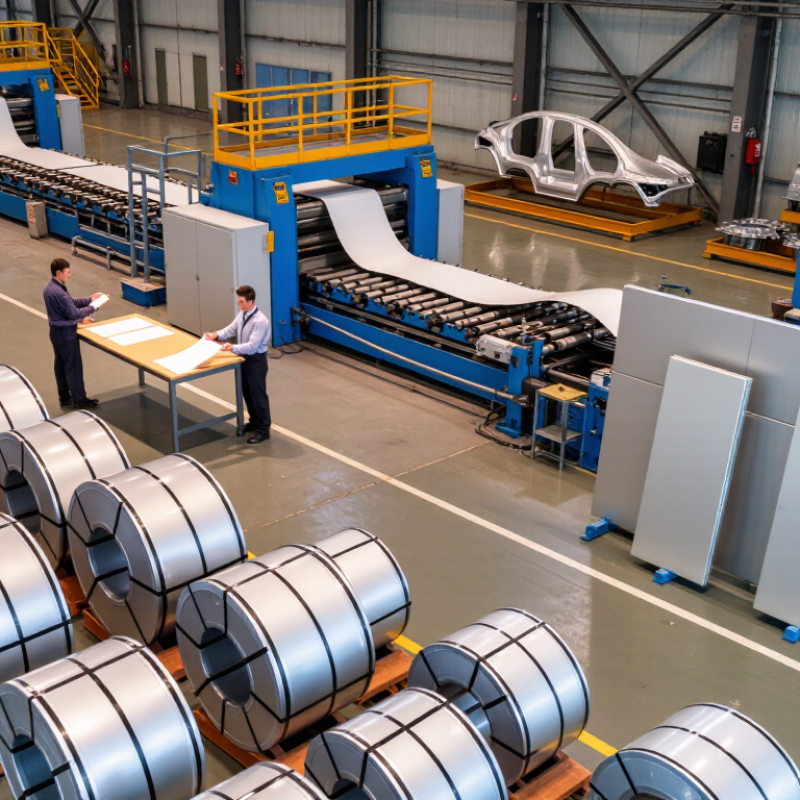
Cold rolled steel is not made by rolling liquid steel at low temperatures. It starts as hot-rolled coil, which is cooled, cleaned, and usually pickled to remove surface scale. The strip then passes through rolling stands near ambient temperature, below steel’s recrystallization range. The rolls reduce thickness and improve dimensional control. The metal also work-hardens. That matters.

Annealing may follow. Controlled heating softens the strip and restores formability; a light temper pass can then refine flatness and surface feel. The exact route depends on the intended grade and use. A smooth, thin sheet for a formed panel needs different properties from harder strip used in a simple bracket. Cold rolling alone does not guarantee a particular finish or strength.

The industry’s scale is considerable: World Steel Association’s World Steel in Figures 2024 reports 1,888.2 million tonnes of crude steel production in 2023. This is upstream context, not a cold-rolled output figure.

Buyers should check thickness tolerance, surface requirements, and whether the material was annealed. It is easy to overstate what “cold rolled” promises. The label describes processing, not one universal performance level.

Which Main Cold Rolled Steel Types Can Buyers Choose?

Buyers usually choose cold rolled steel by balancing formability, strength, surface quality, and cost. Commercial-quality low-carbon steel suits brackets, covers, and simple panels that need a smooth finish. It bends readily, but it may not hold shape as firmly as stronger grades. That matters.

Drawing-quality and deep-drawing steel are better for parts with deeper shapes, such as formed housings or kitchen components. Their chemistry and processing support more stretching with less risk of tearing. Still, tool design, sheet thickness, and bend direction affect results. A grade name alone cannot guarantee a clean part.

High-strength low-alloy steel can reduce weight while maintaining strength in structural or automotive components, though it may need more forming force and springback control. Full-hard material offers high hardness and strength, but is generally unsuitable for severe forming unless further processed. Not always an easy choice.

Tips: Ask suppliers for the grade, thickness tolerance, surface finish, and mechanical-property data. Test a sample using your actual tooling; a small trial can reveal cracking or springback before a full order. Sometimes the cheapest sheet costs more in rework.

Top Cold-Rolled Steel Types Buyers Can Choose in 2026

Tensile-strength ranges for common EN 10130 cold-rolled low-carbon steel grades

DC01 is a general-purpose forming grade; DC03–DC06 are progressively suited to more demanding forming applications. Values show specified tensile-strength ranges in MPa; confirm the applicable standard edition and product requirements when purchasing.

How Do Grades Differ in Strength, Formability, and Finish?

What Are the Top Cold Rolled Steel Types for Buyers in 2026?

Buyers should compare more than a grade number. ASTM A1008/A1008M covers cold rolled commercial, drawing, deep-drawing, and structural steels, with different priorities for forming and strength. Commercial-quality steel suits simple bends and brackets; deep-drawing grades better tolerate complex shapes, such as a stamped panel with a narrow radius. Extra formability has a trade-off: these grades may not provide the strength needed for a load-bearing part.

For higher strength, structural and high-strength low-alloy grades can reduce part thickness, but forming becomes less forgiving. WorldAutoSteel’s 2021 AHSS Application Guidelines describe advanced high-strength steels spanning roughly 440 MPa to above 1,000 MPa in tensile strength. That range is not a promise for every cold rolled product; verify the mill certificate and applicable specification. Springback matters. A test part can reveal it.

Surface finish is a separate buying decision. Cold rolling generally produces a smoother, more uniform surface than hot rolling, while temper rolling and subsequent handling affect appearance and flatness. Ask for the required surface designation, thickness tolerance, and oiling condition—not just “bright finish.” For visible parts, inspect a sample under the lighting used in production. It sounds obvious, but finish expectations are often left vague.

What Are the Top Cold Rolled Steel Types for Buyers in 2026? — How Do Grades Differ in Strength, Formability, and Finish?

Grade / Type Standard Typical Strength Properties Formability Surface and Finish Common Applications Buyer Consideration
DC01
Commercial-quality cold-rolled steel
EN 10130 Tensile strength: 270–410 MPa
Yield strength: maximum 280 MPa
Elongation A80: minimum 28%*
Suitable for simple bending and light forming. The least formable option in this group. Smooth cold-rolled surface. Skin-passed matte or bright finishes can be specified; surface quality is generally ordered as A or B. General sheet-metal parts, covers, panels, and formed components with modest drawing requirements. A practical choice when cost and general-purpose performance matter more than deep-drawing capability.
DC03
Drawing-quality steel
EN 10130 Tensile strength: 270–370 MPa
Yield strength: maximum 240 MPa
Elongation A80: minimum 34%*
Better drawing and forming performance than DC01; suitable for more demanding shapes. Smooth cold-rolled surface; matte or bright skin-pass finish may be agreed for the order. Appliance parts, formed housings, and components with moderate drawing depth. Consider when a part needs more forming latitude than commercial-quality sheet provides.
DC04
Deep-drawing steel
EN 10130 Tensile strength: 270–350 MPa
Yield strength: maximum 210 MPa
Elongation A80: minimum 38%*
Good deep-drawing and stretch-forming capability, with lower strength limits than DC01. Smooth, uniform cold-rolled surface; finish and surface-quality class should be stated in the purchase specification. Deep-drawn containers, automotive interior parts, and formed appliance components. A common step up for parts where drawability and reliable forming are priorities.
DC05
Extra-deep-drawing steel
EN 10130 Tensile strength: 270–330 MPa
Yield strength: maximum 180 MPa
Elongation A80: minimum 40%*
High formability for complex drawing operations and parts with substantial deformation. Cold-rolled surface suitable for coated or painted applications when the required surface class is specified. Complex automotive and appliance stampings, including parts with challenging draw geometry. Choose when DC04 does not provide enough forming margin; confirm tooling and lubrication requirements.
DC06
Extra-deep-drawing steel, stabilized
EN 10130 Tensile strength: 270–330 MPa
Yield strength: maximum 170 MPa
Elongation A80: minimum 41%*
Very high formability for demanding drawing operations; designed to provide consistent forming behavior. Smooth cold-rolled surface; specify surface quality and finish requirements for visible or coated parts. Complex deep-drawn stampings and components requiring substantial forming without cracking. Best suited to difficult forming jobs; compare material cost and availability against the production benefit.

*Indicative minimum elongation values are for the EN 10130 thickness range above 0.5 mm up to and including 1.5 mm. Strength and elongation limits vary with thickness and the applicable standard edition; verify the ordered grade, thickness, surface quality, finish, and inspection requirements on the material certificate.

Where Are Cold Rolled Steel Types Used Across Industries?

Cold rolled steel serves different roles depending on its grade, temper, and surface finish. Annealed low-carbon sheet is commonly used for appliance panels, electrical enclosures, and stamped brackets because it can be formed into smooth, consistent shapes. Skin-passed material offers a more uniform surface, useful for visible cabinet panels and furniture components. Fit matters. A polished appearance alone does not guarantee the right forming performance.

Automotive suppliers use cold rolled grades for interior brackets, seat components, and body parts that need predictable dimensions. Higher-strength grades can support lighter structures, though they may require more careful tooling and springback control. Electrical equipment makers also use thin-gauge sheet for housings and control cabinets, where flatness helps doors and panels align. Full-hard steel is less suited to deep drawing; it may work for simple, stiff parts or undergo further processing. Not always. Buyers should match grade, thickness, coating needs, and forming method to the actual part. A specification can look complete on paper and still miss a practical detail, such as a tight bend radius that causes cracking.

How Should Buyers Evaluate Cold Rolled Steel in 2026?

Buyers should start with the part, not a grade name. A deep-drawn appliance panel needs different properties from a stiff bracket. Compare low-carbon drawing-quality steel with higher-strength cold rolled grades against the required forming depth, yield strength, and finished-part shape. Ask for the applicable standard, thickness tolerance, width range, and surface condition in writing. Small differences matter. A sheet that varies by a fraction of a millimeter can affect die settings and assembly fit.

Check evidence from the actual production lot. Review the mill test certificate for chemistry and mechanical properties, then confirm that the stated values match your specification. For visible parts, inspect sample sheets under consistent lighting for scratches, oil marks, and uneven texture. For formed parts, run a trial using your own tooling when possible; supplier samples may not reflect your process. Also compare packaging, lead time, and the cost of rejects, not just price per ton. I would not assume a higher-strength grade is automatically better: it may spring back more or require adjustments. That detail is easy to miss. Keep a record of trial results and recheck them when the source, thickness, or production route changes.

Contact us

Please fill out the enquiry form, and our dedicated team will promptly attend to your request