Top Home Audio Intercom Systems for Global Buyers?
Choosing the right Home Audio Intercom System requires more than comparing speaker volume or screen size. Global buyers must examine room layout, wiring access, network stability, microphone clarity, and local installation requirements. A system that performs beautifully in a quiet showroom may struggle beside a kitchen extractor or a busy entrance gate. Real homes are less predictable.
Paul McGowan, an audio industry expert and PS Audio founder, has said, “Good sound should serve the experience, not distract from it.” That principle applies strongly to residential intercoms. Clear voices matter more than exaggerated bass. Simple controls matter more than crowded menus. A parent calling from upstairs should hear a natural response, not digital harshness or delayed audio.
This guide compares leading systems for different global buying needs. It considers wired and wireless designs, multi-room communication, door-station integration, remote access, and long-term support. It also looks at microphone pickup, echo cancellation, installation complexity, and replacement parts. These details often decide whether a product remains dependable after several years.
No ranking is perfect.
Product availability changes by region. Firmware support can also differ between markets. Some buyers may prefer premium features, while others need reliable voice communication with minimal maintenance. Therefore, this overview should support careful research rather than replace a professional site assessment. The best Home Audio Intercom System is not always the most expensive model. It is the one that fits the building, users, climate, network, and daily habits with the fewest unpleasant surprises.
What Is a Home Audio Intercom System?
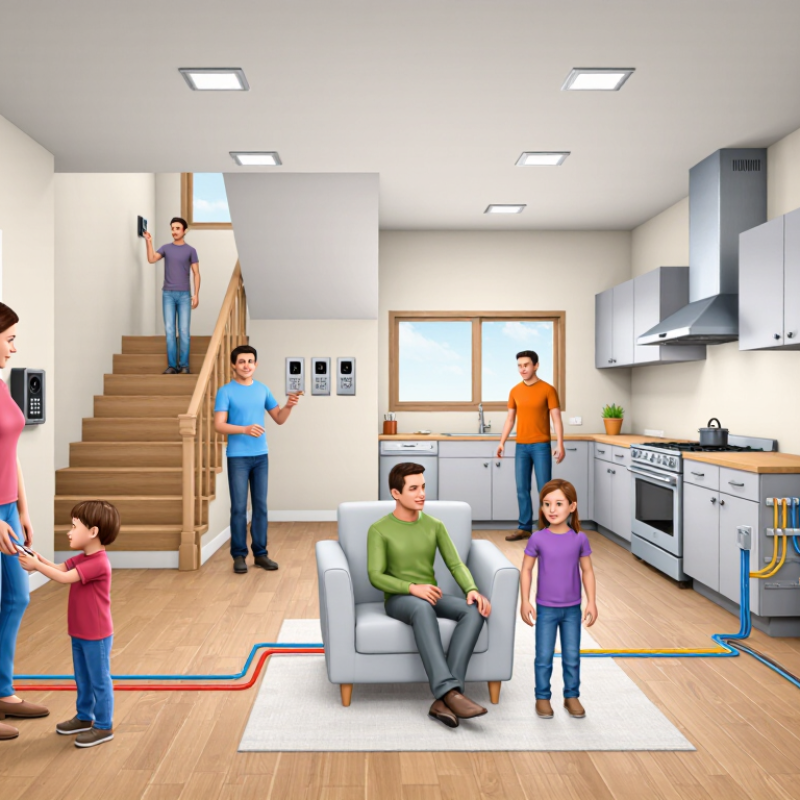
A home audio intercom system is a two-way communication network inside a residence. It links wall-mounted stations, room units, or mobile controls through wired or wireless connections. Users can speak from the kitchen to an upstairs bedroom without shouting. Some systems also support door communication, call alerts, volume control, and hands-free operation.
The system usually includes microphones, speakers, control panels, and a central connection method. Wired installations often provide stable sound and fewer wireless interruptions. Wireless models offer easier installation, especially in rented or renovated homes.
The 2024 MarketsandMarkets Smart Home Market report projects growth from about USD 154.4 billion in 2024 to USD 250.6 billion by 2029. That expansion supports stronger demand for connected household communication. Yet, market growth does not guarantee a good listening experience.
Room size, wall materials, network strength, and background noise still matter. A concrete hallway can weaken wireless signals. A small speaker may sound harsh at high volume. I have found that simple controls often serve families better than crowded interfaces.
According to the International Telecommunication Union, about 5.4 billion people were online in 2023, representing roughly 67% of the global population. However, internet access remains uneven. This makes local, offline communication valuable. Buyers should check language settings, power compatibility, installation standards, and data protection practices before choosing a system. The practical question is not only whether it connects, but whether every household member can use it confidently.
How Home Audio Intercom Systems Work
Top Home Audio Intercom Systems for Global Buyers?
How Home Audio Intercom Systems Work
A home audio intercom connects rooms through microphones, speakers, and a central control unit. When someone presses a call button, the microphone changes speech into an electrical or digital signal. The system then sends that signal to a selected room or several zones.
Most models support two-way communication. You speak through one speaker while listening through another, much like a hands-free telephone. Some systems use dedicated cables, which usually provide stable sound and low delay. Wireless systems send audio through a home network or radio connection. Thick walls, metal doors, and network congestion can reduce clarity.
The control panel manages room selection, volume, and door communication. A home with three rooms may need separate stations for the kitchen, bedroom, and entrance. Outdoor stations often include weather-resistant housings and stronger microphones. Placement matters. A speaker near a noisy refrigerator may produce unclear audio.
Simple setup helps.
From practical installation experience, testing each room at different times is worthwhile. Morning traffic and evening appliances can reveal unexpected noise. I once assumed a wireless signal would reach every room, but a concrete wall proved otherwise. That mistake showed why floor plans and building materials deserve attention before purchase.
For global buyers, check voltage compatibility, language settings, network requirements, and local installation practices. Audio quality is important, but reliable operation matters more. A system that sounds impressive in a quiet showroom may behave differently in a busy home.
How to Compare Systems for Global Use
Global buyers should compare more than speaker volume.
According to ITU Facts and Figures 2023, about 67% of the world’s population used the internet. That leaves many homes facing uneven connectivity. Test each intercom on both stable Wi-Fi and weak mobile networks. Check voice delay, microphone pickup, codec support, and offline calling. A clear voice at two meters matters more than a dramatic specification sheet.
Power standards also deserve careful comparison. Look for wide-voltage input, replaceable power supplies, and documented safety compliance. IEC 62368-1 provides a useful reference for audio and communication equipment safety. MarketsandMarkets reports continued growth in smart-home connectivity, but growth does not guarantee compatibility. Confirm wireless bands, local network requirements, app language options, and firmware support before purchase. A system that works well in one apartment may fail behind thick concrete walls.
Privacy needs practical testing.
Review encryption claims, account permissions, data storage locations, and update policies. The 2024 GSMA Mobile Economy report highlights the expanding role of mobile connectivity, yet mobile access can vary sharply by country. Do not assume cloud access is always reliable. Ask whether basic room-to-room audio works locally.
No comparison is perfect. My own scoring would still leave room for judgment, especially when installation quality changes the result. Test with doors closed, background music playing, and a child speaking softly. Tiny details reveal weaknesses.
Installation, Compatibility, and Maintenance Considerations
Choosing a home audio intercom for global use involves more than sound quality. Installation conditions often decide daily reliability. Measure wall depth, cable routes, power access, and indoor noise before ordering. Wired systems usually offer stable communication, but installation may require drilling and qualified electrical work. Wireless units install faster. Thick concrete walls can weaken signals. Test each room from the intended mounting position. A clear voice matters more than impressive specifications.
Tips: Create a simple room map before purchase. Mark doors, bedrooms, kitchens, and outdoor points. Check voltage requirements and plug standards for your destination. Confirm whether the system supports your preferred network frequency and language settings. Do not assume every wireless protocol works with every router. Compatibility is often overlooked. Ask the supplier for written details, not vague assurances.
Maintenance should be practical for the household. Keep microphones and speaker grilles free from dust, grease, and moisture. Inspect cables after renovations or furniture changes. Update software only through verified channels, and keep configuration notes for future troubleshooting. If audio becomes distorted, test the power supply and connection before replacing the whole unit. I have seen buyers blame the device when a loose terminal caused the fault. Still, manuals can be incomplete, and installation advice is not always universal. Leave room for professional inspection when symptoms persist.
Top Home Audio Intercom Systems for Global Buyers
Installation, compatibility, and maintenance considerations by system architecture
Indicative planning figures for a typical four-room residential installation. Wired systems generally require more initial labor but offer stable operation, while IP/PoE and Wi-Fi systems provide broader integration with modern networks. Maintenance time includes routine inspection, firmware updates, connector checks, and battery replacement where applicable.
