Top LED Mood Light Manufacturers for Global Buyers
Ambient lighting can change how a room feels, but choosing a supplier takes more than comparing colors and prices. A dependable LED Mood Light Manufacturer should explain how its products perform in everyday settings. Buyers may need soft bedside illumination, a steady glow for a retail display, or adjustable colors for hospitality spaces. Each use calls for different controls, brightness levels, and housing details.
This guide introduces manufacturers serving global buyers and highlights practical points for comparing them. Look closely at dimming behavior, color consistency, diffuser quality, heat management, and the feel of buttons or touch controls. Ask about sample availability, customization limits, production capacity, lead times, and support after delivery. Clear product specifications and relevant test documentation can help buyers assess whether a model fits their market and project. Small details matter.
A polished sample can still hide uneven color or awkward controls. That is worth checking. Buyers should test products in the intended setting, review real operating details, and confirm that packaging and documentation match their needs. Manufacturer claims are useful, but they are not a substitute for evaluation. The comparison ahead focuses on these practical factors, helping readers shortlist suppliers with care rather than relying on appearance alone.
What LED Mood Lights Are and How They Create Ambient Effects
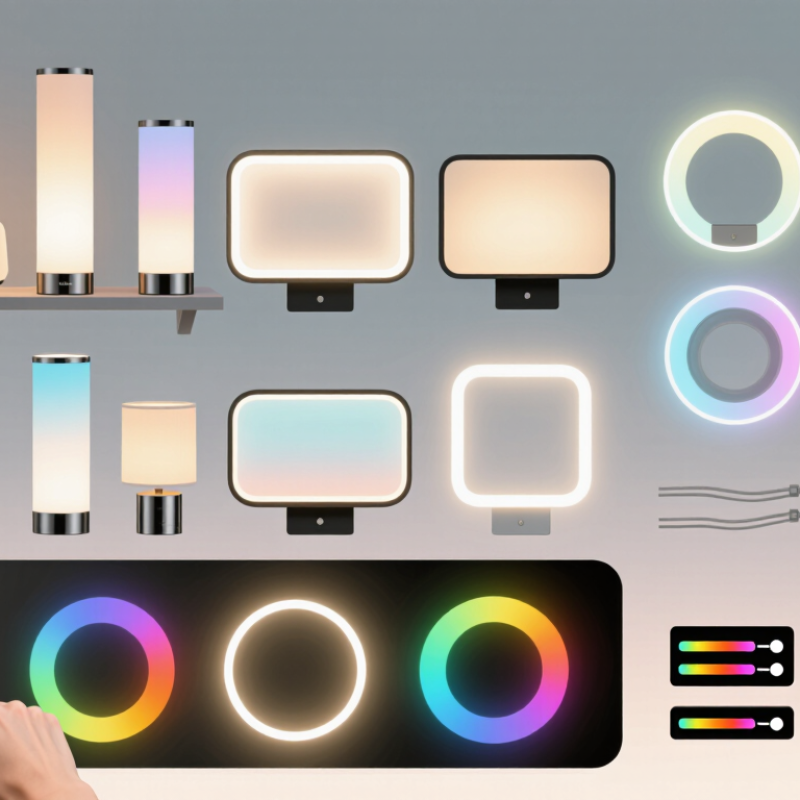
An LED mood light uses light-emitting diodes with adjustable brightness, color, or color temperature to shape a room’s atmosphere. A warm amber setting can soften a reading corner, while a cooler white setting makes a desk feel more alert. Many models use red, green, and blue LEDs to create colored scenes; others shift between warm and cool whites. Diffusers and indirect placement matter, too. A lamp aimed at a pale wall creates a gentler glow than a bare LED facing your eyes. Small changes are noticeable.
The effect is visual, not magic. Color and brightness can influence how a space feels, but personal preference, wall color, and daylight also change the result. The International Energy Agency’s 2019 analysis estimated that lighting used about 15% of global electricity. The U.S. Department of Energy says residential LEDs use at least 75% less energy and can last up to 25 times longer than incandescent bulbs. Those figures support efficient use, though they do not guarantee a better atmosphere. A low-cost color preset may look vivid on a screen but harsh on a cream wall. Testing a few settings at night is more useful than trusting a product’s brightest mode. Some rooms still feel flat. That is worth noticing.
LED Mood Lights: Color and Approximate Wavelength
LED mood lights use colored or adjustable light to create different ambient effects. This chart shows representative peak wavelengths for common visible-light colors; actual LED spectra vary by product.
Warm colors such as amber and red can create a cozy visual atmosphere, while blue and cyan are often used for cooler-looking scenes. These descriptions are design conventions, not guaranteed effects on mood.
Key Product Types and Technologies Offered by Manufacturers
LED mood-light manufacturers commonly offer table lamps, floor lights, flexible strips, wall panels, and portable fixtures. Each suits a different setting: a bedside lamp needs gentle, downward light, while a strip must spread color evenly around a shelf or desk. Small details matter. Look for diffusers that soften visible LED dots and housings that stay cool during extended use.
Core lighting options include RGB color mixing, RGBW systems with a separate white channel, and tunable-white LEDs that shift from warm to cool tones. These technologies are not interchangeable. RGB can create saturated colors, but its white may look less natural than a dedicated white LED. Check color-rendering data when comfortable reading light matters, and ask how brightness changes at low settings. Flicker performance also deserves attention, though product information can be incomplete.
Controls range from buttons and remote controls to app-based dimming, timers, and music-responsive effects. Some models use Bluetooth or Wi-Fi; confirm which functions work without an internet connection. A showroom sample can appear vivid, yet look harsh in a small bedroom. It is worth checking light output, power supply, cable length, and replacement-part availability before ordering. Not every feature helps. Manufacturer specifications should be compared with a physical sample whenever possible.
How LED Mood Lights Are Designed, Tested, and Certified
LED mood lights begin with a simple question: should the room feel calm, vivid, or warm? Designers combine LED chips, diffusers, and control circuits to shape color and brightness. A frosted cover can soften harsh points of light, while a compact heat sink helps manage warmth behind the housing. Small details matter. The U.S. Department of Energy reports that LEDs use at least 75% less energy and last up to 25 times longer than incandescent lighting. These figures describe broad lighting comparisons, not a guarantee for every mood light.
Testing checks whether the experience stays consistent beyond a showroom. Engineers measure color temperature, color rendering, dimming response, flicker, and heat after extended operation. Photobiological safety assessment under IEC 62471 can evaluate optical exposure risks; electrical safety and electromagnetic compatibility tests address separate hazards. A few prototypes still show uneven color at the lowest setting. That is a useful warning, not a pass. Test results should reflect the final housing, power supply, and firmware, since changing one component can alter performance.
For global buyers, documentation matters as much as a test report. Requirements differ by market, so manufacturers should identify applicable electrical, EMC, energy, and chemical-substance rules before shipment. Buyers can request traceable laboratory reports, component records, and clear instructions for installation and use. A certificate alone may not show how the light behaves after thousands of dimming cycles.
How Global Buyers Evaluate LED Mood Light Manufacturers
Top LED Mood Light Manufacturers for Global Buyers
Global buyers should assess LED mood light manufacturers beyond appearance and unit price. Request measured lumen output, color temperature range, color rendering index, dimming behavior, and flicker data for the exact product configuration. A warm amber glow in a sample room may look different across a hotel lobby or retail display. Ask for test reports and production tolerances, not just a specification sheet. Small differences matter.
Energy and lifetime claims also deserve scrutiny. The International Energy Agency reports that lighting represents about 15% of global electricity use and 5% of greenhouse gas emissions. The U.S. Department of Energy says LEDs use at least 75% less energy and can last up to 25 times longer than incandescent lighting. These comparisons are useful context, but they do not prove that a particular mood light meets its claimed performance. Check warranty terms, thermal test results, and consistency between samples and mass production. That sounds simple. It isn’t.
Tips: Request samples from different production batches, then compare color and brightness after dimming. Confirm packaging, lead times, spare-part availability, and technical support in writing. A factory visit can help, but it cannot replace independent test evidence. I would also ask how failures are recorded; buyers sometimes overlook this, and it can leave quality questions unresolved.
Leading Manufacturers and Their Distinctive Market Strengths
Global buyers should compare LED mood-light manufacturers by proven strengths, not catalog size. Some excel in optical engineering; others offer flexible customization, control integration, or reliable production capacity. Ask for color-consistency measurements across batches, not just one polished sample. A warm bedside scene should stay warm when dimmed, without visible flicker or abrupt color shifts. Consistency matters.
The U.S. Department of Energy says LEDs use at least 75% less energy than incandescent bulbs. They can last up to 25 times longer. These figures support the efficiency case, but they do not guarantee a satisfying mood-light experience. The comparison is imperfect: control quality, dimming behavior, and heat management also shape performance. Manufacturers with stronger testing capabilities can provide measured results for these details. Not every factory excels.
Market data offers useful context. Grand View Research estimated the global LED lighting market at USD 75.3 billion in 2023, reflecting broad adoption beyond decorative lighting. That scale favors suppliers able to balance cost, quality, and delivery, though market growth alone says little about an individual manufacturer. Request sample-level measurements and current test documentation. Check how suppliers handle replacement parts and control-system issues, especially for hotel or retail installations.
