What Are the Top Machine Safety Door Types in 2026?
In 2026, a machine safety door is more than a barrier between an operator and moving equipment. It must suit the machine’s access points, work cycle, and surrounding floor space. A hinged door may be practical beside a compact cell, while a sliding design can help where swing clearance is limited. Roll-up and lift-up doors serve different layouts, but their speed and maintenance needs deserve close attention. Small details matter.
The right choice depends on the hazard, how often people enter, and what materials move through the opening. Interlocked doors can help prevent machine operation while access is open, provided the controls are selected, installed, and maintained for the application. A door that looks robust is not automatically suitable. Check manufacturer guidance, review the machine’s risk assessment, and consider routine inspection before comparing options.
This guide introduces common types, including hinged, sliding, roll-up, and vertical-lift designs, along with key differences in access, space, and operating demands. It also considers how interlocks and practical maintenance affect a real installation. No single door fits every cell. That is easy to forget when a product photo makes a solution look simple. The final selection should reflect the actual machine and how people use it, not just a catalog description.
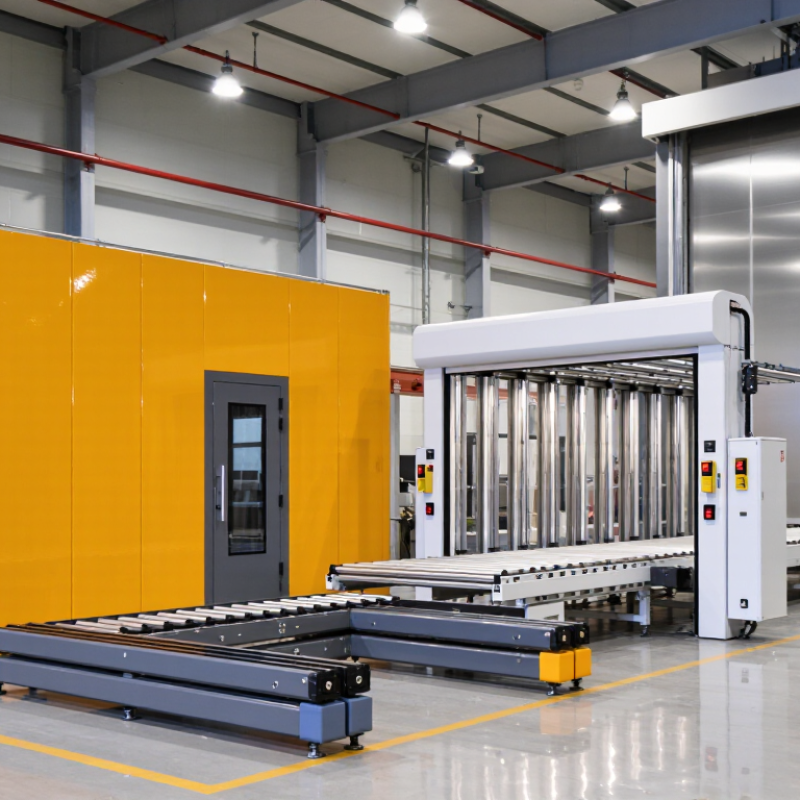
What Is a Machine Safety Door and How Does It Protect Operators?
A machine safety door is a movable physical barrier that separates operators from hazardous machine areas, such as cutting zones, presses, or robotic cells. Its purpose is to prevent access during dangerous movement and reduce the chance of contact with sharp tools, hot surfaces, or moving parts. Simple, but not foolproof.
Many doors use an interlock connected to the machine’s safety control system. When the door opens, the system should stop hazardous motion or prevent a cycle from starting. Some applications also require guard locking, which keeps the door shut until dangerous movement has stopped. The right arrangement depends on the machine’s risks, stopping time, and how often operators need access.
A door protects only when its components work together. A poorly aligned latch, damaged cable, or bypassed interlock can undermine the safeguard. In a real installation, check that the door cannot be opened too soon and that operators can reach controls without leaning through the opening. Risk assessment, correct installation, and regular functional checks matter. Maintenance can be overlooked; that deserves attention.
What Are the Main Types of Interlocked Machine Safety Doors?
What Are the Top Machine Safety Door Types in 2026?
What Are the Main Types of Interlocked Machine Safety Doors?
Interlocked machine safety doors come in several forms. The best fit depends on how often operators enter, the available space, and how quickly a machine stops. Hinged doors swing open and suit compact work cells with clear floor space. Sliding doors move along a track, making them useful where a swinging panel would obstruct a walkway.
Vertical lift doors rise above the opening and can work well when side clearance is limited. Removable or lift-off panels suit areas needing occasional maintenance access, but they are less convenient for frequent entry. That matters. Each door needs an interlock that detects whether it is closed; some applications also need guard locking to keep it shut until hazardous motion has stopped.
A practical choice is not always the easiest one. A heavy sliding door can bind if its track collects dust, while a hinged door may drift out of alignment after repeated use. Check that the interlock remains correctly positioned, and include routine inspection in maintenance planning. Where access is frequent or stopping takes time, have a qualified safety professional assess the machine and the door’s role in the overall safeguarding system.
| Door or Guard Type | How It Opens | Common Interlocking Arrangement | Typical Applications | Key Design Consideration |
|---|---|---|---|---|
| Hinged swing door | Swings outward or inward on hinges; suited to openings with enough clearance for the door arc. | A safety switch detects whether the door is closed. Guard locking can be added when access must remain restricted until hazards stop. | Machine enclosures, maintenance access points, and smaller production cells. | Check swing clearance, hinge alignment, and whether the door can be opened before hazardous motion has stopped. |
| Sliding door | Moves horizontally along a track, usually parallel to the machine enclosure. | An interlock monitors the closed position; a guard-locking device may hold the door shut during a hazardous cycle. | Automated cells and machine openings where a swinging door would obstruct walkways or work areas. | Keep tracks clear and prevent the panel from being lifted, bypassed, or moved out of alignment. |
| Vertical lift-up door | Moves upward, manually or with powered assistance, to expose the machine opening. | A position-sensing interlock detects closure. Where gravity or stored energy can move the guard, suitable mechanical support is also needed. | Presses, packaging equipment, and larger openings with limited floor-level clearance. | Account for the door’s weight, falling hazards, and safe support during inspection or maintenance. |
| Removable or hinged access panel | Is detached or opened to reach an area that does not need frequent operator access. | A coded or mechanically actuated interlock can monitor the panel. Fasteners may be appropriate when access is infrequent and tool use is acceptable. | Fixed machine covers, service panels, and access points used mainly for maintenance. | Prevent easy removal or defeat where opening the panel could expose a person to hazardous motion. |
| Perimeter access gate | Provides walk-through access to a fenced machine cell or restricted production area. | A gate interlock signals the safety control system when the gate opens; guard locking may be needed if the hazard takes time to stop. | Robotic cells, automated lines, and larger guarded work zones. | Position the gate to support safe entry and exit, and consider whether a person could be trapped inside the guarded area. |
| Interlocked guard with guard locking | May be hinged, sliding, or lift-up; the defining feature is that the closed guard is held locked when required. | The system monitors both guard position and the locked condition. Unlocking is permitted only when the applicable safety conditions are met. | Machines with a run-down time, hazardous tool motion, or processes that remain dangerous after a stop request. | Use when risk assessment shows that stopping time or residual hazards make immediate access unsafe; interlocking alone does not physically hold the door shut. |
Selection note: Door construction (hinged, sliding, lift-up, or removable) and interlock technology are separate design choices. Select and validate the complete protective system through a machine risk assessment, including stopping time, access frequency, foreseeable bypassing, and any residual hazards.
How Do Sliding, Hinged, and Lift-Up Safety Doors Differ?
Sliding, hinged, and lift-up safety doors suit different machine layouts. Sliding doors move along tracks, so they work well where swing clearance is limited. Their panels can expose a wide loading area, but chips and dust may foul the track. Hinged doors are familiar and simple to inspect. They need clear swing space, and an open panel can obstruct a nearby aisle. Lift-up doors rise above the opening, keeping the floor area clear. They need overhead clearance and reliable support to prevent unexpected descent. Each type still needs suitable guarding and interlocking for the machine’s hazards.
Small design choices matter. A handle placed too close to a closing edge can invite awkward hand positions. Track cleaning or hinge wear can also be overlooked during routine maintenance. OSHA’s FY2023 Top 10 list recorded 1,644 machine-guarding citations, a reminder that guard design remains a practical safety concern. ISO 14120:2015 provides requirements for the design and construction of fixed and movable guards; ISO 13857 addresses safety distances that help prevent access to danger zones. Neither standard selects a door type for every machine. Check the full opening path, operator reach, cleaning needs, and access frequency before choosing. A door that looks convenient on a drawing may feel clumsy beside a real production line. That deserves a trial.
When Are Roll-Up or Removable Safety Doors Used?
What Are the Top Machine Safety Door Types in 2026?
When Are Roll-Up or Removable Safety Doors Used?
Roll-up safety doors suit work cells with frequent material transfer, narrow aisles, or limited swing clearance. They lift above the opening, leaving the floor clear for carts and pallets. But a standard industrial shutter is not automatically a machine safeguard. The door, access control, and machine stop functions must be designed as one safety system. ISO 14120 covers guard design; ISO 14119 addresses interlocking devices.
Removable safety doors are more suitable for occasional access, such as planned maintenance or tool changes. They can simplify access to a large machine area, but they are easy to leave off. Use suitable interlocking or controlled access where opening the guard could expose someone to hazardous motion. The U.S. Bureau of Labor Statistics recorded 738 fatal work injuries involving contact with objects and equipment in 2022. That broad category is not a machine-guarding count, but it underlines why access design matters. A practical choice.
Tips: Check cycle frequency, clearance, cleaning needs, and maintenance access before choosing a door. Verify stopping time and safety distances with a qualified risk assessment. A door that is convenient but poorly integrated can create a false sense of protection.
How Should a Machine Safety Door Be Selected for an Application?
A machine safety door should match the way people work at the machine, not just its opening size. Measure the hazard, access frequency, and stopping time. A hinged door suits occasional access where there is room to swing it clear. A sliding door can work better beside a narrow aisle. For overhead access, a lift-up guard may be practical, but its weight and support need careful assessment. Small details matter.
Check what operators must reach, how often they enter, and whether the machine can stop before they reach danger. ISO 13857:2019 provides safety distances for preventing access to hazardous zones, while ISO 14119:2024 addresses interlocking devices associated with guards. Use these standards as design references, not substitutes for a machine-specific risk assessment. Select an interlock and guard arrangement that resists foreseeable bypassing and still allows safe cleaning or tool changes. Test the real cycle. Paper dimensions can mislead.
The cost context is substantial: Liberty Mutual’s 2024 Workplace Safety Index estimated $58.8 billion in direct U.S. costs from disabling workplace injuries in 2022. That figure is not specific to machine doors, but it underlines why guarding decisions deserve engineering attention. Record the reason for the chosen door, its inspection method, and any limits on access. A door that slows every routine task may invite workarounds. That uncomfortable possibility should be part of the selection review.
Article Source:
Contact us
Please fill out the enquiry form, and our dedicated team will promptly attend to your request