Top PDU Switchboard Manufacturers for Global Buyers?
Choosing the right Pdu Switchboard manufacturer can shape an entire power distribution project. Global buyers need more than attractive pricing or polished catalogs. They need verified engineering, stable production, clear documentation, and dependable after-sales support. A switchboard may look simple from outside. Inside, busbars, breakers, protection systems, wiring, and thermal design must work together under pressure.
Mike Holt, a respected electrical safety educator, states, “The only acceptable level of electrical safety is 100%.” That principle should guide every manufacturer comparison. Buyers should examine short-circuit ratings, enclosure protection, temperature-rise testing, component traceability, and factory inspection records. Certifications matter, but certificates alone do not prove consistent workmanship. Ask for test reports, project references, and photographs of completed assemblies. Better still, request a realistic production timeline.
This guide reviews leading Pdu Switchboard manufacturers for international purchasers. It considers technical capability, customization, quality control, communication, and service responsiveness. Some suppliers excel in high-density data centers. Others perform better in industrial plants, commercial buildings, or renewable-energy installations. The strongest choice depends on the project, not the loudest marketing claim.
There is no perfect shortlist. Supplier data can change. Regional support may also vary. Therefore, buyers should verify current certifications, factory capacity, and local compliance requirements before placing an order. A small documentation gap can become an expensive delay. Careful comparison remains less exciting, but it is usually safer, clearer, and more economical.
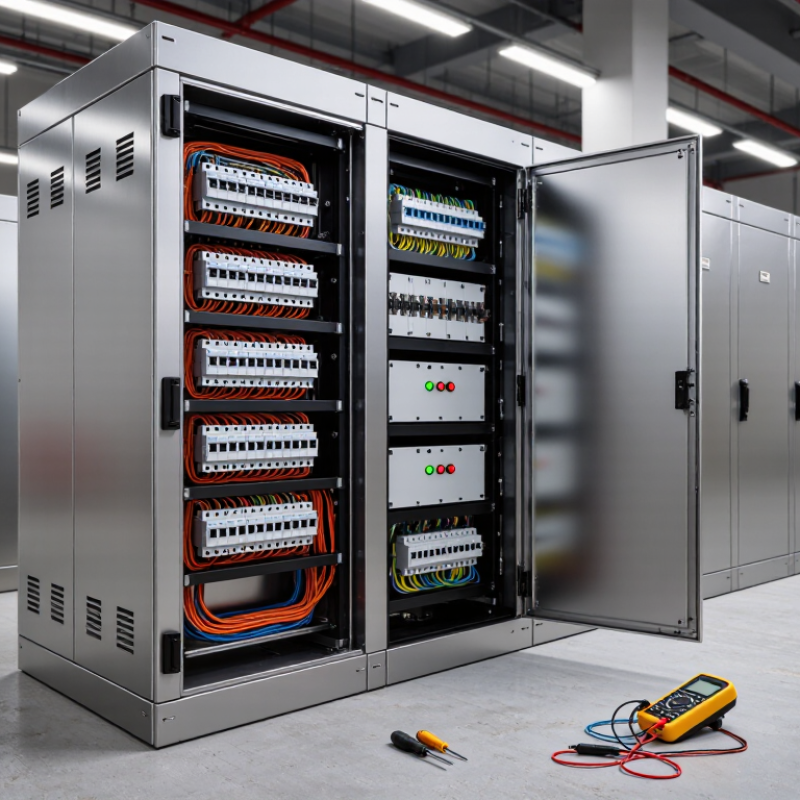
What Is a PDU Switchboard? IEC 61439-1/-2 Standards Explained
Top PDU Switchboard Manufacturers for Global Buyers?
A PDU switchboard distributes electrical power from an incoming source to several outgoing circuits. It may include busbars, circuit breakers, meters, protection devices, and cable terminals. In practice, the enclosure should match the installation environment, not just the drawing. Dusty rooms, humid plants, and crowded data spaces demand different IP ratings and cooling arrangements.
IEC 61439-1 defines general rules for low-voltage switchgear and controlgear assemblies. It covers construction, service conditions, technical characteristics, and verification methods. IEC 61439-2 applies specifically to power switchgear and controlgear assemblies.
Buyers should request design verification evidence for temperature rise, short-circuit withstand, dielectric properties, clearances, creepage distances, and mechanical strength. Routine verification is also required for each completed assembly. Check the documents carefully.
Real inspection experience often reveals small weaknesses. Loose busbar joints, unclear circuit labels, or poor cable bending space can create serious maintenance problems. Ask manufacturers for rated current, voltage, frequency, IP level, short-circuit rating, form of separation, and test records.
Confirm whether the stated rating applies to the complete assembly, not only individual components. That distinction is easy to miss. A reliable supplier should explain heat calculations, protection coordination, material choices, and installation limits in clear language.
Some specifications remain incomplete until site conditions are confirmed. That is normal, but it deserves written clarification before production.
PDU Electrical Ratings: 230/400 V Inputs and 10–63 A Branch Circuits
PDU switchboards for global buyers should be judged by electrical ratings, not catalog appearance. A 230/400 V input system may support single-phase or three-phase distribution, depending on its wiring and protection design. Buyers should confirm the supply arrangement, frequency, earthing method, and short-circuit withstand rating before ordering. These details affect safe operation.
Branch circuits commonly range from 10 A to 63 A. A 10 A outlet can suit monitoring equipment, while a 63 A feeder may supply a dense rack row or auxiliary panel. The protective device must match the cable size, connector, load type, and expected inrush current. Do not size every circuit for its maximum label. Real loads vary. A clamp meter reading during startup often reveals more than a nameplate.
Experienced manufacturers should provide wiring diagrams, terminal layouts, test records, and clear marking for each circuit. Factory inspection should include insulation resistance, protective conductor continuity, polarity, and functional testing. Buyers also need enclosure dimensions, ingress protection, busbar material, and spare capacity. Documentation sometimes looks complete but misses the neutral arrangement. That is a costly oversight.
A practical review should compare measured performance with declared ratings. Ask how 230/400 V inputs are tested under load, and how 10–63 A breakers are coordinated. Leave room for future circuits. Too little space creates heat and maintenance problems. Even careful specifications can contain mistakes, so independent verification remains worthwhile.
How Buyers Compare Manufacturers: IP54/IP65 Protection and ISO 9001
Global buyers often compare PDU switchboard manufacturers through two visible signals: IP protection and ISO 9001 certification. These indicators matter, but they require careful interpretation. An IP54 enclosure limits dust entry and protects against water splashes. IP65 provides dust-tight protection and resistance to water jets. That difference becomes important in humid plants, outdoor utility areas, and dusty production rooms.
Check the complete assembly, not only the enclosure label. Door gaskets, cable glands, ventilation openings, and mounting joints can reduce real protection. During supplier evaluation, request test reports, certificate numbers, and the exact product scope. A factory acceptance test should also confirm wiring, insulation resistance, labeling, and functional operation. Small details matter.
ISO 9001 shows that a manufacturer operates a quality management system. It does not automatically prove superior design or electrical performance. Buyers should verify certificate validity, certification scope, drawing control, incoming inspection, and corrective-action records. Ask how each busbar, breaker, and terminal is traced after assembly. In practice, paperwork can look excellent while site workmanship falls short. That deserves attention. A realistic comparison combines documents, factory evidence, and installation feedback.
Top PDU Switchboard Manufacturers for Global Buyers: IP54/IP65 Protection and ISO 9001
This chart uses the protection levels defined by IEC 60529. The first digit indicates protection against solid particles, while the second digit indicates protection against water. IP54 provides dust-protected and splash-resistant performance; IP65 provides dust-tight and water-jet protection. ISO 9001 is a quality-management-system standard, so buyers should verify a current certificate and its scope directly with each manufacturer.
Procurement Criteria: N+1 Redundancy, 99.99% Availability, and TCO
Top PDU Switchboard Manufacturers for Global Buyers?
Global buyers should assess PDU switchboard manufacturers against measurable resilience, not catalog claims. N+1 redundancy means one module can fail without interrupting critical loads. However, redundancy only works when bypass paths, breakers, cooling, and maintenance procedures are tested together.
The 99.99% availability target allows about 52.6 minutes of annual downtime. That margin is smaller than many procurement teams expect. Uptime Institute’s 2024 Annual Outage Analysis reported that 54% of respondents experienced an outage costing over $100,000, while nearly one in five reported costs above $1 million. Buyers should request factory test records, thermal-rise data, short-circuit ratings, alarm logs, and evidence from comparable installations. Paper compliance is not enough.
Total cost of ownership requires more than purchase price. Compare efficiency at realistic loads, metering accuracy, spare-module availability, service response, and five-year maintenance costs. Uptime Institute’s 2023 Global Data Center Survey reported an average PUE of 1.58, showing why distribution losses and monitoring can affect operating budgets. Select switchboards with remote diagnostics and clear energy data. Keep the design serviceable.
There is a practical weakness here. Some teams overbuy redundancy and underfund maintenance. A cheaper PDU may become expensive when compatible parts disappear or technicians lack training. I would also challenge any 99.99% promise without documented load testing, commissioning records, and a local escalation plan. Reliability is engineered, measured, and occasionally questioned.
