What Are the Top Rectangular Fly Banners in 2026?
Choosing the top Fly Banners Rectangular for 2026 means looking beyond bright colors and a low price. A banner must stay readable from across a busy walkway, stand securely on its base, and tolerate repeated setup. Think of a windy entrance, a crowded trade-show aisle, or a damp morning outside a shop. Each setting tests different materials and hardware. A crisp print matters, but so do reinforced stitching, a dependable pole, and a base suited to the surface.
This guide compares rectangular fly banners by practical features: fabric weight, print clarity, available sizes, assembly time, portability, and replacement-part support. We’ll also consider how each design handles real-world use, since product photos rarely show a banner after a full day outdoors. One detail is easy to overlook: the best choice may not be the tallest one. A smaller banner can work better where space is tight. Trade-offs matter.
A verified industry voice can sharpen that comparison. Insert a sourced quotation here from [verified expert name], such as a specialist in event displays or large-format printing. Do not publish an unsourced attribution. Their experience should help explain what buyers should inspect, from pole connections to edge finishing. With those criteria in view, the 2026 options become easier to judge—and their limits easier to spot.
What Is a Rectangular Fly Banner?
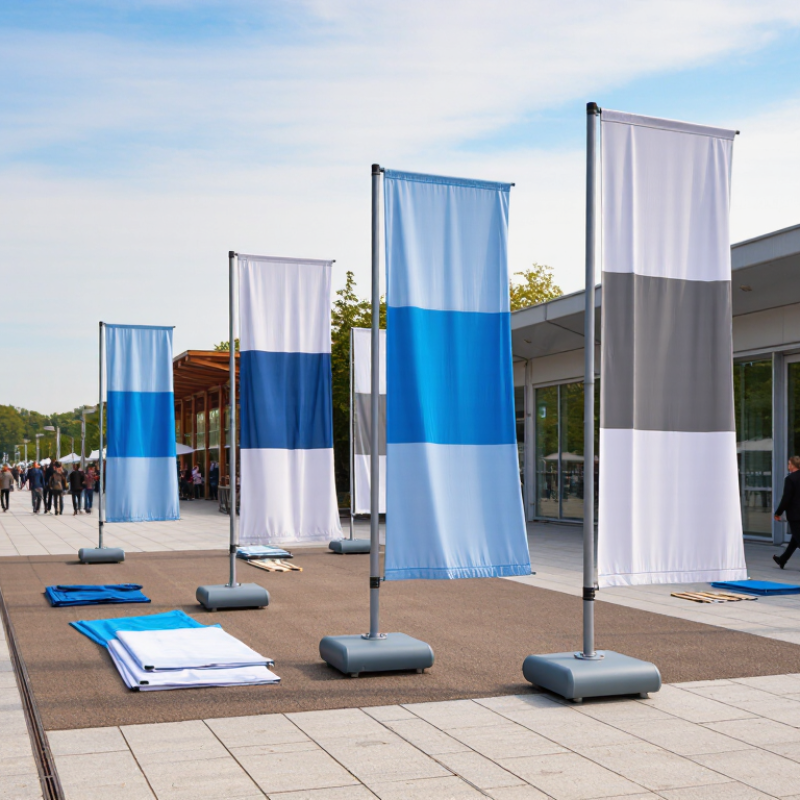
A rectangular fly banner is a portable advertising flag with a tall, straight-sided fabric panel. Its shape gives messages a clear, sign-like area rather than the curved outline of a feather banner. A pole supports the fabric, while a ground spike or weighted base keeps the display upright. Set one beside an entrance, trade-show aisle, or outdoor queue, and the headline can sit near eye level. Simple, but useful.
The format works best with a short headline, strong contrast, and generous empty space. Small text can disappear from a distance, and wind may twist or wrinkle the fabric. Measure the display area before choosing a height; a banner that blocks a doorway is not doing its job. The Outdoor Advertising Association of America reported U.S. out-of-home advertising revenue of $9.1 billion in 2023 in its annual revenue reporting. That figure covers many formats, not rectangular fly banners alone, but it shows continued investment in public-space advertising. Treat it as context, not proof that a particular banner will attract customers. Fabric weight, print quality, base stability, and viewing distance still matter. And honestly, even a clean design can look cluttered when every inch carries a message.
How Are Rectangular Fly Banners Evaluated in 2026?
How Are Rectangular Fly Banners Evaluated in 2026?
A useful evaluation starts with visibility, stability, print quality, and setup time. Check whether the message stays readable from several steps away, not just in a product photo. A tall banner with crowded text can lose impact quickly. Inspect the pole connection, stitching, and base; these small details often reveal more than glossy claims. The Outdoor Advertising Association of America reported that U.S. out-of-home advertising revenue reached $9.1 billion in 2023, up 2.1% year over year. This industry figure shows the medium’s scale, but it is not a performance rating for individual fly banners.
Compare fabric weight, edge finishing, and replacement-part availability alongside price. Ask how the banner behaves in light wind, and follow the maker’s stated operating limits. A lightweight frame is easier to carry, yet may need a heavier base outdoors. There is no perfect setup. One overlooked issue is storage: damp fabric can wrinkle or develop odors, so confirm care instructions before buying. Evaluate print samples in daylight, where color and contrast may look different from a screen.
Tips: Measure your display space first. Test assembly with the actual base, and time the setup. Read the smallest text from a few metres away. Keep the artwork simple; a short headline and clear contrast usually beat a wall of copy.
How Rectangular Fly Banners Are Evaluated in 2026
A practical evaluation framework showing suggested relative importance for key buying criteria. These percentages are a planning model, not measured market rankings.
How to use this: Compare banners against the same criteria. Prioritize stability, print quality, and material durability for frequent outdoor use, and consider portability and total ownership cost for occasional events.
Which Rectangular Fly Banner Styles Suit Different Uses?
What Are the Top Rectangular Fly Banners in 2026?
Which Rectangular Fly Banner Styles Suit Different Uses?
Rectangular fly banners work well when clear, readable messaging matters more than a sweeping flag shape. A single-sided style suits indoor aisles, shop entrances, and sheltered events where people approach from one direction. For sidewalks or open exhibition spaces, a double-sided banner keeps the message visible from either side. Its added fabric can catch more wind, though, so choose a stable base and check the setup area.
Tips: Match the base to the surface. Ground stakes suit grass; a weighted cross base is more practical on hard floors. Check the pole height against nearby signs and branches. Small detail, big difference.
For changing venues, look for a portable frame with simple assembly and a carry bag. A compact package is useful, but very light hardware may wobble outdoors. Rectangular fabric also needs suitable tension; loose corners can make text harder to read and may wear sooner. Measure the printed area before designing, and keep key words away from edges. I would not assume one style fits every event. Wind exposure, viewing distance, and setup time can change the best choice.
What Materials, Sizes, and Base Options Are Available?
Rectangular fly banners typically use knitted polyester for a soft drape and easy packing, or heavier polyester for a steadier display. Fabric weight and printing method affect opacity, color, and wind resistance, so compare actual samples when possible. The Outdoor Advertising Association of America’s 2023 revenue report recorded $9.1 billion in U.S. out-of-home advertising revenue. That growth makes clear, durable displays valuable, though it does not guarantee a banner will perform well in every setting.
Common rectangular formats range from compact tabletop sizes to tall outdoor displays; check the finished graphic area, not just the pole height. A ground spike suits soft soil, while a cross base with a water-weighted bag works on many hard surfaces. Flat plates can fit tighter indoor spaces. ASCE 7-22 treats wind loads as site-specific, so no base is universally safe outdoors. The trade-off is easy to miss: a larger banner catches more wind.
Tips: Match the base to the surface and expected gusts. For exposed sites, ask the supplier for tested wind guidance, and take the display down in severe weather. Verify fabric weight, print visibility from both sides, and packed dimensions before ordering. A small sample check can prevent an expensive mismatch.
How Can You Choose the Right Rectangular Fly Banner?
What Are the Top Rectangular Fly Banners in 2026?
How Can You Choose the Right Rectangular Fly Banner?
Choosing a rectangular fly banner starts with its location and viewing distance. A banner beside a roadside entrance needs larger lettering than one placed near a booth. Measure the available height, check for overhead obstacles, and confirm that the base fits the ground. Compare fabric weight, stitching, and frame materials, too. Ask for care instructions and replacement-part details; these practical points matter after repeated setup.
Tips: Write one short message and view it from several steps away. Keep strong contrast between text and background. Check the supplier’s size chart, packed dimensions, and wind-use guidance before ordering. A sturdy base helps, but it does not make every outdoor location suitable.
Think about setup time and transport. A lightweight pole is easier to carry, while a heavier base may feel steadier on a hard surface. Match the base to the intended ground, and follow the maker’s installation guidance. Print previews can look sharper on a screen than on fabric, so request a proof when possible. I have found that small text is easy to regret later. Still, choosing the biggest banner is not always better; tight spaces can make it awkward and harder to read.
What Are the Top Rectangular Fly Banners in 2026? - How Can You Choose the Right Rectangular Fly Banner?
Compare common rectangular fly banner setups by size, portability, display conditions, and typical use. Dimensions and setup details are indicative; confirm the available sizes and hardware with the supplier.
| Banner Setup | Typical Height | Display Format | Typical Base | Best Suited For | Key Selection Consideration |
| Compact rectangular | About 2–2.5 m (6.5–8 ft) | Single-sided or double-sided fabric graphic | Ground spike for soft ground; small weighted base for hard surfaces | Shop entrances, small events, and locations with limited space | Choose a shorter pole where ceiling clearance, transport space, or nearby sightlines are limited. |
| Standard rectangular | About 2.5–3.5 m (8–11.5 ft) | Vertical rectangular graphic on a flexible pole | Ground spike, cross base, or water-fillable base, depending on the surface | Trade shows, storefronts, outdoor events, and general promotional use | A versatile option for visibility and portability; check the assembled height and base footprint. |
| Tall rectangular | About 3.5–5 m (11.5–16.5 ft) | Large-format single-sided or double-sided graphic | Heavier cross base or ground spike; additional securement may be needed | Open outdoor areas where the display needs to be seen from farther away | Greater height can improve visibility but increases wind exposure and setup requirements. |
| Double-sided rectangular | Commonly about 2.5–4 m (8–13 ft) | Two printed faces, often separated by an opaque blockout layer | Base selected for the pole height and installation surface | Walkways, event aisles, and places where visitors approach from either direction | Confirm the graphic construction, added fabric weight, and whether the design reads correctly on both sides. |
| Heavy-duty outdoor setup | Often about 2.5–4 m (8–13 ft) | Rectangular fabric graphic with a more robust pole and base combination | Ground spike or a substantial weighted base appropriate to the surface | Repeated outdoor use in locations where a sturdier support system is useful | No fly banner is safe in every wind condition. Follow the supplier's wind guidance and take it down when conditions require. |
How to choose: Start with the viewing distance and available height, then select a banner size and base suited to the installation surface. For double-sided viewing, check the print construction; for outdoor use, prioritize secure placement and follow the manufacturer's weather and wind instructions.
