Why Choose a Tin Bar Casting Machine?
Choosing the right casting equipment can shape product quality, operating costs, and workplace consistency. A Tin Bar Casting Machine offers a controlled way to produce uniform tin bars with repeatable dimensions. Its value becomes clearer when operators need stable output, clean mold filling, and dependable cooling performance. In a well-managed production area, the machine can reduce manual handling and limit variations between batches.
Small details matter. Mold alignment, pouring temperature, cooling speed, and release timing all influence the final bar. Experienced operators know that automation does not remove responsibility. It makes process discipline more visible. Regular inspections, accurate temperature monitoring, and documented maintenance remain essential for reliable operation. Safety guarding and compliance with local industrial requirements should guide every purchasing decision.
The best choice depends on more than capacity. Buyers should compare material compatibility, control accuracy, energy use, spare-part access, and technical support. A compact machine may suit limited production, while a larger system may justify its cost through higher throughput. Yet bigger is not always better. Poorly matched equipment can create waste, difficult maintenance, and unnecessary expense.
A Tin Bar Casting Machine can support a stronger production process, but it is not a complete solution by itself. Supplier experience, operator training, and realistic performance expectations matter equally. Before investing, manufacturers should review samples, inspect the control system, and ask for clear service information. Practical evidence is more useful than impressive promises.
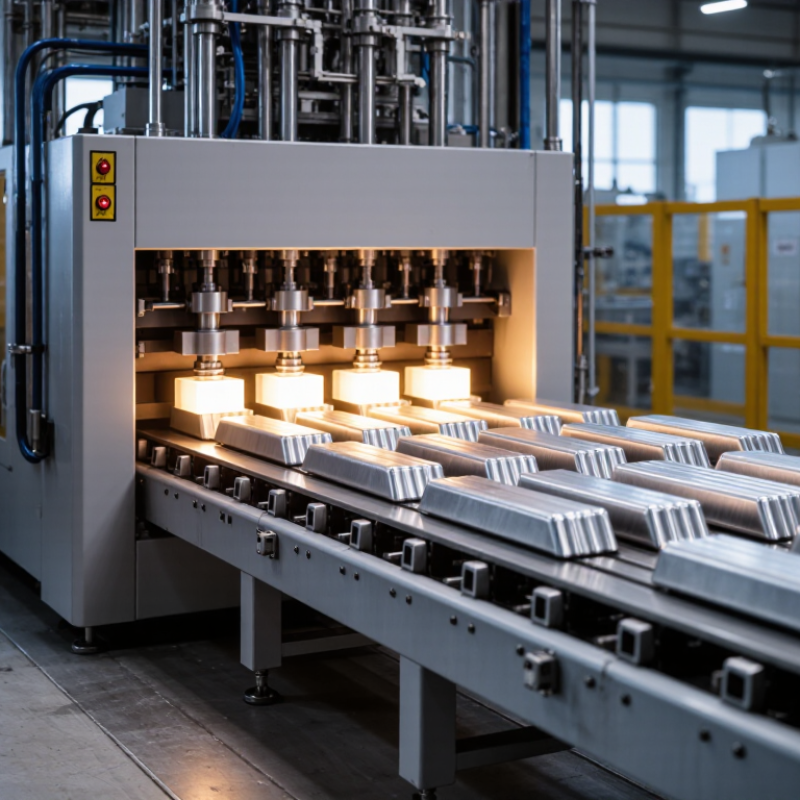
What Is a Tin Bar Casting Machine?
A tin bar casting machine is equipment designed to turn molten tin or tin-based alloy into uniform solid bars. It usually combines a heated melting chamber, a controlled pouring system, a bar mold, and a cooling section. Some models also include automatic cutting and collection units.
The process begins when prepared metal is heated to a suitable temperature. A measured amount then enters the mold, where cooling shapes it into a bar. Sensors may monitor temperature, filling speed, and cooling time. These details matter. Small changes can create surface marks, uneven dimensions, or internal defects.
It is not magic.
Choosing this machine can improve repeatability and reduce manual handling. A stable mold produces bars with more consistent weight and length. This helps inspection, storage, and later processing. Experienced operators still check the melt, mold condition, and cooling water regularly. Automation cannot correct contaminated material or poor maintenance.
The right machine depends on output, bar size, alloy requirements, and available space. Stainless steel contact parts may support cleaner production, but design quality matters more than appearance. Safety guards, temperature controls, ventilation, and emergency stops should be verified before operation.
A practical weakness deserves attention: higher automation can increase maintenance demands. Complex sensors may save labor, yet they can also cause delays when calibration is ignored. Clear operating records and trained staff remain essential for reliable casting.
Why Choose a Tin Bar Casting Machine? - What Is a Tin Bar Casting Machine?
| Data Dimension | Typical Data | Practical Meaning |
|---|---|---|
| Machine Definition | Automated equipment for melting, metering, molding, cooling, and releasing tin bars | A tin bar casting machine converts molten tin into bars with controlled dimensions, weight, and surface quality. |
| Primary Material | Commercially pure tin or tin-based alloys | The machine can be configured according to the required tin grade, alloy composition, bar size, and end-use application. |
| Melting Point of Pure Tin | Approximately 231.9°C | The heating system must raise the material above its melting point while maintaining stable temperature control during casting. |
| Typical Casting Temperature | Approximately 250–350°C | The actual setting depends on tin purity, alloy composition, bar dimensions, mold design, and required casting speed. |
| Heating Method | Electric resistance or induction heating | Both methods can provide controlled heating; the selected system should match the required capacity, energy efficiency, and temperature stability. |
| Bar Weight Range | Commonly 0.5–25 kg per bar | Mold dimensions, filling volume, and handling equipment determine the final bar weight. Custom sizes may be possible. |
| Production Capacity | Typically 50–1,000 kg per hour | Capacity varies with furnace size, mold count, cooling time, bar weight, automation level, and operating cycle. |
| Casting Mold Material | Heat-resistant steel or other suitable metal alloys | The mold should withstand repeated thermal cycling and provide consistent bar shape, dimensions, and release performance. |
| Mold Configuration | Single-cavity, multi-cavity, or continuous casting layout | Multi-cavity and continuous configurations can improve throughput when large quantities of uniform tin bars are required. |
| Temperature Control Accuracy | Often within approximately ±2–5°C | Stable temperature control helps reduce incomplete filling, excessive oxidation, inconsistent weight, and surface defects. |
| Cooling System | Natural cooling, air cooling, or water-assisted cooling | The cooling method affects cycle time, solidification behavior, bar appearance, and overall production capacity. |
| Automation Level | Manual, semi-automatic, or fully automatic | Automatic systems can coordinate material feeding, mold movement, cooling, bar ejection, counting, and collection. |
| Weight Consistency | Controlled through metering and mold-volume accuracy | Consistent bar weight supports inventory control, packaging, pricing, alloy traceability, and downstream processing. |
| Surface Quality | Smooth, uniform, and visually consistent bar surfaces | Correct temperature, mold condition, filling speed, and cooling control help minimize cracks, voids, oxidation, and uneven surfaces. |
| Operational Advantages | Repeatability, reduced manual handling, and improved productivity | Compared with manual pouring, mechanized casting can improve process consistency and reduce operator exposure to molten metal. |
| Safety Features | Thermal insulation, guards, emergency stop, alarms, and temperature monitoring | Safety functions help control risks related to molten metal, hot surfaces, moving molds, electrical systems, and abnormal operating conditions. |
| Energy Considerations | Depends on furnace size, insulation, heating method, and operating cycle | Good insulation, correct batch sizing, and stable process control can reduce heat loss and improve energy efficiency. |
| Quality Inspection Points | Bar weight, dimensions, surface condition, alloy composition, and internal defects | Inspection requirements should be defined according to the intended application and applicable material or customer specifications. |
| Best-Fit Applications | Metal trading, solder production, alloy preparation, chemical processing, and industrial manufacturing | The equipment is suitable when repeatable tin bar production is required at a higher consistency or output than manual casting can provide. |
| Key Selection Factors | Bar size, required capacity, tin grade, temperature range, automation, and available workspace | Selecting the machine according to actual production requirements helps avoid insufficient capacity, excessive energy use, and unnecessary equipment cost. |
Note: The numerical values shown are typical engineering ranges for tin bar casting equipment. Actual performance depends on machine configuration, material composition, mold design, operating conditions, and process requirements.

Contact us
Please fill out the enquiry form, and our dedicated team will promptly attend to your request