Why Choose an Oxygen Generator for Your Business?
For many businesses, oxygen is not an occasional supply; it is part of daily operations. A glass furnace needs a steady flow. A wastewater treatment plant may use oxygen to support biological processes. In these settings, an Oxygen Generator can produce oxygen from ambient air at the site, reducing reliance on repeated cylinder deliveries or bulk-liquid schedules. That can mean fewer delivery interruptions and more control over supply. A useful advantage.
The right choice depends on actual operating conditions, not a brochure’s headline capacity. Buyers should compare oxygen purity, flow rate, outlet pressure, energy use, and expected demand peaks. Generation technology matters, too: pressure swing adsorption and other systems have different operating requirements. A site assessment should also consider compressor performance, ventilation, room temperature, maintenance access, and backup supply. Small details count. A narrow service aisle can make routine filter changes awkward.
Costs deserve the same careful review. Equipment price is only one part of ownership; electricity, consumables, service, and downtime affect the long-term picture. Ask suppliers for performance data that matches your duty cycle, and confirm what support and monitoring they provide. A generator may improve supply resilience, but it is not automatically the best option for every business. Demand can change, and an undersized unit can create pressure when production is busiest. The decision is stronger when operating staff, engineering teams, and suppliers check the figures together—and revisit assumptions before purchase.
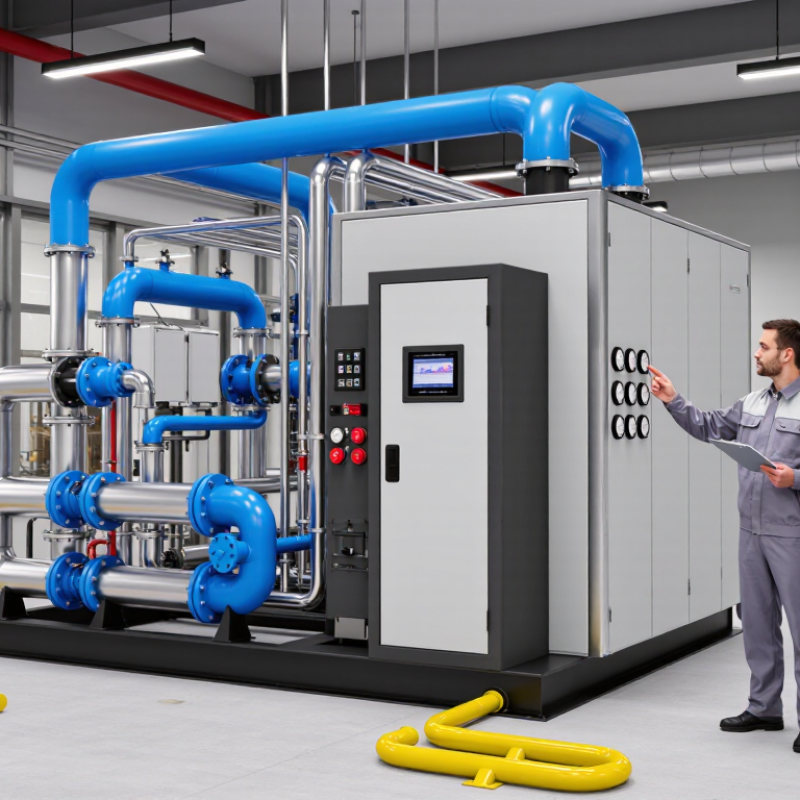
What Is an Oxygen Generator?
An oxygen generator is an on-site system that separates oxygen from ambient air. It does not create oxygen. NOAA’s dry-air composition data puts oxygen at about 20.95% of the air around us. Many systems use pressure swing adsorption: zeolite material captures nitrogen, allowing oxygen-rich gas to pass through. Membrane systems separate gases differently. The equipment, flow rate, and achievable purity depend on the process.
For a business, the key question is whether output meets the process requirement at the required flow and pressure. A nameplate rating alone can mislead; ask for performance data under your site conditions. Applications include wastewater treatment, glass production, and metal processing.
Some processes need high-purity oxygen; others may not. That difference affects equipment size, power use, and operating costs. Small details matter.
Oxygen also changes fire risk. OSHA defines an atmosphere above 23.5% oxygen as oxygen-enriched in its permit-required confined-space standard, 29 CFR 1910.146. Materials can ignite more readily in enriched conditions. Plan for ventilation, oxygen-compatible fittings, leak checks, and staff training. Include the air compressor, filters, maintenance, and backup supply in the cost estimate. It is easy to overlook those. A site assessment is still worthwhile.
How Does an Oxygen Generator Work?
An oxygen generator separates oxygen from the air around it. A compressor pushes filtered air through a vessel packed with zeolite, a material that preferentially traps nitrogen under pressure. Oxygen-rich gas passes through to a storage tank or process line. When the vessel depressurizes, it releases the trapped nitrogen. A second vessel takes over, keeping production continuous. That is the core. The U.S. Department of Energy describes pressure swing adsorption as a gas-separation process that uses pressure changes and adsorbent materials.
The actual oxygen concentration depends on the system and its operating conditions. WHO and UNICEF’s 2019 Technical Specifications and Guidance for Oxygen Therapy Devices gives an 82–96% range for concentrator output; that medical-device range is not a universal specification for industrial generators. A plant should match purity and flow to its use, such as wastewater aeration or aquaculture. A tidy process diagram can make operation look effortless. Real systems are less tidy: wet filters, leaks, and demand spikes can affect performance. Operators need to monitor pressure, purity, and maintenance intervals.
Tips: Ask suppliers for measured purity at your required flow, not just a best-case figure. Check incoming air quality and plan for regular filter changes. Small details matter.
Which Industries Use Oxygen Generators?
Why Choose an Oxygen Generator for Your Business?
Which Industries Use Oxygen Generators?
Oxygen generators serve industries that need a steady supply near the point of use. Wastewater plants use oxygen to support biological treatment, often feeding it into aeration tanks through fine-bubble diffusers. Aquaculture farms use it to maintain dissolved oxygen in fish tanks and transport systems. Demand varies. Stocking density, water temperature, and equipment layout all affect the required flow.
Hospitals and clinics may use oxygen generation systems for patient care, but these applications require carefully validated equipment, monitoring, and backup supply. Metal fabricators use oxygen in cutting and welding processes, while glassmakers use it in combustion systems that need controlled oxygen flow. Each setting has different purity and pressure requirements. A generator is not a shortcut. Operators need to check performance regularly and plan for maintenance, power interruptions, and changing demand. In practice, plant layouts are rarely as tidy as a drawing suggests, so sizing should reflect real operating conditions.
Why Choose an Oxygen Generator for Your Business? — Which Industries Use Oxygen Generators?
| Industry | How Oxygen Is Used | Why On-Site Generation Can Help | Important Consideration |
|---|---|---|---|
| Wastewater treatment | Oxygen can support biological treatment processes and oxygenation in wastewater systems. | Generating oxygen on site can reduce reliance on delivered oxygen and provide a supply matched to the facility’s operating needs. | Required oxygen flow depends on wastewater load, process design, and treatment objectives. |
| Aquaculture | Oxygen is added to water to help maintain dissolved oxygen for fish and other aquatic species. | An on-site supply can support continuous or demand-based oxygenation at farms and hatcheries. | Suitable dissolved-oxygen levels vary by species, water temperature, stocking density, and system design. |
| Glass manufacturing | Oxygen may be used for oxygen-enriched combustion in glass furnaces. | On-site generation can provide a supply for processes that use oxygen enrichment and may reduce dependence on delivered gas. | Furnace configuration, fuel, required oxygen flow, and target oxygen concentration determine system suitability. |
| Metal fabrication | Oxygen is used in some oxy-fuel cutting and metal-processing operations. | On-site generation may suit operations whose process requirements match the generator’s output and purity. | Cutting performance depends on material, thickness, equipment, and oxygen purity. Some applications require higher-purity oxygen than standard PSA systems provide. |
| Chemical processing | Oxygen is used in selected oxidation, combustion, and other chemical processes. | Producing oxygen at the point of use can help reduce deliveries and provide a controllable supply. | Process chemistry, oxygen demand, pressure, purity, and safety controls must be assessed by qualified engineers. |
| Healthcare facilities | Medical oxygen systems supply oxygen for clinical use and facility distribution. | An appropriately designed on-site system can provide an alternative or supplementary oxygen source. | Medical applications require compliant equipment, monitoring, backup arrangements, and oxygen that meets applicable regulations and quality standards. |
| Food and beverage production | Oxygen may be used in controlled process steps, including some fermentation and packaging operations. | On-site generation can be considered where the process has a steady, well-defined oxygen demand. | Use must meet product-quality, hygiene, and process-safety requirements; oxygen is not suitable for every food application. |
PSA oxygen generators commonly produce oxygen in the approximate 90–95% concentration range, depending on system design and operating conditions. Actual output, pressure, flow, and purity vary by equipment; confirm that they meet the requirements and regulations of the intended application.
What Benefits Can On-Site Oxygen Generation Provide?
An on-site oxygen generator can reduce dependence on delivered cylinders or bulk liquid oxygen. That can mean fewer delivery schedules, less storage pressure, and a steadier supply beside the process line. For wastewater operators, oxygen availability can also affect treatment performance. The U.S. EPA’s 2010 Energy Conservation Measures report notes that aeration may account for 25–60% of a wastewater plant’s energy use. Oxygen generation may help operators adjust supply to demand, but actual energy savings depend on equipment, process design, and local electricity costs.
Purity must match the job. The WHO’s 2021 technical specifications for oxygen concentrators set an outlet concentration range of 82–96% for medical devices; that is not a substitute for an industrial process specification. Buyers should confirm purity, flow, pressure, and backup capacity against their own operating conditions. Some processes need more than a generator can reliably provide. Maintenance matters, too: filters, compressors, and scheduled checks affect uptime. The trade-off is real. A site with low or highly variable demand may find delivered oxygen simpler, so compare total operating costs before installation.
What Should Businesses Consider When Choosing a System?
Why Choose an Oxygen Generator for Your Business?
When choosing a system, start with measured oxygen demand—not a supplier’s headline capacity. Record average and peak flow, required purity, delivery pressure, and hours of operation. A food-processing line, for example, may need extra capacity during washdown or product changeovers. Peak demand matters. Ask how output changes with hot rooms, altitude, and compressor wear; published capacity may assume ideal conditions.
Energy use deserves close attention. The U.S. Department of Energy’s Improving Compressed Air System Performance sourcebook estimates compressed-air systems use about 10% of electricity in U.S. manufacturing, and sometimes considerably more. Since many oxygen generators depend on compressed air, compare total system power, not just the generator’s nameplate. Also check maintenance intervals, noise, filtration, spare parts, and backup supply. A spreadsheet can miss real operating patterns, so use meter readings where possible.
Tips: Request a performance curve at your actual purity and pressure. Compare annual electricity and service costs with delivered-oxygen costs. Confirm whether the system can meet peak demand while one component is being serviced. Keep a backup plan; even a well-sized system can stop unexpectedly.
Why Choose an Oxygen Generator for Your Business?
Typical oxygen concentration by production method
PSA and VPSA systems typically produce a higher oxygen concentration than membrane systems and can generate oxygen on site. Actual output depends on system design and operating conditions. Compare required purity, flow rate, energy use, installation needs, and maintenance before choosing a system.
Bars show representative values: midpoints of typical ranges for PSA, VPSA, and membrane systems; ambient air is approximately 20.9% oxygen. Specifications vary by system.
Article Source:
Contact us
Please fill out the enquiry form, and our dedicated team will promptly attend to your request