Why Choose Thermal Bond Non Woven Fabric?
thermal bond non woven fabric is chosen when strength, lightness, and production efficiency must work together. It is made by bonding thermoplastic fibers with controlled heat and pressure. No liquid adhesive is required. This process can create a clean surface, stable thickness, and useful air permeability. These details matter in hygiene products, filtration layers, packaging, furniture padding, and protective covers.
Dr. Behnam Pourdeyhimi, a leading nonwovens researcher, has said, “Nonwovens are engineered materials, not merely fabrics.” This principle explains why material selection should begin with performance requirements. Fiber type, web structure, bonding temperature, and production speed all influence the final result. A soft fabric may need different bonding conditions than a stiff automotive liner. Small temperature changes can affect tensile strength, softness, and dimensional stability.
There is no universal grade.
A practical evaluation should include both laboratory data and real production experience. Check tensile strength in machine and cross directions. Examine thickness after compression. Test airflow, absorbency, thermal behavior, and aging when relevant. Thermal bonding may reduce flexibility if the bonding pattern is too dense. It can also create weak areas when heat distribution is uneven. These are not minor concerns. They can appear as edge curling, brittle spots, or inconsistent roll quality.
The best choice depends on the application, not attractive specifications alone. Buyers should request technical datasheets, sample rolls, and traceable quality records. They should also confirm compliance with applicable product standards. A careful supplier will explain limitations, not hide them. That transparency supports reliable decisions and stronger long-term performance.
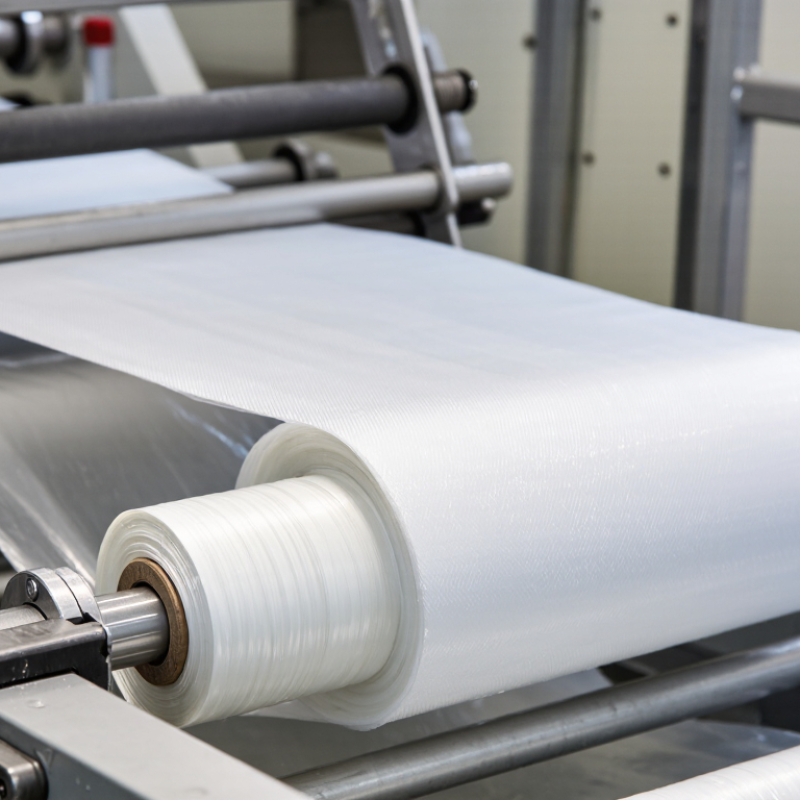
Thermal Bond Nonwoven Fabric: 15–200 g/m² Basis Weight Options
Why Choose Thermal Bond Non Woven Fabric?
Thermal Bond Nonwoven Fabric: 15–200 g/m² Basis Weight Options
Thermal bond nonwoven fabric offers practical weight choices for different product needs. Its fibers are bonded with controlled heat, without traditional liquid binders. This process can create a clean, soft, and stable sheet. Basis weight ranges from 15 to 200 g/m², giving designers room to adjust strength, coverage, and handling. Lightweight grades suit breathable liners, filtration layers, and disposable protective components. Heavier grades provide better cushioning, insulation, and dimensional support.
Tips: Do not select fabric by weight alone. Check thickness, fiber type, tensile strength, airflow, and bonding uniformity. A 30 g/m² sheet may feel firm in one structure but weak in another. Small trial samples reveal more than a specification sheet.
In practical testing, lighter materials often fold easily and conform to curved surfaces. However, they may tear during high-speed converting or repeated handling. Medium weights, such as 60–100 g/m², can balance flexibility and durability for many interior and filtration applications. Heavier options may improve resilience, but they can reduce softness and increase material use. That trade-off deserves attention. Sometimes, a thinner fabric performs better because the final design needs airflow rather than bulk. Temperature control also matters, since uneven bonding can create stiff spots or weak edges. Performance should be verified under real humidity, pressure, and movement conditions.
How 80–160°C Thermal Bonding Controls Strength and Loft
Why Choose Thermal Bond Non Woven Fabric?
How 80–160°C Thermal Bonding Controls Strength and Loft
Thermal bond non woven fabric gains strength without traditional liquid adhesives. The key is controlled heat. At 80–110°C, bonding may remain limited, preserving a soft, open structure. As temperatures approach 120–140°C, selected fibers soften and connect at crossing points. The web becomes more stable. At 140–160°C, bonding can increase noticeably, but excessive heat may flatten loft or create stiff areas. The correct range depends on fiber composition, web density, and equipment design. The process is not perfectly predictable.
Temperature alone does not determine performance. Dwell time, pressure, airflow, and line speed also shape the final fabric. A fast line may need more heat or stronger preheating. Too much pressure can compress the web before bonding develops. Too little pressure may produce weak contact points. Production teams often inspect thickness, tensile strength, softness, and recovery after conditioning. Real-world testing matters because laboratory settings can look better than continuous production. Small changes can create visible differences.
Tips: Begin with a narrow temperature trial between 80 and 160°C. Record loft before and after bonding. Check several fabric areas, not just one sample. Reduce pressure if the surface feels board-like. If strength remains low, review dwell time and fiber compatibility before raising temperature further. Temperature is useful, but it is not the whole answer.
ISO 9073-1 Testing for Tensile Strength and Dimensional Stability
Why Choose Thermal Bond Non Woven Fabric?
Thermal bond non woven fabric uses heat to join fibers without liquid adhesives. This creates a clean, consistent structure for liners, filters, packaging, and protective components. Its performance depends on fiber type, bonding temperature, pressure, and cooling speed. Small process changes can affect the final sheet.
ISO 9073-1 measures mass per unit area, not tensile strength or dimensional stability. This distinction matters during material evaluation. A controlled mass supports repeatable comparisons between production lots. Related ISO 9073 methods are commonly used for tensile testing and dimensional changes. Samples should be conditioned before testing, then cut in both machine and cross directions. A 50-millimeter strip may stretch differently from a cross-direction strip.
Testing should record peak force, elongation, and visible deformation. Watch the edges.
For dimensional stability, measure length and width before and after heat, moisture, or washing exposure. A fabric may retain strength but still shrink around a seam. That practical failure can be missed in a basic tensile report.
Test reports should identify specimen size, conditioning time, test speed, and environmental conditions. These details make results traceable and easier to challenge.
Thermal bonding offers useful uniformity, but it is not automatically superior for every application. Excessive heat can stiffen fibers or reduce flexibility. Insufficient bonding can cause weak spots.
Experienced evaluation combines standards, production records, and real-use observations. One laboratory result is only evidence, not the whole decision.
Air Permeability from 100–2,000 L/m²/s Under ISO 9237
Why Choose Thermal Bond Non Woven Fabric?
Thermal bond non woven fabric offers controlled airflow for applications that need breathability and stable handling. Under ISO 9237 testing, air permeability can range from 100 to 2,000 L/m²/s, depending on basis weight, thickness, fiber structure, and bonding conditions. This wide range supports different product requirements, from gentle air exchange to rapid ventilation.
In practical testing, technicians place a fabric specimen over a defined test area. Air then passes through the material under a controlled pressure difference. The result shows how much air moves through one square metre each second. A higher value is not automatically better. Filter layers may require lower permeability, while mattress covers, ventilation liners, or agricultural fabrics may need much higher airflow.
Thermal bonding avoids liquid adhesives, which can help preserve open pore pathways. Heat also creates a clean, stable web with useful dimensional strength. However, excessive bonding can close pores and reduce airflow. Uneven fiber distribution may create different readings across the same roll. That detail is easy to overlook.
Quality teams should test multiple samples from the roll, not one convenient section. They should also record pressure, specimen conditioning, thickness, and basis weight. These details improve comparison between production batches. Still, laboratory results cannot represent every field condition. Humidity, compression, dust, and installation tension may change actual airflow.
Why Choose Thermal Bond Non Woven Fabric?
Air permeability can be engineered across a broad range of approximately 100–2,000 L/m²/s. The reference values below show how increasing basis weight generally reduces airflow when tested under ISO 9237 at a 200 Pa pressure difference.
Representative reference points for thermal bonded non woven fabric. Actual results vary with fiber type, bonding pattern, thickness, porosity, and finishing treatment.
Why 0% Added Chemical Binder Can Reduce VOC Emissions
Why Choose Thermal Bond Non Woven Fabric?
Why 0% Added Chemical Binder Can Reduce VOC Emissions
Thermal bond non woven fabric joins fibers through controlled heat, pressure, and engineered bonding fibers. It does not require an added chemical binder to hold the web together. This matters in mattresses, filtration layers, and interior products, where air contact can continue for years.
Lower binder content can reduce one potential VOC source. The U.S. Environmental Protection Agency reports that indoor VOC levels are often two to five times higher than outdoor levels. Some products can create much higher short-term concentrations. A binder-free structure may therefore support cleaner indoor-air design, especially when paired with low-emission fibers and finishes.
The result is not automatically VOC-free.
That distinction matters. Fiber oils, dyes, packaging residues, and thermal-processing conditions can still influence emissions. The World Health Organization’s 2010 guideline sets formaldehyde at 0.1 mg/m³ for a 30-minute average, showing why measured results matter more than marketing language. In practice, manufacturers should use controlled chamber testing, conditioning, and GC-MS analysis, following recognized methods such as ISO 16000 series procedures. Test the finished article, not only the raw web. A small detail can change the result.
Thermal bonding also avoids extra curing steps associated with some adhesive systems. This can simplify process control and reduce chemical handling. Yet “0% added binder” should be treated as a design claim, not a complete emissions guarantee. Reliable specifications should disclose fiber composition, finishes, test conditions, and detection limits.
Why Choose Thermal Bond Non Woven Fabric? - Why 0% Added Chemical Binder Can Reduce VOC Emissions
| Data Dimension | Thermal Bond Non Woven Fabric | Chemically Bonded Non Woven Fabric | VOC and Performance Relevance |
|---|---|---|---|
| Added chemical binder | 0% by design | Binder may be applied as a liquid, foam, spray, or powder | Eliminating an added binder removes one potential source of binder-related VOCs and odor. It does not prove that total VOC emissions are zero. |
| Bonding mechanism | Heat softens or melts thermoplastic fibers, low-melt sheath fibers, or thermoplastic webs at selected bond points | A chemical binder forms adhesion between fibers after application and drying or curing | Thermal bonding can avoid binder drying and curing stages, which may reduce process emissions and drying energy. |
| Typical polymer components | Polyester, polypropylene, polyethylene, or bicomponent fibers with a lower-melting sheath | Fiber substrate plus an acrylic, styrene-butadiene, vinyl acetate, polyurethane, or other binder system | The exact polymer, additives, finishes, and processing temperature determine the final emission profile. |
| VOC emission status | No binder-derived VOC source is intentionally added | Potential emissions can originate from binder ingredients, coalescing agents, residual monomers, additives, or incomplete drying | “Lower VOC” is a design expectation, not a guaranteed numerical result without laboratory testing. |
| VOC measurement unit | Report measured emissions in µg/m³ or mg/m³, together with sampling time and chamber conditions | Use the same unit and test conditions for a valid comparison | A paired test using identical mass, area, conditioning, temperature, humidity, and sampling time provides the most meaningful comparison. |
| Relevant VOC test methods | ISO 16000-6 for VOC analysis; ISO 16000-9 for emissions from building and furnishing products; ASTM D5116 for small-chamber testing | The same methods should be used to maintain comparability | Test reports should identify the analytical method, chamber volume, air-exchange rate, temperature, relative humidity, and test duration. |
| Process drying or curing | No binder-drying or binder-curing step is required | Drying and, depending on the binder, curing may be required | Removing wet-binder handling can shorten the process route and reduce the opportunity for emissions from volatile formulation components. |
| Material add-on control | Bonding is created within the thermoplastic fiber structure; no binder add-on is required | Binder add-on must be controlled for solids content, distribution, and cure level | Lower formulation complexity can make source control and emissions troubleshooting easier. |
| Air permeability | Measured value depends on basis weight, thickness, fiber diameter, bonding area, and compression | Measured value depends on the same structural factors plus binder distribution and add-on | A real comparison must use the same test standard, pressure differential, basis weight, and sample conditioning. |
| Mechanical strength | Controlled by fiber type, web orientation, bonding temperature, pressure, pattern, and bond area | Controlled by fiber structure, binder chemistry, binder add-on, drying, and curing | Strength should be reported using a defined method such as ISO 9073-3 or an equivalent recognized standard. |
| Odor potential | Often lower when no odorous finish, lubricant, or volatile additive is present | May be influenced by binder formulation, residual volatiles, curing conditions, and storage history | Odor is not equivalent to VOC concentration; both sensory evaluation and instrumental testing may be required. |
| Recyclability considerations | A single-polymer or compatible-polymer construction can simplify recycling compared with a fiber-and-binder composite | Different fiber and binder chemistries may complicate material recovery | Recyclability depends on the complete formulation, product design, contamination level, and available recycling process. |
| What must be verified before making a VOC claim | Confirm total VOC emissions, individual compounds, aldehydes, odor, and any finish-related emissions | Use the same verification items and test conditions | A defensible claim should state the test method, detection limits, conditioning protocol, sampling time, and numerical results. |
Article Source:
Contact us
Please fill out the enquiry form, and our dedicated team will promptly attend to your request