Best Spot Welding Gun Suppliers in China How to Choose?
Choosing the best spot welding gun supplier in China requires more than comparing catalogue prices. A gun may look robust on a clean factory floor, yet overheat during a twelve-hour automotive shift. Its transformer capacity, electrode alignment, cooling circuit, cable flexibility, and replacement support matter equally.
The International Federation of Robotics reported 135,461 robot installations in the automotive industry worldwide during 2023. This figure shows why manufacturers increasingly demand welding equipment that integrates with automated production. Grand View Research also identifies automotive manufacturing as a major driver of the resistance welding equipment market. However, market growth does not guarantee supplier quality.
John C. Ion, a recognised welding-technology author, wrote, “Welding is a process, not merely a machine.” That principle remains practical. A reliable spot welding gun must match sheet thickness, material type, current range, duty cycle, and robot reach. Ask suppliers for weld samples, electrode-life records, cooling specifications, and documented quality procedures. Request evidence, not promises.
Check whether the supplier follows relevant standards, including ISO 9001 and applicable resistance-welding requirements. Review factory audits, traceability records, spare-parts availability, and after-sales response times. A supplier that answers technical questions clearly deserves closer attention.
Still, no shortlist is perfect. Some published specifications may reflect laboratory conditions, not production reality. Testing one gun on your actual line is wiser than trusting polished brochures. This guide compares China-based suppliers through technical capability, manufacturing experience, customization, certifications, and service reliability. The goal is not the cheapest purchase. It is a stable weld, repeatable results, and fewer production surprises.

Define Spot Welding Gun Types: Manual, Robotic, and 2–20 kA Current Ranges
Choosing a spot welding gun supplier in China starts with defining the gun type, not comparing prices. Manual guns suit repair stations, low-volume assembly, and changing workpieces. Operators position the arms directly, so balance, cable flexibility, and trigger response matter. A heavy gun becomes tiring before the shift ends.
Robotic guns fit repeatable production cells. Check mounting dimensions, dress-pack routing, electrode access, and communication with the welding controller. The gun must reach each joint without twisting the cable. A small clearance problem can create unstable contact. That detail is easy to miss.
Current range also needs careful interpretation. A 2–6 kA gun may handle thin coated sheet and lighter assemblies. Guns rated around 8–12 kA often support thicker steel, stronger electrode force, or faster schedules. Systems from 15–20 kA require suitable transformers, cables, cooling, and controller capacity. Higher current is not automatically better. It can increase heat, electrode wear, and energy use. Ask suppliers for verified duty-cycle data, not only peak current. Request weld samples using your actual material thickness and surface coating. Review force consistency, nugget size, maintenance access, and spare-electrode availability. A clean demonstration may hide production weaknesses. That is where careful testing matters.
Best Spot Welding Gun Suppliers in China: How to Choose? — Spot Welding Gun Types, Manual and Robotic Systems, and 2–20 kA Current Ranges
A practical comparison of resistance spot-welding gun configurations and key purchasing criteria for automotive, sheet-metal, appliance, and general fabrication applications.
| Gun Type / Current Range | Typical Application | Typical Welding Current | Operator or Automation Mode | Strengths | Limitations | Important Selection Criteria |
|---|---|---|---|---|---|---|
| Manual Portable Gun | Low-volume body repair, sheet-metal assembly, maintenance, and short production runs. | 2–8 kA | Hand-operated; commonly suspended from a balancer or mounted on a portable station. | Flexible access, relatively low initial investment, quick fixture changes, and simple operation. | Weld consistency depends more heavily on operator technique; productivity is lower than automated systems. | Check gun weight, ergonomic handle design, cable flexibility, throat depth, electrode access, trigger control, and duty cycle. |
| Manual Stationary Gun | Small and medium-sized production lines for brackets, cabinets, appliances, furniture components, and general fabrication. | 4–12 kA | Operator loads and unloads parts while the gun is fixed to a bench, pedestal, or custom fixture. | Better repeatability than handheld use, straightforward maintenance, and easy integration with dedicated tooling. | Part presentation and clamping remain dependent on the operator; less suitable for complex multi-position assemblies. | Evaluate throat reach, electrode force, pneumatic or servo actuation, transformer rating, timer functions, and fixture compatibility. |
| Robotic Servo Gun | High-volume automotive, transportation, and metal-component production with repeated programmed weld locations. | 8–20 kA | Robot-controlled; servo actuation provides programmable electrode movement and force control. | High repeatability, programmable weld sequences, controlled electrode force, and reduced manual handling. | Higher capital cost, more complex commissioning, and greater requirements for programming and preventive maintenance. | Confirm robot payload, gun mass, transformer placement, servo force range, communication protocol, cycle time, and safety integration. |
| Robotic Pneumatic Gun | Automated lines where robust clamping and cost-conscious deployment are more important than highly variable force profiles. | 6–16 kA | Robot-controlled with pneumatic cylinder actuation and regulated compressed air. | Durable construction, relatively simple control, fast operation, and broad availability of service components. | Force adjustment is less flexible than servo systems; compressed-air quality and pressure stability affect performance. | Check air consumption, operating pressure, cylinder response, force repeatability, hose routing, transformer cooling, and robot wrist load. |
| Medium-Current Gun | Thin galvanized steel, coated sheet, mild steel, and assemblies requiring controlled heat input. | 2–8 kA | Manual, pedestal-mounted, or robotic configurations are available. | Suitable for lighter sheet materials, lower energy demand, and compact gun designs. | May not provide sufficient heat or nugget size for thick stacks, high-strength steel, or large shunts. | Match current capability with material thickness, coating, stack-up resistance, electrode tip diameter, and required weld schedule. |
| High-Current Gun | Thicker steel stacks, high-strength steel, structural components, and applications with higher electrical resistance or heat requirements. | 12–20 kA | Most commonly integrated into pedestal or robotic systems with appropriate transformer and water cooling. | Supports larger weld nuggets, thicker material combinations, and demanding production schedules. | Requires stronger power infrastructure, effective cooling, suitable electrodes, and careful control of spatter and indentation. | Verify transformer capacity, secondary current, water-flow requirements, electrode force, cooling-channel design, and short-circuit protection. |
| Water-Cooled Gun | Continuous or high-duty-cycle production where electrode, arm, transformer, or cable temperature must be controlled. | 4–20 kA | Available in manual, stationary, and robotic versions. | Improved thermal stability, longer electrode life, and better suitability for repeated welding cycles. | Needs a clean and stable cooling-water circuit; leaks, blocked passages, or insufficient flow can reduce service life. | Check inlet temperature, flow rate, pressure, filtration, hose connections, cooling-channel layout, and alarm or interlock functions. |
| Air-Cooled Gun | Intermittent repair work, low-duty-cycle production, and installations where water infrastructure is unavailable. | 2–8 kA | Typically manual or light-duty stationary operation. | Simpler installation, lower infrastructure requirements, and easier basic maintenance. | Thermal capacity is lower than a comparable water-cooled design; extended cycles can increase tip wear and downtime. | Compare duty cycle, ambient temperature, ventilation, weld repetition rate, thermal protection, and replacement-part availability. |
| Transformer-Integrated Gun | Compact robotic cells or manual systems where reducing secondary-circuit length and electrical losses is important. | 6–20 kA | Manual or robot-mounted, depending on mass, geometry, and application requirements. | Shorter secondary path, reduced electrical loss, compact cell layout, and potentially improved current delivery. | Additional gun mass may affect robot payload, balance, acceleration, and access to confined weld locations. | Review total mass, center of gravity, transformer frequency, cooling capacity, robot payload, cable routing, and service access. |
| Remote-Transformer Gun | Manual or robotic installations where a lighter welding gun is needed for improved handling or robot dynamics. | 4–20 kA | Commonly used with suspended manual guns or robotic arms connected to a separate transformer. | Lower gun mass, easier positioning, and improved reach for certain production layouts. | Longer secondary cables can increase resistance, heat generation, voltage drop, and maintenance requirements. | Check cable length, cross-sectional area, flexibility, bend radius, cooling method, connection quality, and transformer-to-gun distance. |
Note: The current ranges are practical selection bands rather than universal limits. The required setting depends on sheet thickness, material grade, coating, stack-up, electrode geometry, electrode force, weld time, transformer capacity, and applicable process standards.
Related Posts
-
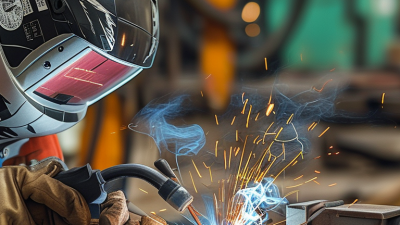
How to Choose the Best Spot Welding Gun in 2026?
-

2026 Top Spot Welder Buying Guide for Global Suppliers?
-
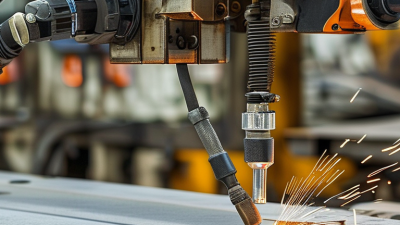
How to Choose the Best Spot Welder for Your Needs
-

2025 How to Choose the Right Resistance Spot Welder for Your Needs
-

2025 Best Spot Welder Guide for Homeowners and DIY Enthusiasts
-
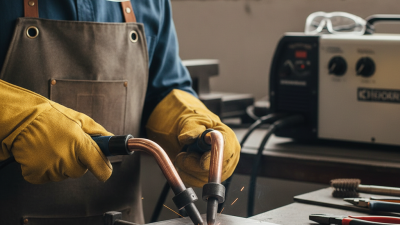
Top 10 Resistance Spot Welder Tips for Beginners

Contact us
Please fill out the enquiry form, and our dedicated team will promptly attend to your request