Top Spot Welding Machine Manufacturers in China for Global Buyers

China’s scale makes it a serious sourcing destination for global manufacturers seeking a reliable spot welding machine. The International Federation of Robotics’ World Robotics 2024 report recorded 276,288 industrial robot installations in China during 2023, about 51% of worldwide installations. That figure measures robots, not spot welding equipment sales, but it signals a deep automation ecosystem: factories, integrators, component suppliers, and technical talent. The distinction matters. A large market does not guarantee a well-built machine.

For buyers, the real test is at the weld. Can the equipment deliver repeatable current and pressure across thin steel panels? Does its electrode arm reach the joint without awkward repositioning? Professor Sindo Kou’s published welding-metallurgy work offers a useful principle, paraphrased here: process conditions and material behavior must be controlled together. It is a technical reminder, not a product endorsement.

This guide examines leading Chinese manufacturers through practical criteria: machine range, control systems, customization, quality documentation, service access, and export experience. Ask for sample welds on your own material. Check duty cycle, electrode availability, and response times before comparing prices. Small details count.

A polished catalogue is not proof. Supplier claims also deserve scrutiny, and public data rarely compares manufacturers on equal terms. The rankings and selection points that follow should therefore help buyers frame due diligence—not replace factory audits, reference checks, or application trials.
Top Spot Welding Machine Manufacturers in China for Global Buyers

Understanding Resistance Spot Welding: Typical 5–30 kA Currents and 100–300 ms Weld Times

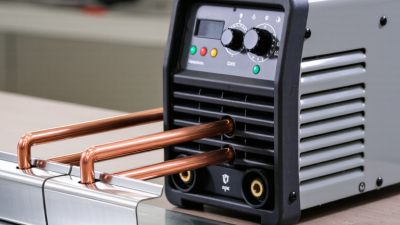
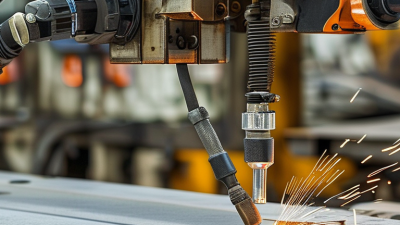
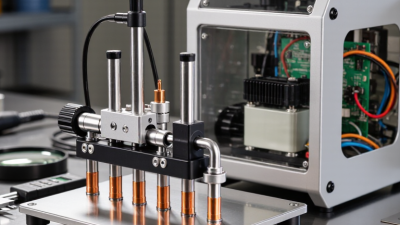
Resistance spot welding joins overlapping metal sheets by pressing them between copper-alloy electrodes. Current passes through the joint, generating heat where electrical resistance is concentrated. Many production setups use roughly 5–30 kA, with weld pulses lasting about 100–300 ms. These are working ranges, not universal recipes. Thin low-carbon steel may need less energy than thicker or coated sheet stacks. Even small changes in electrode force, tip wear, or sheet fit can shift nugget size. That is where shop-floor experience matters. Heat depends on current, resistance, and time, but resistance itself changes during welding. Operators should distinguish weld time from squeeze and hold time, which help stabilize the joint. Not glamorous, but important.

For global buyers, a machine’s peak current alone says little about production quality. Ask for repeatability data using the intended materials, stack thickness, electrode force, and duty cycle. Useful controls include programmable current and pulse timing, plus monitoring that flags deviations. Run sample welds, then inspect cross-sections or perform peel tests against application requirements. Record electrode dressing intervals and cooling-water conditions; both can affect consistency across a shift. Results can still vary. A tidy lab setup may not reflect a crowded, warm factory floor, so validate the proposed 5–30 kA and 100–300 ms settings on the actual production stack.

Mapping China’s Manufacturers by Manual, Pneumatic, Servo, and Robotic Systems

China’s spot welding manufacturers serve different production needs, and the machine category matters more than a broad factory label. Manual systems suit repair work, prototypes, and low-volume batches. Operators position each part by hand, so access and ergonomics deserve close inspection. Ask to weld samples matching your material thickness and joint shape. Small differences matter.

Pneumatic machines use compressed air to apply electrode force. They can support steady production, but buyers should check pressure stability, cooling, and electrode access. Servo systems offer programmable force and motion, which helps when parts vary or weld schedules need tighter control. Request trial data, not just a feature list. A polished demonstration may not reflect daily shifts.

Robotic systems fit repeatable, higher-volume work, especially when fixtures hold parts consistently. Their performance depends on cell layout, part presentation, programming, and operator training—not only the welding unit. Review changeover time and maintenance access before choosing automation. A robot can still wait on a poorly designed fixture. Compare manufacturers by test procedures, documentation, spare-parts planning, and support for commissioning. One overlooked question is who adjusts the process after the first production week. The answer may reveal more than the brochure.

Comparing Leading Chinese Suppliers by Capacity, Controls, Certifications, and Export Support

When comparing Chinese spot welding machine suppliers, start with capacity, not headline output. Ask for rated duty cycle, transformer rating, electrode force, and maximum sheet thickness. A machine advertised for heavy production may struggle with your actual joint geometry. Request a trial weld using your material, such as two coated steel coupons, then inspect nugget consistency and surface marks. Small details matter.

Controls shape daily reliability. Check whether the system stores weld schedules, limits current and time, and records alarms. A clear touchscreen helps operators change recipes without guessing. Ask to see the control cabinet and a sample process log. Simple can be better. Still, advanced controls are not useful if local technicians cannot troubleshoot them; this is easy to overlook.

Certifications and export support need document checks. Request current certificates for the exact machine configuration, and confirm which requirements apply in your destination market. Compare manuals, wiring diagrams, spare-parts lists, and warranty terms. For overseas delivery, clarify crate dimensions, packing protection, lead time, and who prepares shipping documents. Ask how quickly the supplier can send replacement electrodes or control components. A polished quotation may omit these costs, and buyers sometimes miss them. Request a written scope before comparing prices.

Assessing Machine Specifications: Electrode Force, Duty Cycle, and Transformer Rating

For global buyers comparing Chinese spot welding machines, electrode force should be checked against the material stack, not judged by maximum force alone. The AWS C1.1M/C1.1:2019 Recommended Practices for Resistance Welding treats force, current, and weld time as connected process variables. A machine may list 4 kN, yet that figure means little if its pneumatic system cannot maintain pressure through repeated cycles. Ask for force accuracy, adjustment range, and test results on your actual sheet thickness. Small differences matter.

Duty cycle describes how long a machine can weld without overheating. At 50%, the machine may weld for five seconds in a ten-second cycle; real output still depends on cooling and operating conditions. The ISO 669:2016 requirements for resistance welding equipment offer a useful technical reference when reviewing mechanical and electrical performance. Check whether the supplier states duty cycle at a defined ambient temperature and cooling condition. Heat builds fast. A catalog number alone is not enough.

Transformer rating, usually shown in kVA, must be read alongside duty cycle and secondary current. Compare ratings on the same basis: a 100 kVA rating at one duty cycle is not directly equivalent to 100 kVA at another. Request the rating curve, open-circuit voltage, and a production trial with your electrode tips and workpieces. These checks take time. Still, they can reveal a mismatch that polished brochures miss.

Verifying Global-Buyer Requirements Under IEC 62135-1 and ISO 14373

For global buyers, IEC 62135-1 and ISO 14373 address different checks. IEC 62135-1 covers safety requirements for resistance-welding equipment; ISO 14373 provides guidance for spot-welding procedures on coated and uncoated low-carbon steel. Ask manufacturers for the applicable editions, risk assessments, wiring diagrams, and documented test results. A certificate alone is not proof that a complete machine meets your production needs. Verify guards, emergency stops, grounding, and access around the electrodes. Numbers matter.

ISO 14373 makes process evidence important, too. Request sample welds using your material thickness and coating, then review current, electrode force, weld time, and nugget-test results. Check repeatability across multiple cycles, not just one attractive sample. The International Federation of Robotics reported 4,281,585 industrial robots operating worldwide in 2023, up 10% year over year in World Robotics 2024. That figure signals growing automation, but it does not establish spot-welding quality. Buyers still need machine-specific evidence. A polished demonstration can hide inconsistent results.

Tip: Send representative coupons before purchase. Ask for traceable test records and a witnessed trial; confirm settings can be saved and retrieved. Recheck the proposed machine against your plant’s power supply, tooling, and maintenance skills. This is easy to overlook.

Top Spot Welding Machine Manufacturers in China for Global Buyers

Reference editions for buyer verification under IEC 62135-1 and ISO 14373

Both cited editions are dated 2015. IEC 62135-1 addresses safety requirements for resistance-welding equipment; ISO 14373 specifies procedures for spot welding uncoated and coated low-carbon steels. Edition year alone does not demonstrate product conformity—buyers should verify applicable requirements and current standard status for their project.

Contact us

Please fill out the enquiry form, and our dedicated team will promptly attend to your request