Top 10 Welding Repair Services for Global Buyers
Global buyers increasingly need dependable welding repair, not merely low hourly rates. Aging pipelines, pressure vessels, construction equipment, and factory frames demand controlled, traceable intervention. A small crack near a heat-affected zone can become a costly shutdown if diagnosis is rushed.
The American Welding Society’s 2023 Welding Workforce Data projects that more than 330,000 new welding professionals may be needed in the United States by 2028. Its outlook signals a broader concern: skilled capacity is becoming strategically important. Meanwhile, MarketsandMarkets’ Welding Equipment Market report identifies infrastructure, energy, transportation, and manufacturing as major demand sectors. These sectors also generate complex repair requirements.
Quality begins before the arc starts. Reliable providers review drawings, base-metal grades, previous failures, welding procedures, and site risks. They may use visual testing, dye penetrant testing, ultrasonic testing, or radiography. Documentation matters. So do qualified welders, calibrated equipment, and clear repair acceptance criteria.
John C. Lippold, a widely recognized welding metallurgy expert, stresses a central principle: “Weldability depends on the material, the process, and the procedure.” This principle should guide every welding repair comparison. A reputable service provider must explain how heat input, distortion, hydrogen control, and post-weld treatment will be managed.
This list evaluates ten welding repair services for global buyers. It considers technical capability, certification practices, emergency response, industry experience, geographic coverage, and customer evidence. No ranking fits every plant. Some providers may appear strong on paper yet lack local technicians or spare-part access. Buyers should verify those details before signing a contract. Reliable repair is not the fastest visible weld. It is the repair that remains sound after inspection, pressure, vibration, and time.
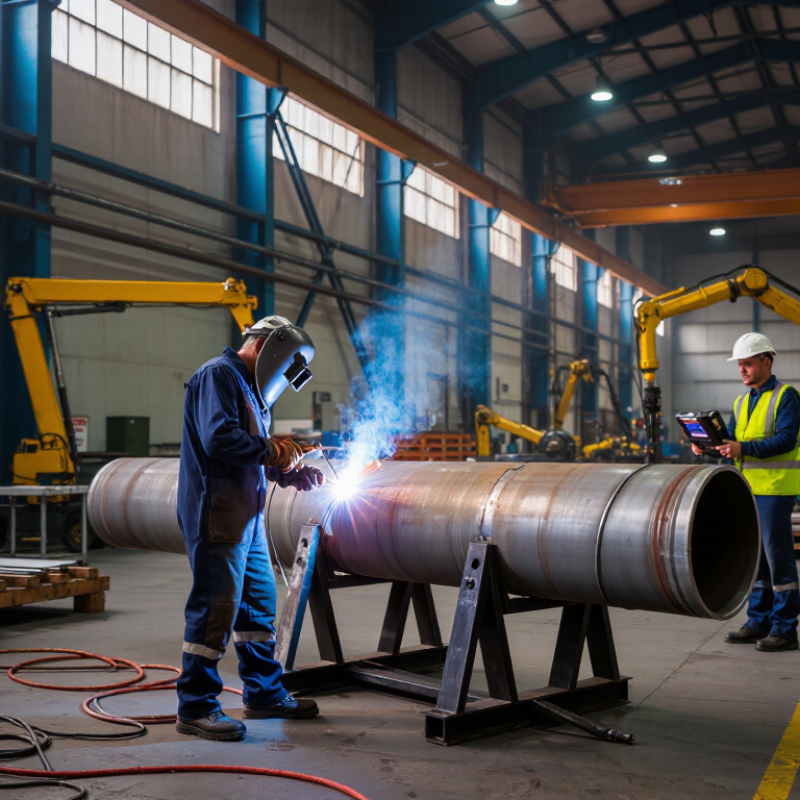
Global Buyer Criteria: ISO 3834’s Three Welding Quality Levels
When global buyers compare welding repair services, ISO 3834 offers a practical quality framework. Its three levels are comprehensive, standard, and elementary. The correct level depends on risk, material, design, and service conditions.
ISO 3834-2, the comprehensive level, suits critical repairs with strict traceability and detailed inspection. It may require qualified welding procedures, approved personnel, controlled consumables, and extensive non-destructive testing. Think of pressure parts, lifting structures, or components exposed to repeated stress. Every repair step should be recorded, from surface preparation to final inspection.
ISO 3834-3, the standard level, fits many industrial repairs with controlled procedures and documented checks. ISO 3834-4, the elementary level, covers simpler work where the consequences of failure are lower. Lower does not mean careless. It still requires suitable materials, competent welders, correct equipment, and visual inspection. A repaired steel bracket may need different controls from a cracked process pipe.
In real projects, buyers should request the quality level before comparing prices. Ask for welding procedure records, welder qualifications, inspection reports, and material traceability. Small details matter. Rust left inside a joint can weaken the repair. Poor preheating can create hidden cracking. A checklist helps, but it cannot replace experienced judgment. Sometimes, the chosen level may look sufficient on paper and still deserve review after site conditions change.
Top 10 Welding Repair Services for Global Buyers - Global Buyer Criteria: ISO 3834’s Three Welding Quality Levels
ISO 3834 classifies welding quality requirements as Comprehensive (ISO 3834-2), Standard (ISO 3834-3), and Elementary (ISO 3834-4).
| No. | Welding Repair Service | Typical Repair Scope | Recommended ISO 3834 Level | Key Technical Controls | Common Inspection Evidence | Suitable Buyer Applications |
|---|---|---|---|---|---|---|
| 1 | Structural Steel Crack Repair | Repair of cracks, incomplete fusion, and localized damage in load-bearing steel members. | Comprehensive (ISO 3834-2) |
Approved welding procedure, qualified welders, preheat control, interpass-temperature monitoring, and traceability. | Weld map, WPS/PQR, welder qualification, visual testing, and applicable NDT report. | Bridges, cranes, platforms, frames, and other safety-critical structures. |
| 2 | Pressure Vessel and Piping Repair | Restoration of weld defects, local thinning, leaks, and damaged pipe or vessel sections. | Comprehensive (ISO 3834-2) |
Material verification, welding consumable control, heat input records, PWHT where required, and repair acceptance criteria. | NDT records, pressure or leak test report, material certificates, repair procedure, and final inspection dossier. | Process piping, storage vessels, boilers, and pressure-containing equipment. |
| 3 | Pipeline Girth-Weld Repair | Repair of weld discontinuities identified during construction, maintenance, or in-service inspection. | Comprehensive (ISO 3834-2) |
Qualified procedure, controlled fit-up, environmental protection, preheat, consumable storage, and repair sequencing. | Radiographic or ultrasonic testing, visual inspection, repair log, and pressure-test documentation where applicable. | Energy, water, chemical, and industrial pipeline systems. |
| 4 | Heavy Equipment and Machinery Repair | Repair of buckets, booms, frames, housings, shafts, and other worn or fractured components. | Standard (ISO 3834-3) |
Base-metal identification, joint preparation, distortion control, compatible filler selection, and dimensional checks. | Visual inspection, dimensional report, magnetic-particle or dye-penetrant testing where relevant. | Mining, construction, agricultural, material-handling, and recycling equipment. |
| 5 | Marine and Offshore Steel Repair | Repair of hull plates, brackets, decks, frames, tanks, and offshore structural components. | Comprehensive (ISO 3834-2) |
Welding sequence planning, low-hydrogen practice, weather protection, distortion management, and coating compatibility. | Inspection and test plan, weld traceability, visual testing, NDT, dimensional survey, and coating records. | Ships, barges, offshore platforms, port equipment, and marine steelwork. |
| 6 | Aluminum Component Repair | Repair of cracks, porosity, impact damage, and worn sections in aluminum parts and assemblies. | Standard (ISO 3834-3) |
Alloy verification, oxide removal, shielding-gas control, clean consumables, and heat-input management. | Visual inspection, dimensional verification, leak testing where required, and NDT appropriate to the part. | Transport equipment, frames, tanks, platforms, and fabricated aluminum assemblies. |
| 7 | Stainless Steel and Corrosion-Resistant Repair | Repair of process tanks, sanitary pipework, guards, and corrosion-resistant fabricated parts. | Standard (ISO 3834-3) |
Cross-contamination prevention, shielding-gas control, purge management, heat-input control, and post-weld cleaning. | Visual inspection, borescope inspection where applicable, dye-penetrant testing, and leak testing. | Food, pharmaceutical, chemical, water-treatment, and clean-process equipment. |
| 8 | Cast Iron and Dissimilar-Metal Repair | Repair of cracked castings, housings, engine parts, and joints between compatible or dissimilar metals. | Standard (ISO 3834-3) |
Material assessment, controlled preheat and cooling, filler-metal compatibility, and machining allowance control. | Visual and dimensional inspection, dye-penetrant or magnetic-particle testing, and functional testing where applicable. | Pumps, gear housings, engine components, machine bases, and industrial castings. |
| 9 | Sheet-Metal and Fabricated Enclosure Repair | Repair of non-critical panels, brackets, covers, ducts, cabinets, and light fabricated assemblies. | Elementary (ISO 3834-4) |
Basic welding instructions, suitable consumables, fit-up control, surface preparation, and distortion prevention. | Visual inspection, dimensional check, surface-finish review, and basic leak or fit testing where needed. | General industrial enclosures, ducts, guards, brackets, and non-pressure sheet-metal products. |
| 10 | Wear-Resistant Overlay and Build-Up Repair | Restoration of worn surfaces on rollers, plates, blades, chutes, dies, and high-abrasion components. | Standard (ISO 3834-3) |
Wear-material selection, dilution control, bead placement, interpass-temperature control, and final machining allowance. | Visual inspection, hardness testing where specified, dimensional measurement, and crack detection. | Mining, cement, steel, quarrying, recycling, and bulk-material handling equipment. |
Related Posts
-
2026 Top Mobile Welding Innovations and Trends in the Industry?
-

Why Robotic Welding Machines Are Revolutionizing the Manufacturing Industry
-
What Is the 2026 Best Mobile Welding Service for Buyers?
-
How to Weld Steel Like a Pro for Your Next Project?
-
What is the Best Spot Welder for Your Welding Needs?
-

Unlocking the Future: How Automotive Welding Technologies Are Revolutionizing Vehicle Manufacturing

Contact us
Please fill out the enquiry form, and our dedicated team will promptly attend to your request