2026 Top Types of Welding Metal for Global Buyers
Choosing the right welding metal is a commercial decision, not only a technical one. Global buyers must evaluate strength, corrosion resistance, weight, machinability, availability, and total fabrication cost. Carbon steel remains widely used for structural frames, pipelines, and heavy equipment. Stainless steel suits hygienic, marine, and chemical environments. Aluminum reduces weight, but it demands tighter control of heat input and joint preparation.
As welding specialist David J. Kotecki has noted, “A sound weld begins before the arc starts.” This practical principle still matters in 2026. Metal grade, surface condition, thickness, and filler compatibility can determine whether a joint performs reliably or fails prematurely. A clean stainless sheet should not carry iron contamination from careless tools. Thin aluminum can distort within seconds. Small details become expensive problems.
This guide examines the top types of welding metal for international buyers. It considers common applications, weldability, purchasing risks, and inspection requirements. It also compares familiar materials with less obvious choices, including nickel alloys and copper-based metals. Availability can vary between regions. Certification documents may also differ in quality and completeness.
No single material is best for every project. That sounds obvious, yet buyers still select metals by price alone. A cheaper alloy may require slower welding, more preparation, or costly post-weld treatment. The final decision should connect material data with real workshop experience, supplier reliability, and service conditions. Some recommendations remain imperfect, because project specifications, local standards, and production skills can change the result.
What Is Welding Metal and Why Does It Matter in 2026?
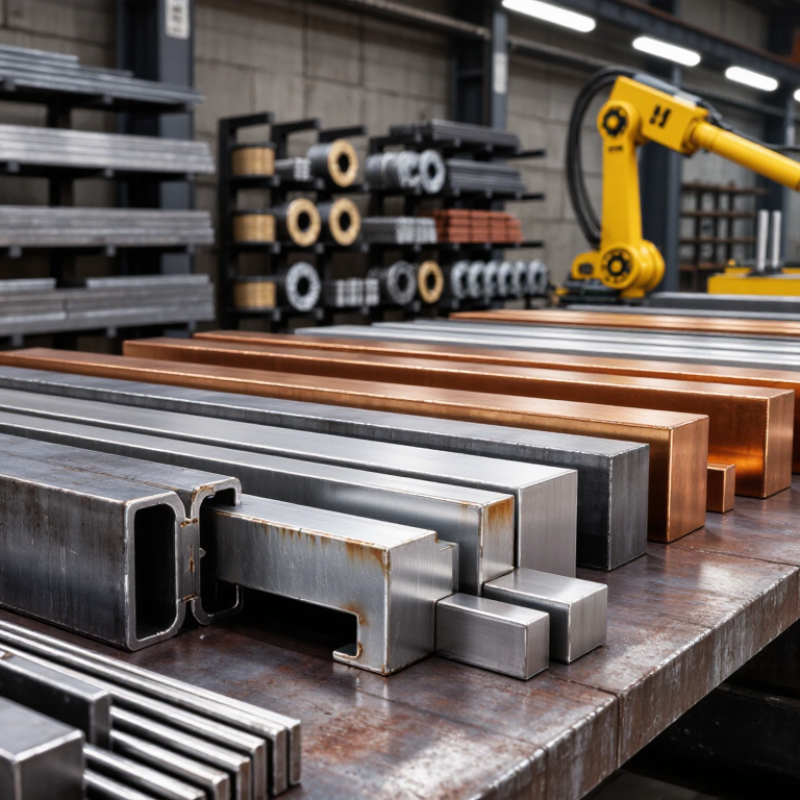
Welding metal is the material joined or added during welding. It includes carbon steel, stainless steel, aluminum, nickel alloys, titanium, and filler metals. Each option reacts differently to heat, moisture, pressure, and corrosion. Carbon steel offers strength and cost control. Aluminum reduces weight but demands tighter heat management. Stainless steel resists corrosion, yet its surface can discolor or distort without proper shielding.
The choice matters because a welded joint is only as reliable as its weakest material decision. The World Steel Association reported approximately 1.89 billion tonnes of crude steel production in 2024. That scale shows steel’s continuing industrial importance. However, volume does not equal suitability. A structural frame near saltwater may need corrosion-resistant metal, not simply the lowest-priced grade. A thin transport panel may require lightweight aluminum, but poor heat control can cause warping.
Workforce capability also affects buying decisions. The American Welding Society’s 2023 workforce data projected a shortage of about 330,000 welding professionals in the United States by 2028. Global buyers should therefore evaluate metals alongside weldability, documentation, and operator skill. Material certificates, tensile data, and applicable ISO or AWS procedures deserve careful review. These checks can feel slow. They are cheaper than repairing failed joints.
Material selection is rarely perfect. A stronger alloy may increase machining time or require specialized filler metal. A lower-cost option may create hidden maintenance costs. In 2026, buyers need practical evidence, not attractive specifications alone. The final decision should match the joint’s environment, load, thickness, and production reality.
How Are the Main Types of Welding Metal Classified?
2026 Top Types of Welding Metal for Global Buyers
How Are the Main Types of Welding Metal Classified?
Welding metals are mainly classified by base-metal chemistry, product form, and intended joint performance. Carbon steel remains widely used because it combines strength, availability, and reasonable cost. The World Steel Association reported about 1.89 billion tonnes of crude steel production in 2023. This scale supports steady demand for wire, rods, and covered electrodes.
Stainless steel is classified by chromium content and alloy structure. It offers better corrosion resistance, especially in humid or chemical environments. Aluminum welding metal is lighter and conducts heat quickly, requiring careful control of amperage and shielding gas. The United States Geological Survey estimated global primary aluminum production at roughly 70 million tonnes in 2023. Copper alloys, nickel alloys, and titanium are selected for heat, electrical, or corrosion performance. They are less forgiving.
Classification also depends on consumable form. Solid wire supports continuous automated welding, while flux-cored wire can improve deposition rates and outdoor practicality. Covered electrodes remain useful where equipment access is limited. ISO 2560 and related international standards classify consumables by chemical composition, tensile strength, coating type, and welding position. The system is reliable, but not perfect. Actual results depend on joint design, surface condition, operator skill, and storage.
Tips: Match the filler metal with the base metal first. Check tensile strength, corrosion needs, welding position, and service temperature. Ask for a mill certificate and batch traceability. A cheap kilogram can become expensive after rework.
What Are the Key Properties of Common Welding Metals?
When global buyers compare welding metals, strength is only one part of the decision. Carbon steel offers good tensile strength, easy machining, and generally simple welding behavior. Its low cost suits structural frames, machinery, and repair work. However, it can rust quickly when moisture reaches an unprotected surface. That detail matters.
Stainless steel provides strong corrosion resistance because of its chromium content. It also keeps a clean appearance in food, chemical, and outdoor equipment. Excessive heat can distort thin sheets or reduce corrosion resistance near the weld.
Aluminum is lightweight and conducts heat rapidly. Welders must control heat carefully, or the joint may burn through before the surrounding area becomes visibly hot. Its oxide layer also requires thorough surface preparation.
Copper transfers heat even faster, making stable penetration difficult. It remains valuable where electrical or thermal conductivity matters.
Nickel alloys tolerate high temperatures and aggressive environments, but they demand careful process control and compatible filler metal. They usually cost more and may reveal defects after cooling.
In practical shop trials, joint design often changes the result more than the metal name suggests. I once underestimated distortion on a thin stainless panel. The material was suitable, but the welding sequence was not.
Buyers should check grade, thickness, expected service temperature, corrosion exposure, and required mechanical properties before ordering. Test welds remain useful, especially when specifications differ between suppliers or regions.
Which Welding Metals Suit Different Industrial Applications?
2026 Top Types of Welding Metal for Global Buyers
Which Welding Metals Suit Different Industrial Applications?
Choosing welding metal starts with the working environment, not only the purchase price. Carbon steel suits structural frames, pipelines, machinery bases, and general fabrication. It offers strong joints and easy availability. However, poor surface preparation can cause porosity and weak welds. Real workshops still see this mistake.
Stainless steel fits food-processing equipment, medical structures, chemical tanks, and coastal installations. Its chromium content supports corrosion resistance, but heat can distort thin sections. Aluminum works well for transport bodies, marine parts, and lightweight platforms. It reduces weight, yet it demands careful cleaning and stable heat control. Nickel alloys handle severe heat and aggressive chemicals, although their higher cost requires accurate application planning. Copper alloys support electrical components and heat exchangers, but their thermal conductivity makes welding more demanding.
Tips: Match the metal with temperature, load, corrosion exposure, and joint thickness. Check the metal’s grade, certificates, and welding procedure before production. Test a sample joint when the application carries safety risks. A metal that looks suitable may perform poorly after repeated heating, vibration, or salt exposure. Experienced welders also inspect storage conditions, because moisture and contamination can change results. Budget estimates often ignore preparation time. That oversight can become expensive.
| Welding Metal | Typical Grades or Forms | Density (g/cm³) |
Approx. Melting Range (°C) |
Typical Welding Processes | Best-Fit Industrial Applications | Main Advantages | Important Buying and Welding Considerations |
|---|---|---|---|---|---|---|---|
| Carbon Steel | Low-carbon and medium-carbon structural steel; plate, tube, pipe and section | Approximately 7.85 | Approximately 1,425–1,540 | GMAW, FCAW, SMAW, GTAW and SAW | Buildings, bridges, pressure vessels, machinery frames, pipelines, transport equipment and general fabrication | Low cost, broad availability, high strength-to-cost ratio and relatively straightforward welding | Control hydrogen and preheat requirements for thicker or higher-carbon material. Corrosion protection is normally required after welding. |
| Stainless Steel | Austenitic, ferritic, martensitic and duplex stainless grades | Approximately 7.7–8.1 | Approximately 1,370–1,530 | GTAW, GMAW, SMAW, FCAW and laser welding | Food and beverage equipment, chemical processing, pharmaceutical systems, marine components and architectural fabrication | Good corrosion resistance, clean surface appearance and strong service life in demanding environments | Use compatible filler metal and avoid excessive heat input. Interpass temperature and post-weld cleaning are important, especially for corrosion-sensitive service. |
| Aluminum Alloys | Aluminum sheet, plate, extrusion and casting alloys; common families include 5xxx and 6xxx series | Approximately 2.66–2.85 | Approximately 475–660 | GTAW, GMAW, friction stir welding and laser welding | Vehicle bodies, railcars, ships, heat exchangers, storage tanks, aerospace structures and lightweight frames | Low weight, good corrosion resistance, high thermal and electrical conductivity and strong recyclability | Remove oxide contamination and manage high thermal conductivity. Some heat-treatable alloys lose strength in the heat-affected zone. |
| Nickel Alloys | Nickel-based corrosion-resistant, heat-resistant and high-temperature alloy products | Approximately 8.2–9.2 | Approximately 1,260–1,450 | GTAW, GMAW, SMAW, FCAW and submerged arc welding | Chemical processing, power generation, oil and gas equipment, aerospace hot sections and high-temperature furnaces | Excellent resistance to heat, oxidation, corrosion and aggressive chemicals | Higher material cost and lower thermal conductivity require strict cleanliness, controlled heat input and qualified welding procedures. |
| Copper and Copper Alloys | Commercially pure copper, brass, bronze and copper-nickel alloys | Approximately 8.3–8.96 | Approximately 890–1,085 | GTAW, GMAW, brazing and specialized resistance or laser welding | Electrical busbars, power equipment, heat exchangers, refrigeration systems, plumbing and marine piping | Very high electrical and thermal conductivity; copper-nickel alloys offer useful marine corrosion resistance | High heat dissipation can cause incomplete fusion. Select filler metal carefully to limit porosity, cracking and galvanic compatibility problems. |
| Titanium Alloys | Commercially pure titanium and alpha-beta titanium grades | Approximately 4.5 | Approximately 1,660–1,670 | GTAW, laser welding, electron beam welding and friction welding | Aerospace structures, chemical equipment, medical devices, marine components and high-performance transport systems | High strength-to-weight ratio, strong corrosion resistance and good performance at moderately elevated temperatures | Requires highly controlled shielding with inert gas, including trailing and backside protection. Surface contamination can cause embrittlement and weld failure. |
| Cast Iron | Gray, ductile, malleable and compacted-graphite cast iron components | Approximately 6.9–7.3 | Approximately 1,150–1,200 | Cold welding, SMAW, nickel-alloy GMAW and brazing | Engine blocks, machine beds, housings, pump bodies, industrial frames and repair of cast components | Excellent compressive strength, vibration damping and castability for complex shapes | High cracking risk from thermal stress and hard zones. Preheating, controlled cooling and short weld runs are commonly required. |
| Galvanized Steel | Zinc-coated low-carbon steel sheet, tube, pipe and structural components | Approximately 7.8–7.9 for the steel substrate | Steel substrate approximately 1,425–1,540; zinc melts at approximately 420 | GMAW, FCAW, SMAW, resistance welding and spot welding | Automotive parts, HVAC systems, agricultural equipment, guardrails, roofing structures and light fabrication | Steel strength combined with sacrificial zinc corrosion protection and good availability | Remove or manage zinc near the weld zone, provide effective ventilation and restore corrosion protection after welding. Zinc fumes require strict occupational controls. |
| Cobalt-Based Alloys | Wear-resistant and high-temperature cobalt alloy castings, plates and overlays | Approximately 8.3–9.4 | Approximately 1,250–1,480 | GTAW, GMAW, plasma transferred arc and laser cladding | Valve seats, cutting tools, combustion components, pump wear surfaces and high-temperature processing equipment | Strong wear resistance, heat resistance and corrosion resistance under severe operating conditions | Often purchased as overlay or repair material rather than bulk construction metal. Heat control and appropriate ventilation are essential during welding. |
How Can Global Buyers Select and Source Welding Metal?
2026 Top Types of Welding Metal for Global Buyers
How Can Global Buyers Select and Source Welding Metal?
Global buyers should match welding metal to the joint, service environment, and fabrication method. Carbon steel suits many structural projects and offers practical cost control. Stainless steel performs better where corrosion, moisture, or chemical exposure matters. Aluminum reduces weight, but it demands careful heat control and clean surface preparation. Nickel alloys support demanding heat and corrosion conditions, although purchasing costs are higher.
Start with technical evidence, not attractive quotations. Request the exact grade, chemical composition, thickness tolerance, surface condition, and applicable standard. Confirm whether the metal is supplied as plate, pipe, wire, bar, or welding electrode. A material test certificate should identify the heat number and testing results. Independent inspection can verify composition, dimensions, and packaging before shipment.
Ask suppliers about production capacity, lead time, minimum order quantity, and export experience. Check how they protect metal from seawater, humidity, and impact during transport. Small details matter. A wet package can damage otherwise acceptable welding material. Compare total landed cost, including freight, duties, inspection, and possible rejection losses. I have found that the lowest quotation is not always economical. Supplier documents may also contain minor inconsistencies, so buyers should review them line by line. When specifications remain unclear, a small trial order can reveal weldability, surface quality, and delivery reliability before a larger contract.
2026 Top Types of Welding Metal for Global Buyers
How can global buyers select and source welding metal? This chart compares the approximate melting temperatures of widely used industrial metals and alloys. Lower melting temperatures may support lower heat input, while higher temperatures generally require more controlled welding procedures and equipment.
Values are representative engineering benchmarks: aluminum 6061 typically melts at approximately 582–652°C, stainless steel 304 at approximately 1400–1450°C, mild carbon steel at approximately 1425–1540°C, nickel at approximately 1455°C, copper at approximately 1085°C, and titanium at approximately 1668°C. Buyers should also verify alloy grade, form, diameter or thickness, applicable standards, weldability, certificates, and shipping requirements before sourcing.
Related Posts
-
Top 10 Mini Spot Welding Machines for Global Buyers?
-
Top Benefits of Using Seam Welding Machines for Global Buyers?
-
Top 5 Best Welders for every Budget in 2023: Reviews and Buyer’s Guide
-
How to Choose the Best Spot Welding Gun in 2026?
-
How to Choose the Best Spot Welder for Your Needs?
-

Top 10 Benefits of Choosing Mig Welder Hire for Your Next Project
Contact us
Please fill out the enquiry form, and our dedicated team will promptly attend to your request